








In the rapidly evolving landscape of technology, the barrier between human intent and machine execution is dissolving. A new paradigm has emerged, colloquially termed "vibe coding." First coined in February 2025 by computer scientist Andrej Karpathy—the co-founder of OpenAI and former director of AI at Tesla—this concept represents a fundamental shift in how software is conceptualized, built, and deployed.
No longer tethered to the rigid syntax of traditional programming, vibe coding allows creators to build websites and applications by describing their vision in natural language. As Karpathy succinctly put it, the process involves a workflow where one can "say stuff, run stuff, and copy-paste stuff, and it mostly works." This article explores the emergence, mechanics, and profound implications of this AI-driven revolution.
The Genesis of a New Paradigm: What is Vibe Coding?
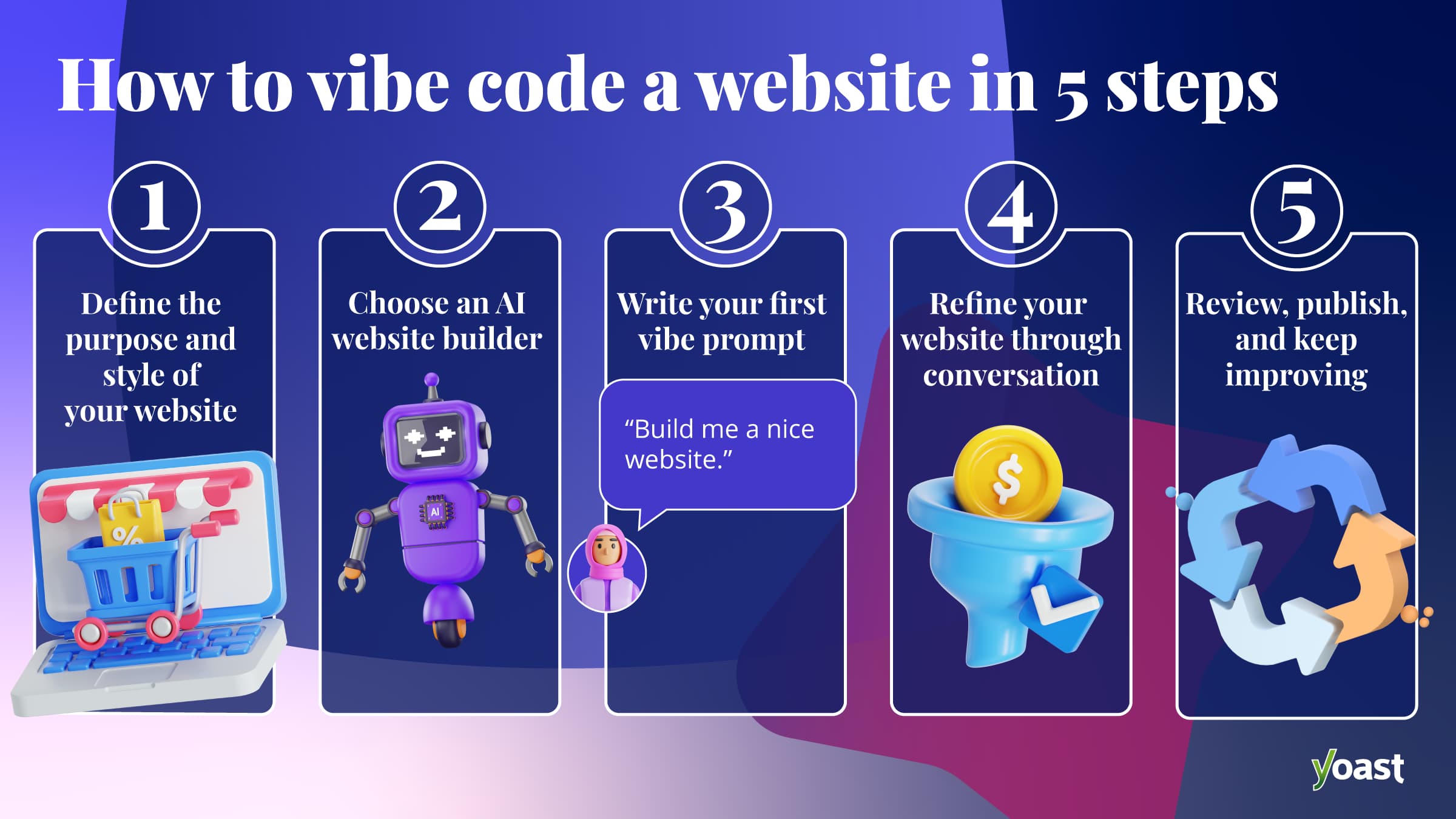
At its core, vibe coding is the democratization of development. It transforms the user from a manual "coder" who writes line-by-line syntax into a "creative director." In this model, the developer’s role is to provide the "vibe"—the artistic, functional, and strategic vision—while the AI handles the heavy lifting of architectural implementation.
Unlike traditional software development, which requires deep expertise in frameworks, languages like Python or JavaScript, and rigorous debugging protocols, vibe coding relies on conversational iteration. You provide a prompt, the AI generates the code, and you refine it through dialogue. It is, in essence, a collaborative process where the AI acts as a tireless, fluent translator between human desire and machine logic.
A Chronology of the Shift
The ascent of vibe coding was not an overnight occurrence but the culmination of several technological milestones:
- Pre-2023 (The Manual Era): Software development was largely restricted to those with specialized technical training. Building a custom website required manual coding or complex CMS management.
- 2023–2024 (The Copilot Era): AI began acting as a force multiplier for developers, suggesting code snippets and catching syntax errors. However, the human still held the primary responsibility for the structure.
- February 2025 (The Vibe Coding Milestone): Andrej Karpathy articulated the term, signaling a move toward "autonomous" coding agents that could handle entire modules or websites based on high-level descriptions.
- Late 2025–Present (The Prototyping Revolution): AI website builders began integrating LLMs directly into hosting platforms, allowing users to move from an idea to a live site in minutes without ever touching a command-line interface.
What Can You Build? The Expanding Horizon
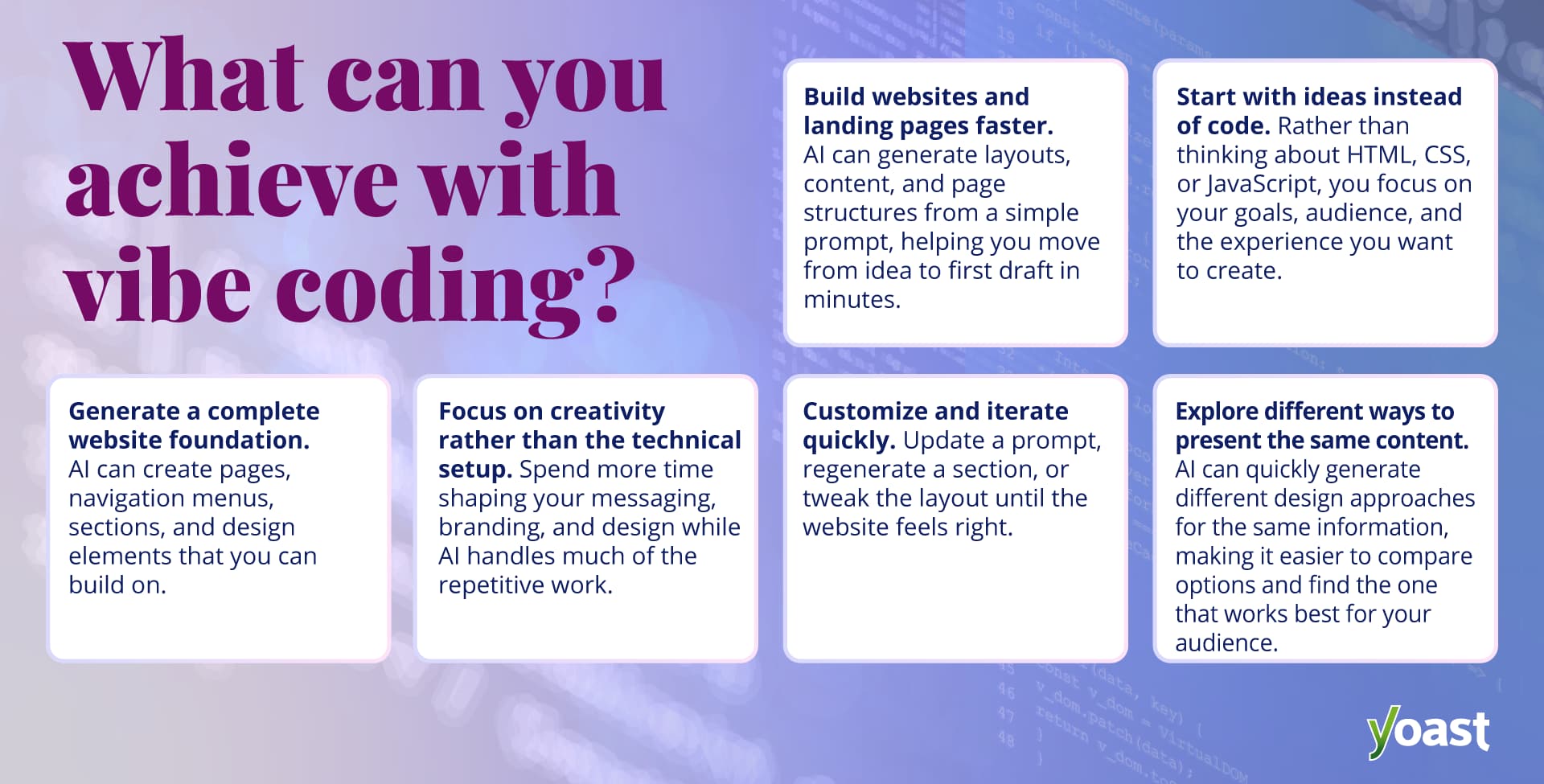
Vibe coding is not limited to simple text generators. Today, the scope of what can be built includes:
- Landing Pages: High-converting, responsive pages for marketing campaigns.
- Business Dashboards: Custom tools for data visualization and internal management.
- Full-Stack Web Applications: Functional apps that include databases, user authentication, and API integrations.
- E-commerce Stores: Online shops with payment processing and inventory management capabilities.
The primary shift is that you are no longer writing the code; you are managing the output. You observe the "vibe" of the AI’s work—the aesthetic choices, the user experience, and the functional logic—and steer it toward your specific goals.
Strategic Benefits: Why Industry Leaders are Pivoting
The transition toward vibe coding is driven by clear economic and strategic advantages.
1. Radical Acceleration of Prototyping
In traditional development, creating a "Minimum Viable Product" (MVP) could take weeks or months. With vibe coding, that timeline is reduced to hours. This agility allows entrepreneurs to test ideas in the market, gather user feedback, and pivot without the "sunk cost" of months of manual labor.
2. Lowering the Barrier to Entry
Vibe coding effectively removes the "syntax tax." By allowing non-technical founders to build their own digital presence, it fosters a new wave of innovation. Whether you are a local coffee shop owner needing a website or a freelancer building a portfolio, the complexity of hosting and backend architecture is handled by AI-integrated platforms.
3. Iteration through Conversation
Traditional debugging is a linear, often frustrating process. Vibe coding, however, is recursive. If a button isn’t working or a layout looks misaligned, you don’t hunt through thousands of lines of code. You simply tell the AI, "The button is misaligned on mobile, please fix the padding," and the AI adjusts the underlying CSS accordingly.
Managing the "Vibe Coding Doom Loop"
Despite its efficiency, vibe coding is not without its pitfalls. Users frequently encounter the "vibe coding doom loop"—a state where the AI becomes caught in a cycle of generating broken solutions, often because the context has become too muddled.
How to avoid the loop:
- Context Engineering: Don’t try to do everything in one prompt. Provide clear, modular instructions. If you are building a homepage, define the "About" section as a distinct block of context.
- Incremental Validation: Do not build the entire application before checking if it works. Verify each component as the AI generates it.
- Human Oversight: AI is a tool, not a replacement for judgment. You must review the code for security vulnerabilities and functional errors. Treat the AI’s output as a draft that requires your final approval.
Vibe Coding vs. Traditional Development
While vibe coding is revolutionary, it does not render traditional coding obsolete. The two methodologies serve different purposes:
| Feature | Traditional Coding | Vibe Coding |
|---|---|---|
| Input | Manual syntax (JS, HTML, PHP) | Natural Language Prompts |
| Skillset | Deep CS knowledge | Strategy & Clear Communication |
| Control | Absolute, granular control | High-level architectural guidance |
| Use Case | Complex, scalable enterprise systems | MVPs, portfolios, small businesses |
Traditional development remains the gold standard for high-security environments, complex algorithms, and large-scale, high-traffic applications where every micro-optimization matters. Vibe coding is the preferred choice for rapid iteration and accessible digital creation.
The Future: SEO and AI-Driven Discovery
As we move toward a future where websites are built by AI, the way these sites are discovered must also evolve. Search engines are no longer just indexing text; they are interpreting the "intent" and "structured data" behind the site.
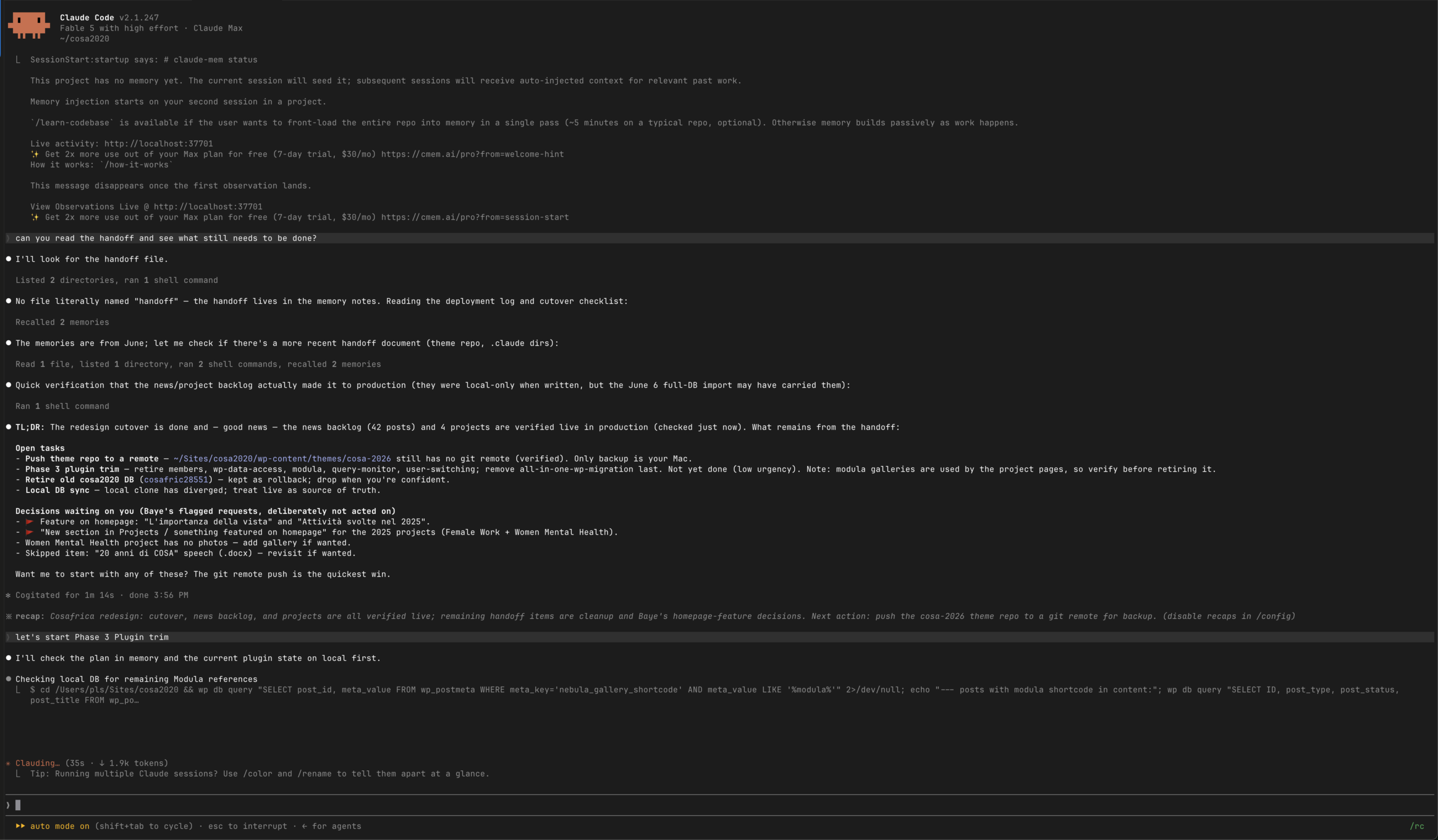
Platforms like Yoast SEO are adapting to this new world. As sites are built via "vibe," they need to ensure that their underlying data is structured so that AI assistants and search bots can understand the business, its offerings, and its expertise. Features like schema aggregation and AI-powered content analysis ensure that while you "vibe" your way into building a site, your SEO strategy remains robust, allowing you to actually be found by your target audience.
Conclusion: The New Creative Frontier
Vibe coding is more than just a trend; it is a fundamental shift in the creative process. By delegating the technical implementation to AI, we are reclaiming time to focus on strategy, design, and user experience.
The successful "vibe coder" of the future will be the person who best understands how to communicate their vision. They will be the ones who define the goals, review the outputs with a discerning eye, and maintain the strategic direction of their digital presence. Whether you are an entrepreneur or a seasoned developer looking to speed up your workflow, the era of building through conversation is here—and it is just getting started.