In the ever-evolving landscape of digital marketing, search engine optimization (SEO) remains a cornerstone for driving organic traffic. At the heart of this discipline lies the "focus keyword"—a fundamental concept that serves as the bridge between user intent and content delivery. While the algorithms governing search engines like Google become increasingly sophisticated, the requirement for clear, intent-driven content remains constant. Mastering the art of the focus keyword is not merely about gaming the system; it is about providing a roadmap for search engines to categorize your content accurately and for users to find exactly what they are searching for.
The Essence of the Focus Keyword
A focus keyword is the primary term or phrase that acts as the thematic anchor for a specific page. It represents the central topic you wish to rank for in search engine results pages (SERPs). By concentrating on one distinct keyword per page, content creators can ensure that their messaging remains coherent and targeted.
It is critical to distinguish between a "topic" and a "keyword." While these terms are often used interchangeably, a topic is the broad subject matter—such as "Pilates"—whereas a keyword is the specific search query a user types into a browser, such as "best pilates abs exercises." The focus keyword is the intentional selection of that search query, chosen because it perfectly encapsulates the specific value proposition of your content.
Chronology of Keyword Evolution: From Meta Tags to Intent
The perception of keywords has shifted dramatically over the past two decades. In the early days of the web, SEO practitioners relied heavily on the "meta keyword" tag—an HTML element where webmasters could list relevant terms. However, as search engines evolved to combat spam and keyword stuffing, the meta keyword tag lost all relevance. Today, Google does not consider meta keywords in its ranking algorithms.
The focus has shifted from "tagging" content to "semantic relevance." Modern SEO is no longer about repeating a phrase a specific number of times; it is about establishing topical authority. As demonstrated by the evolution of Google’s search algorithms, such as BERT and RankBrain, the priority is now on understanding user intent. Consequently, the focus keyword has transformed from a technical requirement into a strategic guide for content structure.
Supporting Data: The Keyword Tripod Rule
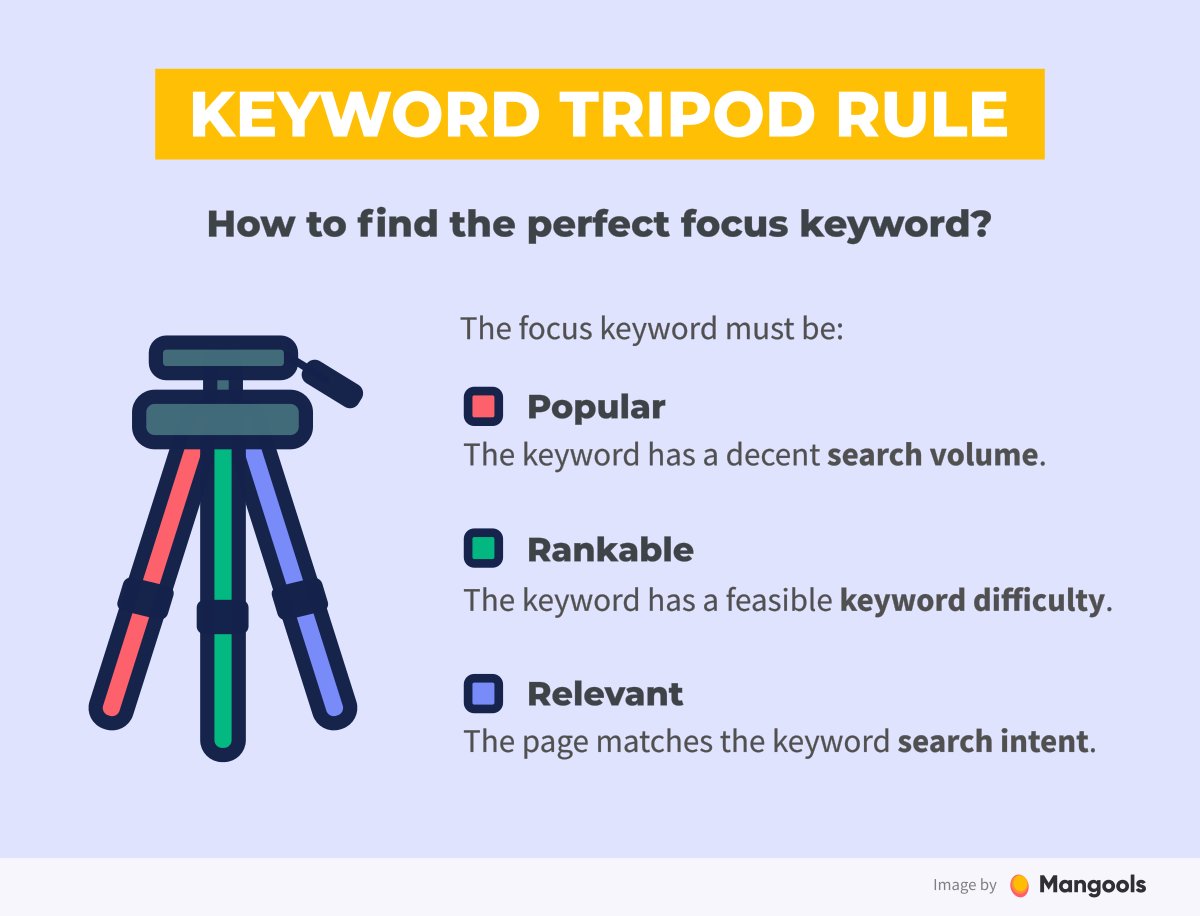
To select the right focus keyword, one cannot rely on guesswork. The "Keyword Tripod Rule" offers a professional framework for evaluating potential keywords based on three pillars:

- Search Volume: This measures the popularity of a keyword—how many people are searching for this specific term? High volume is desirable, but it often comes with high competition.
- Difficulty (Competition): This evaluates how hard it is to rank for a keyword. Analyzing the domain authority and content quality of the top-ranking sites is essential to determine if your platform can compete.
- Search Intent: This is the most critical factor. Does the user want to buy something, find information, or navigate to a specific site? If your content does not align with the intent behind the keyword, your chances of ranking are negligible.
These metrics can be analyzed using professional SEO tools, which provide data-driven insights into the search landscape. By evaluating these three factors, you can move away from vanity metrics and focus on keywords that actually drive qualified leads and engagement.
Official Guidance: Insights from Search Experts
The SEO community often looks to Google’s Search Advocate, John Mueller, for clarity on how to handle content optimization. A common misconception is that keywords must be forced into every paragraph. However, Mueller has consistently emphasized that the primary goal is clarity.
In various public forums and videos, Google representatives have stressed that a page must make its topic "perfectly obvious" to both the user and the search engine. If a page is massive—perhaps 20,000 words—but only introduces its main topic toward the very end, it fails the fundamental requirement of accessibility. The focus keyword acts as a signpost; it should be integrated naturally into the title, the introduction, and the subheadings, ensuring that a reader—and a crawler—understands the value of the page within seconds of arrival.
Strategic Implications of Keyword Placement
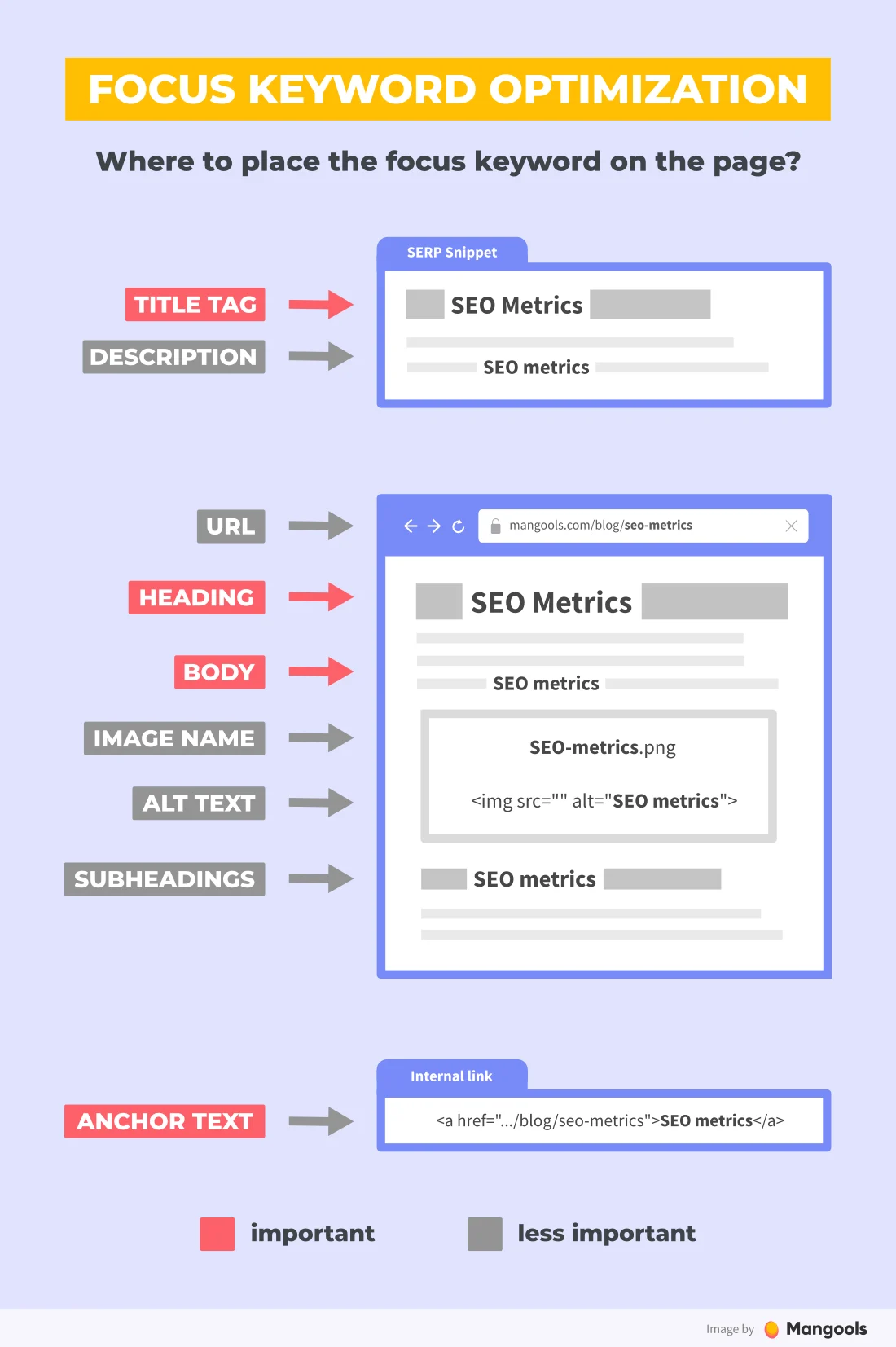
Once a focus keyword is selected, its placement determines the efficacy of your on-page SEO strategy. While there is no "secret code" to tell Google what to rank, there are high-impact areas where keywords should be placed to improve visibility:
- Title Tag: The most important indicator of a page’s topic. It should be concise and contain the primary keyword.
- URL Structure: A clean, keyword-rich URL helps both users and search bots understand the hierarchy of the content.
- Main Heading (H1): This is the headline of your article. It should clearly state what the reader will gain from the content.
- Introduction: Placing the keyword in the first 100 words helps establish immediate context.
- Subheadings (H2/H3): These break up the text and provide opportunities to include the keyword or semantic variations, improving readability and scanability.
The Danger of Keyword Stuffing
A recurring error in SEO is "keyword stuffing"—the practice of loading a page with keywords in an attempt to manipulate ranking. This is not only ineffective but potentially harmful. Search engines are designed to penalize content that prioritizes keywords over readability.
When a user visits a site, they are looking for an answer, not a repetitive string of text. If you find yourself struggling to incorporate a keyword naturally, it is a sign that the keyword might not be a perfect fit for that specific piece of content. The goal is to provide a seamless user experience. If the content is high-quality, readable, and addresses the user’s needs, the keywords will naturally fall into place.
Unique Focus Keywords: Avoiding Cannibalization
One of the most important rules in site architecture is avoiding keyword cannibalization. This occurs when multiple pages on your site compete for the same focus keyword. For example, if you have a service page for "dog grooming" and a blog post titled "Why You Need Dog Grooming," both pages are fighting for the same search query.
This is counterproductive. By forcing these two pages to compete, you divide your own authority. Instead, differentiate them. Optimize the service page for "dog grooming services" and the blog post for "benefits of professional dog grooming." This allows you to capture different types of search intent and increases your footprint in the SERPs.
Conclusion: A Holistic Approach
The focus keyword is the North Star of your SEO strategy, but it is not the destination. It provides the necessary direction to ensure your content reaches the intended audience. By choosing unique, intent-aligned keywords, placing them strategically, and prioritizing the quality of your writing, you create a sustainable foundation for long-term growth.
Ultimately, Google’s algorithms are designed to reward websites that provide the best answers to user queries. If you treat your focus keyword as a tool to improve clarity and relevance rather than a mechanism to "trick" the algorithm, you will find that your rankings naturally follow. SEO is an ongoing process of refinement—always test, measure, and adjust your keyword strategy based on performance data to remain competitive in an ever-changing digital environment.