










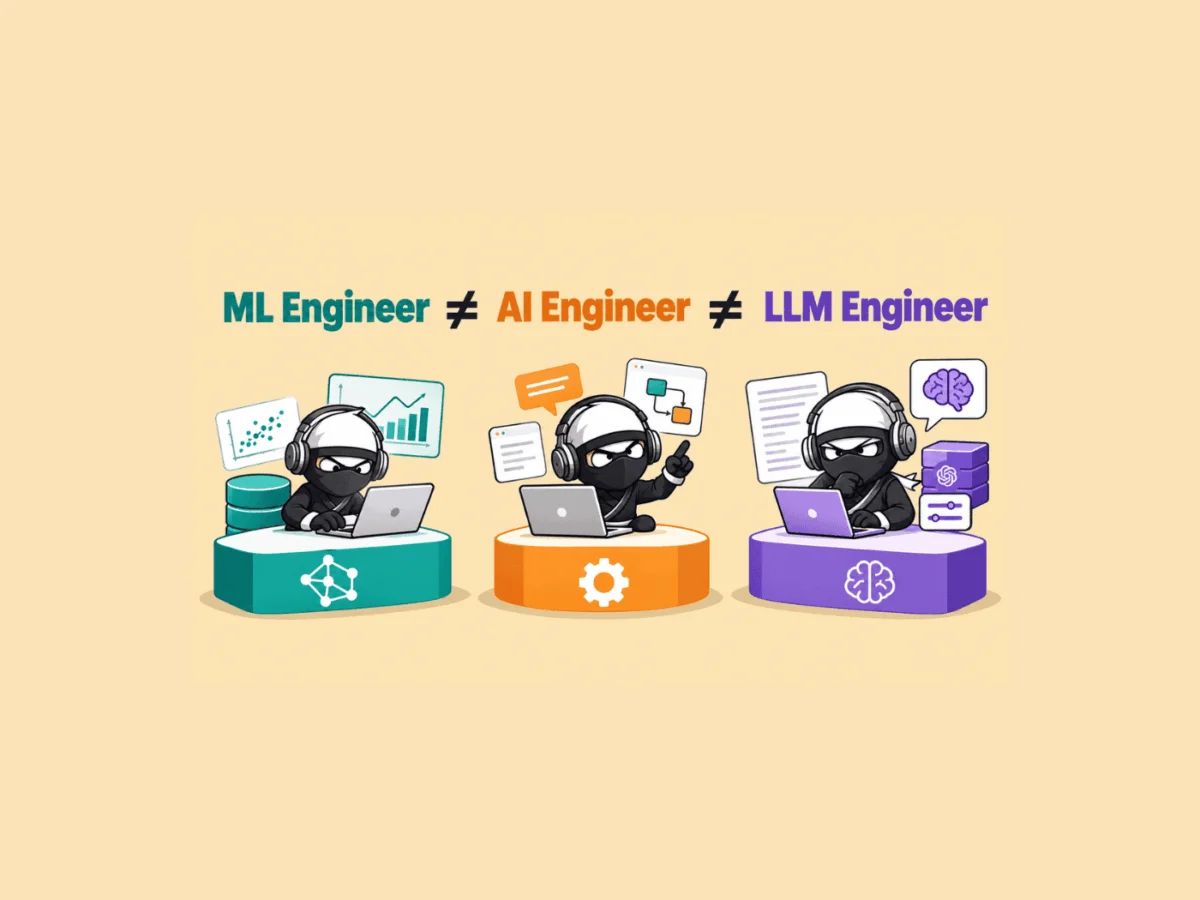
In the rapidly evolving landscape of artificial intelligence, a peculiar phenomenon has emerged: a profound disconnect between job titles and the actual engineering work performed daily. A candidate searching for roles across major job boards will encounter "AI Engineer," "Applied AI Engineer," and "LLM Engineer," often side-by-side. While these titles suggest distinct specializations, the underlying responsibilities—Python proficiency, API integration, retrieval-augmented generation (RAG), and production reliability—often overlap to the point of interchangeability.
This ambiguity creates significant friction in the labor market. Professionals who prioritize prestige or growth-oriented titles may find themselves in roles that bear little resemblance to their expectations. Conversely, those seeking the rigorous, research-heavy environment of a traditional Machine Learning (ML) Engineer role may inadvertently land in a software-heavy product integration role. To navigate this "naming chaos," one must look past the buzzwords and examine the core artifacts of the role: what you are tasked to build, own, and maintain six months into your tenure.
The Chronology of an Evolving Field
To understand why these titles feel so mismatched, one must look at the historical progression of the discipline. The field began with Data Science, which focused on exploratory analysis and statistical inference. As the need to move models from static notebooks into live production environments grew, the Machine Learning Engineer role was born, bridging the gap between data science and traditional software engineering.
The arrival of Generative AI in 2022 fundamentally shifted the landscape. Suddenly, the focus moved away from training models from scratch—a computationally expensive and data-heavy endeavor—toward leveraging pre-trained foundational models. This gave rise to the AI Engineer, a role that prioritizes system orchestration over algorithmic development. Finally, as the industry began to treat Large Language Models (LLMs) as a distinct technology stack requiring specialized fine-tuning and weight adjustment, the LLM Engineer emerged as the most granular evolution of this trend.
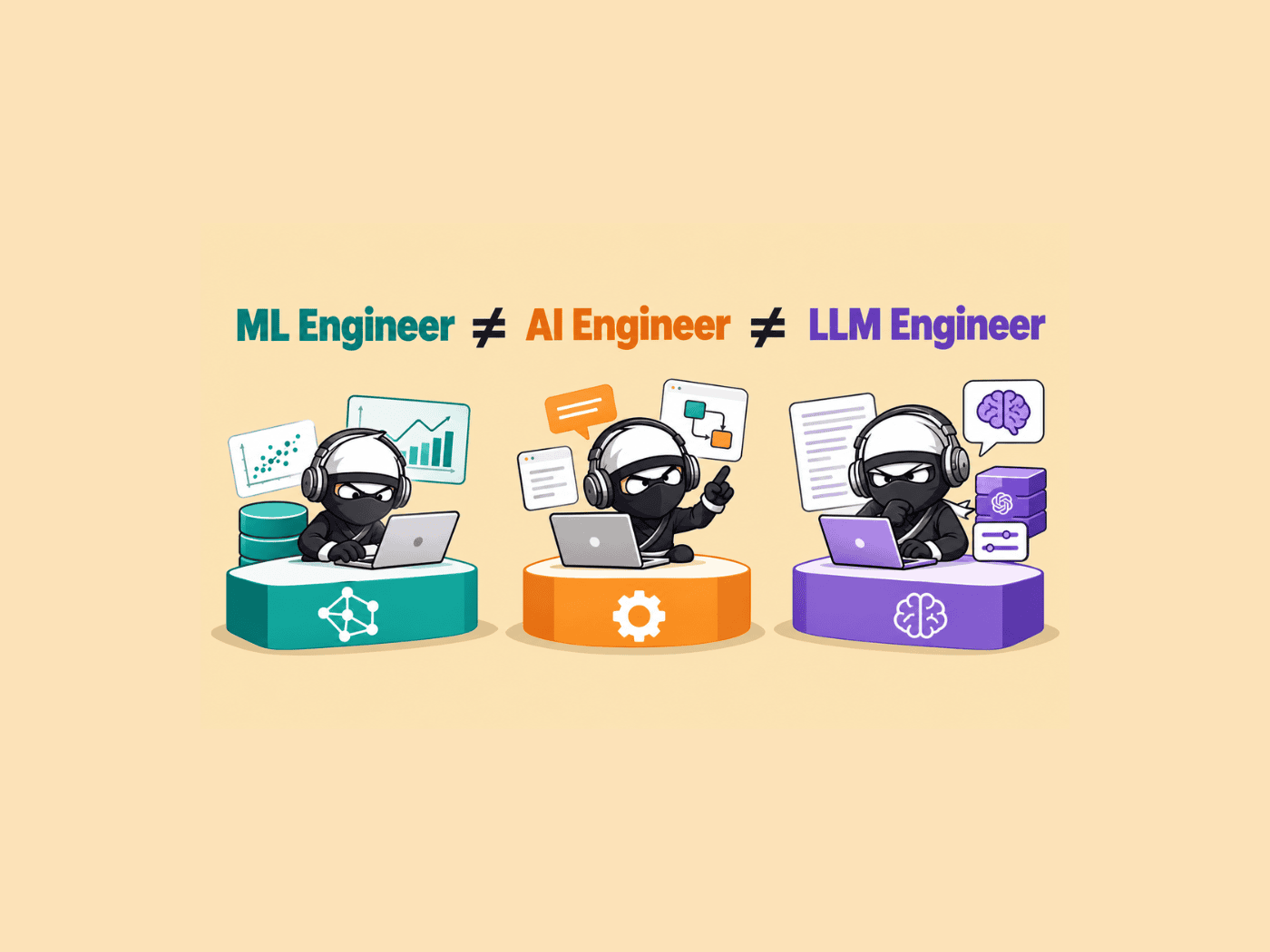
The industry has not yet reached a consensus on terminology. Because the technology is moving faster than organizational human resources departments can codify it, companies are labeling identical roles in a dozen different ways. This naming gap extends to compensation, where two roles with near-identical technical requirements may carry significantly different salary bands simply due to the prestige or novelty of the chosen job title.
Defining the Roles by Their Output
The most effective way to distinguish these roles is to evaluate the technical output each produces.
1. The Machine Learning Engineer: The Architect of Prediction
The ML Engineer is primarily responsible for the end-to-end lifecycle of a predictive model. Their core loop involves:
- Data Acquisition and Cleaning: Preparing the raw input.
- Algorithmic Selection: Choosing the appropriate mathematical framework.
- Training and Validation: Using metrics like RMSE or confusion matrices to ensure performance.
- Deployment and Monitoring: Ensuring the model scales and updates as new data flows in.
Their toolset includes PyTorch, TensorFlow, and scikit-learn, alongside feature stores like Amazon SageMaker or Databricks. Their outputs are usually concrete, functional assets: a fraud detection score, a recommendation engine, or a demand forecasting system. Crucially, the ML Engineer sits at the intersection of applied research and rigorous software engineering, spending the majority of their time managing data pipelines rather than writing novel algorithms.
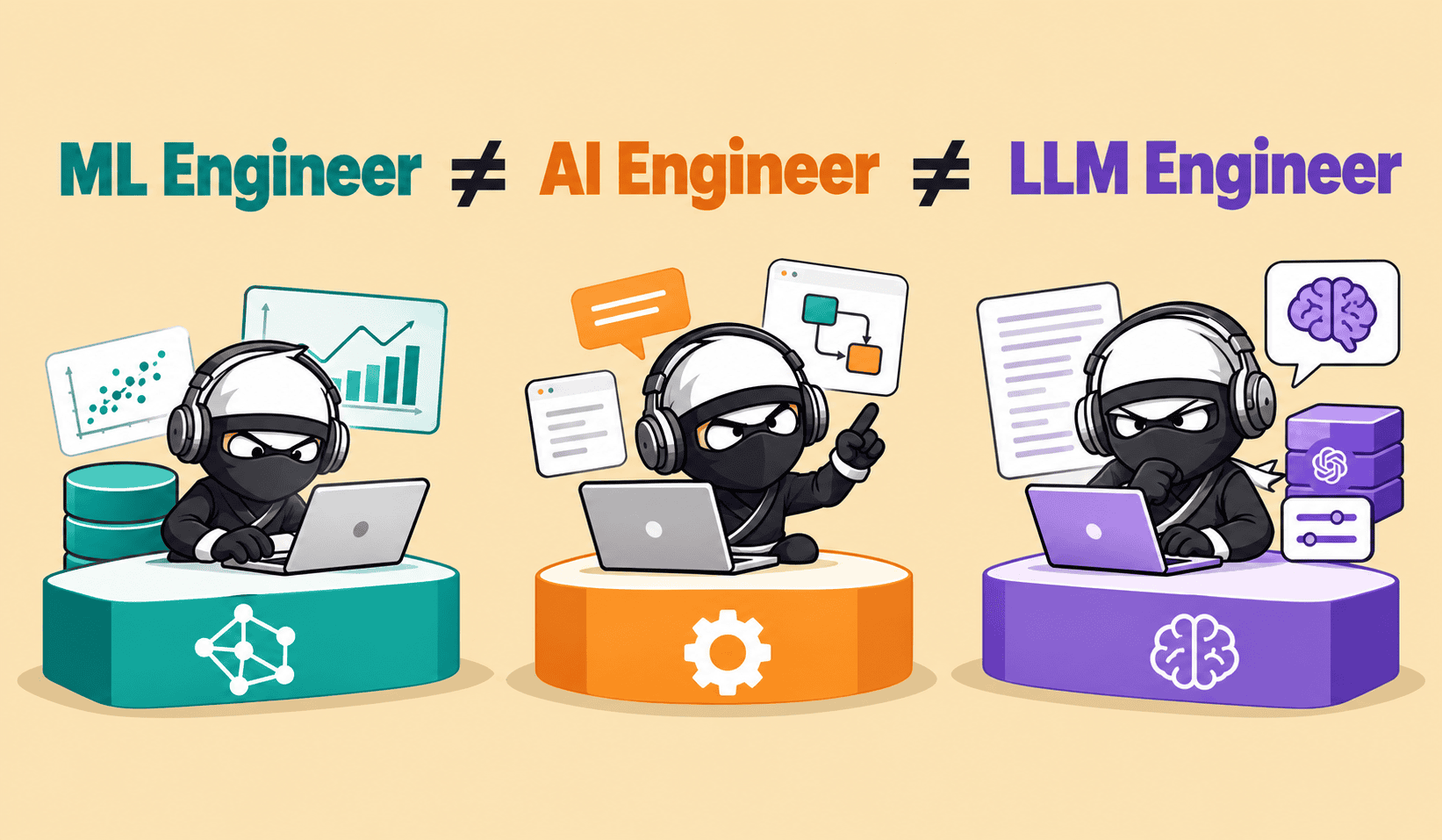
2. The AI Engineer: The Product Integrator
The AI Engineer operates at a different layer of the stack. They rarely, if ever, train a model from scratch. Instead, their work begins once a foundational model—such as GPT-4, Claude, or Llama—is already accessible via an API.
Their daily workflow consists of:
- Prompt Engineering and Design: Crafting the inputs that guide model behavior.
- Orchestration: Using tools like LangChain, LangGraph, or LlamaIndex to connect the model to external data sources.
- Retrieval Systems: Managing vector databases (e.g., Pinecone, Qdrant) to provide models with contextual, domain-specific information.
- Evaluation and Guardrails: Implementing systems to detect hallucinations and ensure output quality.
The common misconception among aspiring AI Engineers is that they will be spending their days designing neural networks. In reality, the role is heavily weighted toward backend engineering, API management, and fixing data pipelines to ensure the model remains reliable for the end user.
3. The LLM Engineer: The Specialist
The LLM Engineer is essentially an AI Engineer with a specialized focus on the internals of Large Language Models. Their differentiator is the practice of fine-tuning. When a general-purpose model fails to meet the performance requirements of a highly specialized task, the LLM Engineer uses techniques like LoRA (Low-Rank Adaptation) or QLoRA to adjust the model’s weights.

However, an expert LLM Engineer is defined by their restraint. They often spend more time proving that fine-tuning is unnecessary than actually performing it. They prioritize retrieval-augmented generation (RAG) and prompt optimization first, as these methods offer lower costs and require less ongoing maintenance. Fine-tuning is treated as a measure of last resort.
Supporting Data and Organizational Structure
The scope of these roles is also heavily dependent on the size and maturity of the organization.
- At a Startup: One individual often wears all three hats. They may be responsible for training a small-scale model, building the retrieval layer, and deploying the final interface.
- At an Enterprise: The responsibilities are typically siloed. Larger organizations often divide the work into specialized departments: Applied AI Product Engineers focus on user experience, ML Infrastructure Engineers handle the underlying hardware and deployment pipelines, and AI Research Engineers focus on core model performance.
According to industry surveys, the lack of standardized definitions is causing high levels of candidate fatigue. Recruiters are increasingly finding that the most effective way to attract top-tier talent is to provide a "90-day roadmap" in the job description, detailing exactly what the hire will be expected to build and ship within their first three months.
Implications for Career Development
The current instability in job titles has significant implications for professional development. Because titles are inconsistent, candidates must learn to perform "due diligence" on job descriptions. Before applying, a candidate should be able to answer three questions based on the posting:

- What will I build in the first 90 days?
- What systems will I own and maintain long-term?
- Does the role focus on model development or system integration?
The most important takeaway for those entering the field is that the interview bar remains remarkably consistent across all three titles. Regardless of whether the role is called "LLM Engineer" or "ML Engineer," companies are looking for the same foundational competencies:
- SQL Proficiency: The ability to extract and manipulate data remains the baseline.
- Data Shaping: The ability to clean, format, and structure data to prevent "leakage" and improve model performance.
- Problem Framing: The ability to break down a vague business requirement into a technical solution before writing a single line of code.
Conclusion
The AI hiring market is currently undergoing a "naming crisis" that will likely persist for the foreseeable future. As generative AI continues to integrate into every facet of software development, the distinction between "Software Engineer," "AI Engineer," and "ML Engineer" will become increasingly blurred.
For the professional, the solution is to disregard the vanity of the job title. Instead, focus on the substance of the work. A candidate who builds a robust, scalable system—whether that system uses a custom-trained model, a fine-tuned LLM, or a simple API call—is building the career longevity that no job title can guarantee. When a recruiter reaches out with an unfamiliar title, do not be intimidated by the nomenclature. Ask for the technical stack, the team structure, and the specific deliverables. By focusing on the work rather than the label, you will find the role that truly aligns with your technical trajectory.



