










NEW YORK — When the SARS-CoV-2 virus emerged in late 2019, the global scientific community held a crucial, albeit narrow, advantage. Decades of prior, painstaking academic research on coronaviruses meant researchers already possessed a foundational understanding of the pathogen’s key proteins. This pre-existing structural knowledge enabled vaccine developers to design life-saving inoculations in record-breaking time.
The next global health emergency, however, may offer no such head start.
To fundamentally alter this dynamic, a powerful coalition of global research organizations—anchored by tech heavyweights NVIDIA and Google DeepMind alongside the European Molecular Biology Laboratory’s European Bioinformatics Institute (EMBL-EBI)—has announced the public release of predicted three-dimensional structures for the protein complexes of more than 2,800 viruses.
Unveiled to coincide with a high-level United Nations General Assembly meeting convened by the World Economic Forum in New York City, the new dataset is freely and openly available to scientists, academics, and pharmaceutical researchers anywhere in the world through the AlphaFold Database. By moving away from reactive measures and toward proactive biological "stockpiling," the international consortium hopes to permanently rewrite humanity’s playbook for pandemic preparedness.
Main Facts
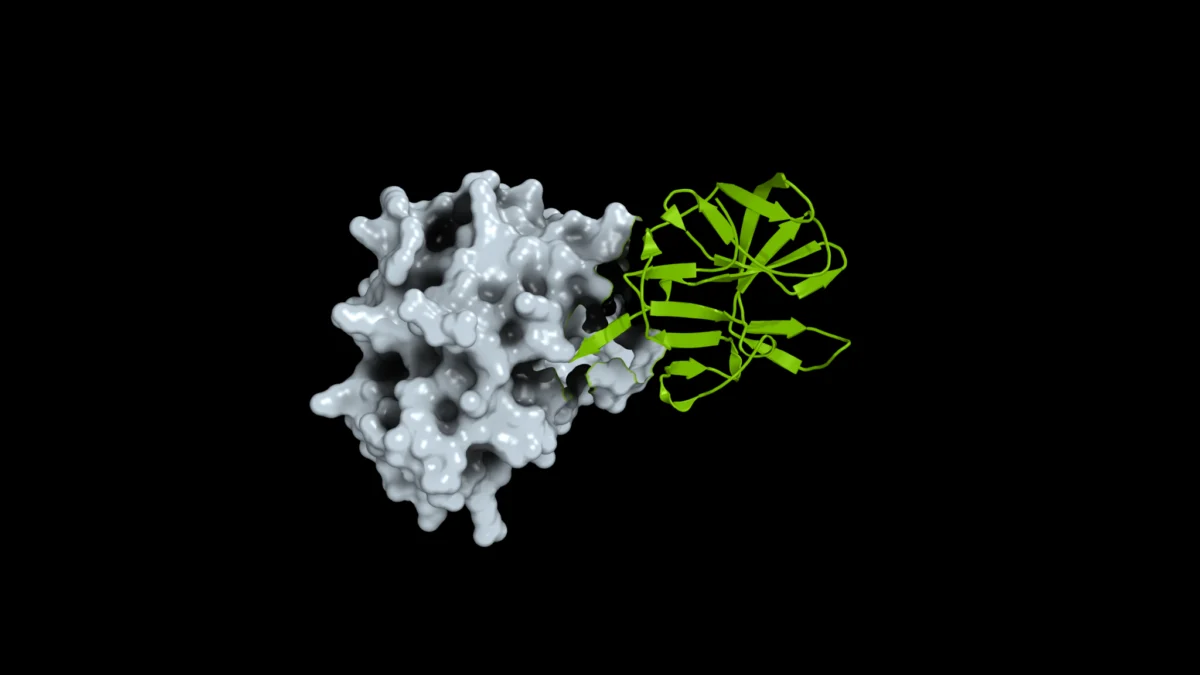
The newly expanded AlphaFold Database introduces AI-inferred 3D structural predictions for thousands of viral proteomes, focusing explicitly on protein complexes—groups of interacting proteins encoded within viruses that dictate how they function, replicate, and infect host cells.
- The Scale of the Release: The dataset catalogs structural predictions for more than 2,800 viruses known to infect humans and animals, spanning everything from common cold pathogens to severe emerging threats like Mpox.
- Uncharted Territory: Remarkably, approximately 30% of the protein interactions included in this release are entirely novel to science, displaying shapes and configurations never before documented in the Protein Data Bank (PDB), the primary global repository for experimentally determined protein structures.
- The Technological Engine: The dataset was generated using Google DeepMind’s AlphaFold2 AI model, heavily optimized with the NVIDIA BioNeMo Inference Runtime. This hardware-software integration allowed researchers to scale inference from single molecules to thousands of complete viral proteomes in a fraction of the time traditionally required.
- Open-Source Democratization: Alongside the database contribution, NVIDIA is openly releasing the BioNeMo Structure Prediction Pipeline. This GPU-accelerated workflow allows independent researchers to translate raw protein sequences into high-confidence 3D structural predictions for their own proprietary or academic targets.
- Expanding the Archive: With this latest addition, the AlphaFold Database now houses more than 260 million protein and protein complex predictions, covering virtually every cataloged protein known to modern science.
Chronology of a Breakthrough: From Academic Blind Spots to AI-Driven Discovery
To understand the magnitude of this release, one must trace the timeline of structural biology and the computational revolutions that have reshaped it over the past decade.
The Era of Experimental Bottlenecks (Pre-2020)
For decades, mapping the 3D structure of a protein or protein complex was an agonizingly slow and expensive endeavor. Traditional experimental methods—such as X-ray crystallography, nuclear magnetic resonance (NMR) spectroscopy, and, more recently, cryogenic electron microscopy (cryo-EM)—required researchers to isolate, purify, and crystallize proteins in a laboratory setting. A single structure could take years of trial and error and cost tens of thousands of dollars.
Dr. Joe Grove, a professor of molecular virology at the Medical Research Council-University of Glasgow Centre for Virus Research, recalls what this era felt like for early-career scientists. "When I did my Ph.D., there were no structures for any of the proteins we were investigating," Grove reflects. "It was like working in the dark—we had to guess what was going on."
The AlphaFold Revolution (2020–2023)
The landscape shifted irrevocably when Google DeepMind introduced AlphaFold, demonstrating that artificial intelligence could accurately predict protein folding based on amino acid sequences. While AlphaFold1 and AlphaFold2 solved the monumental challenge of single-protein folding, predicting how multiple proteins interact within complex cellular environments—and how viral proteins assemble to hijack host machinery—remained a formidable computational hurdle.
The Convergence of High-Performance Computing and Biology (2023–Present)
Recognizing that individual academic labs lacked the compute power to process thousands of viral proteomes at scale, Google DeepMind, EMBL-EBI, NVIDIA, and other international partners joined forces. By pairing AlphaFold2 with NVIDIA’s BioNeMo framework—which leverages enterprise-grade accelerated computing—the consortium managed to compress what would have been centuries of manual laboratory work into an automated, high-throughput pipeline. The culmination of this multi-institution effort is the current public dataset release, designed explicitly to fortify global defenses before the next pathogen jumps the species barrier.
Supporting Data and the Urgency of Preparedness
The timing of this release is underscored by sobering statistical models regarding global health security. According to an analytical assessment by the Center for Global Development, there is a roughly 50% probability that the world will face another pandemic as severe as COVID-19 by the year 2050.
Additional data points highlighting the scope and impact of the initiative include:
- The Power of Complexes: Most biological processes—and conversely, most viral mechanisms—rely on multiprotein complexes rather than isolated molecules. Therapeutics and vaccines typically need to target these complex interfaces to disrupt viral replication. Until now, structural data for most viral complexes simply did not exist.
- Speed and Efficiency: Traditional experimental methods can take years per structure. In contrast, the BioNeMo-optimized AlphaFold2 pipeline generates high-confidence structural predictions in mere minutes per target.
- Bridging Resource Gaps: According to EMBL-EBI, the democratization of structural data drastically lowers the barriers to entry for research institutions in low- and middle-income countries, empowering local scientists who are frequently on the front lines of regional disease outbreaks.
- Confidence Metric Benchmarking: Every prediction within the database is meticulously labeled with confidence scores, allowing researchers to immediately distinguish between highly reliable structural models and those requiring secondary experimental validation.
Official Responses and Perspectives from the Coalition
The coalition behind the initiative represents a unique cross-section of tech leaders, intergovernmental bioinformatics hubs, and academic virology labs. Leaders from across the partnership emphasized the ethical and scientific imperatives of making the data universally accessible.
"Our ambition with the AlphaFold Database has always been to democratize access to foundational biology at scale," said Risha Patel, life sciences partnerships manager at Google DeepMind. "This collaboration to bring thousands of viral complexes into the database will equip scientists around the world with insights they need to help prepare for future outbreaks."
For NVIDIA, the focus centers on providing the computational infrastructure necessary to turn massive biological datasets into actionable discoveries.
"This database is an engine for hypothesis generation," noted Chris Dallago, applied research science team lead in digital biology at NVIDIA. "We’re enabling biologists and the AI community to investigate protein interactions, not just as single molecules but as complexes, so the whole field can move forward."
Virologists who spent their careers navigating structural blind spots have been particularly vocal about how this tool changes the paradigm for the next generation of researchers.
"When the next pandemic happens, there may be something that comes out of the blue, and we’ll be lacking the knowledge we had for COVID," said Dr. Joe Grove of the University of Glasgow. "What we’re trying to do is stockpile some of that knowledge ahead of time… This dataset is a powerful tool for all the researchers doing their Ph.D.s now, giving them high-quality structural data that’s going to accelerate fundamental science."
Jo McEntyre, interim director of EMBL-EBI, underscored the equity aspect of the open-access model: "Making this data open is critical for understanding viral diagnostics and developing treatments and vaccines. The dataset also covers lesser-studied viruses and lowers the barriers for scientists in low-resource settings who are confronting outbreaks firsthand."
Implications for Global Health and Digital Biology
The release of these 2,800 viral proteome complexes carries profound implications across multiple sectors, extending far beyond academic virology.
1. Accelerating Countermeasure Development
When a novel pathogen emerges, time is the ultimate currency. By having pre-computed structural models of viral complexes stored in a public database, vaccine designers and immunologists can bypass months of initial structural determination work. They can immediately begin screening monoclonal antibodies, designing peptide inhibitors, or mapping epitope targets against high-confidence 3D models.
2. Democratizing Infectious Disease Research
Historically, structural biology has been dominated by well-funded laboratories in wealthy nations equipped with multi-million-dollar cryo-EM facilities. By placing AI-inferred structures into a centralized, open-access repository and open-sourcing the BioNeMo Structure Prediction Pipeline, the coalition is effectively leveling the playing field. Researchers in developing nations can now access sophisticated structural insights without needing access to localized supercomputing clusters.
3. Fostering New Avenues of Basic Science
Because roughly 30% of the mapped protein interactions are entirely unprecedented, the dataset serves as a vast playground for computational biologists and biochemists. These previously unknown interaction shapes invite deep exploration into evolutionary virology, protein folding physics, and cross-species viral transmission dynamics.
4. A Template for Public-Private Biosafety Collaboration
The coalition—bringing together the Coalition for Epidemic Preparedness Innovations (CEPI), EMBL-EBI, Google DeepMind, NVIDIA, Seoul National University, Sungkyunkwan University, the Swiss Institute of Bioinformatics, and the University of Glasgow—serves as a blueprint for how private enterprise and public research entities can cooperate to solve existential global challenges.
As the world looks toward an uncertain biological future, initiatives like the AlphaFold Database Pandemic Preparedness Portal signal a paradigm shift: humanity is no longer waiting for the storm to hit; it is building the shelter in advance.
Researchers and scientists interested in exploring the viral protein complex dataset can access the AlphaFold Database Pandemic Preparedness Portal, run custom predictions using the BioNeMo Structure Prediction Pipeline on GitHub, or learn more about enterprise digital biology tools via NVIDIA BioNeMo.



