










The digital marketing landscape is undergoing a period of rapid, platform-driven transformation. From the integration of advanced artificial intelligence in content creation to shifting paradigms in social commerce and audience engagement, marketers are currently tasked with recalibrating their strategies to maintain relevance in an increasingly saturated attention economy. As we move through the latter half of 2026, the data suggests that the "spray and pray" era of content production is officially dead, replaced by a mandate for precision, psychological resonance, and algorithmic agility.
Main Facts: The New Rules of Engagement
The current industry trends point to a seismic shift in how platforms prioritize content. At the heart of this shift is the concept of "Packaging"—a holistic approach to content strategy that treats titles, thumbnails, and hooks as the most critical variables in the distribution chain.
Key findings from recent industry summits, including Social Media Marketing World 2026, indicate that:
- YouTube Performance is Algorithmic: Click-through rates (CTR) are no longer accidental. The use of AI-accelerated brainstorming and built-in A/B title testing has become the industry standard for high-growth channels.
- The "Unpolished" Advantage: On platforms like Instagram, the pendulum has swung away from high-production value. Authenticity, signaled through "unpolished" Reels, is now the primary driver of audience retention and community building.
- Platform Independence: Major networks, particularly Threads, are decoupling their advertising requirements from legacy platforms like Instagram, allowing brands to forge standalone identities.
- The Rise of Conversational Commerce: Tools like Google’s "Business Agent" are blurring the lines between content consumption and product purchase, turning passive viewers into active buyers through integrated conversational AI.
Chronology of Industry Developments (Q3 2026)
The recent months have been marked by a flurry of platform updates and strategic pivots:
- Early September 2026: Meta intensified testing on Facebook Page link restrictions, signaling a broader push to gate organic traffic for non-subscribing businesses.
- Mid-September 2026: LinkedIn rolled out its "Post Proofreader" AI tool for Premium members, signaling the platform’s commitment to professionalizing user-generated content.
- September 15, 2026: Google’s "Made on YouTube" event unveiled a suite of creator-focused AI tools, including dynamic thumbnail generation and Shorts-specific conversational editing.
- Late September 2026: Threads officially removed the requirement for a linked Instagram account for advertisers, marking a maturation point for the platform as an independent media entity.
- Ongoing: Pinterest continues to roll out its "Campaign Optimization Score" system, providing real-time diagnostic data for advertisers heading into the crucial Q4 holiday shopping season.
Supporting Data: Why Strategy Must Shift
The data surrounding these changes highlights a clear correlation between strategic adaptation and performance metrics.
The YouTube Packaging Formula
Data presented by industry experts suggests that content is often "buried" not due to quality, but due to poor packaging. By utilizing AI to generate a minimum of 10 title variants—segmented by either "SEO intent" or "curiosity triggers"—creators are seeing significant lifts in CTR. One notable case study involved a single title swap that yielded a 6% increase in performance. Furthermore, the "time-versus-outcome" hook formula—where a creator promises a specific benefit within a specific timeframe—has proven capable of generating hundreds of thousands of views and thousands of email subscribers from a single high-impact asset.

The Power of Specificity in Reels
Analysis from growth strategists indicates that generic language is a silent killer of engagement. Moving from broad terms (e.g., "moving") to specific, emotive terminology (e.g., "relocating to Nashville") consistently outperforms generic copy. This is because users are currently prioritizing connection over production. The data suggests that when content feels "too polished," it creates a psychological distance between the brand and the viewer.
Verification as a Trust Signal
LinkedIn’s expansion of its verification system—which now covers over 115 million members—underscores the growing demand for trust in a world of AI-generated content. As platforms become more crowded, verified professional credentials are acting as a proxy for authority, helping businesses protect their brand equity against impersonation.
Official Platform Responses and Strategic Shifts
The major platforms have provided clear signals regarding their long-term intent:
Google/YouTube: The company’s focus is squarely on "shortening the path to conversion." By integrating conversational AI directly into the ad experience, Google is moving toward an ecosystem where the user never needs to leave the platform to complete a purchase. The "Made on YouTube" updates further solidify this, with features designed to handle the heavy lifting of editing and optimization for the creator.
Meta: Meta’s stance on Facebook Pages is a clear indicator of the "pay-to-play" reality of 2026. By limiting organic link posts, the platform is nudging businesses toward the Meta One subscription model. However, their relaxation of Threads’ advertising requirements suggests they are willing to foster a different, perhaps more organic, growth model on their newer text-based platform to compete with X (formerly Twitter).
LinkedIn: The test of a dual-feed system (Network vs. For You) acknowledges the tension between professional networking and content discovery. By separating these streams, LinkedIn is attempting to solve the "feed clutter" problem while keeping users on the platform longer.

Implications for Marketers: The Road Ahead
What do these shifts mean for the marketing professional in the final quarter of 2026 and beyond?
1. Master the Art of "Micro-Packaging"
Gone are the days when a video title was an afterthought. Marketers must now approach titles and thumbnails as a technical discipline. Leveraging AI to split-test variations is no longer an optional "pro tip"—it is a necessity for anyone looking to break through the algorithmic noise.
2. Prioritize "Human-First" Content
Despite the explosion of AI tools, the most successful content remains that which feels human. The shift toward "unpolished" Reels is a direct reaction to the prevalence of AI-generated perfection. Marketers should focus on vulnerability, storytelling, and local or niche-specific language that makes the viewer feel seen. If your content sounds like a generic press release, it will be filtered out by the audience’s subconscious "ad-detector."
3. Embrace the "Community" Aspect
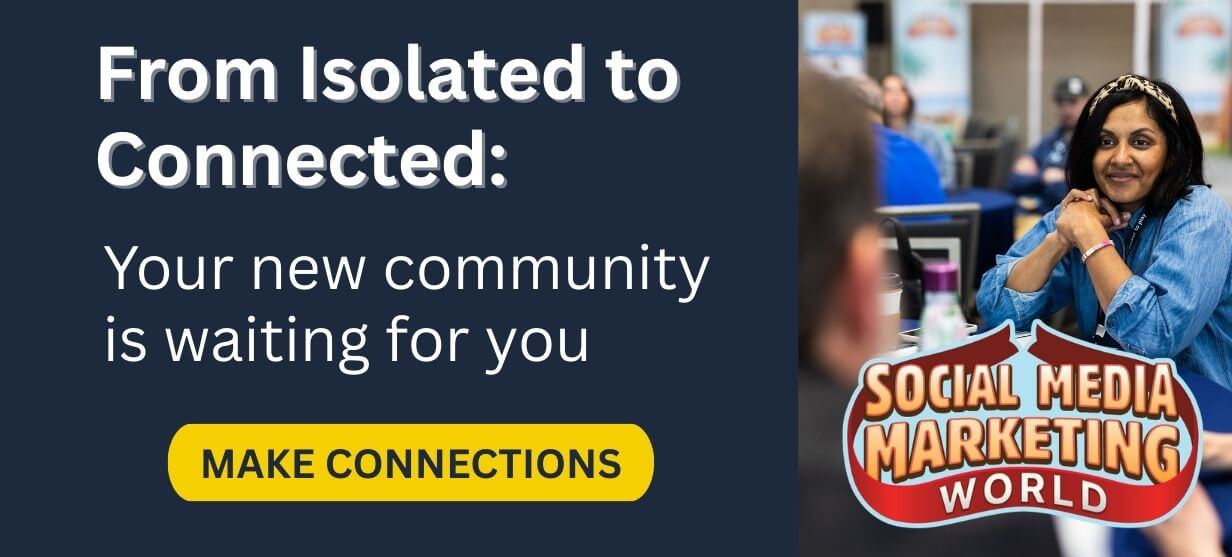
Marketing is increasingly a team sport. The loneliness of the digital marketer—often sitting behind a screen, guessing at what works—is being addressed by industry-wide gatherings and community-led knowledge sharing. As social algorithms become more complex, the ability to bounce ideas off peers in a "hallway chat" or professional network is becoming a competitive advantage.
4. Prepare for a Fragmented Ad Landscape
With platforms like Threads decoupling from Instagram, marketers must rethink their multi-channel strategy. A one-size-fits-all approach to ad copy and creative will likely fail as platforms develop more distinct user cultures. Brands need to be prepared to tailor their messaging to the specific psychological state of the user on each individual platform.
5. Leverage Conversational AI
The integration of AI agents into the customer journey means that the "landing page" is moving upstream. Marketers should focus on how their brand appears within these conversational interfaces. If your product is not "discoverable" by an AI agent in a conversational ad, you are effectively invisible to the next generation of consumers.

Conclusion
The 2026 digital marketing landscape is defined by a tension between high-tech automation and high-touch authenticity. While platforms are providing more sophisticated tools for data analysis, A/B testing, and AI-driven production, the fundamental requirement of marketing remains unchanged: understanding the human at the other end of the screen.
The successful marketer of the future will be one who masters the technical packaging of their content while simultaneously resisting the urge to let that technology sanitize their brand’s voice. By balancing the cold precision of algorithm-optimized titles with the warmth of authentic, unpolished storytelling, brands can navigate this period of rapid evolution not just as survivors, but as leaders in their respective fields. The tools have changed, but the mission—to connect, engage, and convert—is more critical than ever.



