










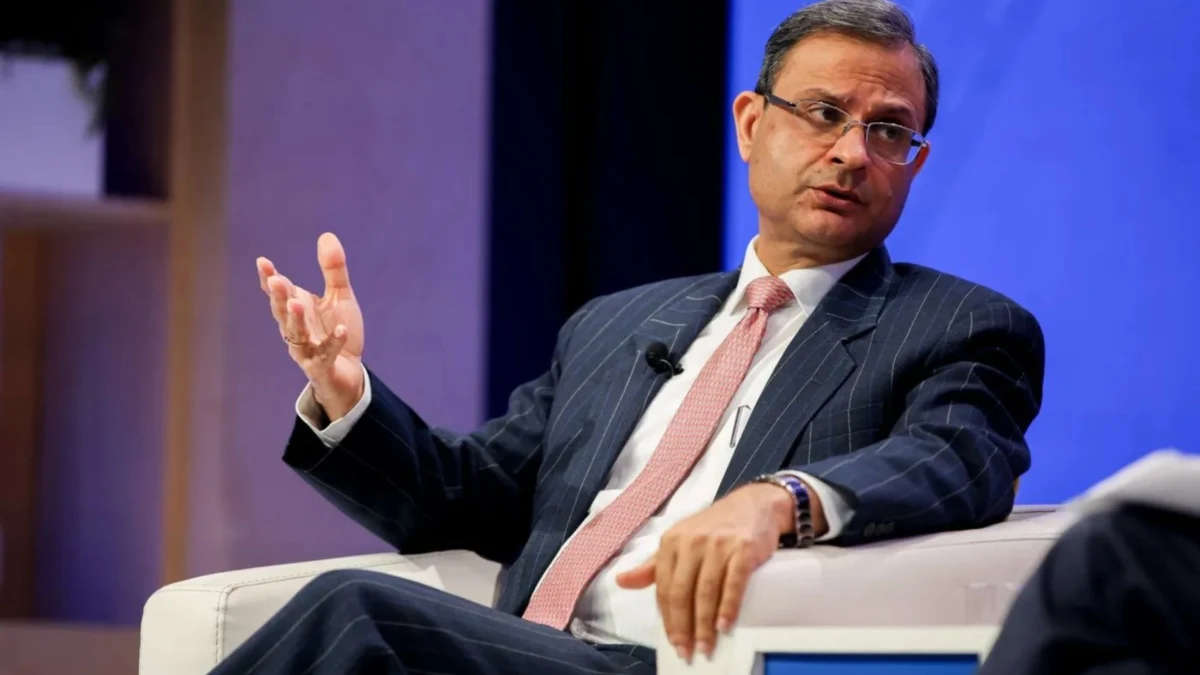
MUMBAI — India’s juggernaut of digital finance, the Unified Payments Interface (UPI), is bracing for its most consequential policy test since its inception. Following a strategic decision by the National Payments Corporation of India (NPCI) to introduce a Merchant Discount Rate (MDR) on select high-value peer-to-merchant (P2M) transactions, Reserve Bank of India (RBI) Governor Sanjay Malhotra has stepped forward to calm the ecosystem.
Addressing lingering anxieties across the financial sector, Governor Malhotra asserted that the modest new charges are highly unlikely to stall the explosive trajectory of India’s retail payments backbone. However, as the October 15 implementation deadline approaches, bankers, merchants, and fintech stakeholders remain locked in a debate over whether shifting the cost burden to commercial entities will alter consumer habits or recalibrate merchant enthusiasm for digital acceptance.
1. Executive Summary & Main Facts
The foundational shift centers on a revised economic model for processing high-value digital receipts. Effective mid-October, the NPCI has authorized a 0.4% MDR on specific category-driven, high-value UPI P2M transactions.
- The Threshold: The MDR applies exclusively to transactions exceeding ₹2,000.
- The Cap: To protect mid-tier and large-ticket commercial merchants from exorbitant processing costs, a hard cap of ₹300 has been instituted for transactions amounting to ₹75,000 and above.
- The Consumer Shield: In a vital structural maneuver, the financial burden of the MDR falls entirely on the receiving merchant. Everyday consumers remain insulated, facing zero direct charges for making UPI payments.
- The Regulatory Stance: The central bank maintains that the fee is a necessary calibration for the ecosystem’s long-term operational health, engineered to ensure sustainable revenue streams for payment service providers (PSPs) and banks without alienating the retail base.
Despite these adjustments, Governor Malhotra remains bullish. During a post-monetary-policy briefing in Mumbai, he dismissed fears of a mass exodus from the platform. "On UPI-MDR, a decision has already been taken," Malhotra stated. "As of now, we do not see any drop in UPI volumes, and I don’t personally think that a small fee will have a major impact on the volumes."
2. Chronology of the Policy Shift
To understand how India arrived at this juncture, it is essential to trace the historical timeline of UPI’s fee structure and the regulatory milestones that enabled the current framework.
- August 2016 (The Genesis): The NPCI soft-launches UPI, introducing an interoperable, real-time payment system designed to displace cash. To drive early adoption, zero MDR is enforced across the board, making it entirely free for both consumers and merchants.
- 2019–2021 (Exponential Scale): Backed by massive smartphone penetration and affordable data tariffs, UPI transactions skyrocket. However, the zero-MDR policy creates severe friction for banks and payment gateways, which absorb processing costs without earning revenues, prompting repeated appeals for state intervention or structural subsidies.
- Late 2022 – 2024 (The Subsidy Era): Recognizing the threat to banking infrastructure, the Indian government steps in with annual budgetary support (production-linked incentives and direct subsidies) to compensate banks for processing zero-MDR person-to-merchant transactions.
- Early 2025 – Mid 2026 (The Policy Rethink): As transaction volumes scale into the tens of billions monthly, maintaining blanket subsidies proves fiscally unsustainable for the exchequer. Stakeholders push for a targeted monetization model that does not penalize retail consumers.
- October 7, 2026 (The Official Announcement): NPCI formalizes the introduction of a 0.4% MDR on high-value P2M transactions above ₹2,000. On the same day, RBI Governor Sanjay Malhotra publicly defends the framework during the central bank’s monetary policy announcements, setting the stage for the October 15 rollout.
- October 15, 2026 (Implementation Date): The new MDR rules officially take effect, marking a historical pivot away from the absolute zero-MDR era for high-value commercial UPI transfers.
3. Supporting Data & Market Metrics
The central bank’s confidence is anchored in continuous, albeit slightly moderating, growth data. Far from hitting a plateau, India’s digital payments architecture continues to expand, though the pace of acceleration warrants close monitoring.
- Macro Volume Trends: During the second quarter of the 2026–27 fiscal year, overall UPI transaction volumes recorded a robust year-on-year growth rate of 22.2%.
- Pace Moderation: While the 22.2% growth figure signals undeniable scale, it reflects a slight cooling compared to the 24.2% growth rate registered in the first quarter of the same fiscal year.
- Ticket Size Concentration: The vast majority of individual UPI transactions remain micro-payments (under ₹500), meaning the new 0.4% MDR threshold (triggering only above ₹2,000) will bypass the vast majority of everyday street-vendor and kirana-store exchanges.
Financial analysts note that while the moderation in quarterly growth cannot be directly attributed to the anticipated MDR—since the policy has yet to go live—it underscores a natural maturation curve. As an ecosystem scales into hundreds of millions of daily users, marginal percentage growth requires exponentially larger absolute transaction volumes.
4. Official Responses and Industry Perspectives
The announcement has triggered intense dialogues across the financial sector, dividing opinions between macroeconomic regulators, commercial bankers, and merchant associations.
The Reserve Bank and NPCI Viewpoint
From the perspective of the RBI and NPCI, the zero-MDR policy was always intended as a market-seeding tool rather than a permanent economic reality. Central bank officials emphasize that maintaining a robust, cyber-secure, and highly available national payment infrastructure requires continuous capital expenditure. Without a sustainable revenue pool for acquiring banks, technology vendors, and third-party application providers (TPAPs), long-term system resilience could be compromised.
The Banking Sector’s Perspective
Commercial lenders have largely welcomed the move, albeit with cautious optimism. For years, banks have borne the infrastructural costs of routing massive volumes of P2M traffic without direct compensation.
"The fact that consumers are entirely shielded from the charge is the masterstroke of this policy," noted a senior retail banking executive at a major private sector bank in Mumbai. "It ensures that user drop-off will be minimal. However, the ultimate health of this framework depends heavily on merchant sentiment. If commercial entities absorb the 0.4% fee as a cost of doing business, the ecosystem wins. If they attempt to pass it back to consumers illegally via surcharges, we could face compliance friction."
The Merchant Dilemma
On the ground, merchant reactions are mixed. While large organized retailers and e-commerce platforms are accustomed to paying MDR on credit and debit card transactions (which traditionally range from 1% to 2%), small and medium-sized enterprises (SMEs) that grew accustomed to free digital collections under UPI are wary of margin erosion.
Representative bodies for small traders have voiced concerns that while large-ticket transactions above ₹2,000 represent a fraction of daily volume, they account for a substantial share of total business value in sectors like electronics, apparel, and hospitality.
5. Broader Implications for India’s Digital Economy
The introduction of the high-value UPI MDR is more than a technical fee adjustment; it represents a philosophical and economic milestone for India’s fintech revolution.
Sustainability vs. Universal Financial Inclusion
India’s digital payment story has been hailed globally as a triumph of public digital infrastructure (India Stack). The foundational ethos has always prioritized friction-free, low-cost access. Critics of the MDR argue that introducing any fee—even one restricted to merchants and high-value transactions—risks fracturing the psychological barrier of "completely free" digital payments.
Conversely, proponents argue that financial sustainability is the ultimate guarantor of inclusion. An underfunded payments infrastructure risks vulnerabilities in cybersecurity, server uptime, and dispute-resolution mechanisms. A balanced MDR ensures that the private sector remains incentivized to innovate and invest in cutting-edge fraud-detection and capacity-expansion technologies.
Global Precedents
India’s move brings its premier instant payment rails closer to global standards, where processing costs are universally distributed among stakeholders. Unlike markets dominated by proprietary credit card networks (such as Visa and Mastercard in the United States) where interchange fees can burden both merchants and consumers, India’s targeted approach deliberately shields the retail consumer, preserving the populist appeal of UPI while establishing a B2B revenue framework.
Conclusion: The Road Ahead
As the October 15 implementation date approaches, all eyes are locked on the transactional data feeds of the NPCI.
Governor Sanjay Malhotra’s wager is clear: the unmatched convenience, ubiquitous network effects, and sheer speed of UPI will easily absorb a minor, merchant-borne fee on high-value transfers. If transaction volumes continue their steady upward march through the festive season and into the final quarters of 2026–27, the MDR will be written off as a minor technical adjustment that successfully future-proofed India’s financial architecture.
However, should transaction momentum falter or should widespread merchant pushback lead to illegal consumer surcharges, the central bank and the NPCI may find themselves compelled to revisit the drawing board. For now, India’s digital payments revolution stands resilient at the crossroads of scale and sustainability, ready for its next great operational chapter.



