










Introduction: The Paradigm Shift in Digital Discovery
For decades, the playbook for content marketers has remained fundamentally consistent: publish high-value content on a regular schedule, build domain authority through earned trust, optimize for traditional search engine result pages (SERPs), and rigorously measure how those organic visits contribute to pipeline and demand generation. Success was defined by keyword rankings, organic click-through rates (CTR), and the steady accumulation of inbound traffic.
Today, that foundational paradigm is undergoing a seismic shift. Modern buyers are no longer relying exclusively on traditional search engines to conduct their preliminary research. Instead, they are turning to conversational AI assistants, large language models (LLMs), and answer engines like ChatGPT, Google Gemini, and Perplexity. In many cases, these users receive comprehensive, synthesized answers to complex purchasing queries directly within the chat interface—often without ever clicking through to a brand’s website.
This behavioral evolution has rendered traditional SEO metrics insufficient on their own. Knowing whether a landing page ranks on page one of Google is no longer the sole indicator of digital visibility. Content marketing teams are now forced to answer a more complex set of questions: Is our brand appearing in AI-generated answers? Which external sources and web pages are those answer engines citing? And, crucially, what happens to conversion rates and pipeline velocity when a visitor finally does reach our site via an AI referral?
Enter Answer Engine Optimization (AEO)—a strategic evolution of content marketing designed to secure brand visibility where conversational AI sources its information. To help marketers navigate this uncharted territory, platforms like HubSpot have introduced specialized tools to track, analyze, and capitalize on AI search behavior.
Main Facts: The Anatomy of Answer Engine Optimization
The rise of AI search represents a structural transformation in how information is indexed, synthesized, and presented to consumers. Unlike traditional search engines, which serve as directories pointing users toward external destinations, answer engines act as synthesized consultants. They read, parse, and aggregate content across the web to formulate a single, cohesive response to a user’s prompt.
This dynamic introduces unique challenges and opportunities for content strategists:
- The "Zero-Click" Reality: Many buyers complete their entire initial evaluation phase inside an AI assistant. Brand presence in these responses builds crucial top-of-funnel awareness and consideration, even if it does not immediately translate to a tracked web session.
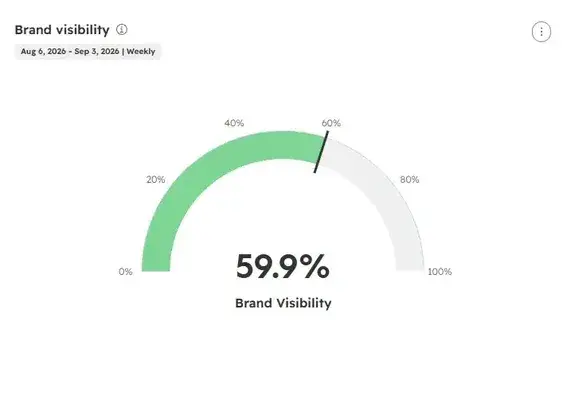
- The Shift in Metrics: Visibility metrics must now expand beyond traditional rankings to include brand visibility scores across major AI platforms, prompt-level tracking, competitor share-of-voice in AI outputs, and citation frequency.
- The Core AEO Loop: Successful Answer Engine Optimization does not abandon content marketing fundamentals; rather, it supercharges them. Marketers must still understand audience pain points, create authoritative content, and maintain accuracy. However, AEO introduces a crucial feedback loop: analyzing which sources AI engines cite when answering specific prompts, allowing teams to optimize existing assets or fill critical content gaps.
Chronology: How Content Discovery Evolved into AI-Driven Search
To understand why AEO has become the bleeding edge of marketing technology, it is helpful to trace the chronological milestones that shifted consumer behavior from keyword queries to conversational prompts.

Phase 1: The Era of Blue Links and Keyword Density (Early 2000s – 2015)
For years, digital marketing was synonymous with search engine optimization. Success depended on identifying high-volume keywords, optimizing meta tags, building backlinks, and securing a spot among the coveted "ten blue links" on search engine results pages. Content was often structured primarily for search engine crawlers rather than holistic user intent.
Phase 2: Featured Snippets and Zero-Click Information (2016 – 2022)
Search engines began evolving past simple lists of links. The introduction of Google’s Featured Snippets, Knowledge Panels, and "People Also Ask" boxes allowed users to find direct answers on the SERP itself. Content marketers adapted by structuring posts with clear definitions, bullet points, and FAQ schema to capture these prized real estate spots, marking the early genesis of optimizing specifically for answers rather than just traffic.
Phase 3: The Generative AI Explosion (Late 2022 – 2024)
The public rollout of generative AI models fundamentally disrupted the search ecosystem. Tools like OpenAI’s ChatGPT, Anthropic’s Claude, and specialized answer engines like Perplexity proved that users preferred natural-language dialogue over query strings. Buyers could now ask nuanced, multi-layered questions—such as, "What is the best enterprise marketing automation software for a mid-sized B2B SaaS company with complex multi-touch attribution needs?"—and receive an instant, synthesized comparative analysis.
Phase 4: The AEO Era and Integrated Tooling (2025 – Present)
Recognizing that visibility was migrating away from traditional SERPs, software providers began developing infrastructure to monitor and optimize for conversational AI. Platforms like HubSpot introduced dedicated AEO solutions, providing brand visibility scores across major LLMs, prompt-level tracking, and direct attribution tracking for AI-referred traffic. Content teams transitioned from merely publishing for human readers and web crawlers to actively engineering content to be referenced, cited, and summarized by artificial intelligence.
Supporting Data: The Measurable Impact of AI Search
While skeptics once viewed AI search as a speculative trend, empirical data demonstrates that ignoring answer engines comes at a steep commercial cost. Modern data highlights a profound correlation between AI optimization and tangible business growth.
According to proprietary data released by HubSpot, companies and marketing teams that actively optimize their digital assets for AI search and leverage structured AEO strategies generate 170% more Marketing Qualified Leads (MQLs) compared to comparable peer organizations that fail to optimize for generative AI.
Furthermore, behavioral studies into modern buying patterns indicate that B2B and high-consideration B2C buyers who utilize AI assistants during their research phase exhibit higher intent and shorter sales cycles. Because AI models pre-qualify solutions and synthesize vendor comparisons before the buyer ever speaks to a sales representative, the leads that do cross the finish line are often better informed and closer to a purchasing decision.

Additional data points shaping the AEO landscape include:
- Citation Distribution: Studies show that LLMs tend to draw their citations from a diverse ecosystem of authoritative content, including niche industry blogs, peer reviews, structured knowledge bases, and community forums—not just high-domain-authority traditional media outlets.
- The Attribution Gap: A significant percentage of buyers exposed to a brand via AI recommendations do not click through immediately; instead, they execute a branded search or type the company’s URL directly days later, making sophisticated multi-touch attribution essential.
Official Responses and Industry Insights
As marketing leaders grapple with the decline of predictable organic traffic models, industry analysts and software executives are weighing in on the strategic imperative of Answer Engine Optimization.
"Content marketers have always built their reputations on earning trust and driving demand through consistent publishing," notes product leadership at HubSpot. "However, when the intermediary between your brand and the buyer becomes an algorithm synthesizing answers rather than a search engine indexing pages, the rules of engagement change entirely. You cannot afford to be invisible in the exact spaces where your buyers are conducting their research."
Digital marketing strategists emphasize that AEO should not be viewed as a replacement for traditional SEO, but rather as its necessary evolution.
"Think of traditional SEO as securing a billboard on a heavily trafficked highway," explains a leading digital transformation consultant. "Answer Engine Optimization is akin to having a trusted industry expert explicitly recommend your product when a prospective client asks them for advice in a private consultation. The former is about mass visibility; the latter is about authoritative validation. Both matter, but validation closes deals."
Industry experts also stress the importance of moving past vanity metrics. Tracking whether a brand is mentioned in an AI response is only half the battle; marketers must integrate this visibility data with CRM systems to evaluate how AI-driven exposure ultimately feeds the sales pipeline.
Implications: The Future of Content Marketing and Strategy
The mainstream adoption of Answer Engine Optimization carries profound strategic implications for marketing departments, content creators, and corporate leadership.

1. The Redefinition of "Content Quality"
In the AEO era, fluffy, keyword-stuffed content designed solely to game search algorithms is effectively worthless. AI models are exceptionally good at detecting redundancy and synthesizing factual information. To earn a citation from an LLM, content must be profoundly useful, data-backed, structurally organized with clear headings and schema, and rich in proprietary insights or original research that AI models cannot easily replicate elsewhere.
2. Streamlining the Content Feedback Loop
Marketers can no longer afford to publish content into a vacuum and wait months for organic rankings to materialize. By utilizing advanced AEO dashboards—such as those integrated into HubSpot’s Marketing Hub Professional and Enterprise editions—teams can establish an immediate baseline of their brand visibility across platforms like ChatGPT, Gemini, and Perplexity. By analyzing the citation patterns of competing content, marketers can dynamically prioritize which topics to update, expand, or build from scratch.
3. Closing the Attribution Loop
One of the historical hurdles of brand awareness campaigns has been proving ROI. AEO bridges this gap by marrying top-of-funnel AI visibility metrics with bottom-of-funnel pipeline tracking. Using tools that classify "AI Referrals" within contact and deal properties, revenue teams can trace a direct line from an AI assistant’s citation to a closed-won enterprise deal.
4. Competitive Differentiation
In markets saturated with generic, AI-generated content flooding the web, true authority becomes the ultimate differentiator. Brands that invest in authentic storytelling, expert-led insights, and rigorous AEO strategies will capture disproportionate mindshare among AI engines, effectively positioning themselves as the definitive industry standard in the eyes of both algorithms and human buyers.
Conclusion
The digital marketplace has entered a definitive post-SERP era. As conversational AI reshapes how consumers discover, evaluate, and purchase products, content marketers must adapt their measurement frameworks and optimization tactics accordingly.
By embracing Answer Engine Optimization—tracking brand visibility across major AI platforms, leveraging citation-driven content recommendations, and monitoring AI-referred traffic alongside traditional pipeline metrics—forward-thinking organizations can ensure they remain front and center in the minds of modern buyers. The future belongs not to those who merely chase keyword rankings, but to those whose expertise is trusted, cited, and amplified by the artificial intelligence engines of tomorrow.



