



In the rapidly evolving world of software development, a new, unconventional methodology has emerged that promises to democratize the creation of digital assets. Coined "vibe coding," this paradigm shift prioritizes intent and natural language interaction over the traditional, syntax-heavy requirements of programming. By leveraging the power of generative AI, users can now build complex, functional websites simply by describing their vision, effectively bypassing the steep learning curve of traditional coding.
As we stand in 2026, the barriers to entry for web development have never been lower. However, the rise of vibe coding is not merely a shortcut; it represents a fundamental change in the relationship between human creators and machine intelligence.
What is the Vibe Around Vibe Coding?
The term "vibe coding" was introduced in February 2025 by computer scientist Andrej Karpathy, a founding member of OpenAI and a former leader of AI development at Tesla. Karpathy’s description of the practice was characteristically succinct: "Say stuff, run stuff, and copy-paste stuff, and it mostly works."
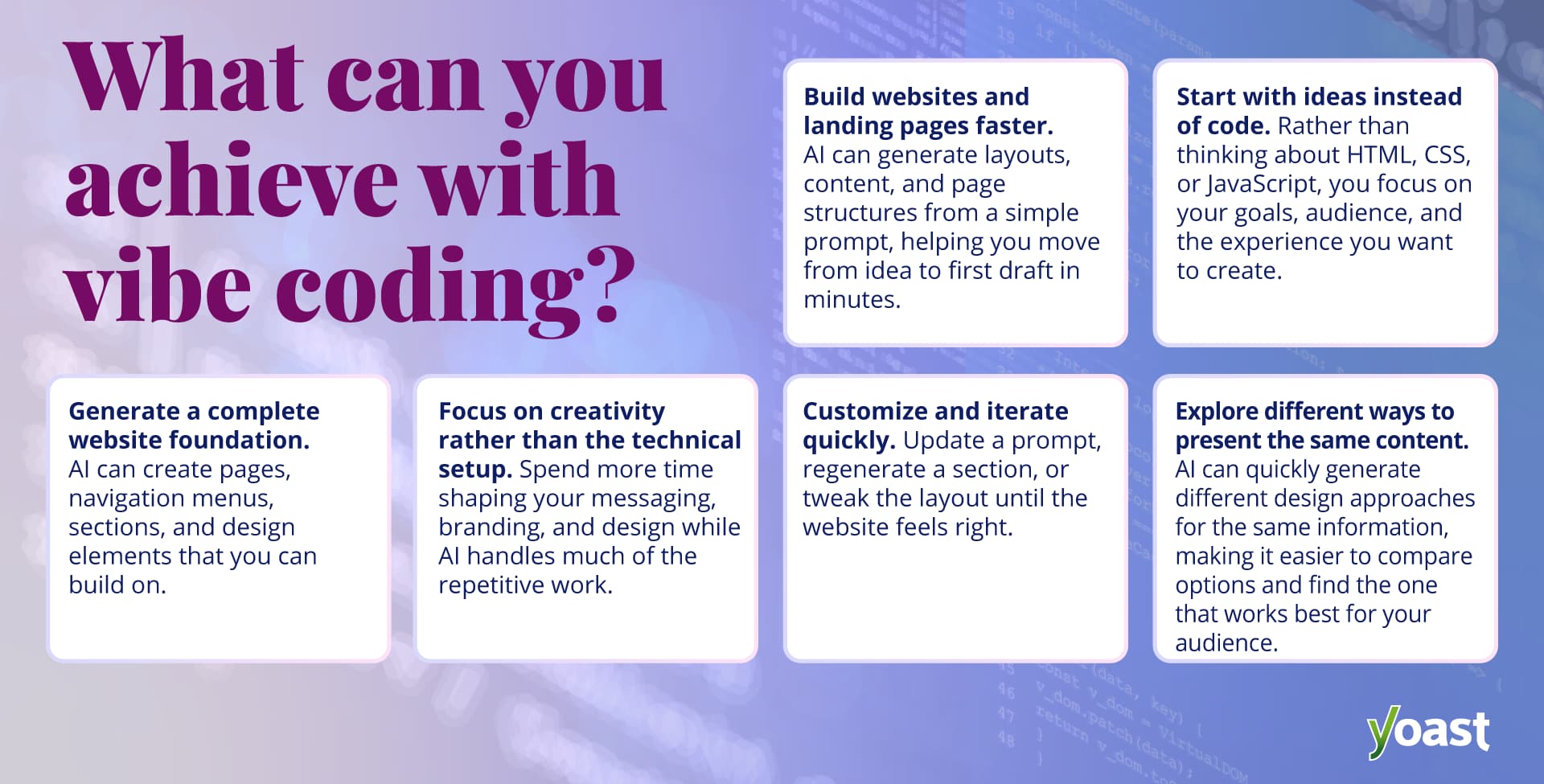
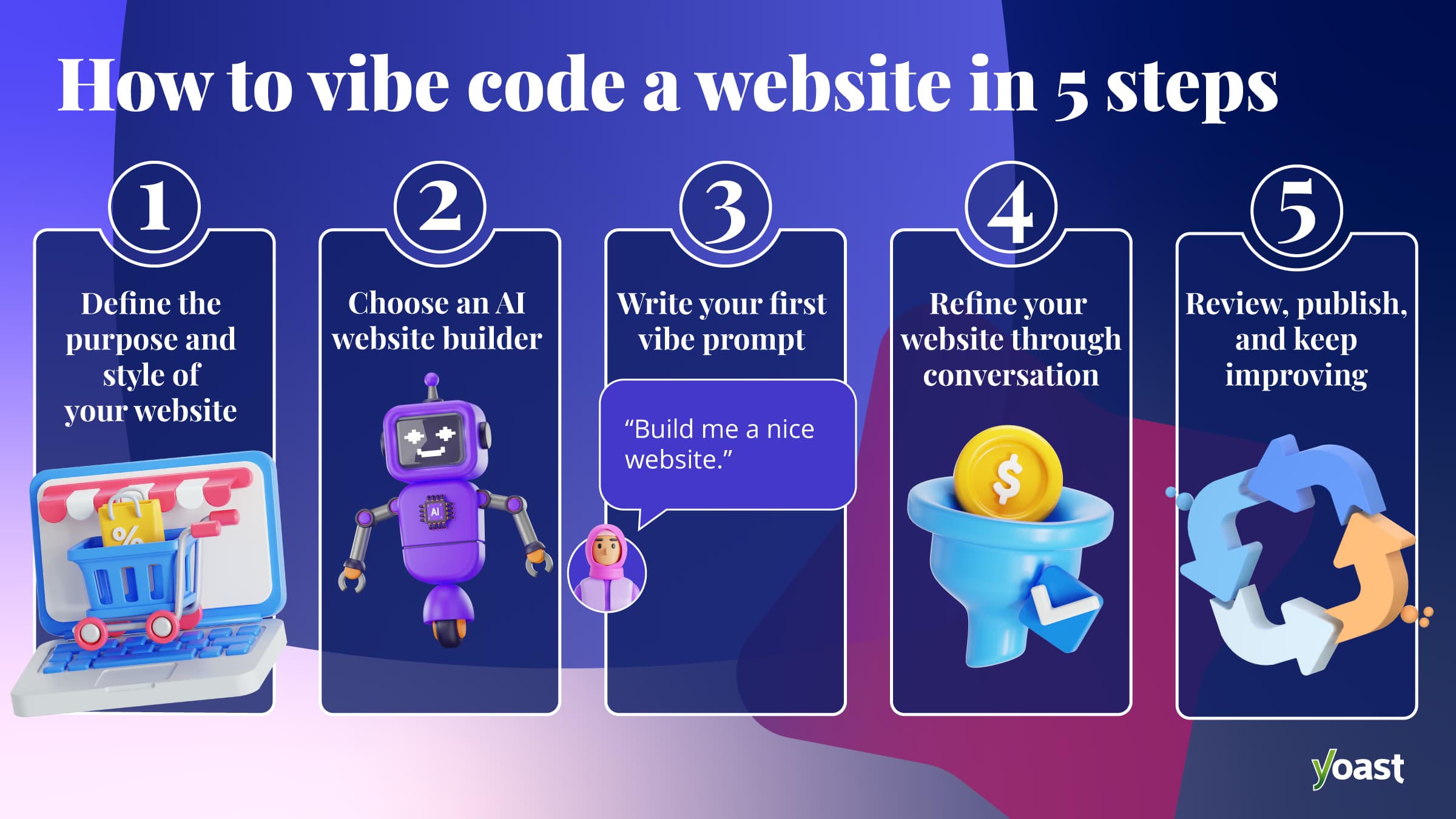
At its core, vibe coding shifts the user’s role from a low-level architect—who must understand the intricacies of HTML, CSS, JavaScript, and framework lifecycles—to a high-level creative director. In this workflow, the AI acts as the primary executor, translating natural language prompts into executable code. The developer no longer spends hours debugging syntax errors; instead, they engage in a collaborative, iterative dialogue, refining the output until the product aligns with their creative intent. It is, in essence, a move from "coding" to "curating."
A Chronology of the Shift
The evolution of web development has been a steady march toward abstraction. In the 1990s, developers manually wrote raw HTML. The 2000s introduced Content Management Systems (CMS) like WordPress, which allowed for visual editing. The 2010s brought drag-and-drop page builders that simplified layout design.
Vibe coding is the latest iteration of this timeline, but with a critical difference: intelligence.
- Early 2024: Large Language Models (LLMs) began showing proficiency in writing boilerplate code, but they required constant human supervision.
- February 2025: Andrej Karpathy’s conceptualization of "vibe coding" provided a name and a philosophy for the emerging trend of AI-first development.
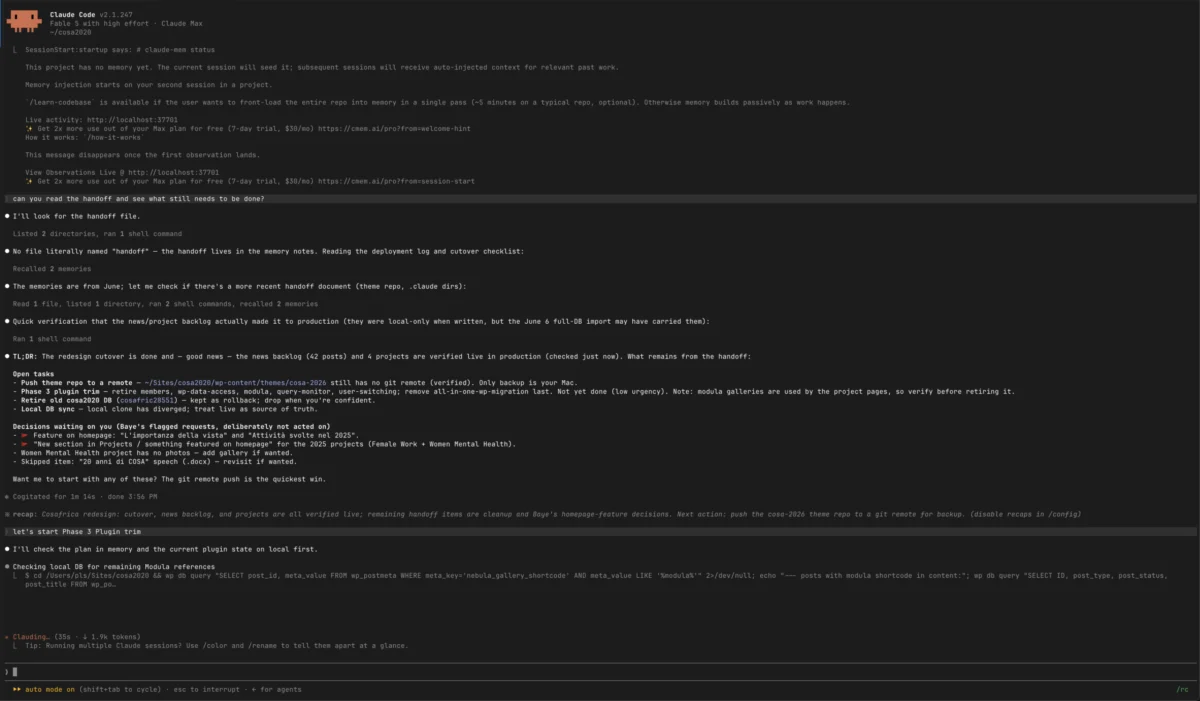
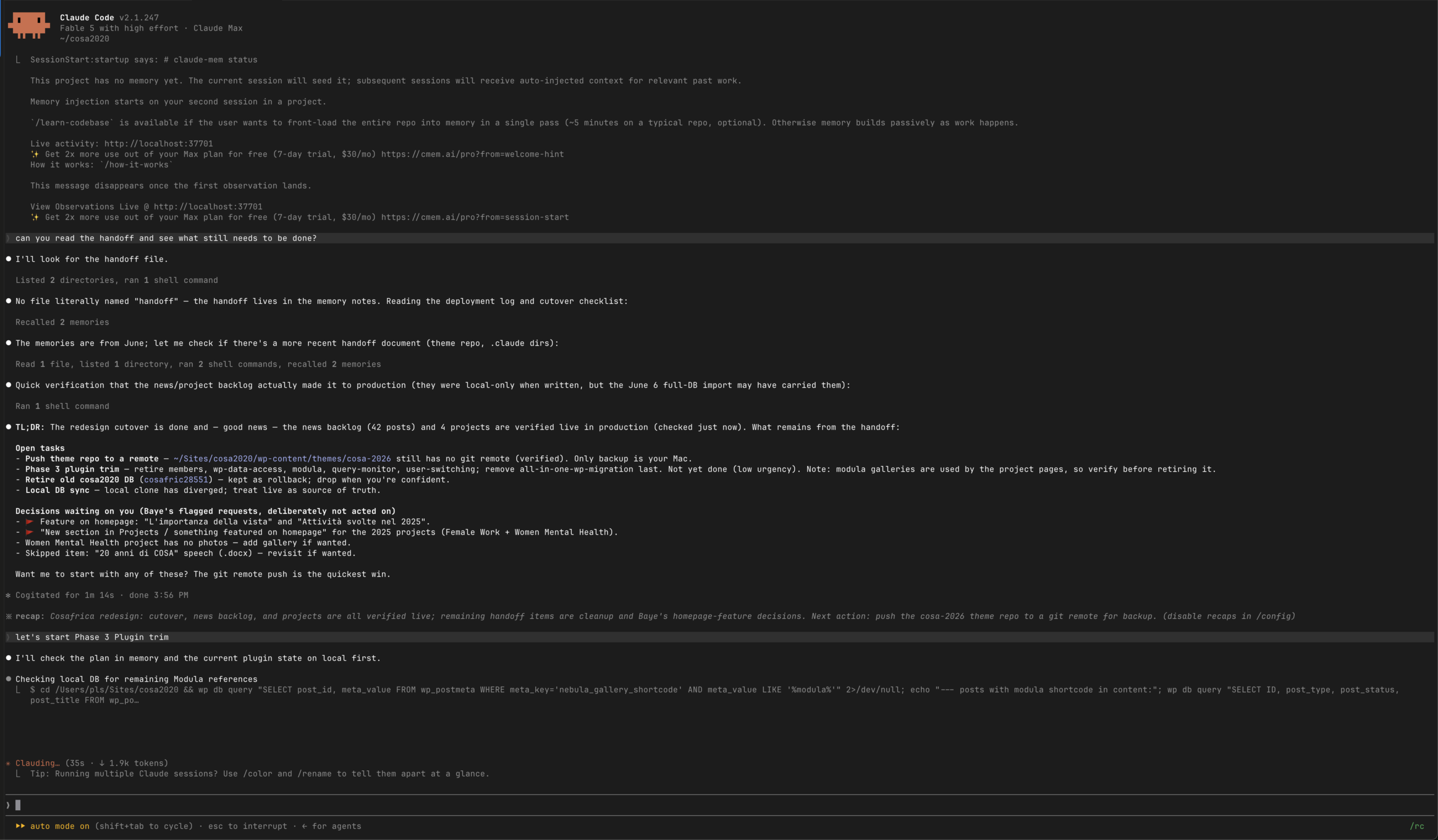
- Late 2025 – Present: The emergence of specialized AI coding agents—such as Claude Code and integrated platform builders like Bluehost’s AI tools—has turned the theory into a commercial reality. Users can now generate entire site architectures in minutes, not days.
Supporting Data and Technical Realities
To understand the impact of this shift, one must look at the efficiency metrics. In traditional development, a simple landing page might take a developer several hours to design, code, test, and deploy. With vibe coding, the initial structure can be generated in under five minutes.
| Feature | Traditional Coding | Vibe Coding |
|---|---|---|
| Primary Input | Manual syntax (HTML/JS/PHP) | Natural language prompts |
| Skillset | Deep technical knowledge | Creative direction & clarity |
| Development Time | High (days to weeks) | Low (minutes to hours) |
| Iterative Process | Manual refactoring | Conversational feedback |
| Ideal For | Custom enterprise systems | MVPs, portfolios, small business |
While traditional coding remains the gold standard for high-performance, custom-built, or highly secure enterprise applications, the vast majority of web needs—landing pages, blogs, and small business storefronts—are being increasingly fulfilled through AI-assisted generation.
Implications for the Tech Ecosystem
The proliferation of vibe coding carries significant implications for the future of the internet.
1. The Democratization of Digital Presence
The most immediate impact is accessibility. Entrepreneurs, artists, and small business owners who previously lacked the budget for professional developers can now manifest their ideas online. This lowers the cost of failure, allowing for rapid experimentation and validation of business concepts.
2. The "Doom Loop" Phenomenon
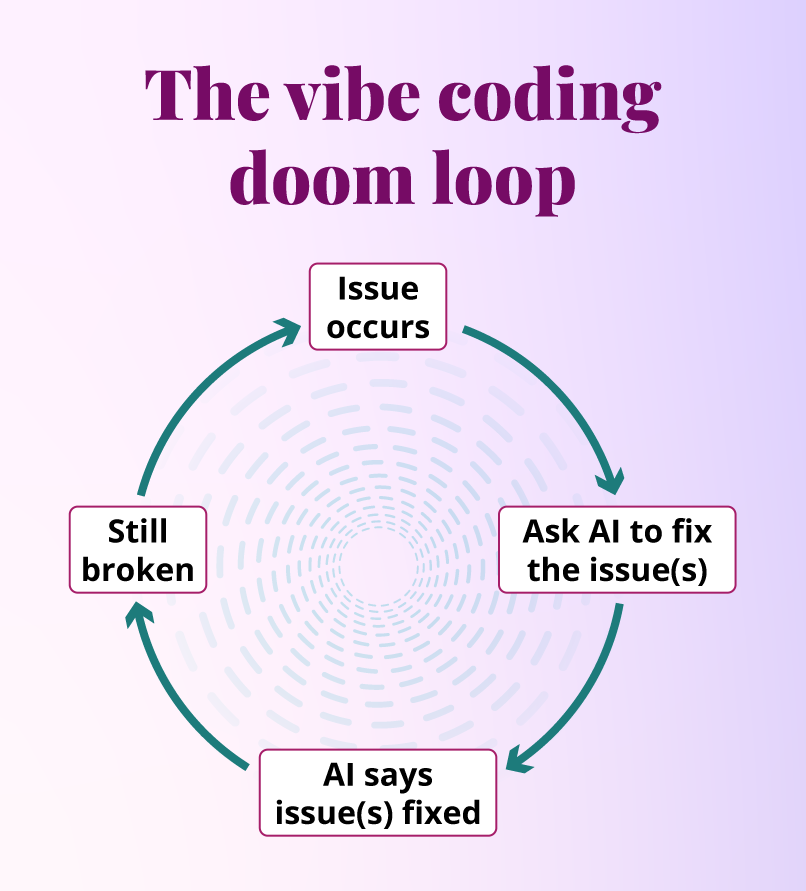
Despite its benefits, the process is not without pitfalls. Industry experts have identified the "vibe coding doom loop"—a state where a user, through vague prompts or conflicting instructions, leads an AI into an infinite loop of ineffective fixes. This occurs when the user lacks the foundational understanding to diagnose why a piece of code is failing, or when the AI loses the context of the larger project. The solution, according to experts, is "context engineering": providing the AI with clear, structured information about the site’s goals, target audience, and design language from the outset.
3. A New Role for Professional Developers
Contrary to the belief that AI will replace developers, the industry is witnessing a shift in the developer’s role. Many engineers are adopting vibe coding to accelerate the prototyping phase. By automating the "boring" parts of coding, developers can dedicate their cognitive energy to solving complex architectural problems and optimizing user experiences that require a human touch.
Official Responses and Industry Sentiment
Major players in the tech space are leaning into this trend. Hosting platforms and software-as-a-service (SaaS) companies are integrating AI agents directly into their dashboards. The sentiment among industry leaders is that we are moving toward a "Natural Language Programming" (NLP) future.
However, there remains a healthy skepticism regarding long-term maintenance. When a website is "vibe-coded" by an amateur, who maintains it when the AI model updates or when the code becomes technical debt? Industry consensus suggests that while the creation phase has been simplified, the lifecycle management of a website still requires a basic grasp of digital literacy, security, and SEO.
Strategic SEO in the Age of AI
Perhaps the most important implication of vibe coding is the separation between building a site and being found by users. Because AI can now generate websites at scale, the internet is facing an unprecedented influx of content.
"Your prompts build the site, but SEO helps people find it," notes Ahad Qureshi, an expert in the field. As websites become easier to produce, search engines and AI assistants are prioritizing content that offers genuine value and structured data. Tools like Yoast SEO Premium have responded to this by integrating AI-driven insights that help creators ensure their sites—regardless of how they were built—are visible to both human users and the burgeoning ecosystem of AI search agents.
Conclusion: The Future of Creative Direction
Vibe coding is not the death of the developer, nor is it a magical "make everything perfect" button. It is a powerful new toolset that changes the interface of creation. By allowing creators to focus on the "what" and the "why" rather than the "how," it is unlocking a new wave of human creativity.
As the technology matures, the "vibe" of building a website will likely become as common as writing an email. For those willing to embrace the iterative, conversational nature of this new development style, the digital world has never been more open. The era of the "Creative Director" is here, and the tools are ready to listen.