In an expansive recent interview on the Sources podcast with host Alex Heath, Google CEO Sundar Pichai shed light on the rapidly evolving landscape of artificial intelligence. As autonomous software agents transition from conceptual novelties to active participants in the digital economy, industry leaders are grappling with a foundational question: How will these AI agents interact with the web?
Pichai’s insights offer a rare roadmap into how Google envisions the coexistence of human-like browser navigation and standardized agent protocols. Navigating a delicate ecosystem shift, Google is simultaneously championing backend technical standards like the Universal Commerce Protocol (UCP) while deploying active server-side fetchers like Google-Agent.
This comprehensive analysis examines Pichai’s statements, the broader economic and technical implications for publishers and merchants, and the strategic positioning of tech giants as the "agentic web" takes shape.
Main Facts: The Dual-Path Future of AI Web Access
At the heart of Pichai’s vision is a bifurcated approach to how AI agents will consume and interact with web content. According to the Google chief, agentic access will bifurcate into two distinct paradigms:
- Browser-Based Interaction (Human-Style Simulation): AI agents mimicking human behavior—opening virtual browser instances, rendering pages, clicking buttons, and filling out web forms.
- Protocol-Driven Communication (Direct API/Standardized Messaging): Specialized machine-readable protocols designed from the ground up for agent-to-server communication, bypassing the visual UI layer altogether.
While Pichai acknowledged that browser-based interaction offers immediate utility and preserves tight control loops for the user, he emphasized that specialized protocols will ultimately scale far better. However, because these protocols require ecosystem-wide adoption and complex standardization, they will take significantly longer to develop and mature.
Furthermore, Pichai discussed the convergence of Google’s traditional search infrastructure with its conversational AI ecosystem, Gemini, pointing toward a unified user experience where search functions are effectively absorbed into a seamless "agentic layer."
Chronology: The Rise of Agentic AI and Ecosystem Friction
The conversation between Pichai and Heath arrives at a critical inflection point in the tech industry, marked by escalating friction between AI developers and website operators over automated traffic.
- Early Experimentation & The Browser Paradigm: For years, AI tools relied on simple scrapers or direct API calls. However, as personal AI assistants evolved into autonomous "actors" capable of executing complex workflows (such as booking flights or purchasing goods), developers began outfitting them with full-fledged browser automation capabilities.
- September 2025 (The Amazon vs. Muse Standoff): The tensions inherent in agentic browsing boiled over when Amazon officially blocked Meta’s personal AI assistant, Muse, from shopping on its platform. Amazon cited the agent’s failure to properly identify itself during automated browsing sessions, highlighting a growing anxiety among retailers regarding unmonitored AI traffic.
- September 2025 (Google Advances UCP): Concurrently, Google expanded its push for standardized commerce by updating its Merchant Center to support cart-transfer capabilities via the Universal Commerce Protocol (UCP), allowing items curated in AI interfaces to pass directly to merchant checkouts.
- Recent Interviews & Strategic Pivots: Pichai’s interview on Sources consolidates these disparate events into a cohesive thesis: the web is experiencing a "chaotic evolution" that will eventually establish new market equilibriums. Google has also signaled plans to roll out Gemini’s advanced agent features—currently restricted primarily to Ultra and Pro tiers—to a much broader audience in the coming months.
Supporting Data: Protocols, Crawlers, and Ecosystem Standards
To understand how Google is bridging the gap between browser simulation and machine protocols, one must look at the specific technical mechanisms the company currently employs and advocates.
1. The Universal Commerce Protocol (UCP)
Co-developed by Google alongside a coalition of industry partners, UCP is an open standard designed to streamline agent-driven commerce. Rather than forcing an AI agent to clumsily navigate a graphical user interface (GUI) and click through a checkout funnel, UCP allows AI models in environments like AI Mode and Gemini to interact natively with merchant inventories.
Current expansions of UCP include direct buying capabilities and cart-transfer options, with upcoming integrations targeting complex logistical verticals such as lodging, travel bookings, and food delivery.
2. Google-Agent and User-Triggered Fetchers
On the browsing front, Google utilizes a specific user-agent string known as Google-Agent. According to developer documentation, these are user-triggered fetchers deployed from Google’s servers to navigate the web and execute actions explicitly requested by an end-user.
Crucially, because these operations are initiated directly by user intent, Google’s documentation notes that these fetchers generally bypass standard robots.txt directives. To maintain transparency despite this operational exemption, Google publishes the specific IP address ranges from which these fetchers operate, acknowledging that user-agent strings themselves can easily be spoofed by malicious actors.
Official Responses and Strategic Perspectives
When questioned by Alex Heath about how Google plans to protect its massive advertising revenue engine while facilitating autonomous AI browsing—drawing parallels to Amazon’s standoff with Meta’s Muse—Pichai leaned into long-term market philosophy rather than immediate fixes.
"The right answer longer term is you put users first and say what would users want," Pichai stated. He stressed that while user experience must be the North Star, any sustainable model must ultimately deliver value to the businesses supplying the underlying content and products.
Comparing the current era to the infancy of the consumer internet, Pichai noted that early tech pioneers frequently overestimated how quickly foundational industries—such as real estate transactions—would completely transform. Decades later, many core structural methods remain identical due to "real constraints in the real world."
However, Pichai cautioned that AI agents will introduce entirely new "micro-equilibriums" that could prove far more disruptive to traditional business models than previous digital revolutions. His commentary notably omitted a direct roadmap for how Google’s lucrative search advertising ecosystem will monetize interactions where an AI agent entirely bypasses the traditional search results page.
Implications for Publishers, Merchants, and the Web Ecosystem
Pichai’s admissions and Google’s ongoing engineering efforts carry profound implications for stakeholders across the digital economy.
1. The Proliferation of "Chaotic Evolution"
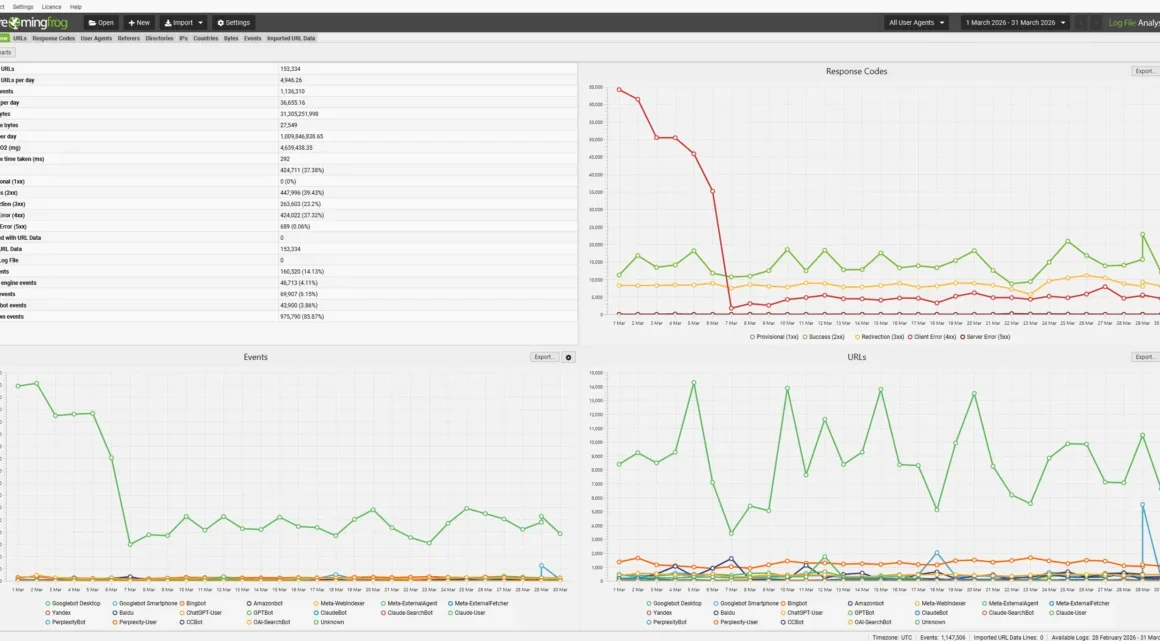
As long as protocols like UCP remain in their infancy, website operators must brace for an influx of browser-simulating agents. This creates a severe technical challenge for site security and infrastructure management. Webmasters must find ways to distinguish between benign user-triggered AI agents (like Google-Agent), valuable customer-facing assistants, and predatory web scrapers designed to steal intellectual property.
2. The Slow Death of Traditional UI Dependency
As protocols scale, the dependency on human-centric graphical user interfaces will diminish. Websites may eventually maintain two distinct presences: a traditional front-end optimized for human engagement and conversion, and a streamlined, headless back-end optimized strictly for agentic protocols (MCP, UCP, and payment APIs).
3. The Advertising Paradox
For Google, the rise of the agentic layer presents a fascinating paradox. If Gemini and autonomous agents complete tasks directly on behalf of users—booking hotels, purchasing retail goods, and answering complex queries without displaying traditional search engine results pages (SERPs)—the classic click-to-ad monetization model is severely disrupted. Pichai’s vision of market equilibrium suggests that new forms of auction dynamics or sponsored agent recommendations will inevitably emerge, but the transition period promises to test the financial resilience of content creators and publishers alike.
4. Accessibility and Democratization
With Google preparing to push advanced Gemini agent capabilities to broader consumer tiers beyond its highest-paid subscribers, agentic technology is poised to shift from an enterprise novelty to an everyday utility. As millions of consumers begin delegating daily digital chores to AI agents, websites that fail to optimize for agent accessibility—whether through robust protocol integration or clean, navigable structures—risk becoming invisible in the next era of the internet.