It is a milestone that marks the definitive end of an era and the beginning of a digital revolution. It has been exactly 25 years since the late Steve Jobs stepped onto a stage in Cupertino and pulled a small, white device from his pocket, forever changing how humanity consumes music. The original iPod, with its iconic white earbuds and promise of "1,000 songs in your pocket," did more than just play MP3s; it established the design language and user-experience philosophy that would eventually lead to the iPhone.
To commemorate this silver anniversary, Apple has deployed a delightful, highly interactive Easter egg hidden within the depths of its Apple Music website. For those who remember the tactile satisfaction of the mechanical click wheel, this is more than a novelty—it is a time machine.
The Discovery: A Virtual Trip Down Memory Lane
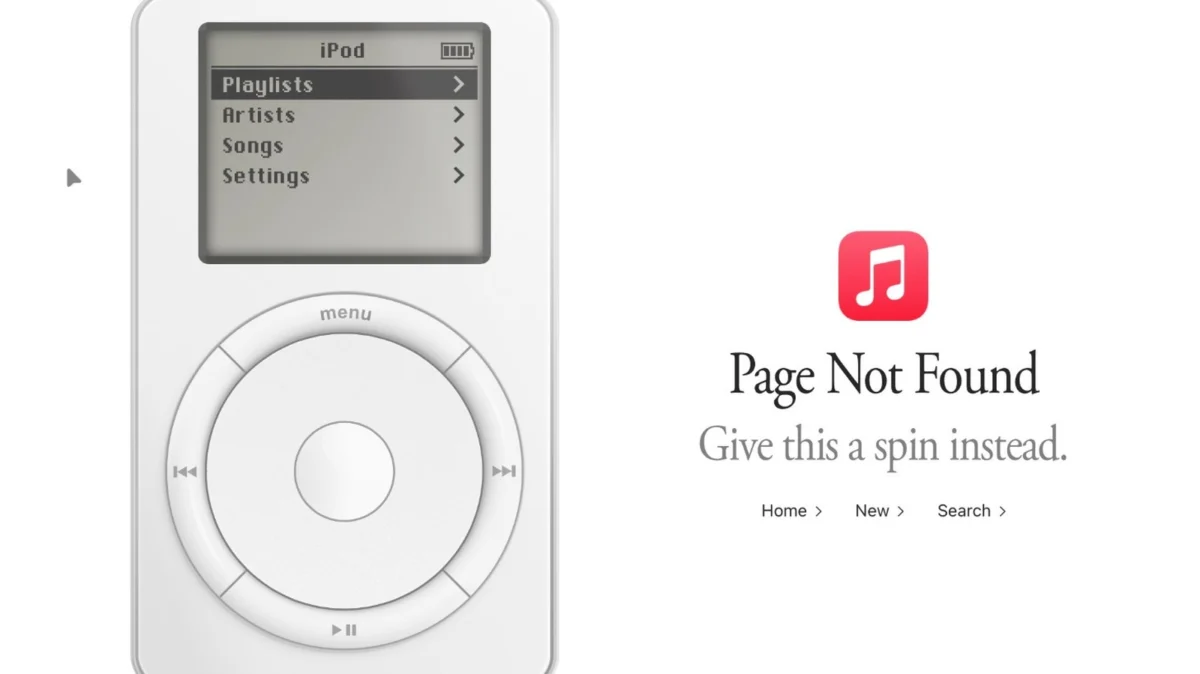
The Easter egg is cleverly tucked away on a 404 "Page Not Found" error page. By navigating to an invalid URL on the Apple Music website, users are greeted not with the standard technical jargon of a broken link, but with a fully rendered, functional, and interactive virtual representation of the first-generation iPod.
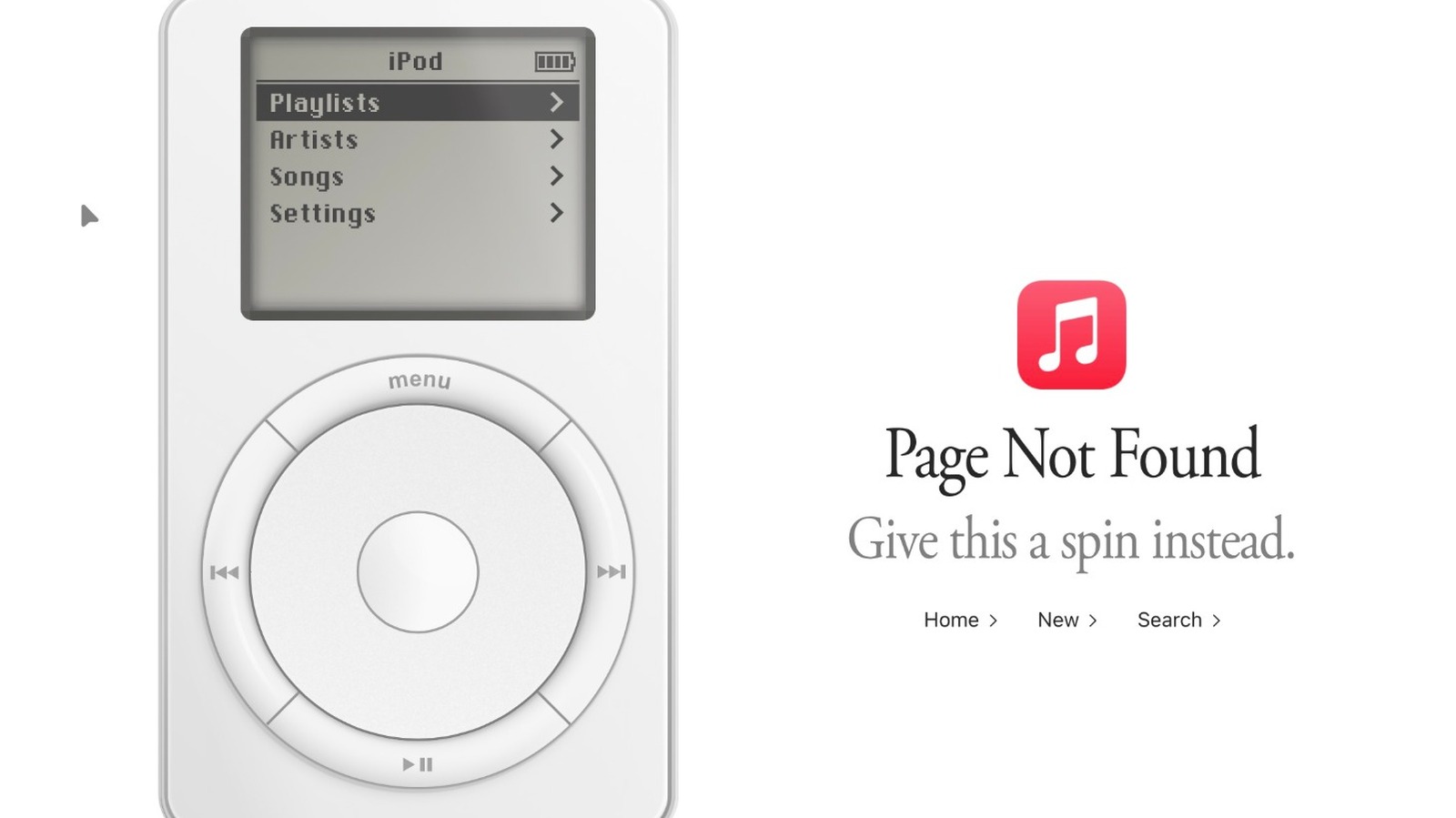
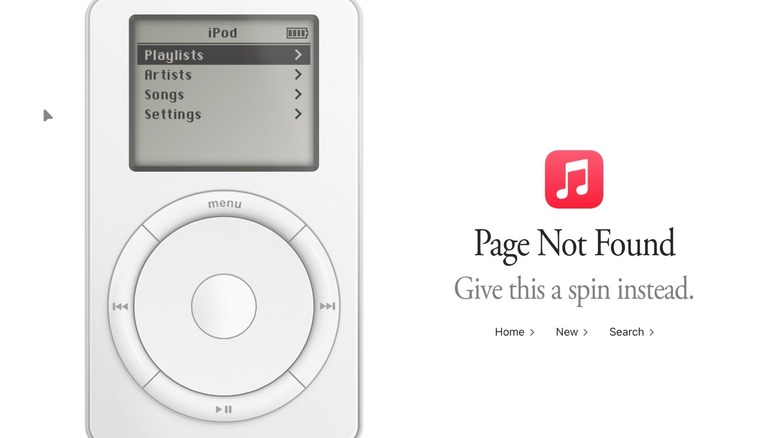
Beneath the standard error message, Apple has placed the invitation: "Give this a spin instead." What follows is a remarkably faithful recreation of the original interface. The virtual device allows users to navigate a curated library of 1,029 songs. The interface retains the classic monochromatic aesthetic—complete with the "Playlists," "Artists," "Songs," and "Settings" menus—that defined the early 2000s tech landscape.
The functionality is surprisingly deep. While it may occasionally suffer from the minor performance jitters expected of a browser-based simulation, it is best experienced on a smartphone or tablet. By using a touchscreen to rotate the virtual click wheel, users can replicate the specific physical sensation of scrolling through a library of thousands of tracks, a gesture that defined a generation of music lovers.
A Chronological Look at the iPod Revolution
To understand why this tribute is so significant, one must look at the timeline of the iPod’s evolution.
- October 23, 2001: Steve Jobs introduces the first-generation iPod. It featured a 5GB hard drive, a mechanical scroll wheel, and FireWire connectivity. It was the catalyst for the digital music transition.
- 2003: Apple launches the iTunes Music Store, bridging the gap between hardware and a legitimate, accessible digital storefront.
- 2004: The release of the iPod Mini introduces color and portability, expanding the device’s reach to a broader demographic.
- 2005: The iPod Nano arrives, replacing the hard drive with flash memory, signaling the beginning of the end for spinning disks.
- 2007: The iPod Touch is unveiled, effectively becoming an "iPhone without the phone," cementing the shift toward touch-based interfaces.
- 2022: Apple officially discontinues the iPod Touch, marking the formal end of the iPod brand after more than two decades of production.
Throughout these years, the iPod was not merely a consumer electronic device; it was a cultural icon. It appeared in high-profile television commercials featuring silhouette dancers and became the primary way for an entire generation to define their musical identity.
The Curated Experience: 2000s Nostalgia in 90-Second Bursts
The virtual iPod hosted on Apple’s site is not just a visual skin; it is a curated collection of early 2000s culture. The library includes tracks from artists like Baha Men, blink-182, and Eminem—the definitive soundscape of the iPod era.
While the inclusion of these tracks is a triumph of licensing and sentimentality, there is a catch: users can only listen to 90-second snippets of each song. This limitation serves to keep the experience focused on the novelty of the interaction rather than acting as a full-scale music streaming replacement.
One of the most impressive technical inclusions, as noted by Notebook Check, is the presence of the game Brick. For those who spent hours waiting for school buses or sitting on airplanes in the mid-2000s, Brick was the original "time-killer" app. On the virtual iPod, users can access the game by navigating to the "About" screen and holding down the center button for several seconds—a direct homage to the hidden commands that were a hallmark of early Apple hardware.
Supporting Data: Why the iPod Still Matters
The success of the iPod cannot be understated. At its peak, the iPod commanded over 70% of the digital music player market. It forced the legacy music industry to accept the digital distribution model, effectively saving the record labels from the "Napster era" by providing a legal, easy-to-use alternative.
- Market Penetration: By 2007, Apple had sold its 100 millionth iPod.
- Economic Impact: The iPod and the subsequent iTunes ecosystem became the bedrock of Apple’s financial resurgence, providing the cash flow and brand loyalty necessary to develop the iPhone.
- Design Influence: The "Click Wheel" was voted by various design publications as one of the most intuitive user interfaces in history, proving that mechanical input could feel as natural as human touch.
The decision to make this Easter egg accessible without requiring an active Apple Music subscription suggests that Apple recognizes the iPod as a "public" cultural artifact rather than just a proprietary product. It is a gesture of goodwill to the users who grew up with the device.
Official Responses and Corporate Sentiment
Apple has remained characteristically tight-lipped regarding the development of this specific project. There have been no formal press releases explaining why the engineering team chose to dedicate resources to this 404-page Easter egg. However, the move aligns with the company’s recent trend of leaning into its "legacy" status.
In recent years, Apple has increasingly highlighted its history, creating museums on its campuses and producing commemorative content for its anniversaries. By celebrating the iPod, Apple is reinforcing the narrative that its products have a "soul" and that they are intended to be remembered long after they have been retired from the market.
Industry analysts suggest that this is a brilliant marketing move. By tapping into the intense nostalgia of Millennials and Gen X, Apple fosters a sense of brand continuity. When a user interacts with the virtual iPod, they are not just looking at a 404 error; they are remembering the moment they first plugged in their headphones and discovered their favorite album.
Implications: The Enduring Legacy of the iPod
The implications of this anniversary celebration are twofold. First, it highlights the transition of the iPod from a functional tool to a historical object. Much like the vinyl record or the cassette tape, the iPod has moved into the realm of "retro-tech."
Second, it underscores the importance of preservation in the digital age. As software updates render old devices obsolete, browser-based simulations allow these experiences to persist. Apple’s decision to build a high-fidelity emulator of its own hardware suggests that the company is interested in digital archival, even if it is presented as a fun, hidden surprise.
As we look back at the last 25 years, the iPod stands as a testament to the idea that simplicity is the ultimate sophistication. In an age of complex, hyper-connected AI-driven devices, the simplicity of a single dial and a monochromatic screen feels surprisingly refreshing.
Whether you are a longtime Apple fan or a newcomer curious about the roots of the smartphone, visiting the 404 page is a must. It is a reminder of a time when technology felt more personal, more physical, and perhaps a little bit more magical. Dust off those virtual skills, navigate to the menu, and see if you can still beat your high score in Brick. After all, it’s not every day that a 25-year-old gadget gets to come back to life.