








The global media landscape is undergoing a period of profound transition as 2026 enters its final quarter. From the monumental exit of legendary foreign correspondent Christiane Amanpour from CNN to seismic legal confrontations involving the White House and the Supreme Court, the news industry is grappling with shifting hierarchies, economic pressures, and the ongoing struggle to define the boundaries of press freedom.
I. The End of an Era: Amanpour Departs CNN
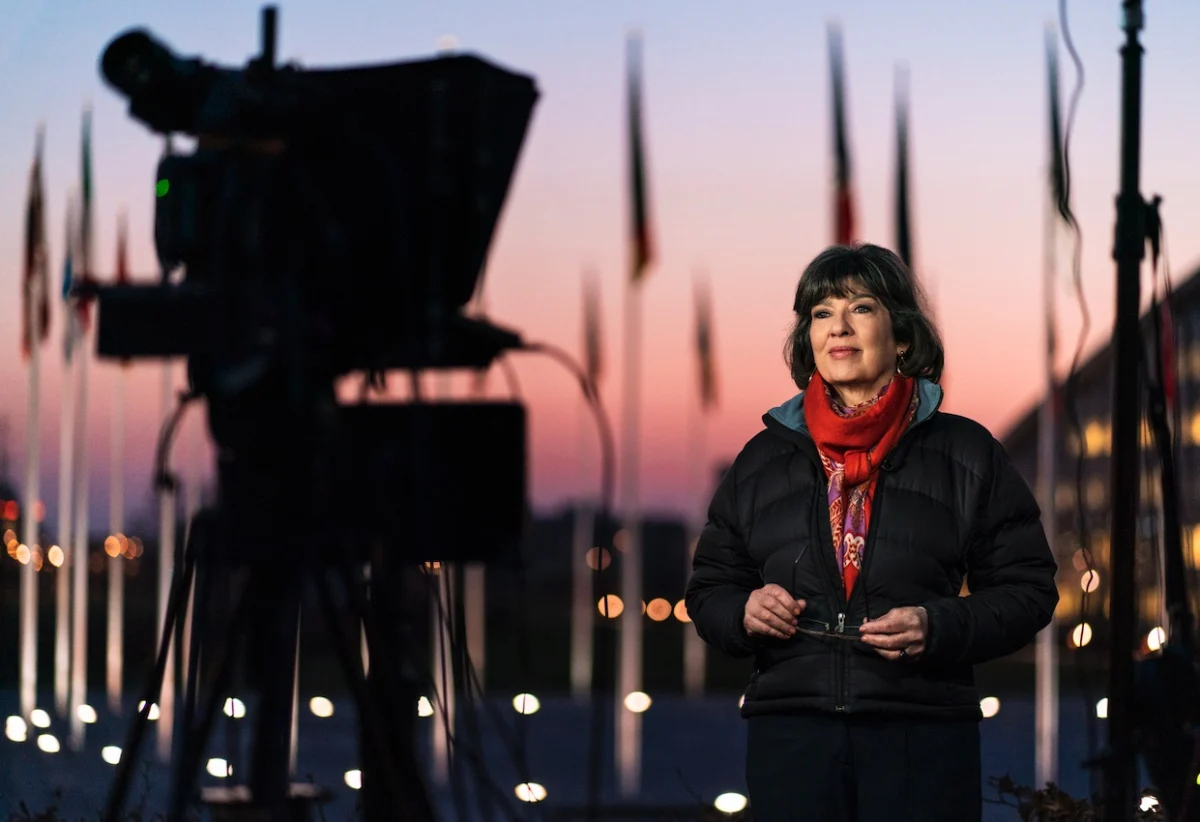
In a move that marks the closing of a significant chapter in broadcast journalism, CNN’s chief international anchor, Christiane Amanpour, has announced her departure from the network after 43 years of service. The announcement, delivered at the conclusion of her namesake program on Monday, caught much of the industry by surprise, though it followed months of deliberation.
"After thinking about this carefully for several months and experiencing a few sleepless nights, as you can imagine, I have decided to separate from CNN, my partner of 43 fantastic years," Amanpour stated.
A Chronology of the Transition
Amanpour’s departure will be methodical rather than immediate. Her daily program, which maintains a dual-broadcast presence on CNN International and PBS, will continue in its current format through the end of the calendar year. Beginning in January, the show will transition to a weekly cadence, a schedule that will hold until her final broadcast in June 2027.
Official Responses and Internal Climate
CNN CEO Mark Thompson, who has been managing the network’s strategic pivot in an increasingly competitive digital-first era, addressed the staff via internal memo. "I’m very sorry to see her go, but I’ve come to accept that this is the right time for her, both personally and professionally," Thompson wrote.
The departure of a pillar like Amanpour underscores the volatility within the network’s talent roster. Simultaneously, CNN is parting ways with senior global affairs analyst Bianna Golodryga. A mainstay at the network since September 2019, Golodryga noted on social media that she was departing for "an opportunity that I couldn’t pass up." Reports indicate she is in advanced discussions with Politico regarding a global affairs role, while simultaneously exploring a contributor position at CBS News, a network where she previously maintained a professional footprint.
II. The Legal Front: Press Freedom and Executive Power
Beyond personnel changes, media organizations are currently embroiled in significant litigation that challenges the traditional access afforded to the press.
The White House vs. The Press Pool
CNN has escalated its dispute with the Biden administration regarding the inclusion of the network in the official White House press pool for travel aboard Air Force One. The network, represented by outside counsel Ted Boutrous, has formally petitioned the Justice Department, arguing that the exclusion of CNN from its designated rotations is a form of retaliatory discrimination.
In a scathing letter, Boutrous noted, "These efforts to retaliate and discriminate against CNN based on the content of its news coverage are mistaken, counterproductive, and unlawful." The network has signaled that it is prepared to pursue further legal remedies if the White House continues to bypass its designated pool participation.
Supreme Court Petitions and Confidential Sources
In a separate but equally consequential legal battle, Fox News is petitioning the U.S. Supreme Court to intervene in a case involving journalist Catherine Herridge. The core of the issue involves the protection of confidential sources—a cornerstone of investigative journalism.
Fox News is seeking to overturn a civil contempt order that has resulted in daily $800 fines against the network. The legal stakes are high: the network argues that if the court upholds the lower ruling, it could create a dangerous precedent, forcing reporters to compromise their sources and effectively chilling investigative work across the industry.
The $10 Billion BBC Lawsuit
Meanwhile, the judiciary has moved to accelerate proceedings in the high-stakes $10 billion lawsuit brought against the BBC. U.S. Magistrate Judge Enjoliqué Lett has mandated that President Donald Trump appear for a deposition by December 11. The order comes after repeated delays by the former president, with the judge explicitly warning that failure to comply could result in severe sanctions, including the potential dismissal of the underlying litigation.
III. Strategic Shifts and Audio Expansion
While traditional broadcast television faces structural challenges, major networks are aggressively diversifying their portfolios to recapture audience attention. CBS News, in particular, is doubling down on its investment in the podcasting space, launching two new original series aimed at reaching younger, on-the-go demographics.
New Audio Programming
- "Great Questions with Tony Dokoupil": Hosted by the CBS Evening News anchor, this twice-weekly show will delve into the complex policy and social issues defining the modern news cycle.
- "Straight Up": Featuring a collaboration between CBS Mornings host Vlad Duthiers and anchor Kelly O’Grady, this weekly series will focus on trending topics and viral news, aiming to bridge the gap between hard news and pop culture.
Leadership and Editorial Standards
The shifting internal culture at CBS is also marked by a "revolving door" at the executive level. Jon Tower has been named the permanent executive producer of CBS Mornings. Having served in the interim capacity, Tower is now tasked with stabilizing the program’s ratings and supporting the return of lead anchor Norah O’Donnell.
The network has also demonstrated a rigid stance on journalistic ethics. Chief legal correspondent Jan Crawford recently faced scrutiny after posting a tweet critical of Michigan Senate candidate Abdul El-Sayed. Crawford promptly deleted the post and issued a public apology, acknowledging that the commentary was a "violation of CBS News standards." The incident serves as a stark reminder of the tightening constraints placed on journalists’ personal social media activity.
IV. Global Economic Realities: The BBC Contraction
Economic headwinds are not limited to American networks. BBC News has confirmed a significant reduction in its workforce, with over 100 positions being eliminated in the coming months.
Director of BBC News Rachel Jupp described the cuts as a necessary measure to address funding shortfalls, noting that the $7.4 million in anticipated savings is "not sufficient to meet our funding reduction." This phrasing has sparked industry speculation that further, more aggressive staff reductions may be on the horizon as the legacy broadcaster attempts to navigate a fragmented digital media ecosystem.
V. Implications: A Changing Guard
The convergence of these events—Amanpour’s exit, the legal pushback against the executive branch, and the aggressive expansion into digital audio—signals a broader transformation in how the public consumes information.
- Institutional Instability: The departure of legacy talent like Amanpour highlights the difficulty networks face in maintaining brand identity in an era of individual-led journalism.
- The Weaponization of Access: The dispute over Air Force One access suggests that the relationship between the White House and the press is increasingly litigious, with both sides using the courts to set boundaries.
- The Erosion of Privacy: The Fox News/Herridge case remains a "canary in the coal mine" for press freedom. A ruling against the network could fundamentally change how investigative journalists interact with whistleblowers.
- Economic Rationalization: The BBC’s downsizing and the pursuit of podcasting revenue demonstrate that news organizations are no longer betting on traditional models. They are moving toward a leaner, more diversified structure that prioritizes niche digital content over broad-spectrum linear broadcasting.
As 2026 concludes, the media industry is clearly shedding its skin. While the faces on our screens may change, the underlying tension between corporate profitability, journalistic independence, and political scrutiny remains more intense than ever. The coming year will likely define whether these networks can successfully navigate these challenges or if the "fourth estate" is destined for a more permanent fragmentation.