






By Digital Marketing Desk
Published: Special Industry Report
Main Facts: The Great Pop-Up Debate and New Findings
For years, the digital marketing community has engaged in a polarizing debate regarding email subscription pop-ups. While web designers and casual internet users frequently decry them as intrusive, aggressive, and disruptive to the user experience, growth-focused marketers continue to champion them as conversion powerhouses.
In August, digital publisher and strategist Sugarrae published a landmark case study examining whether email subscription pop-ups genuinely work. Utilizing tools such as OptinMonster across multiple distinct properties, the initial research yielded definitive proof: despite widespread consumer claims of hating pop-ups, they dramatically increase email list subscription rates, and they do so efficiently.
However, a higher volume of sign-ups often brings up a secondary, more nuanced question among email marketers: Does quantity come at the expense of quality?
Critics have long argued that aggressive opt-in methods like pop-ups attract unengaged "freebie-seekers" or accidental clickers who inflate list sizes while dragging down overall engagement metrics, open rates, and click-through rates. To answer this critical question, a six-month longitudinal data analysis was initiated, tracking the Sound Bites newsletter from September 1, 2015, through January 15, 2016.
The core finding of this extended data study challenges conventional wisdom: There is no significant statistical difference in long-term engagement quality between subscribers acquired via pop-ups and those acquired through traditional, passive on-page sign-up methods. Both cohorts demonstrated nearly identical behavioral patterns, rendering the fear of "low-quality pop-up traffic" largely unfounded for this case study.
Chronology: From Initial Implementation to Long-Term Audit
To understand how these conclusions were reached, it is necessary to examine the timeline of the research and the methodology applied by the publisher.
Phase 1: The Initial Rollout (Summer 2015)
The journey began when the publisher decided to test OptinMonster pop-up overlays across two separate content sites. Prior to this, subscription methods relied strictly on static forms embedded within sidebars, footers, or at the end of articles. The immediate implementation of exit-intent and timed pop-ups caused a sharp, undeniable surge in daily conversions. Sign-up rates, confirmation completion percentages, and overall traffic-to-subscriber conversion rates jumped significantly within the first few weeks.
Phase 2: The Subscriber Inquiry (Late Summer 2015)
Shortly after publishing the initial findings, the publisher received a targeted question from a regular Sound Bites newsletter subscriber. The subscriber asked whether any discernible differences existed in the long-term quality, responsiveness, and overall engagement of subscribers who converted via the new pop-up mechanism compared to those who used legacy opt-in forms. At the time, the data was too fresh to provide a definitive, empirically backed answer.
Phase 3: The Six-Month Audit (September 2015 – January 2016)
Recognizing the validity and importance of the subscriber’s question, the publisher established a formal tracking window spanning nearly five months—from September 1, 2015, to January 15, 2016. During this period, Google Analytics and email service provider metrics were cross-referenced to evaluate whether the initial surge in pop-up subscribers maintained steady activity or experienced higher-than-average churn, drop-off, or inactivity.
Supporting Data: Evaluating the Metrics
Evaluating email subscriber quality requires looking past mere acquisition numbers and diving deep into behavioral indicators such as confirmation rates, message open rates, and unsubscribe behavior.
Maintaining Conversion Momentum Over Time
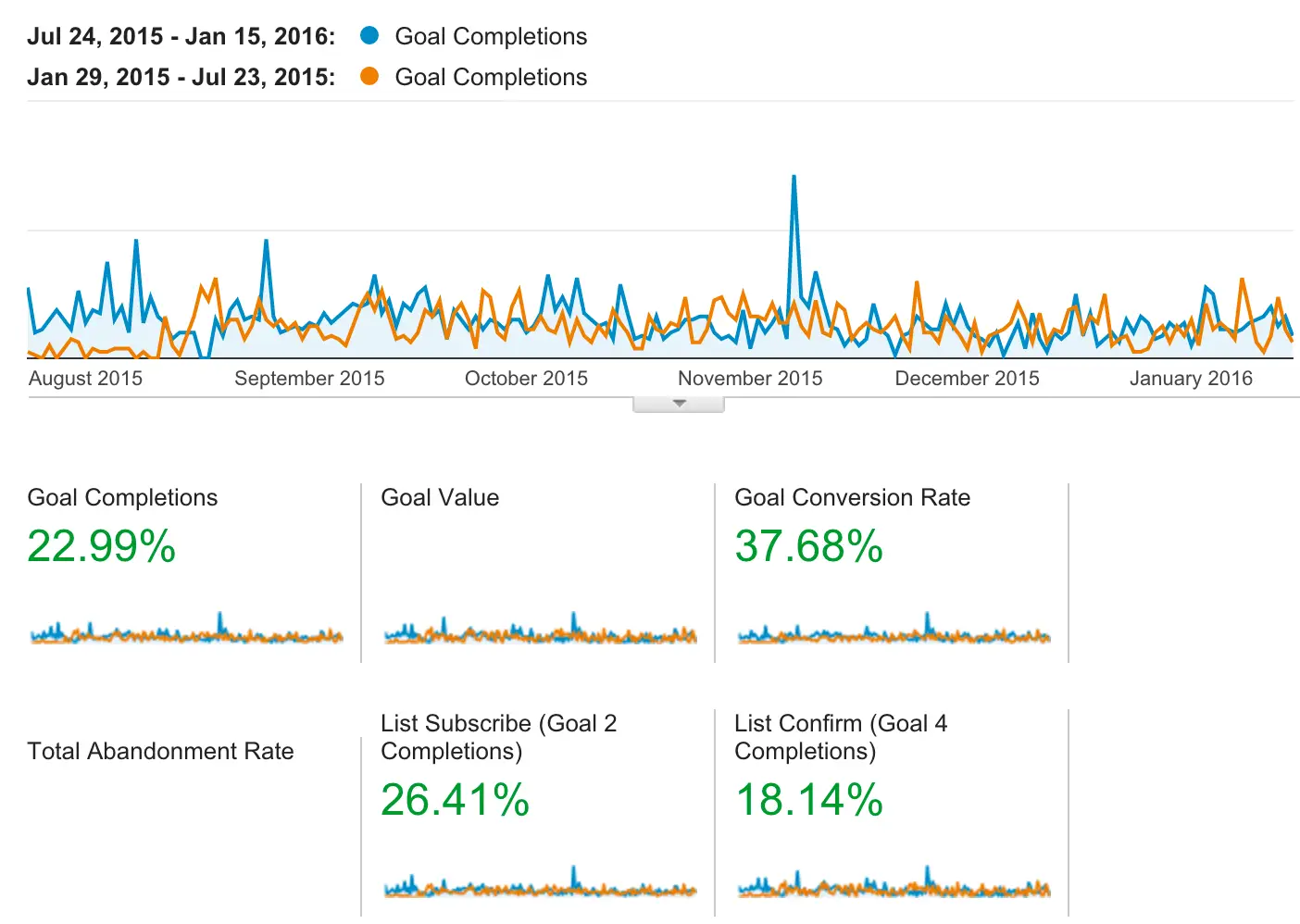
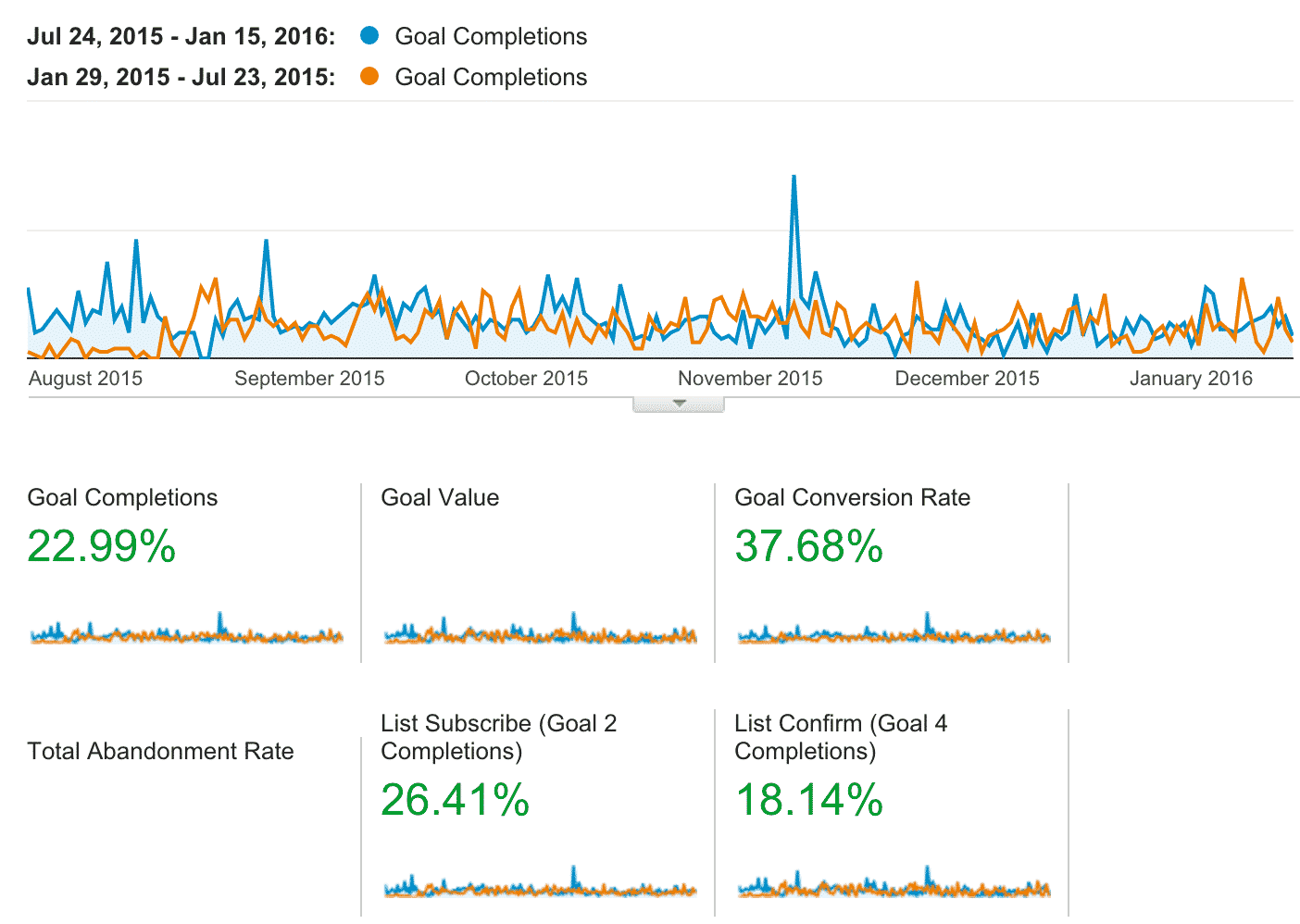
Throughout the multi-month audit window, subscription rates did not experience the temporary spike followed by a sharp burnout that some marketers predict. Instead, the baseline metrics—signups, confirmations, and conversion efficiency—stabilized at a permanently elevated plateau compared to the pre-pop-up era.
Comparative Engagement Metrics
When breaking down subscriber behavior over the extended period, the numbers revealed striking parity between the two acquisition channels:
- Confirmed Subscribers: The ratio of users who successfully completed double-opt-in confirmations remained balanced, showing that pop-up users were just as willing to verify their email addresses as passive subscribers.
- Follow-Up Message Open Rates: Automated welcome sequences and onboarding series experienced nearly identical open rates across both segments, indicating that initial intent and interest levels were matched.
- Unsubscribe Rates: Churn is often cited as the ultimate test of list quality. If pop-ups attracted uninterested users, unsubscribe rates would spike. However, the data showed comparable, minimal churn from both cohorts over the six-month span.
- Inactive ("No Opens") Rates: The percentage of dormant subscribers who stopped engaging with emails entirely showed no disproportionate skew toward the pop-up segment.
- Benchmark Comparison: Crucially, open rates for both pop-up acquired subscribers and traditional subscribers significantly outperformed published industry averages provided by major email marketing infrastructure providers, including Mailchimp and ConstantContact benchmarks.
The Challenges of Click and Sales Tracking
While open rates and subscriber retention provided clear answers, measuring bottom-line click-through conversions proved more methodologically complex.
Limitations within the email service provider (Aweber) created analytical hurdles. The platform’s architecture did not allow for straightforward, macro-level segmentation of subscribers based on a generalized "clicked any link" behavior across all broadcasts. Instead, segmentation required isolating users who interacted with specific links inside individual newsletter editions. For instance, measuring total click-throughs to a specific Pinterest case study required manually pulling data from every historical newsletter where that link appeared.
Furthermore, native sales-tracking integrations between the autoresponder and checkout funnels presented technical configuration hurdles prior to the study launch. Consequently, direct revenue attribution per subscriber acquisition method could not be definitively isolated at the time of publication, though plans were put in place to resolve technical bottlenecks for future iterations of the research.
Official Responses and Industry Perspectives
The ongoing debate over pop-up marketing invites strong opinions from web usability experts, conversion rate optimization (CRO) specialists, and everyday content creators.
- The Usability Perspective: User experience (UX) advocates frequently warn that heavy-handed pop-ups—particularly those that load immediately upon page entry—drive away first-time visitors and increase bounce rates. Many design purists argue that forcing a conversion action damages brand equity and frustrates readers who simply want to consume content uninterrupted.
- The Growth Marketing Perspective: CRO professionals and list-building experts counter that traffic is inherently fleeting. Without aggressive mechanisms to capture user attention, the vast majority of visitors will read an article and vanish forever without establishing a permanent connection. Proponents of tools like OptinMonster emphasize that modern targeting options—such as exit-intent technology, scroll-depth triggers, and mobile-optimized overlays—allow publishers to minimize annoyance while maximizing opt-in efficiency.
- The Publisher’s Take: Reflecting on the data, the publisher behind the Sound Bites study noted that while consumer complaints about pop-ups are loud and vocal, actual user behavior tells a different story. When executed cleanly, pop-ups serve as a vital bridge between casual readership and long-term audience cultivation, without sacrificing the integrity or responsiveness of the mailing list.
Implications for Digital Marketers and Publishers
The insights drawn from this six-month comparative data analysis carry significant strategic implications for bloggers, newsletter operators, e-commerce brands, and digital publishers.
1. Re-Evaluating Conventional Wisdom
Marketers should be cautious of blanket assumptions within the industry. The common narrative that "pop-up subscribers are low quality" is frequently an unverified bias rather than a data-backed reality. While poor implementation—such as misleading lead magnets or aggressive, un-timed overlays—can certainly attract low-quality leads, the pop-up format itself does not inherently degrade subscriber engagement.
2. The Imperative of Independent Testing
Every niche, audience demographic, and website structure behaves differently. While the Sound Bites study proved that pop-ups can successfully scale list growth without hurting quality, digital strategists are strongly encouraged to run their own internal A/B tests. Metrics such as open rates, click-through rates, and long-term retention should be monitored over a sustained period of 90 to 180 days rather than judged solely on day-one acquisition numbers.
3. Prioritizing List Growth Without Fear
For any digital property where building and owning a direct communication channel (an email list) is a core business objective, fear of user backlash should not prevent the implementation of effective opt-in technologies. When balanced with high-value content and respectful timing rules, pop-ups remain one of the most reliable catalysts for sustainable digital audience growth.
Conclusion
The data collected over nearly half a year provides a reassuring conclusion for growth-oriented publishers: Pop-ups work, and they bring in high-quality subscribers.
By increasing sign-up velocity without triggering a spike in unsubscribes or dead engagement, exit-intent and timed subscription overlays validate their place in modern digital marketing arsenals. As the digital landscape continues to evolve, data-driven decision-making will remain the ultimate arbiter between stylistic preferences and proven business growth.
Do you track your subscriber cohorts by acquisition source? Have your own analytics revealed a difference in quality between pop-up leads and traditional opt-ins? Share your insights and data in the comments below.