







WASHINGTON — In a milestone that could fundamentally reshape how humanity explores the cosmos, NASA’s pioneering Starling mission has successfully demonstrated an autonomous navigation system that allows a spacecraft to pinpoint its exact orbital position without relying on GPS or terrestrial tracking networks.
Instead of looking down toward Earth or waiting for instructions from ground-based flight controllers, the spacecraft looks around. By utilizing other satellites and orbital debris as dynamic reference points, NASA has unlocked a completely self-sufficient method of wayfinding. This capability is poised to become the operational gold standard for future lunar settlements, deep-space exploration, and congested orbital architectures.
The technology behind this leap forward is known as FALCON (Fast Autonomous Lost-in-space Catalog-based Optical Navigation). Developed as a joint flight experiment between NASA and EraDrive—a commercial startup born out of cutting-edge research at Stanford University—FALCON combines advanced embedded algorithms with standard spacecraft hardware to grant satellites unprecedented operational independence.
Main Facts
The core achievement of the FALCON experiment centers on untethering spacecraft from traditional navigation dependencies. Near Earth, satellites rely heavily on the Global Positioning System (GPS). However, as missions venture further into deep space, toward the Moon, or across interplanetary trajectories, GPS signals fade, become entirely unavailable, or are too unreliable to support critical maneuvers.
FALCON solves this existential navigation bottleneck by turning the surrounding cosmic environment into a map. Using Starling’s onboard star-tracker cameras—hardware traditionally reserved for determining a spacecraft’s celestial orientation—the system identifies nearby artificial objects, such as active satellites and defunct orbital debris.
Once these objects are captured visually, FALCON cross-references them against an onboard catalog of known space objects. By measuring the relative angles and vectors of these dynamic reference points, the spacecraft triangulates its own precise three-dimensional position in orbit.
Furthermore, the technology does not merely consume catalog data; it actively improves it. Over a rigorous three-day test window, FALCON autonomously refined the predicted orbits of more than 200 space objects, generating tracking data significantly more precise than the baseline information provided by ground stations. This dual capability—self-navigation paired with autonomous space-traffic surveillance—represents an unprecedented first for optical space navigation.
Chronology of the Starling and FALCON Missions
To fully appreciate the magnitude of this technological leap, it is vital to trace the developmental timeline that brought FALCON from a theoretical university concept to a flight-proven orbital system.
- The Academic Genesis: The technology originated as a University SmallSat Technology Partnerships project, funded by NASA to explore how academic research could solve pressing aerospace engineering challenges.
- Commercial Incubation: Building upon the success of the foundational research, the innovators behind the project formed EraDrive, translating academic algorithms into robust, commercialized flight software known as Era-Core.
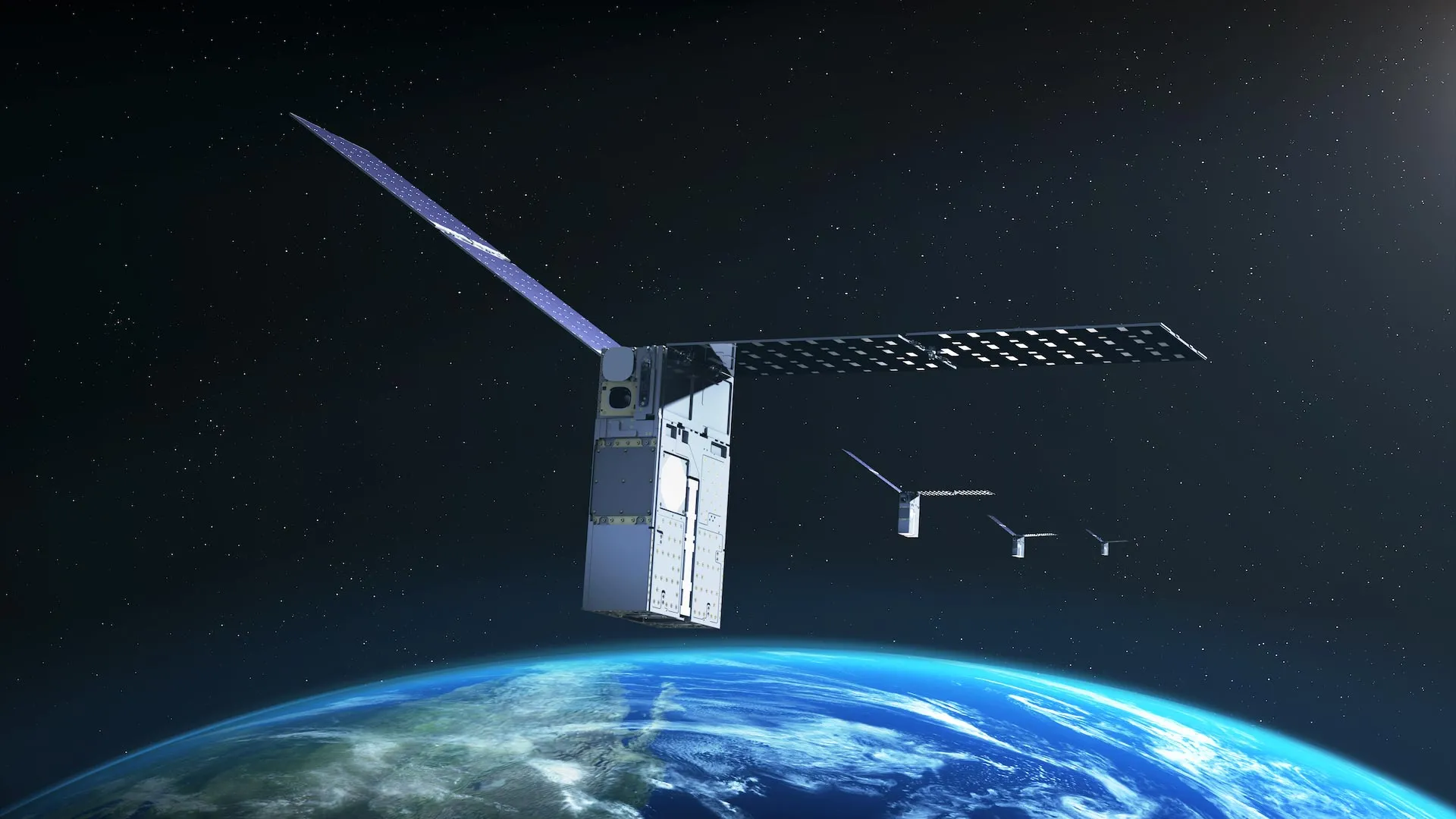
- July 2023: NASA’s Starling mission successfully launches into low-Earth orbit. Comprising a constellation of four identical small satellites, Starling is designed specifically to test autonomous swarm technologies, inter-satellite communications, and resilience in distributed systems.
- The FALCON Experiment Phase: Mission controllers upload a vast catalog containing approximately 20,000 known space objects and their predicted orbital paths onto the Starling spacecraft.
- Recent Milestones: Starling’s star trackers engage in autonomous observation campaigns. FALCON successfully identifies objects, calculates its own orbit relative to them, and updates the positions of hundreds of space pieces—all without human intervention from the ground.
- Late 2024 and Beyond: NASA plans to expand the FALCON experiment. The four Starling spacecraft will begin sharing their individual tracking data with one another, using collective, swarmed observations to refine their positions as a unified network.
Supporting Data and Technical Architecture
The architecture of the FALCON experiment bridges the gap between software efficiency and hardware constraints in harsh space environments.
Small satellites (SmallSats) are inherently limited by power, computational capacity, and payload mass. To overcome these barriers, EraDrive’s Era-Core software was engineered to run seamlessly on standard avionics without requiring massive supercomputing resources.
Key Performance Metrics:
- Catalog Scope: Approximately 20,000 space objects and their projected ephemerides (orbital paths) were successfully loaded and processed onboard the satellite.
- Refinement Yield: Over a continuous three-day testing period, the algorithm corrected and optimized the positional tracking data for more than 200 distinct space objects.
- Precision Index: The autonomously updated orbital estimates generated by Starling’s cameras surpassed the accuracy of standard ground-station catalogs.
- Constellation Size: The ongoing Starling demonstration utilizes a coordinated swarm of four spacecraft, laying the groundwork for multi-agent distributed networking.
The system relies on optical sensors—specifically star trackers—which are passive instruments that detect starlight and illuminated space objects. Because they do not emit signals, they are stealthy, energy-efficient, and immune to electronic jamming or signal degradation over distance. By matching what the camera sees against the onboard catalog using rapid pattern-matching algorithms, the system can determine its "lost-in-space" coordinates instantly, even if it has suffered a total loss of communications with Earth.
Official Responses and Perspectives
Leadership across NASA’s research centers and partner organizations have lauded the FALCON experiment as a watershed moment for small spacecraft operations and autonomous systems.
"FALCON is yet another success for the Starling demonstration mission," declared Roger Hunter, program manager for NASA’s Small Spacecraft and Distributed Systems program at NASA’s Ames Research Center in California’s Silicon Valley. Highlighting the rapid pace of innovation, Hunter noted, "The results from FALCON can have far-reaching implications for on-orbit space-traffic monitoring, collision avoidance, and alternative navigation. The number of ‘firsts’ from Starling just keeps growing."
Engineers and software architects at EraDrive have similarly emphasized the profound transition from ground-dependent architectures to edge-computed autonomy. By processing complex astrodynamics data directly on the spacecraft ("at the edge"), latency is eliminated, and space missions gain the agility required to survive in increasingly unpredictable orbital regimes.
NASA Ames Research Center serves as the overarching administrative hub for the Starling mission, with funding and strategic direction provided by the agency’s Small Spacecraft and Distributed Systems program within the Space Technology Mission Directorate. This institutional backing highlights NASA’s ongoing commitment to fostering public-private partnerships that accelerate the maturation of high-risk, high-reward space technologies.
Broader Implications for Space Exploration
The successful demonstration of FALCON aboard the Starling mission carries profound implications that extend far beyond low-Earth orbit. As space agencies and commercial entities look toward the Moon, Mars, and beyond, the technological paradigms of the past will no longer suffice.
1. Enabling Deep-Space and Lunar Infrastructure
As NASA’s Artemis campaign and international partners establish a permanent human presence on the lunar surface and in cislunar space, maintaining continuous communication and navigation links with Earth will become increasingly difficult. Distributed networks of lunar orbiters and communication relays will require autonomous ways to maintain their formations. Technologies like FALCON ensure that lunar satellite swarms can self-manage their positions without demanding continuous attention from Deep Space Network antennas on Earth.
2. Revolutionizing Space Traffic Management
Earth’s orbital environment is growing dangerously crowded. Hundreds of thousands of pieces of space debris, ranging from defunct rocket bodies to microscopic fragments, zip through orbit at hypersonic speeds. Traditional ground-based radar and optical tracking networks are overburdened, struggling to maintain accurate catalogs of every piece of debris.
By empowering satellites to act as autonomous sentinels—tracking debris, refining their positions, and sharing that data with other spacecraft—the industry moves closer to automated space traffic management and collision avoidance systems. This capability will be essential to preventing cascading collision events, such as the Kessler Syndrome, in heavily utilized orbital shells.
3. Advancing Distributed Science Missions
Future scientific breakthroughs in heliophysics, astrophysics, and Earth science will increasingly rely on distributed science missions—fleets of spacecraft flying in precise formations to gather simultaneous measurements from multiple vantage points. Whether studying coronal mass ejections from the Sun or mapping Earth’s magnetosphere, these missions demand millimeter-precision relative positioning. FALCON’s optical navigation framework provides the exact synchronization and positional confidence required to align data collected across vast expanses of space.
4. Commercialization and Economic Growth
The evolution of FALCON from a university grant project into a commercially viable software product exemplifies NASA’s commitment to growing the commercial space economy. By testing EraDrive’s software in the unforgiving crucible of Earth orbit, NASA has provided the startup with critical flight heritage—the gold standard required for commercial aerospace adoption. As EraDrive and similar companies package these technologies for wider commercial deployment, satellite operators worldwide will be able to purchase robust, GPS-independent navigation capabilities off-the-shelf.
Conclusion
As NASA’s Starling mission prepares for the next phase of its orbital lifetime—including the upcoming swarm-based tracking tests later this year—the successful demonstration of FALCON stands as a testament to human ingenuity. By teaching spacecraft how to navigate the trackless void of space using the very debris and satellites that surround them, engineers have unlocked a new era of cosmic exploration.
The days of absolute dependence on terrestrial signals are drawing to a close. As humanity ventures deeper into the solar system, autonomous systems like FALCON will serve as our digital pathfinders, ensuring that our machines—and eventually our explorers—can always find their way home.