






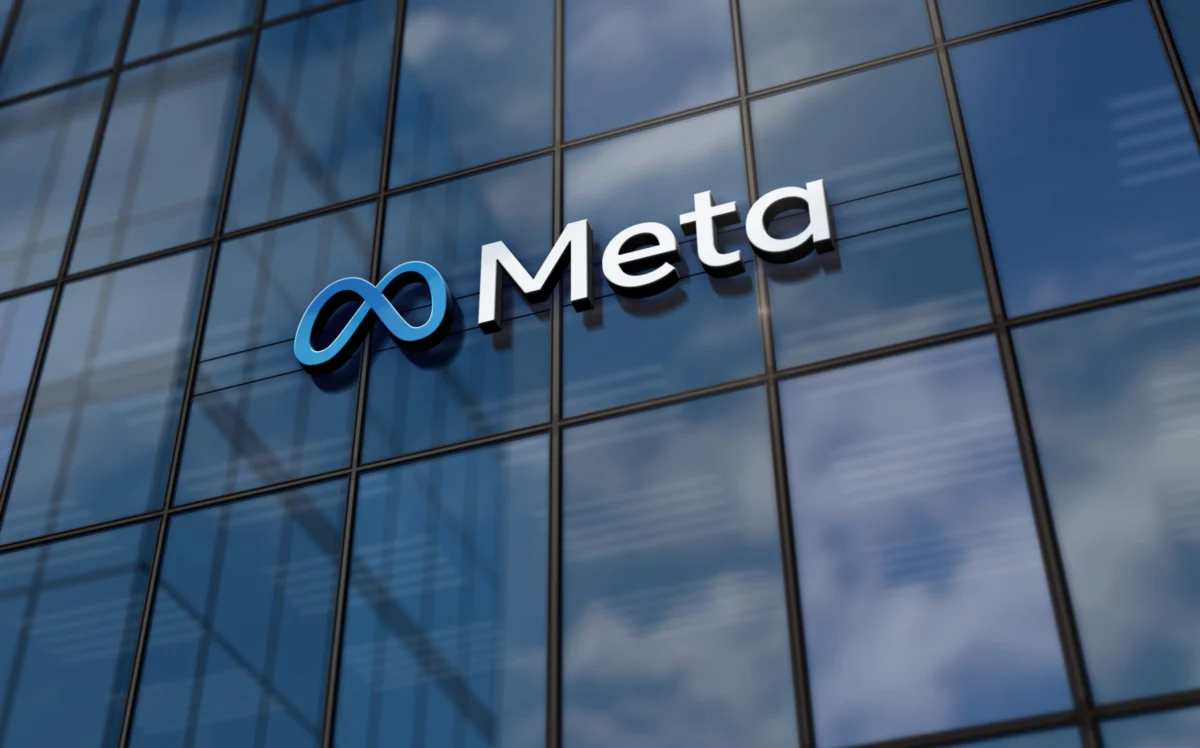
In a legal development that has sent shockwaves through the corridors of Silicon Valley, a New Mexico judge has ordered Meta to pay a staggering $25 billion in damages. The ruling, delivered by Judge Francis Mathew, concludes a protracted legal battle concerning the company’s systemic mishandling of user data between 2010 and 2021. The verdict is not merely a financial penalty; it is a profound judicial condemnation of the business model that underpinned Facebook’s meteoric rise—one built on the granular harvesting and monetization of personal information.
The court found that Meta committed over 43 million individual violations of New Mexico’s consumer protection laws. At the core of the ruling is the company’s failure to safeguard user data, most notably the unauthorized exposure of millions of personal profiles to third-party developers, including the infamous Cambridge Analytica scandal. While Meta has already announced its intent to appeal, the ruling serves as an unprecedented warning shot to global enterprises: the era of "move fast and break things" regarding data privacy has officially come to an end.
The Core Facts of the Judgment
The $25 billion fine represents one of the largest corporate penalties in the history of consumer protection litigation. Judge Mathew’s decision centered on the assertion that Meta’s internal culture systematically prioritized engagement and data access over the fundamental privacy rights of its users.
The judge’s order was scathing. In his written opinion, Judge Mathew remarked, “The harm in this matter is difficult to overstate, and goes to the heart of Facebook’s basic business proposition.” He noted that the company had effectively deceived its user base by creating a facade of privacy while simultaneously allowing third-party app developers to scrape, store, and exploit personal data without meaningful consent.
Despite the monumental size of the fine, legal analysts point out that Meta may have narrowly avoided an existential catastrophe. Under the full weight of New Mexico’s statutory penalties, the damages could have climbed as high as $219 billion—a sum that would have surpassed the company’s total 2025 revenue. By capping the fine at $25 billion, Judge Mathew provided a degree of leniency that remains unexplained in the official record, yet the message to the tech industry remains clear: non-compliance is now a business-ending risk.
Chronology of a Corporate Scandal
To understand the scale of this ruling, one must look back at the decade-long timeline of Meta’s data privacy failures.
The Foundation of Negligence (2010–2015)
During this period, Facebook’s "Platform" features were in their infancy. The company encouraged third-party developers to build applications on top of its social graph. During this time, the company’s API allowed developers not only to access the data of the person using the app but also the data of their "friends" without those individuals’ consent. This architecture was the primary vector for the mass data harvesting that would later define the Cambridge Analytica debacle.
The Cambridge Analytica Explosion (2016–2018)
In 2018, whistleblowers revealed that Cambridge Analytica, a political consulting firm, had improperly obtained the personal data of up to 87 million Facebook users. The data was used to build psychological profiles of voters, which were then leveraged for micro-targeted political advertising. This revelation triggered investigations globally, leading to the Federal Trade Commission’s $5 billion settlement with Facebook in 2019. However, the New Mexico litigation focused on the state-specific violations that persisted even after the federal scrutiny intensified.
The Legal Accountability Phase (2021–2026)
Following the widespread public outcry, the State of New Mexico initiated a civil action against Meta, arguing that the company’s deceptive practices regarding its privacy settings were a direct violation of state consumer protection statutes. Over five years of discovery, the court unearthed internal communications suggesting that Meta leadership was aware of the vulnerabilities in their platform but failed to take adequate remedial action to protect user data from third-party misuse.
Supporting Data: The Anatomy of 43 Million Violations
The court’s finding of 43 million violations is a reflection of the massive scale at which Meta operated its data sharing. These violations were calculated based on the number of individual user interactions where data was accessed, shared, or exploited without clear, informed, and granular consent.
- Third-Party API Access: The court found that Meta maintained "backdoor" access for certain developers, allowing them to bypass privacy settings that were marketed as robust.
- Deceptive UI/UX: The ruling highlighted that Facebook’s interface was intentionally designed to make it difficult for users to opt out of data sharing. The court deemed this a form of "dark pattern" deception.
- Retention Policies: Even after users deleted their accounts or revoked app permissions, evidence suggested that data remained in the hands of third-party developers, a failure of Meta’s oversight responsibilities.
Official Responses and the Road to Appeal
Meta’s reaction to the ruling was swift and defiant. In a statement released shortly after the verdict, a Meta spokesperson characterized the fine as "unprecedented and inconsistent with established legal precedents." The company argued that the ruling ignores the substantial investments it has made in privacy infrastructure over the last five years, including the deployment of "Privacy Checkup" tools and the stricter enforcement of developer policies.
"We have cooperated fully with the court, and we believe this judgment does not accurately reflect the complexity of our data management systems," the spokesperson noted. "We intend to appeal this decision, as we believe it sets a dangerous precedent for the technology sector as a whole."
Legal experts observing the case suggest that the appeal will likely focus on the calculation of the damages and the state’s jurisdiction over what the company views as a global platform. However, the state of New Mexico remains firm, with the Attorney General’s office describing the ruling as a "victory for every citizen whose digital identity was treated as a commodity rather than a private asset."
Implications for the Tech Industry
The ruling in New Mexico is a watershed moment that will force a radical reassessment of corporate risk management.
The End of the "Data Harvesting" Model
For years, the tech industry has operated on the assumption that regulatory fines are simply the "cost of doing business." By imposing a $25 billion penalty, the court has effectively raised the cost of non-compliance to a level that can no longer be absorbed as an operational expense. This will likely force companies to move toward "privacy-by-design" architectures, where data minimization becomes a technical requirement rather than a policy goal.
Increased Regulatory Fragmentation
The New Mexico ruling suggests that in the absence of a comprehensive federal privacy law in the United States, states are increasingly willing to step into the void. If individual states begin to issue multi-billion-dollar fines for data privacy breaches, tech companies will face a "patchwork" of legal risks that could make national and international operations significantly more complex and expensive.
Investor Sentiment and Corporate Governance
Investors are already reacting to the potential long-term impacts of the ruling. The prospect of sustained litigation and the potential for similar rulings in other jurisdictions may lead to a permanent "privacy discount" on the valuation of companies that rely heavily on data harvesting. Corporate boards will likely face increased pressure from shareholders to audit data practices more stringently, as privacy negligence is now clearly linked to shareholder value erosion.
A New Standard for User Consent
The judgment reinforces the legal requirement that consent must be "meaningful." Companies can no longer rely on convoluted Terms of Service agreements to justify the collection and sale of user data. Future regulatory landscapes will likely require clear, affirmative, and granular consent for every instance of data sharing, placing the power back in the hands of the individual user.
Conclusion: A Warning to the Digital Age
The $25 billion fine against Meta is more than just a legal headline; it is a fundamental shift in the relationship between tech giants and the society they serve. For over a decade, companies like Meta have treated personal data as a fuel to be extracted, refined, and sold. The court in New Mexico has declared that this model is unsustainable and legally indefensible.
As the case moves to the appeals court, the focus will remain on whether the law can evolve as quickly as the technology it seeks to regulate. Regardless of the final outcome, the "New Mexico Warning" has been heard loud and clear across the global digital economy. The age of unbridled data exploitation is closing, and a new era of digital accountability has arrived. Companies that fail to adapt to this new reality may find that the price of their past success is far higher than they ever anticipated.