SEATTLE — In an enterprise software landscape where engineering teams are perpetually overwhelmed by the noise of disparate monitoring tools, alert fatigue, and siloed communication channels, Amazon Web Services (AWS) has introduced a transformative solution. CloudWatch Omni, a new AI-powered observability platform, aims to fundamentally redefine how organizations monitor, investigate, and remediate issues across complex modern applications, generative AI systems, and autonomous agentic workloads.
Built natively on OpenTelemetry standards and integrated tightly with the Amazon DevOps Agent, Omni breaks down traditional operational barriers. By shifting the focus of observability away from isolated infrastructure metrics and onto interconnected business applications—while granting non-AWS console access via enterprise Single Sign-On (SSO)—AWS is positioning Omni as a unified workspace for SREs, developers, database administrators, and engineering managers alike.
1. Main Facts: What is Amazon CloudWatch Omni?
At its core, CloudWatch Omni is a unified, collaborative, and artificial intelligence-driven observability experience designed to handle the complexity of modern distributed applications and generative AI deployments.
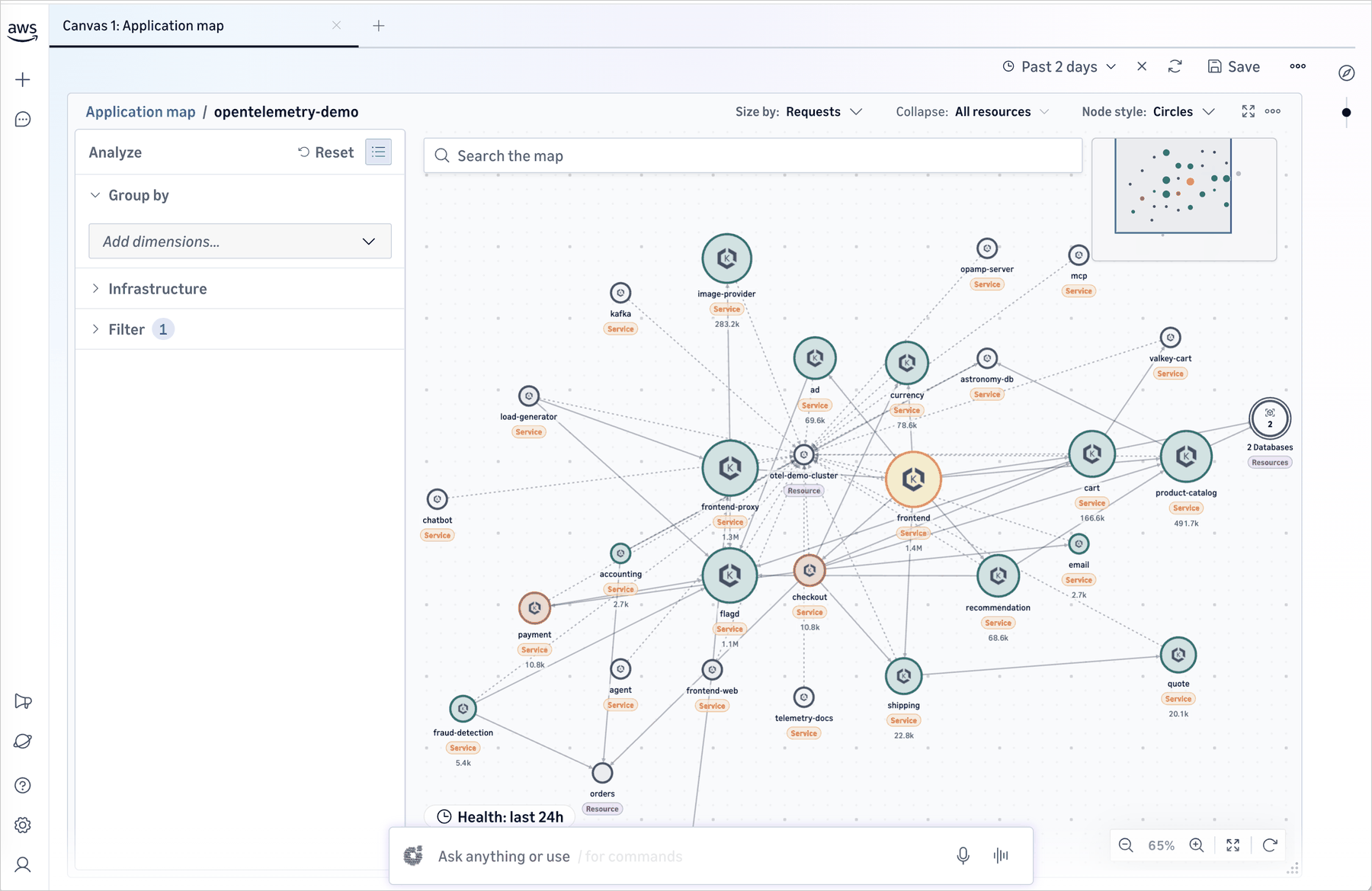
Unlike traditional monitoring setups that require engineers to manually stitch together logs, metrics, traces, and alarms across a dizzying array of dashboards, Omni organizes system telemetry around the application itself. It dynamically maps dependencies, auto-discovers services, and leverages natural language processing to allow engineers to query their telemetry data conversationally.
Key structural pillars of CloudWatch Omni include:
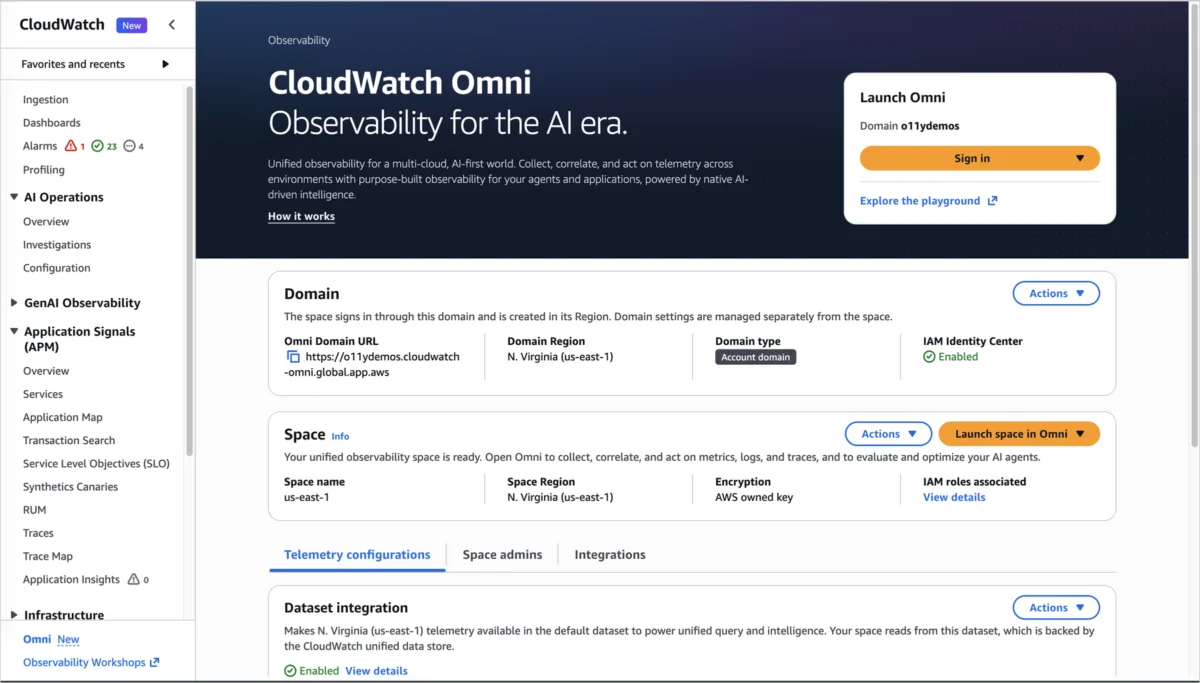
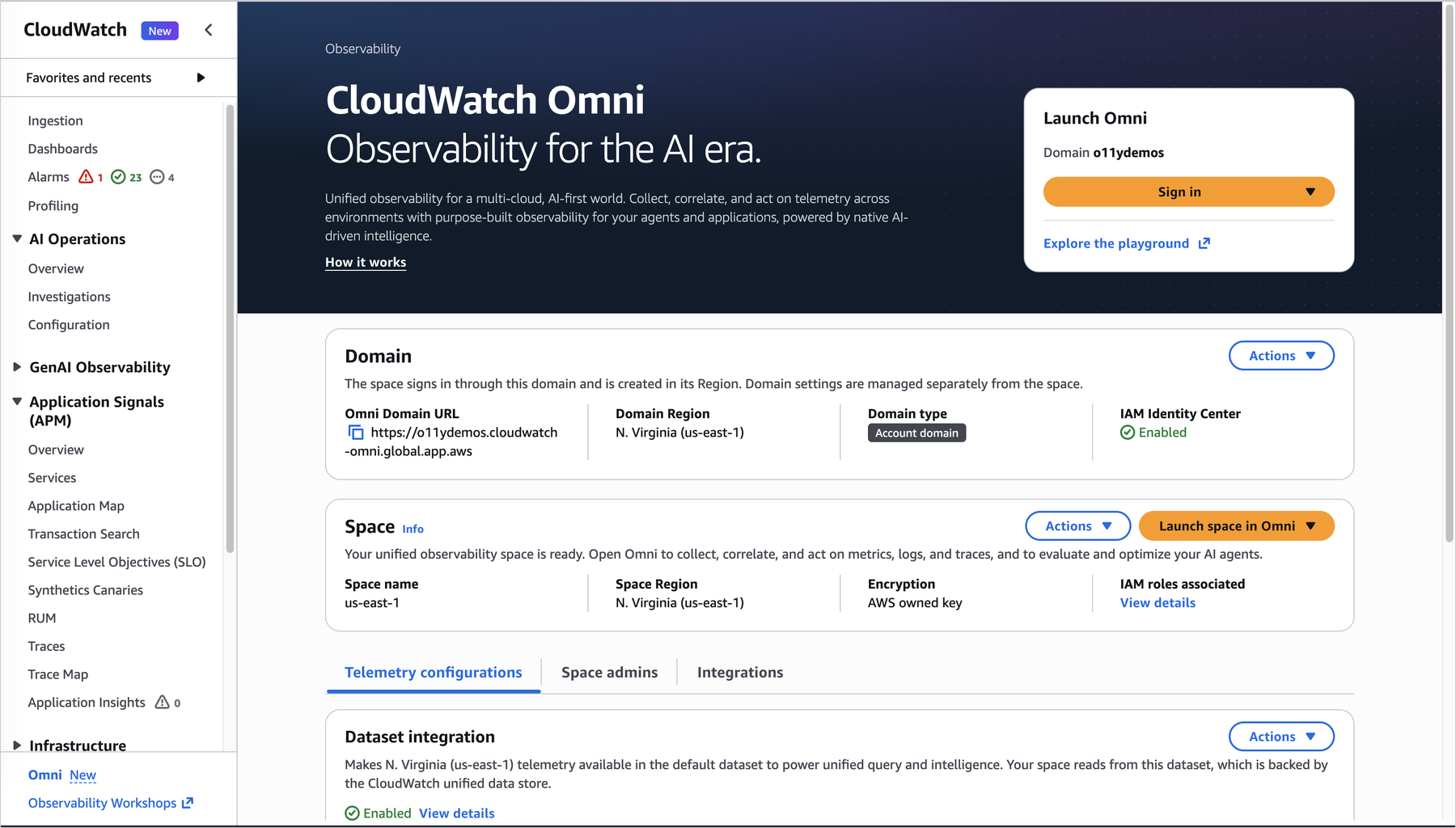
Decoupled Access via Enterprise SSO: Users access Omni through a dedicated organization URL authenticated via AWS IAM Identity Center (supporting identity providers such as Okta, Microsoft Entra ID, and other SAML 2.0 solutions). Team members can fully investigate and resolve incidents without needing direct access to the AWS Management Console.
Native OpenTelemetry Foundation: Omni is built on OpenTelemetry (OTel). Existing telemetry streaming into Amazon CloudWatch appears in Omni automatically with zero reconfiguration. Additional workloads instrumented via OpenTelemetry can send data straight to an OpenTelemetry Protocol (OTLP) endpoint.
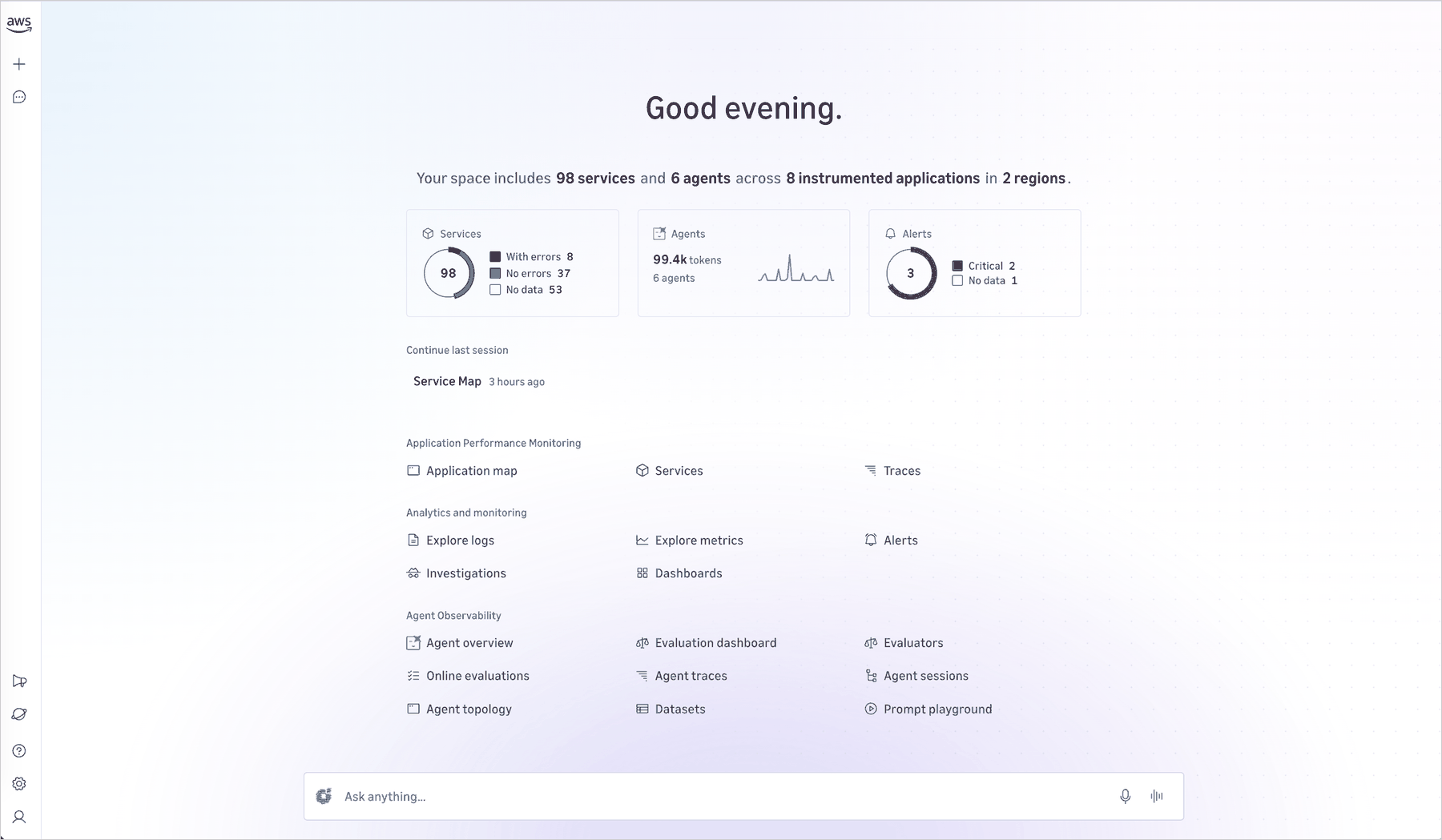
Unified Application and Agent Observability: Omni uniquely bridges standard application monitoring with dedicated observability frameworks for generative AI models and autonomous agentic workflows.
Autonomous Collaboration Spaces: Teams organize their work into "Spaces"—collaborative workspaces that group related applications and automatically inherit relevant telemetry, logs, and alerts without requiring data duplication or movement.
2. Chronology: The Evolution Toward Intent-Driven Observability
To understand the significance of CloudWatch Omni, it is necessary to examine the trajectory of cloud monitoring and the mounting friction engineering organizations face in cloud-native environments.
The Era of Static Dashboards and Siloed Tools
For decades, application performance monitoring (APM) and infrastructure monitoring operated on a reactive, fragmented model. When a microservice misbehaved, engineers relied on static dashboards constructed months prior. These dashboards often lacked context for newly deployed features or upstream/downstream changes.
The Rise of Microservices and OpenTelemetry
As organizations transitioned from monolithic architectures to microservices, containerization, and serverless computing, the volume of telemetry data exploded. While open standards like OpenTelemetry eventually standardized how data was collected, it did little to solve the human problem: data was still scattered across multiple tools, forcing engineers to manually correlate logs, jump between tabs, and debate root causes across disconnected Slack threads.
The Generative AI Explosion
The recent integration of Large Language Models (LLMs) and autonomous AI agents compounded these challenges exponentially. Unlike deterministic code, agentic workloads exhibit non-deterministic behaviors, making traditional thresholds and error-rate alarms wholly inadequate for tracking system health.
Recognizing this operational bottleneck, AWS initiated a strategic push toward intent-driven, AI-assisted observability. Following the companion rollout of agent observability for generative AI workloads, AWS officially debuted CloudWatch Omni to unify application and agent monitoring under a single, collaborative roof—transforming observability from a reactive chore into an active, AI-guided collaborative investigation.
3. Supporting Data: The Anatomy of an Incident Investigation
To appreciate the efficiency gains promised by CloudWatch Omni, industry analysts and enterprise engineering leads are looking closely at how the platform alters standard incident management workflows.
The Traditional Incident Workflow
In a legacy observability environment, an incident typically follows a chaotic path:
An automated alert fires, pointing vaguely to a degraded metric (e.g., HTTP 500 spike).
An on-call engineer logs into multiple tooling consoles, piecing together timestamps.
The engineer takes screenshots and pastes them into a Slack channel to loop in database or upstream API teams.
Context fragments across message threads, making post-incident reviews (postmortems) tedious and inaccurate.
The CloudWatch Omni Workflow
CloudWatch Omni restructures this lifecycle into an automated, continuous narrative:
Automated Context Loading: When an alarm triggers—such as elevated error rates in a checkout service—Omni immediately opens a dedicated investigation session. This session is pre-populated with the service topology, correlated deployment events, and downstream API latencies.
Active AI Participation: The Amazon DevOps Agent sits alongside human engineers within the session. Grounded in the exact telemetry of the application, the agent continuously correlates events, traces root-cause paths through the dependency graph, and suggests targeted remediation steps.
Seamless Handoffs: If an issue crosses team boundaries (e.g., escalating from an SRE to a third-party payment gateway team), the incoming engineer joins the identical session. They instantly view the entire investigative history, trace views, and AI correlations without needing a verbal recap or messy screenshot archives.
Automated Incident Documentation: Because every query, correlation, and discovery step is captured natively within the collaborative session workspace, the need for manually compiled incident reports is largely eliminated.
4. Official Perspectives and Expert Responses
The release of CloudWatch Omni has drawn significant commentary from industry experts, DevOps practitioners, and cloud architects who have long struggled with observability tool sprawl.
Daniel Abib, speaking on behalf of the AWS engineering team, emphasized that the platform was built directly in response to feedback from front-line developers and Site Reliability Engineers (SREs).
"Engineering teams spend a significant portion of their observability time maintaining dashboards, tuning thresholds, and switching between tools to piece together what happened during an incident," Abib noted. "When an issue crosses team boundaries, context gets lost in Slack threads and screenshots rather than flowing naturally to the next engineer. CloudWatch Omni changes this by organizing observability around your applications rather than individual signals."
Early adopters and industry observers have echoed these sentiments, noting that decoupling observability access from the core AWS Management Console represents a major win for organizational security and cross-functional collaboration. By allowing product managers, database administrators, and security specialists to inspect system health via enterprise SSO without touching cloud infrastructure credentials, organizations can foster a broader culture of operational transparency.
5. Strategic Implications for the Enterprise
The launch of Amazon CloudWatch Omni carries profound implications for the enterprise software market, competing monitoring vendors, and internal IT governance strategies.
Reduction of "Tool Sprawl"
Many organizations historically adopted third-party observability platforms primarily for their superior collaboration features and unified UI, despite already paying for native cloud monitoring. CloudWatch Omni directly challenges this dynamic. By offering a polished, application-centric workspace backed by enterprise-grade identity federation, AWS provides a compelling reason for companies to consolidate their monitoring workflows natively within their primary cloud ecosystem.
Democratization of SRE Practices
By leveraging natural language processing—allowing engineers to query telemetry data in plain English—Omni lowers the technical barrier to entry for complex troubleshooting. Junior developers and non-technical stakeholders can interact with the system intuitively, allowing senior SREs to focus on architectural hardening rather than repetitive data-pulling tasks.
Future-Proofing for AI and Agentic Workloads
As enterprises increasingly deploy autonomous AI agents that make API calls, execute code, and dynamically invoke tools, traditional APM solutions will struggle to maintain visibility. Omni’s dual focus on traditional application infrastructure and native agentic observability positions it as a future-ready platform capable of adapting as software engineering shifts deeper into the era of generative intelligence.
Getting Started and Availability
Amazon CloudWatch Omni is generally available now. Existing CloudWatch customers can evaluate the platform immediately by navigating to the Amazon CloudWatch console and selecting "Try CloudWatch Omni."
For organization-wide deployments, IT administrators can configure domain settings, link identity providers through IAM Identity Center, and provision tailored Spaces for individual engineering squads. Because Omni hooks directly into existing CloudWatch data logs, metrics, traces, and alarms, organizations can begin leveraging application-centric workspaces and AI-powered investigations instantly with zero data migration overhead.
Comprehensive pricing details, regional availability updates, and integration guides are available on the official Amazon CloudWatch pricing and product documentation pages.