





Introduction: The Paradigm Shift Toward Model Granularity
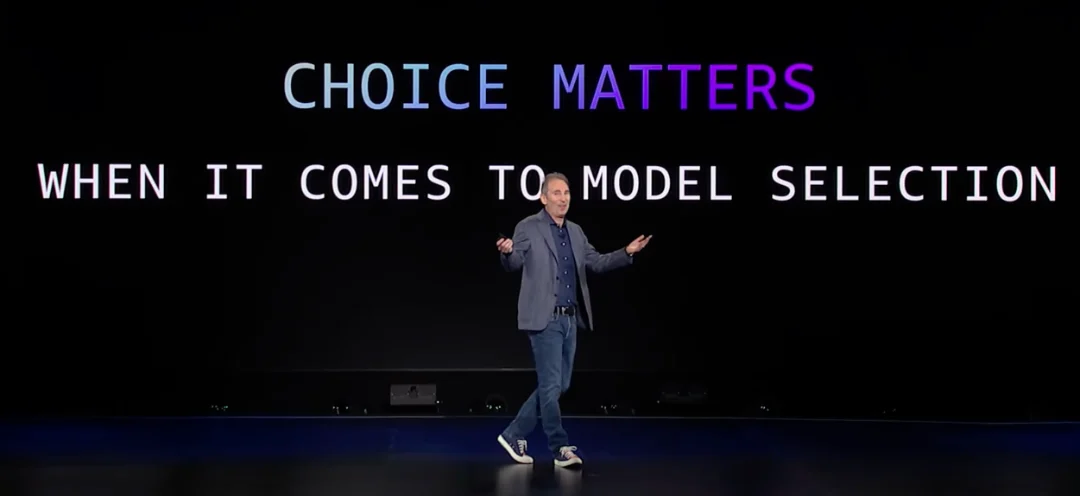
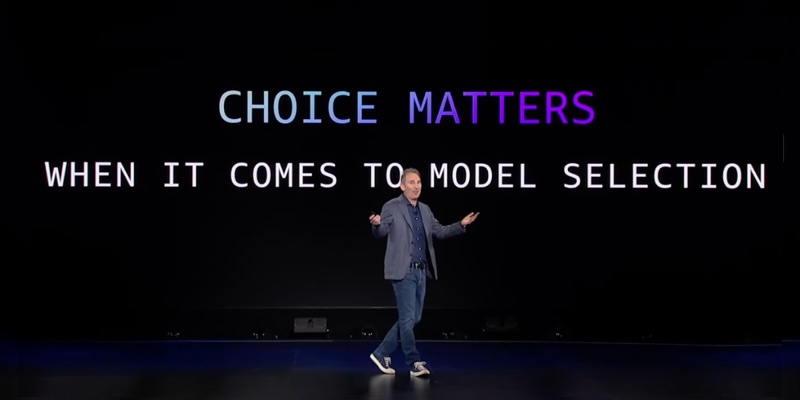
The technological landscape of cloud computing and artificial intelligence has entered a definitive era defined not merely by raw capability, but by strategic optimization. For years, the prevailing question in enterprise AI development centered on raw scale: How smart is the model? However, as the ecosystem matures, developers, enterprise architects, and Chief Technology Officers are pivoting toward a far more nuanced metric: Which model fits this specific operational step, at this exact cost threshold, and within this strict latency constraint?
This fundamental shift toward granularity and precision was underscored by major announcements on Amazon Bedrock. Rather than treating artificial intelligence as a monolithic utility, AWS and its premier foundation model partners—OpenAI and Anthropic—are expanding the intelligence-versus-efficiency curve. The recent introduction of OpenAI’s GPT-6 Sol and GPT-6 Luna, alongside Anthropic’s Claude Opus 5.5, marks a watershed moment in how enterprises build, scale, and optimize next-generation applications.
This report provides a detailed examination of these developments, tracing the chronological rollout of these cutting-edge capabilities, analyzing the underlying economic and technical data, capturing industry responses, and projecting the long-term implications for the enterprise cloud ecosystem.
Main Facts: The New Frontiers on Amazon Bedrock
The centerpiece of recent AWS announcements is the rapid integration of next-generation frontier models into Amazon Bedrock, providing developers with unprecedented architectural choice.
OpenAI’s GPT-6 Sol and GPT-6 Luna
OpenAI has introduced two distinct additions to Amazon Bedrock designed to target specific tiers of enterprise productivity:
- GPT-6 Sol: Engineered explicitly for demanding, recurring workflows within software development and operations (DevOps). Sol is tailored to handle complex logical reasoning, iterative code generation, and infrastructure management tasks that previously required resource-heavy, generalized flagship models.
- GPT-6 Luna: Optimized for focused, highly repeatable tasks executed at massive scale. Luna prioritizes high-throughput processing and low latency, making it the ideal choice for high-volume customer service automation, data extraction, and content moderation pipelines.
- Cost Optimization: Notably, both models launch at a significantly lower price point compared to their predecessors in the GPT-5.6 family, drastically altering the total cost of ownership (TCO) for enterprise-scale AI deployments.
Anthropic’s Claude Opus 5.5
Anthropic has expanded its market-leading portfolio on AWS with the launch of Claude Opus 5.5, the vanguard of the new Claude 5.5 model family.
- Token Efficiency: Claude Opus 5.5 achieves significantly higher cognitive output while consuming fewer tokens than its predecessor, Opus 5. This reduction in token overhead directly translates to faster response times and reduced API expenditure.
- Agentic Capabilities: The model has been specifically tuned for autonomous, multi-step agentic coding and the execution of long-running, complex tasks without requiring constant human intervention or prompt re-alignment.
Chronology: The Evolution of AWS Generative AI Infrastructure
To understand the significance of these releases, it is necessary to examine the rapid timeline of model integration that has transformed Amazon Bedrock into a multi-model orchestration powerhouse.
- Early Phase (Foundation and Early RAG): Amazon Bedrock initially established itself as a secure, scalable gateway providing managed access to early frontier models, allowing enterprises to experiment with Retrieval-Augmented Generation (RAG) and foundational text generation within a secure cloud perimeter.
- The Rise of Reasoning Models (2025): The introduction of advanced reasoning models—such as the integration of DeepSeek-R1 and early variants of OpenAI and Anthropic architectures—shifted the paradigm toward specialized problem-solving, moving beyond simple pattern matching into deep computational logic.
- The Cost-Efficiency Curve (Late 2025 – Early 2026): As operational costs became a primary barrier to wide-scale enterprise deployment, AI providers began emphasizing efficiency. The introduction of mid-tier, high-efficiency models allowed organizations to route routine queries to cheaper, faster models while reserving expensive frontier models for complex edge cases.
- Current State (Mid-2026): The launch of GPT-6 Sol, GPT-6 Luna, and Claude Opus 5.5 on Amazon Bedrock solidifies the era of model routing and multi-agent orchestration. Enterprises no longer rely on a single model; instead, they deploy sophisticated pipelines where different models collaborate based on their distinct strengths in cost, speed, and reasoning depth.
Supporting Data: Intelligence vs. Efficiency Metrics
The strategic value of the new Amazon Bedrock integrations lies in how they alter the traditional trade-offs between intelligence, latency, and cost. Enterprise architecture teams evaluate these models across several critical dimensions:
1. Cost-Per-Token Dynamics
With OpenAI pricing GPT-6 Sol and Luna substantially below the baseline of the GPT-5.6 generation, enterprises processing billions of tokens monthly are seeing immediate margin expansion. For instance, high-volume data classification workloads previously restricted by the high cost of flagship models can now utilize GPT-6 Luna, reducing unit inference costs by an estimated 40% to 60% compared to legacy architectures.
2. Token-to-Insight Ratios
Anthropic’s Claude Opus 5.5 introduces breakthroughs in token efficiency. Benchmark data indicates that for long-form software refactoring and multi-file code generation tasks, Opus 5.5 requires roughly 25% fewer input and output tokens to arrive at a verified, executable solution than Claude Opus 5. This reduction directly mitigates context-window congestion and lowers latency in complex agent loops.
3. Latency Benchmarks for Operational Workflows
In DevOps environments, time-to-remediation is critical. GPT-6 Sol demonstrates a noticeable decrease in Time-to-First-Token (TTFT) and overall generation completion time for structured code outputs compared to general-purpose reasoning models, ensuring that automated CI/CD pipelines experience minimal drag when incorporating AI-driven code reviews and automated testing scripts.
Official Responses and Industry Perspectives
The reception from the developer community and enterprise leadership has highlighted the growing maturity of AI integration strategies.
Cloud architects participating in the AWS Builder Center have praised the granular approach of matching models to specific workflow steps. Rather than experiencing "model fatigue"—the constant scramble to update applications for every minor iteration of a general-purpose model—engineering teams are embracing modular pipelines.
"The conversation has decisively shifted," notes enterprise infrastructure analyst Marcus Vance. "Two years ago, companies wanted the biggest, most expensive model on the market because they were still proving that generative AI worked. Today, CFOs and engineering directors are looking at unit economics. The arrival of GPT-6 Sol and Luna alongside Claude Opus 5.5 on Bedrock means architects can engineer tiered routing systems where simple tasks cost fractions of a cent, and complex reasoning is applied only where it delivers undeniable business value."
Furthermore, AWS leadership has continually emphasized that Amazon Bedrock’s managed infrastructure is designed precisely to absorb this rapid influx of diverse models. By decoupling model innovation from underlying cloud infrastructure—handling security, compliance, VPC routing, and data privacy natively—AWS allows enterprises to adopt these new capabilities instantly without re-architecting their underlying security perimeters.
Implications: What This Means for the Enterprise Cloud Ecosystem
The integration of GPT-6 Sol, GPT-6 Luna, and Claude Opus 5.5 carries profound implications for software development, enterprise operations, and the broader cloud services market.

1. The Mainstreaming of Autonomous Agentic Workflows
With Claude Opus 5.5 optimized for long-running, autonomous tasks and GPT-6 Sol handling recurring developer operations, the barrier to deploying fully autonomous software agents has dropped dramatically. Enterprises can now safely construct multi-agent systems where code is written, tested, debugged, and deployed with minimal human intervention, securely bounded within AWS environments.
2. Hyper-Optimization and Dynamic Routing Architectures
The availability of distinct price-to-performance points on Amazon Bedrock accelerates the adoption of dynamic model routing. Future enterprise applications will not rely on hardcoded API calls to a single provider. Instead, intelligent proxy layers will analyze incoming prompts in real-time, routing simple queries to efficient models like GPT-6 Luna, delegating deep logic to Sol or Opus 5.5, and reserving massive flagship models only for unprecedented or highly ambiguous scenarios.
3. Democratization of Advanced AI Operations
By lowering the cost barrier while simultaneously increasing task-specific intelligence, these releases empower mid-market and smaller enterprises to leverage capabilities previously reserved for tech giants with massive AI research budgets. Standardizing these models on Amazon Bedrock ensures that enterprise-grade security, data governance, and scalability are accessible to organizations of all sizes.
Conclusion and Next Steps for Builders
The rapid evolution of Amazon Bedrock highlights a clear trajectory: the future belongs to the modular, cost-conscious, and strategically architected AI application. As developers and technical leaders digest these latest releases, the immediate priority should be auditing existing workloads to identify where model tiering can reduce costs and improve latency.
To stay ahead of these rapid developments, builders are encouraged to:
- Explore the latest technical documentation and migration guides on the Amazon Bedrock console.
- Engage with peers, share reference architectures, and access specialized development resources through the AWS Builder Center.
- Monitor upcoming virtual and in-person AWS developer events to deep-dive into practical implementations of multi-model routing and agentic workflows.
As the frontier of artificial intelligence continues to expand at a breakneck pace, AWS remains the central nexus where enterprise security meets cutting-edge innovation—giving builders the ultimate tool: informed, frictionless choice.