As digital marketing enters the Generative AI (GenAI) era, the metrics that matter are undergoing a profound shift. For decades, traditional search engine optimization (SEO) professionals have worshiped at the altar of Google Analytics, tracking organic search rankings, click-through rates (CTR), and keyword impressions as the ultimate barometers of website success.
However, a new contender has quietly entered the arena: traffic originating from conversational artificial intelligence, most notably ChatGPT.
While the volume of visits sent directly from ChatGPT may still look modest on a high-level Google Analytics 4 (GA4) dashboard, a deeper dive into user behavior reveals an intriguing reality. Traffic driven by ChatGPT is frequently far more engaged than traditional organic search traffic. Users arriving via AI-generated recommendations spend more time on site, consume more pages, and exhibit higher intent.
For brands and site owners optimizing their content for AI answers, learning how to track, analyze, and interpret this emerging traffic source is no longer an optional luxury—it is an essential operational strategy.

Main Facts: The Rise of High-Intent AI Traffic
The fundamental thesis behind monitoring AI-driven traffic is straightforward: ChatGPT is rapidly evolving into a high-value referral channel.
- Superior Engagement: Based on observational data from client sites optimized for GenAI answers, traffic arriving from ChatGPT consistently outperforms traditional organic search in terms of user engagement metrics.
- The Visibility Problem: Because GenAI traffic volumes are still relatively low compared to mainstream search engines, they are easily overlooked in a standard GA4 overview.
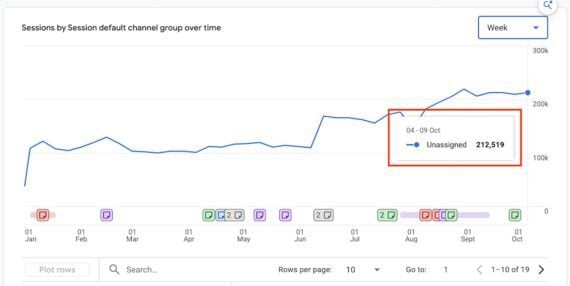
- The "Unassigned" Blind Spot: A significant percentage of actual ChatGPT traffic is misclassified by analytics tools as "Direct" or "Unassigned." This occurs because ChatGPT frequently appends a
noreferrerattribute to external links for privacy reasons, stripping away referral data and masking the true origin of the visitor. - Actionable Reverse-Engineering: While ChatGPT does not disclose the exact user prompts that generated a referral, marketers can deduce user intent by analyzing landing pages and reverse-engineering the context through targeted AI queries.
Chronology: The Evolution of Referral Tracking in the Age of GenAI
To understand how we arrived at the current measurement challenge, it helps to examine the timeline of how search and referral traffic have evolved over the last several years.
- The Traditional SEO Era (Pre-2023): For nearly two decades, web analytics were built around a predictable ecosystem. Users typed keywords into a search engine (predominantly Google), clicked blue links, and passed clear referral strings (
utm_sourceor organic referrer parameters) to destination websites. Analytics tools neatly categorized these visits into "Organic Search" and "Referral." - The Launch of ChatGPT and LLM Integration (Late 2022 – 2023): OpenAI launched ChatGPT, fundamentally changing how consumers seek information. Instead of browsing a list of links, users began asking conversational agents for direct syntheses, troubleshooting steps, and product recommendations.
- The Rise of GenAI Search and Citations (2024): As ChatGPT and rival tools integrated real-time web browsing and citation features, LLMs began acting as active referrers, linking directly to authoritative web pages to substantiate their generated answers.
- The Measurement Crisis (2025 and Beyond): Digital marketers quickly noticed a disconnect. While client inquiries and conversions linked to AI recommendations were rising, standard analytics tools were failing to capture the full scope of the phenomenon, leading to misattributed traffic hiding within "Unassigned" channels.
Supporting Data: Decoding the GA4 Metrics
Analyzing ChatGPT referrals requires moving past surface-level dashboards and building custom segments and filters within Google Analytics 4. Because automated traffic categorization often fails, marketers must adopt proactive tracking methodologies.
Step 1: Locating ChatGPT Referrals
To begin tracking identifiable ChatGPT traffic within GA4, follow these steps:
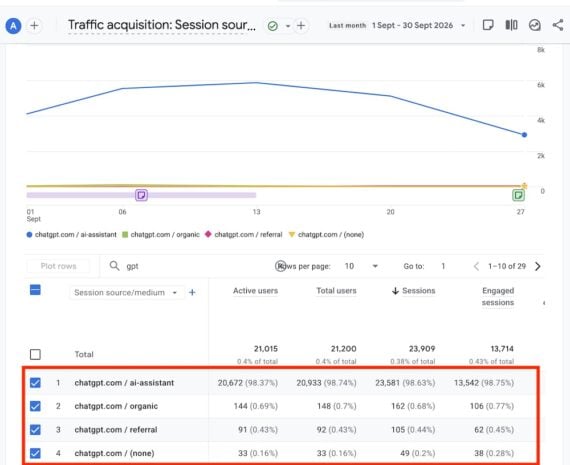
- Navigate to Acquisition > Traffic acquisition.
- Review your primary traffic channels to spot early indicators of AI referral growth.
- Because standard reports may lump these into broader categories, build custom reports to isolate specific referral strings containing terms like "chatgpt" or associated OpenAI domains.
Step 2: Building a "GPT" Traffic Filter in GA4
To quickly isolate and analyze traffic containing variations of the AI platform’s name:
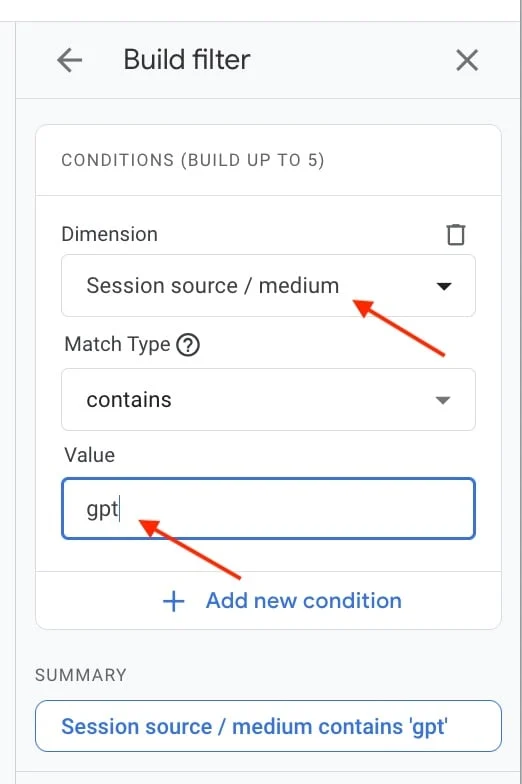
- Go to the GA4 report builder or explore interface.
- Build a custom filter targeting the Traffic Source or Session Source dimensions.
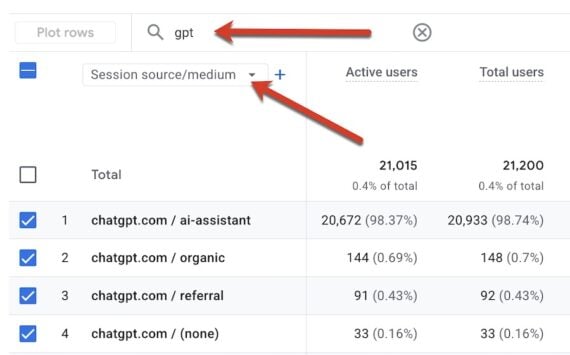
- Set the condition to contain the string "gpt".
- Sort the resulting landing pages by the highest volume of clicks originating from these sources.
Step 3: Reverse-Engineering User Prompts
Because ChatGPT does not hand over user prompt histories due to privacy policies, marketers must deduce intent through landing page analysis:
- Every landing page that receives ChatGPT traffic typically solves a specific problem, answers a niche technical question, or provides a distinct product solution.
- By evaluating which pages are being cited, you can infer the nature of the prompts that triggered the recommendation.
- To confirm your hypothesis, feed your specific URL directly back into ChatGPT with a prompt such as:
"This is my URL: [Insert URL]. What types of user prompts would trigger ChatGPT to cite this page as a solution?"
To gain a holistic view, cross-reference these high-performing landing pages with other diagnostic tools to check how your content is indexed, structured, and read by large language models.
Official Responses and Industry Perspectives
As the marketing industry grapples with the transition from traditional SEO to Generative Engine Optimization (GEO), analytics experts and platform developers are weighing in on the challenges of dark social and hidden referral data.
Data privacy advocates largely defend the implementation of privacy-first attributes like noreferrer. From a consumer standpoint, keeping user queries private prevents third-party tracking scripts from building invasive behavioral profiles based on deeply personal or conversational AI prompts.
However, digital analytics professionals argue that webmasters are left operating in the dark. Major analytics providers, including Google, have faced mounting pressure from enterprise users to develop smarter attribution models that can accurately parse AI-driven traffic rather than dumping it into ambiguous buckets like "Unassigned."
Industry veterans emphasize that while tech giants work on native solutions, digital marketers cannot afford to wait. Proactive auditing—specifically monitoring sudden, unexplained spikes in "Unassigned" traffic alongside growth in technical problem-solving landing pages—remains the industry’s best workaround.

Implications: What This Means for Content Creators and Marketers
The shift toward AI-driven traffic carries profound implications for content strategy, technical optimization, and web analytics.
1. The Death of Keyword-Centric Content
Traditional SEO relied heavily on matching exact-match keywords. ChatGPT and other LLMs, however, evaluate semantic context, authority, and comprehensive problem-solving ability. Content that merely repeats keywords will fail to win AI citations. Instead, content must be structured to provide definitive, well-structured answers that an AI can easily parse and reference as an authoritative source.
2. Redefining "Engagement"
The observation that ChatGPT traffic is often the most engaging source carries strategic weight. Users who click an external link inside a conversational AI response have already been qualified by the LLM. The AI has essentially acted as a pre-sales consultant, narrowing down options and delivering a highly targeted user to your doorstep. Consequently, these visitors bounce less and convert at higher rates.
3. The Need for Auditing "Unassigned" Traffic
If your GA4 property shows a swelling tide of "Unassigned" traffic, do not dismiss it as broken tracking without investigation. Check whether your top landing pages align with problem-solving content that GenAI tools are likely to reference. As generative search tools continue to capture market share from traditional search engines, a growing slice of your most valuable audience may be arriving anonymously.
Looking Ahead
As generative AI tools transition deeper into the mainstream, user habits will continue to morph. The strategies that once dominated search engine marketing—obsessing over keyword rankings and standard organic traffic curves—are expanding to encompass AI citation tracking and intent reverse-engineering.
Until analytics platforms catch up with native solutions for AI referral tracking, monitoring the subtle footprints left by ChatGPT is an essential discipline. By adapting early, marketers can future-proof their digital strategies and capture the high-intent audiences driving the next evolution of the web.