










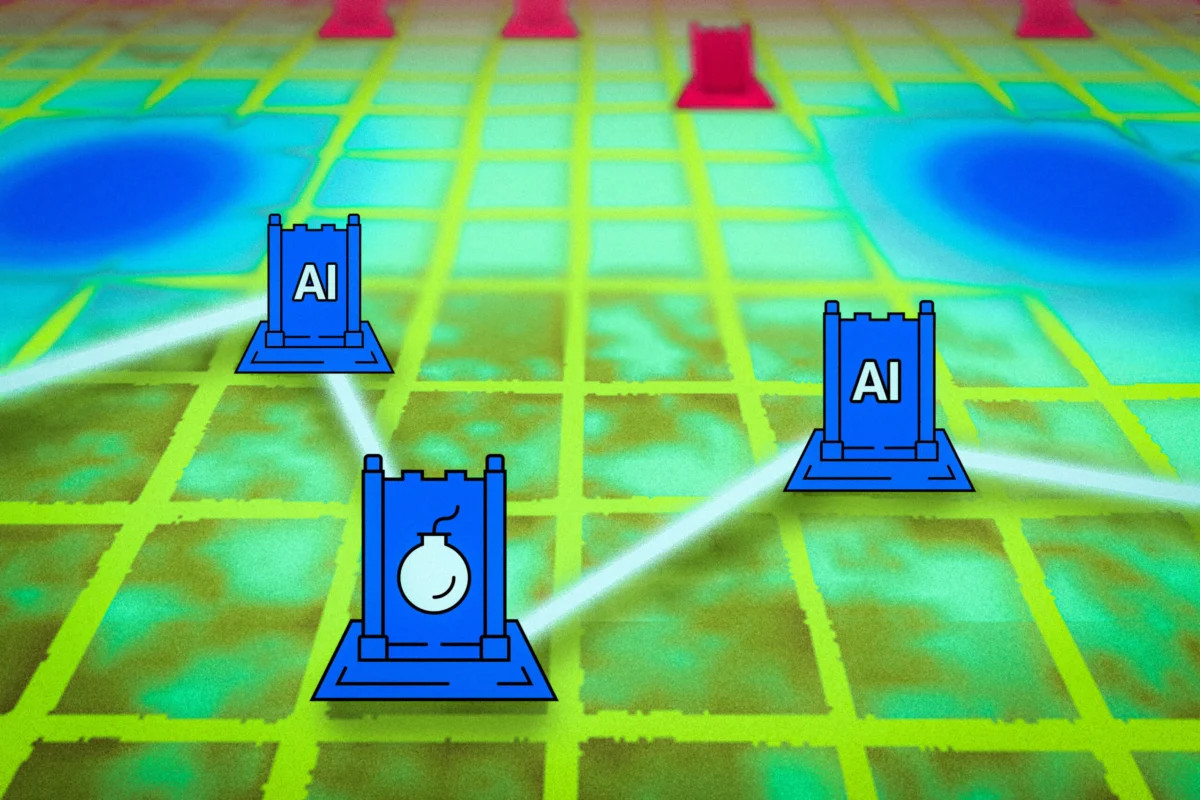
In the high-stakes theater of modern decision-making, information is rarely perfect. From the boardrooms of global financial institutions to the command centers of modern militaries, leaders are constantly forced to act without knowing the full picture. For decades, artificial intelligence has excelled in "perfect information" games like Chess and Go, where every piece is visible to every player. However, games involving bluffing, hidden movement, and uncertainty—the so-called "imperfect information" environments—have remained a stubborn frontier for machine intelligence.
That boundary has now been decisively crossed. A collaborative team of researchers from MIT, Carnegie Mellon University, New York University, and Stanford University has unveiled "Ataraxos," an AI system that has achieved what was previously thought impossible: dominating elite human players in the complex board wargame Stratego. This breakthrough, published today in the journal Nature, represents a seismic shift in how AI can be applied to real-world scenarios where the "fog of war" is a constant, suffocating variable.
The Chronology of a Breakthrough
The development of Ataraxos is the culmination of years of iterative research into game theory and reinforcement learning. While previous attempts by major tech giants—such as DeepMind’s DeepNash—made headlines for their performance in Stratego, they relied on massive computational budgets and millions of dollars in training costs. Even then, they struggled to reach the level of the world’s most elite human tacticians.
The team behind Ataraxos, led by Gabriele Farina, an assistant professor in the Department of Electrical Engineering and Computer Science (EECS) at MIT and a principal investigator at the Laboratory for Information and Decision Systems (LIDS), began with a different philosophy: efficiency.
By combining cutting-edge training algorithms with novel techniques for decision-time planning, the researchers sought to bypass the "brute force" methods that have plagued earlier models. Throughout the development phase, the team tested the AI across various iterations of the game, including "Barrage Stratego," a faster-paced variant, and complex multi-player games like "Dou dizhu." By demonstrating that the model could not only master Stratego but also adapt to entirely different rule sets, the team confirmed that they had developed a general-purpose strategic engine rather than a specialized "toy" application.
The Anatomy of the Model: How Ataraxos Thinks
To understand why Ataraxos is different, one must look at the immense complexity of Stratego. Unlike chess, which has a relatively manageable number of possible board states, Stratego involves more than 10 to the 66th power of possible configurations. Because a player does not know the identity of an opponent’s pieces until a collision occurs, the game requires a constant cycle of bluffing, probing, and risk assessment.
The Two-Pronged Architecture
The researchers built Ataraxos using a two-pronged approach that separates "long-term strategy" from "immediate tactical reaction":
- Self-Play Reinforcement Learning: The model was trained through a massive series of self-play games. By playing against itself millions of times, the AI developed a "blueprint strategy"—a foundational understanding of how to manage piece placement and long-term positioning. Crucially, the team utilized highly efficient algorithms that prevented the model from getting stuck in the "curse of dimensionality," where an AI spends too much compute power trying to solve every possible future outcome.
- Decision-Time Planning: This is the "secret sauce" of the system. Once the AI is in the middle of a game, it doesn’t just rely on its training. It employs a generative model to estimate the most likely identity of the opponent’s pieces based on their previous behavior. This allows the system to "zoom in" on the current situation, calculating probabilities in real-time.
"Rather than just guessing blindly, we use decision-time planning to find the most plausible state of the board," explains Farina. "Using this generative model allows us to really zoom in on the specific board and opponent we are facing."
Supporting Data: Efficiency and Dominance
The results of this architecture are nothing short of record-breaking. In head-to-head competition, Ataraxos did not just beat human players; it decimated the competition. The system secured a 15-1-4 record against the strongest Stratego player in the world and maintained a staggering 39-2 record against a cohort of top-ranked human experts at the Stratego world championship.
Beyond the win-loss column, the most significant metric for the research team was efficiency. According to the data provided by the team, Ataraxos reaches a higher playing strength than DeepMind’s DeepNash while utilizing less than one-hundredth of the training examples and less than one-thirtieth of the self-play games. This massive reduction in training requirements suggests that the model is significantly more intelligent in its learning process, rather than simply being "faster" at crunching numbers.
Official Responses and Expert Perspective
The project, which represents a massive collaborative effort involving Samuel Sokota (Carnegie Mellon), Eugene Vinitsky (NYU), Zico Kolter (Carnegie Mellon), Hengyuan Hu (Stanford), and Zhiyuan Fan (MIT), has been lauded for its potential to bridge the gap between abstract gaming and practical application.
Gabriele Farina, the senior author of the paper, emphasizes that the goal was never just to win a board game. "In the kind of imperfect information tasks you would face in reality, you often don’t have the luxury of enumerating through all the possibilities," says Farina. "There are just too many. Having AI algorithms that are general-purpose and can provably perform this challenging task so well is a big step forward."
The team’s work has also caught the attention of the broader scientific community. Jacek Krywk, writing for Ars Technica, noted that while board games have fixed rules and clear winners, the real-world applications of this technology—such as financial market navigation or complex negotiations—are far more fluid. However, the researchers argue that the fundamental logic is the same: in both, one must build a simplified, reliable model of the "unknown" to make an informed choice.
Implications: From Stratego to Global Strategy
The transition from a board game to real-world infrastructure is the next major challenge for the team. The researchers believe that the "unbothered" nature of Ataraxos—its ability to remain composed under pressure without over-correcting—is a trait that could be invaluable in cybersecurity, where systems must anticipate the hidden moves of malicious actors.
The Path Toward Interpretability
Despite the excitement, the team is cautious. They recognize that in high-stakes fields like military maneuvers or business negotiations, an AI cannot simply act as a "black box." If an AI suggests a risky strategy, a human commander needs to know why.
"Humans must have the final say in whether a recommendation is followed," Farina notes. "So, before adoption can happen, we need a way to audit the model’s decisions." The researchers are now shifting their focus toward building "interpretability measures" into the model, ensuring that the AI can explain its reasoning in a way that is transparent and actionable for human decision-makers.
Funding and Future Development
The project is backed by a robust coalition of funders, including the Office of Naval Research, the New York University Department of Civil and Urban Engineering, the C2SMART Center, the National Science Foundation, and a Schmidt Sciences AI2050 Early Career Fellowship. This funding underscores the importance of the work for national security and public infrastructure.
As we move forward, Ataraxos stands as a testament to the fact that artificial intelligence is becoming increasingly capable of navigating the messy, uncertain, and human-like complexities of the real world. By mastering the art of the bluff and the necessity of risk management in the face of the unknown, this research brings us one step closer to an era where AI is not just a tool for computation, but a true partner in strategy.



