






By 2026, Multi-Factor Authentication (MFA) has graduated from a "best practice" recommendation to a non-negotiable operational baseline. Security frameworks—from NIST to CIS—and the stringent requirements of cyber insurance providers have cemented MFA as the frontline defense against account compromise. Yet, as the digital perimeter dissolves and attackers refine their craft, the mere presence of MFA is no longer a guarantee of security.
For modern CISOs and IT administrators, the critical question has shifted: It is no longer "Have we enabled MFA?" but rather, "Can our MFA withstand the sophisticated, real-time attacks of today?"
The Evolution of the Authentication Arms Race
The primary objective of MFA has always been to neutralize the utility of stolen or weak passwords. By requiring a second form of verification, organizations successfully thwarted the bulk of automated, credential-stuffing attacks that defined the mid-2010s. However, the threat landscape has undergone a radical transformation.
Modern cybercriminals have pivoted away from breaking the authentication factor itself, focusing instead on subverting the human element or exploiting the underlying protocol. Through the use of adversary-in-the-middle (AiTM) kits, sophisticated phishing pages, and "MFA fatigue" tactics, attackers are increasingly finding ways to bypass traditional MFA methods. When an organization treats MFA as a simple compliance checkbox, they often leave the door wide open to these advanced techniques.
A Chronology of Authentication Vulnerability
- The Password Era (Pre-2015): Organizations relied on static passwords, leading to the rise of massive credential-harvesting databases.
- The SMS Explosion (2015–2019): SMS-based OTPs became the standard. This period saw the rise of SIM-swapping and SS7 interception attacks, proving that telecom-based authentication was inherently flawed.
- The Push Notification Era (2018–2023): Push-based apps became the industry favorite due to user convenience. This era was defined by "MFA fatigue" or "prompt bombing," where attackers overwhelmed users until a click was granted.
- The Phishing-Resistant Shift (2024–Present): As AiTM tools became commodified, organizations began moving toward FIDO2-backed hardware keys and passkeys, which mathematically verify the legitimacy of the website being accessed.
Understanding the MFA Security Hierarchy
Not all MFA is created equal. To build a robust security posture, organizations must move beyond "any MFA" and adopt a tiered approach to authentication, understanding the specific vulnerabilities of each method.
1. SMS-Based Authentication: The Minimum Standard
SMS-based codes remain prevalent due to their ease of deployment and lack of specialized hardware requirements. However, from a security standpoint, they represent the weakest link in the chain. Beyond the threat of SIM swapping—where an attacker hijacks a user’s phone number—SMS messages are unencrypted and vulnerable to interception via compromised telecommunications infrastructure. They should be viewed as a "better than nothing" baseline, not a long-term strategy for protecting high-value assets.
2. Push Notifications: Convenience vs. Security
Push notifications, utilized by apps like Microsoft Authenticator and Duo, offer a superior user experience. However, they are highly susceptible to "prompt bombing." High-profile breaches at major corporations like Uber and Cisco demonstrated that attackers can gain access simply by bombarding a user with requests until they click "Approve" out of frustration or distraction.
To mitigate this, organizations must move to "number matching" or push-to-verify workflows, which require the user to actively engage with the authentication request, making accidental or coerced approvals significantly more difficult.
3. TOTP: The Middle Ground
Time-based One-time Passwords (TOTP) offer a more robust alternative. Because these codes are generated locally on a device, they are immune to network-based interception. However, they are not immune to social engineering. An attacker running a convincing phishing site can capture a TOTP code in real-time and relay it to the legitimate service before the code expires. While far superior to SMS, TOTP remains a "phishable" factor.
4. Hardware Security Keys: The Gold Standard
FIDO2 and WebAuthn-based security keys, such as YubiKeys, represent the pinnacle of authentication security. Because they use cryptographic authentication tied specifically to the domain of the service being accessed, the "phishing" component is nullified. If a user lands on a fraudulent site, the hardware key will refuse to provide the necessary signature because the domain does not match. This is the only method that provides true, mathematically proven protection against adversary-in-the-middle attacks.
The Push for Phishing-Resistant Standards
Government and regulatory bodies are no longer ambiguous regarding these risks. CISA and other federal agencies now explicitly prioritize phishing-resistant MFA as a core pillar of their cybersecurity modernization mandates. The logic is simple: if the authentication method is resistant to phishing, the most effective attack vector currently used by ransomware gangs and state-sponsored actors is effectively neutralized.
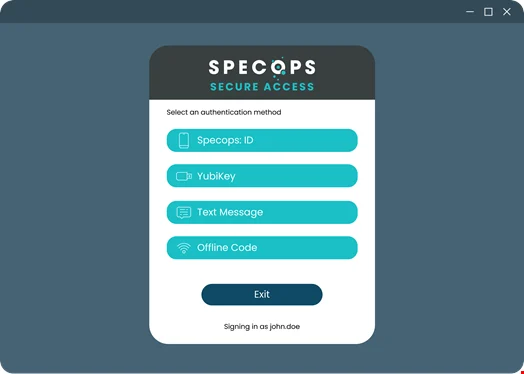
For organizations, the challenge is implementation. It is rarely feasible to switch the entire workforce to hardware tokens overnight. This is where solutions like Specops Secure Access play a vital role. By providing a bridge to stronger authentication, these platforms allow organizations to enforce phishing-resistant MFA across critical entry points—including Windows Logon, Remote Desktop Protocol (RDP), and VPN connections—while maintaining compatibility with existing SSO environments.

Implications for Security Leaders
The transition to phishing-resistant MFA is as much an operational challenge as it is a technical one. Organizations must account for:
- Supply Chain Management: Distributing and replacing hardware tokens like YubiKeys requires robust inventory and logistics workflows.
- Recovery Paths: If a user loses their physical key, what is the secure "break-glass" procedure to restore access without creating a new vulnerability?
- User Education: As authentication becomes more secure, the human element shifts from "entering a code" to "safeguarding the key." Training employees on the importance of these devices is essential.
- Insurance and Compliance: As cyber insurance providers continue to tighten their underwriting criteria, demonstrating the use of phishing-resistant MFA is becoming a requirement for favorable premiums.
A Future-Proof Strategy with Specops
Organizations that fail to evolve their MFA strategy risk falling into a "security theater" trap—where they believe they are protected because they have an MFA prompt, while attackers are already bypassing those specific methods.
By integrating platforms like Specops Secure Access, security teams can effectively manage this transition. Whether it is adding a layer of secure MFA to Active Directory, enforcing FIDO2 keys for high-privilege users, or leveraging modern SSO standards like OIDC and SAML, the goal is to create a seamless yet impenetrable barrier.
In 2026, security is defined by the ability to adapt. As phishing kits evolve, so must our defenses. By moving toward phishing-resistant MFA, leaders can shift the advantage back to the defenders, ensuring that authentication remains a wall, not a gate, in the face of modern threats.
For organizations looking to audit their current authentication landscape and implement stronger, phishing-resistant protocols, it is time to move beyond the checkbox. Contact the team at Specops Software today to explore how modern authentication solutions can protect your environment against the next generation of cyber threats.