


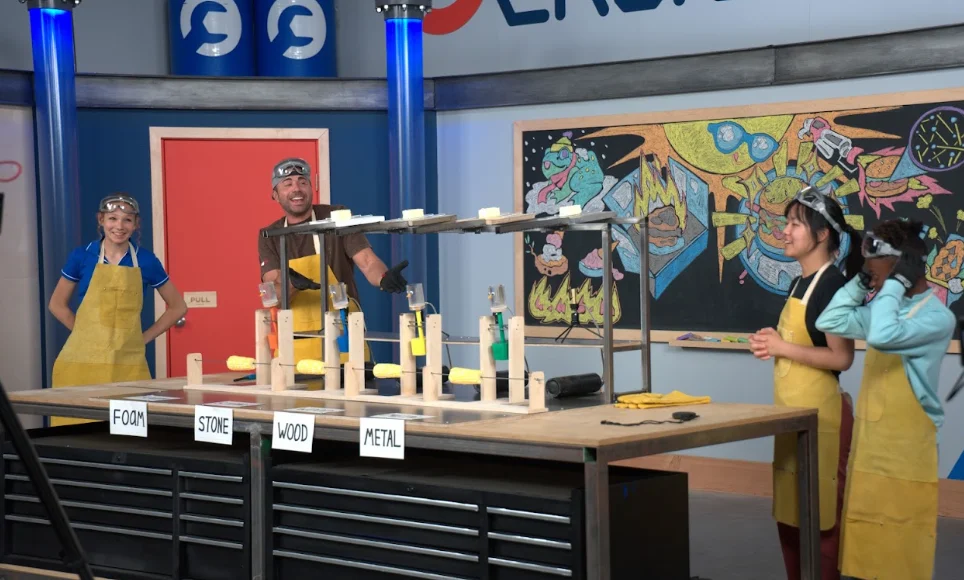
In an era where the traditional classroom is increasingly competing with the boundless, high-octane world of digital content, a fundamental disconnect has emerged. While today’s middle school students are digital natives, raised on the fast-paced, visually stimulating storytelling of YouTube, their science curricula often rely on outdated materials and repetitive worksheets. Mark Rober, the former NASA engineer turned YouTube sensation, has set his sights on bridging this gap.
With the official launch of Class CrunchLabs, a comprehensive, free, and standards-aligned science curriculum for grades 6–8, Rober is attempting one of the most ambitious educational overhauls in recent memory. His goal is as audacious as his past viral engineering projects: to be integrated into 70% of U.S. classrooms by 2030.
The Genesis of a Mission: Why Science Needs a "Banger" Curriculum
The inspiration for Class CrunchLabs was remarkably personal and eye-opening for Rober. While visiting a coworker’s home, he observed a middle-schooler struggling with a science assignment. The materials were uninspiring—an aging video clip paired with a worksheet that appeared to have been photocopied into illegibility.
"This generation grew up on YouTube, but classroom science hasn’t evolved," Rober notes. He realized that the same principles he uses to create viral, high-engagement videos—curiosity, narrative tension, and visceral, hands-on payoffs—could be applied to pedagogical standards.
Rober’s strategy is to "hide the vegetables." By wrapping complex scientific concepts in the guise of high-stakes experiments and engaging storytelling, he intends to make learning feel less like a chore and more like a discovery. This, he argues, is the key to retention. "It’s hard to memorize an equation," Rober explains, "but you remember every word to a song you sang as a teenager because it made you feel something. We’re dealing with matters of the heart, getting them excited and creating visceral experiences. That’s how the learning sticks."
Chronology of the Project: From Viral Engineering to Institutional Impact
The road to Class CrunchLabs was not an overnight endeavor. It represents a pivot from Rober’s previous philanthropy, which included environmental efforts like planting 20 million trees and removing 30 million pounds of plastic from the ocean.
- Initial Concept: Rober began evaluating the state of middle school science education, identifying a lack of engagement as the primary barrier to interest in STEM fields.
- The Investment: Committing to a project of this scale required significant capital. Rober and his team invested over $60 million into the development of the curriculum, ensuring that the production quality would rival his most popular YouTube content.
- Strategic Partnerships: Recognizing that a creator cannot replace a teacher, Rober sought out the National Science Teaching Association (NSTA) and NASA. These partnerships were crucial for ensuring the content was not only engaging but also rigorously aligned with state and national science standards.
- The Launch: On September 29, 2026, the first two courses, "Carnival of Collisions" and "Mission Maglev," went live on YouTube. These initial units serve as the blueprint for a program that will eventually feature over 1,000 videos, localized into 34 languages.
Supporting Data and Methodology: The "Zero-Dollar" Constraint
A primary concern for any new educational initiative is accessibility. Many school districts face severe budget constraints, making expensive lab equipment an impossibility. Rober’s design philosophy for Class CrunchLabs addresses this directly: the experiments must be achievable with zero-dollar materials.
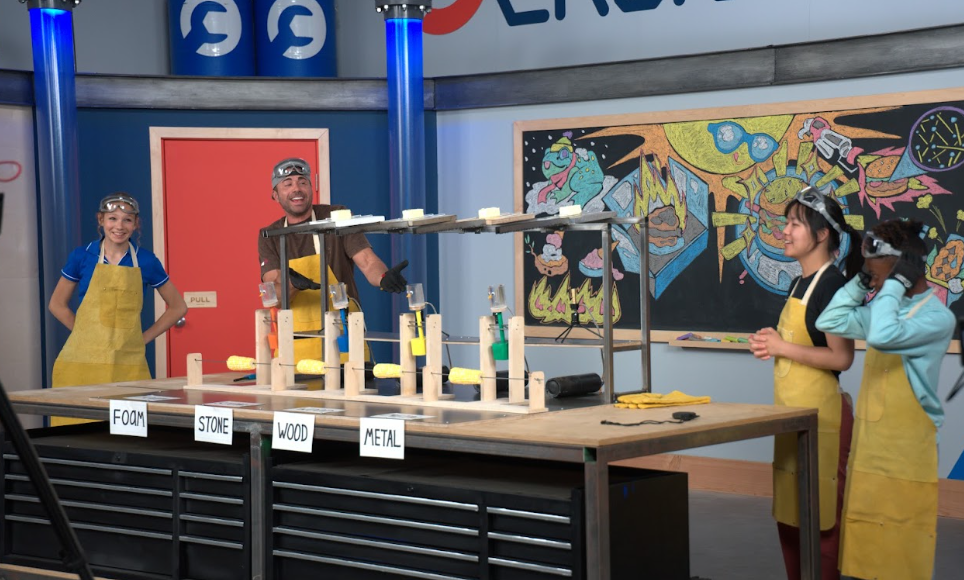
"It has to be stuff you find in a trash can or things teachers already have in their school—cardstock, straws, binder clips, bottle caps," Rober explains. By utilizing household or recycled items, the curriculum democratizes access to high-level scientific exploration. Whether in a well-funded private school or a Title I school, the pedagogical experience remains consistent.
The methodology shifts the teacher’s role from "sage on the stage" to a facilitator of inquiry. In the "Carnival of Collisions" unit, students don’t just learn about kinetic energy through a lecture; they are presented with a high-stakes scenario: a truck with failed brakes. This narrative framing forces students to "Scooby-Doo" their way through the problem, applying physics to solve a practical dilemma over the course of two weeks.
Official Perspectives and Collaborative Vision
Class CrunchLabs is not a solo act. Rober is acutely aware that for a student to envision a career in science, they must see themselves represented in the field. Consequently, the curriculum features a diverse roster of YouTube creators—including personalities like ElectroBOOM and the team from How Ridiculous—who bring varying perspectives, backgrounds, and specialties to the screen.
"They say you can’t be what you can’t see," says Rober. By diversifying the faces of science, the program aims to dismantle the archetype of the isolated, singular genius scientist, replacing it with a collaborative, global community of problem-solvers.
The NSTA partnership serves as the final seal of legitimacy. By working directly with educators, Rober is ensuring that the content integrates seamlessly into existing lesson plans rather than creating additional administrative burdens. "I’m going to teachers and saying, ‘I’m at your service. Your kids know me and enjoy watching the content. Help me help you,’" Rober says.
Implications for the Future of Education
The implications of the Class CrunchLabs initiative are profound. By leveraging the reach of YouTube, Rober is effectively creating a global, open-source educational resource that could shift the paradigm of middle school science.
1. The Death of the Passive Classroom
The traditional model of lecture-followed-by-worksheet is increasingly incompatible with the modern student’s information-consumption habits. Rober’s approach proves that "content" and "curriculum" do not need to be mutually exclusive. By applying entertainment-industry production values to academic content, he is setting a new benchmark for what students expect from their education.
2. Global Scalability
With plans to offer the curriculum in 34 languages, the impact of Class CrunchLabs extends far beyond U.S. borders. This initiative has the potential to provide high-quality, standardized science education to underserved regions globally, effectively lowering the barrier to entry for the next generation of engineers and scientists.
3. A New Model for Philanthropy
Rober’s commitment to spend one week of every month for the next four and a half years creating these videos represents a new model of "impact philanthropy." Instead of simply donating money, high-profile creators are leveraging their unique skill sets—in this case, Rober’s background in engineering and communication—to solve structural societal problems.
Conclusion: A North Star for Education
When asked why he is placing his primary focus on this project, Rober’s answer is characteristically grounded. "We can all have different thoughts on what happens when you die or why we’re here, but at the end of the day, I think we can all agree a successful life is one where you leave the world a better place than you found it."
Class CrunchLabs is, at its heart, an exercise in optimism. It assumes that if you make science fun, accessible, and inclusive, students will naturally gravitate toward it. As the program scales toward its 2030 goal, the success of Class CrunchLabs will be measured not just in YouTube views, but in the millions of students who, for the first time, see science not as a series of dry facts on a page, but as a dynamic, thrilling, and essential tool for navigating the world.
For Mark Rober, this is the most important mission of his career—a labor of love that he believes will have a lasting legacy long after the last experiment is performed. In the competitive, often distracting world of modern media, Rober has chosen to bet on the next generation, providing them with the tools they need to build, invent, and, most importantly, wonder.