










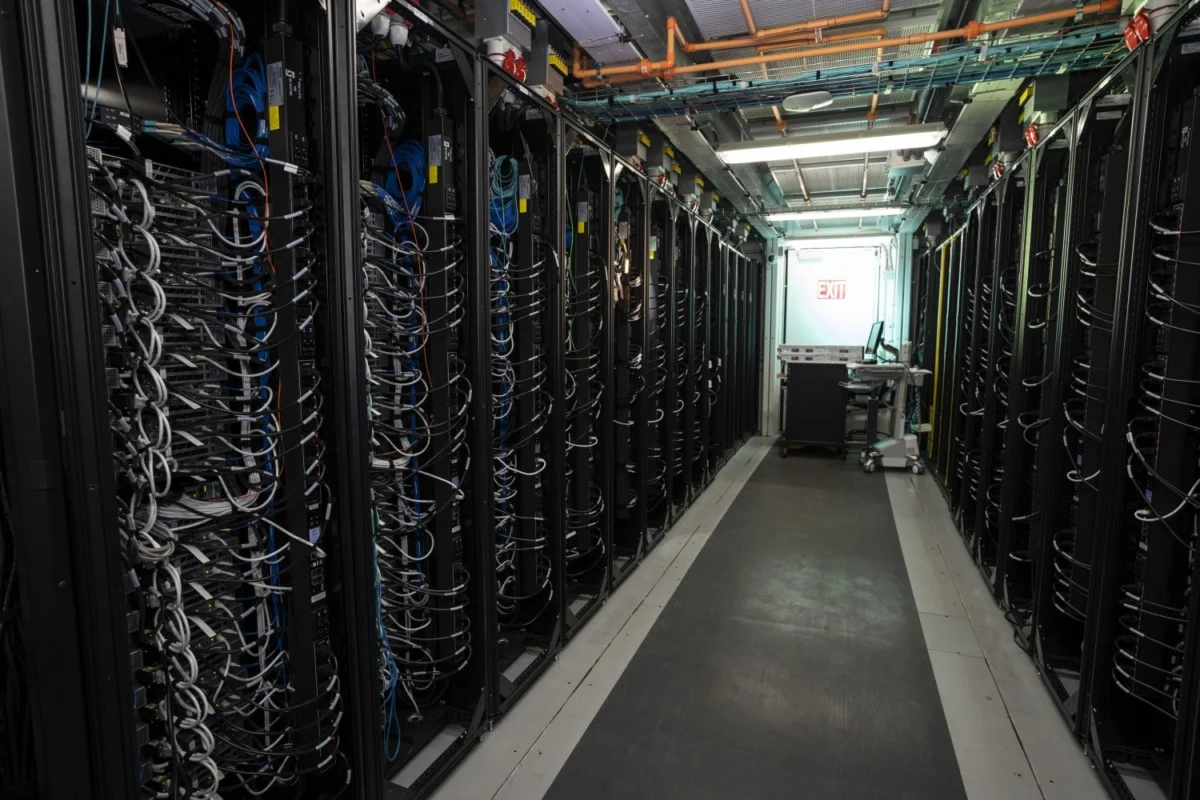
As artificial intelligence permeates every facet of global industry, national security, and scientific discovery, the underlying hardware—the "engine room" of the digital age—has become the most critical theater of technological competition. While software algorithms capture the headlines, the true gatekeeper of AI’s potential is the specialized hardware known as AI accelerators. To navigate this rapidly evolving landscape, the Lincoln Laboratory Supercomputing Center (LLSC) has spent the last eight years cataloging the state of high-performance computing, providing an essential compass for government sponsors and researchers alike.
The Genesis of the Lincoln AI Computing Survey (LAICS)
In 2018, the landscape of high-performance computing was undergoing a seismic shift. The rise of neural networks and deep learning had created a ravenous appetite for computational power, prompting a "Cambrian explosion" of specialized hardware.
"About eight years ago, we saw a sharp rise in the number of research AI accelerators described in research papers and commercial accelerators being announced," recalls Albert Reuther, a staff member at the LLSC. "We started to get questions about them from government sponsors of the laboratory’s work. That was motivation enough to start the survey."
This initiative, dubbed the Lincoln AI Computing Survey (LAICS, pronounced "lace"), was designed to cut through the marketing noise of the burgeoning hardware industry. What began as an internal request for clarity has evolved into a definitive, six-paper series that has become a vital reference point for industry analysts and government decision-makers.
The Taxonomy of Acceleration: CPUs, GPUs, and Beyond
To understand why LAICS is so critical, one must first understand the diversity of the hardware it monitors. AI accelerators are not a monolith; they are a sophisticated spectrum of architectures designed to optimize specific mathematical operations.
- CPUs (Central Processing Units): The versatile "general contractors" of computing. While essential for logic-heavy tasks, they are often outperformed by specialized hardware in the massive parallel processing required for deep learning.
- GPUs (Graphics Processing Units): Originally designed for rendering pixels, their massively parallel architecture proved uniquely suited for the matrix multiplications that underpin modern neural networks.
- ASICs (Application-Specific Integrated Circuits): The "specialized tools" of the industry. They are custom-built for one purpose and one purpose only—such as Google’s TPU—making them incredibly efficient but inflexible.
- FPGAs (Field-Programmable Gate Arrays): Reconfigurable hardware that allows engineers to "rewire" the chip’s logic even after it has been deployed, offering a middle ground between the flexibility of a CPU and the efficiency of an ASIC.
- Dataflow Accelerators: A newer class of hardware that optimizes the movement of data between processors, reducing the "memory wall" bottleneck that often slows down AI models.
The goal of the LAICS team—which includes Michael Jones, Peter Michaleas, Jeremy Kepner, and Vijay Gadepally—is to identify which of these architectures is best suited for specific mission-critical tasks, whether that involves modeling the molecular behavior of new drugs or accelerating complex fluid dynamics simulations.
Chronology of a Data-Driven Crusade
The evolution of the LAICS reports mirrors the acceleration of the industry itself.
2018–2020: The Early Discovery Phase
The inaugural paper in the series analyzed 57 distinct accelerators. At this stage, the team was primarily focused on categorizing existing commercial offerings and establishing a common vocabulary for performance metrics. They identified a significant gap: while companies were quick to announce products, performance data was often proprietary or inconsistent.
2021–2023: Investigating Architectural Trends
As the survey grew, so did its depth. By the time the team reached their most recent reports, they were tracking more than 120 accelerators. The 2022 edition marked a turning point, shifting from simple categorization to deep-dive trend analysis. The researchers discovered that performance gains were no longer solely coming from "brute force" scaling. Instead, they were emerging from smaller, denser transistor designs and the shift toward "lower numerical precision"—a process where chips perform calculations using fewer significant digits to drastically increase speed without sacrificing necessary accuracy.
2024 and Beyond: Architectural Optimization
The latest iteration of the survey focuses on the architectural trade-offs inherent in system design. By analyzing how the addition of cores, memory bandwidth, and parallel processing nodes impacts total system efficacy, the LAICS team is providing a blueprint for the next generation of supercomputing.
Supporting Data: The Metrics of Power and Performance
The primary challenge in surveying AI hardware is the "Black Box" problem. Many startups and established tech giants are reluctant to release raw data regarding peak power consumption versus actual sustained performance.
To combat this, Albert Reuther employs a rigorous intelligence-gathering strategy. He conducts daily news and citation searches, scouring technical press articles, company announcements, and industry presentations to fill the gaps. "It continues to surprise me how each year another five to 10 startups get funded and announced," Reuther notes. "One might think that the landscape is saturated enough, but then another batch of innovative accelerators is introduced."
The LAICS methodology sorts these technologies by their form factor—whether they are implemented as individual chips, full cards, or integrated systems—allowing for an apples-to-apples comparison of energy efficiency. This is particularly important for the LLSC, which operates and optimizes high-performance computing systems for thousands of researchers. Choosing the right hardware is not just a matter of performance; it is a matter of energy budgets, cooling requirements, and total cost of ownership.
Official Responses and Strategic Implications
The implications of this research extend far beyond the walls of the Lincoln Laboratory. As an unbiased technical advisor, the LLSC provides the clarity needed for government agencies to make high-stakes acquisition decisions.
"AI and the hardware it runs on are such hot topics, and it is important for Lincoln Laboratory to be an unbiased technical advisor for choosing and pursuing the right technologies," says Reuther. The survey serves as a safeguard against "hype cycles," ensuring that mission-critical systems are built on foundations that are not only powerful but reliable and sustainable.
For the LLSC itself, the survey is an essential procurement tool. When the time comes to refresh the laboratory’s supercomputing clusters, the team uses the LAICS dataset to determine which GPUs and accelerators offer the best performance-per-watt for their specific research needs. This ensures that taxpayer-funded resources are utilized with maximum efficiency, benefiting all LLSC users.
The Future of the Silicon Race
The speed at which the AI hardware market moves is unprecedented. In just the last few months, six new startups have emerged, announcing their first-generation AI accelerators. This constant churn represents a high-stakes competition to dominate the infrastructure layer of the global economy.
As the industry moves toward more specialized "domain-specific" hardware, the need for the LAICS initiative becomes even more acute. We are entering an era where software and hardware are increasingly co-designed; the software dictates the hardware requirements, and the hardware constraints dictate the software’s limits. By maintaining this comprehensive, open-access record, the Lincoln Laboratory is ensuring that the research community remains ahead of the curve.
For those tracking the trajectory of technological advantage, the LAICS papers and datasets serve as more than just a summary—they are a roadmap to the future of computation. By bridging the gap between theoretical research and practical application, the team at the LLSC continues to demystify the silicon frontier, proving that in the race for AI dominance, the most important tool isn’t just the chip itself, but the data that tells us which one to use.
The full repository of the LAICS findings, including the latest papers and supporting datasets, is available to the public via the project’s GitHub repository. This commitment to transparency ensures that as the landscape of AI hardware continues to shift, the path forward remains illuminated for all.



