In the current corporate landscape, Artificial Intelligence has transitioned from a futuristic novelty to an operational necessity. Yet, as organizations scramble to integrate AI into their daily workflows, many find themselves caught in a paradox: they possess the technology, but they lack the cohesion to make it truly effective. The rapid proliferation of disparate AI models, often appearing on a weekly basis, has created a sense of "AI fatigue" and strategic disorientation among business leaders.
At the recent Atlassian Team Europe 26 conference, the conversation shifted away from the simple adoption of AI toward a more complex, nuanced challenge: how to cut through the noise and achieve genuine, measurable business value. By prioritizing "multiplayer" AI—a framework designed for team-based collaboration rather than individual productivity—Atlassian is positioning itself as the connective tissue between sprawling technological capabilities and human organizational needs.
The Evolution of the AI Workspace: From Individual to Team
For the past two years, the narrative surrounding AI has been dominated by personal productivity gains. Whether it is a coder using a chatbot to write a function or a marketer generating copy, the focus has remained largely solitary.
"Atlassian’s entire ethos is centered on teams—unleashing the power of the team is our mission," explained Tamar Yehoshua, Atlassian’s Chief Product & AI Officer, during the conference. "We have all been using AI agents, but they are currently geared toward the individual. They aren’t organized or effective for teams. We are asking: how do you work effectively with teams and AI? That’s what we call ‘multiplayer.’ We want to ensure everyone can collaborate with agents in an effective way, just as they do with human colleagues."
This shift to "multiplayer AI" reflects a broader realization in the tech industry: work is inherently messy and collaborative. While an individual AI tool might draft a document quickly, a team-based AI architecture must manage permissions, context, history, and dependencies across a project.
Sherif Mansour, Atlassian’s Head of AI, echoed this sentiment, noting that the company’s primary objective is to make the "messiness" of teamwork understandable and controllable. "A lot of AI is about increasing personal productivity, but the same problems we solve for humans—coordination, transparency, and clarity—we are now solving for agents," he said.
Navigating the AI "Chaos": A Strategic Chronology
The adoption of AI in the enterprise has followed a distinct, predictable timeline. According to Yehoshua, we have already moved through the initial stages of the technology’s lifecycle:
- The Phase of Skepticism: When large language models (LLMs) first hit the mainstream, organizations were wary of accuracy, security, and the "black box" nature of generative AI.
- The Phase of Curiosity: This followed quickly, as companies realized the competitive risk of being left behind. Experimentation became the norm, often resulting in "shadow AI" usage across departments.
- The Phase of Acceptance: AI became a standard utility in software stacks. The question shifted from "Should we use it?" to "How do we implement it at scale?"
- The Current Phase: Optimization: We are now in a period of reckoning. Organizations are no longer satisfied with merely using AI; they are demanding a return on investment (ROI). They are asking how to refine their workflows to ensure that the tools they have are actually delivering efficiency rather than just additional, automated noise.
The "Gateway" Strategy: Avoiding Over-Engineering
One of the most significant challenges identified at Team Europe 26 was the "rocket launcher" problem—a term coined by Sherif Mansour to describe the tendency to use overly complex, expensive, and resource-heavy models for trivial tasks.
"You don’t need a massive, sophisticated model to summarize a simple meeting note," Mansour noted. "Using an advanced model for a minor task is like trying to kill a mosquito with a rocket launcher."
To combat this, Atlassian has developed an "AI Gateway." This architectural layer is designed to act as an intelligent switchboard. It automatically selects the most appropriate model for a specific task based on complexity, speed, and cost. If a more advanced or efficient model is released, the system can route tasks to it seamlessly, often without the end-user ever noticing the switch. This provides a "future-proof" layer that prevents companies from being locked into a single model provider, which is essential in an industry where the top-tier technology changes almost monthly.
Implications for Modern Enterprise
The implications of this strategy are twofold: democratization and governance.
Democratization of Innovation
Yehoshua emphasized that AI is empowering more people to contribute to the software lifecycle. "Anyone can build a prototype now," she said. While this allows for rapid innovation, it requires a new set of guardrails. Organizations must balance the ability for anyone to experiment with the necessity of maintaining production-grade security and quality. Atlassian’s approach is to provide a platform where these ideas can be cultivated safely, ensuring that the "democratization" of coding doesn’t lead to a proliferation of technical debt.
Context as a Competitive Differentiator
Perhaps the most crucial takeaway from the conference was the role of "context." As AI models become commodities—accessible to every company via APIs—the intelligence of the model itself is no longer the primary differentiator.
"If we all have access to the same intelligence, that’s a level playing field—it’s the sum of all averages," Mansour explained. "What’s unique is the actual perspective and the specific data context you bring to the table."
Atlassian’s strategy is to help customers enrich their own "context graph." By feeding proprietary, secure, and relevant internal data into AI agents, businesses can produce outcomes that are far more valuable than those generated by a general-purpose model. The goal is to make the company’s internal knowledge the primary asset that the AI works with.
Moving Toward a "Nervous System" for Teams
The consensus among Atlassian’s leadership is that there is no "silver bullet" for digital transformation. Instead, they advocate for building what they call a "nervous system" for the enterprise.
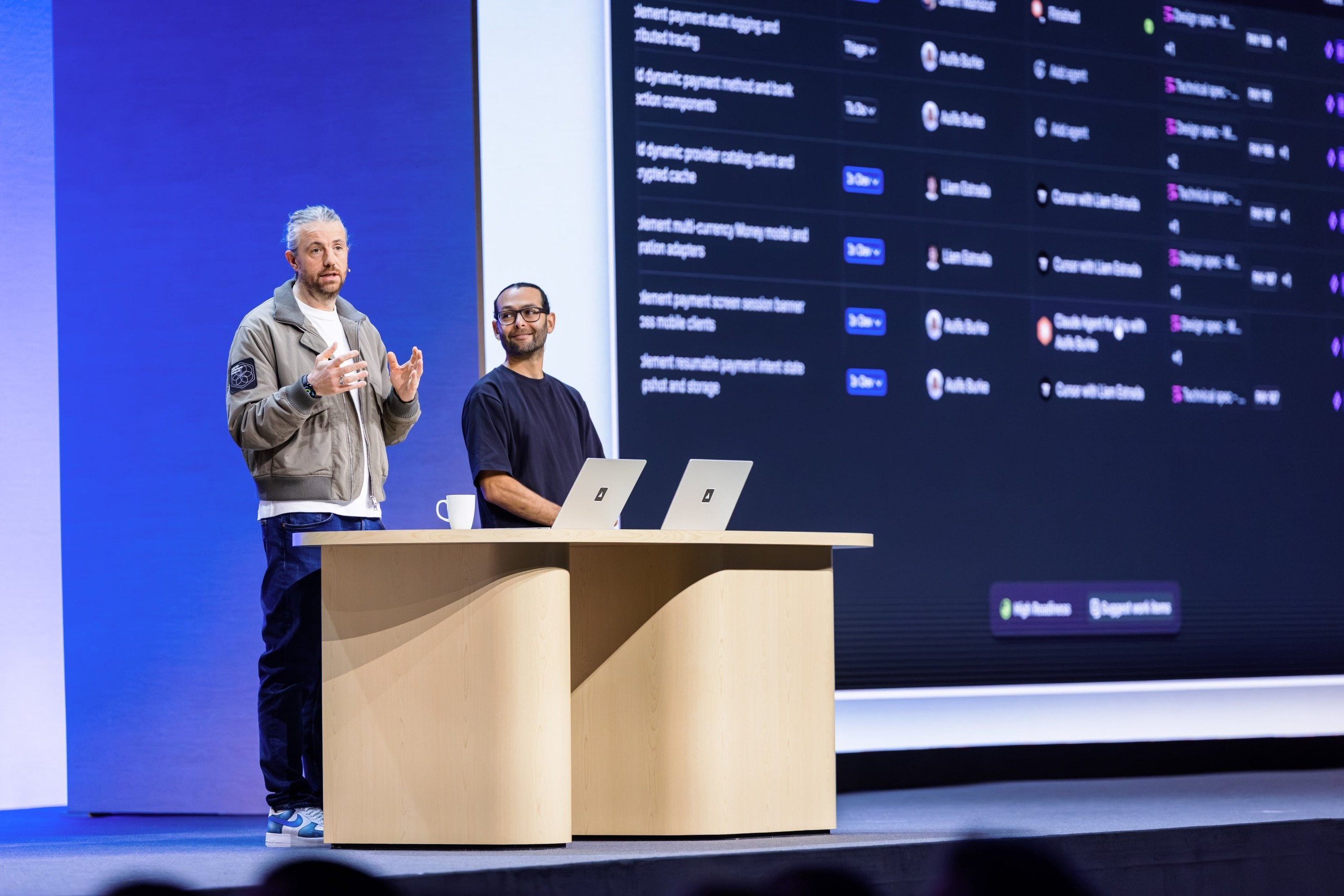
"The chaos of work will always be there," Mansour stated. "Our goal is not to eliminate the chaos, but to make sure you are aware of it. It’s about bringing calm, visibility, and control to the organization."
As companies look to the future, the message is clear: AI is not a destination but a transformative medium. For those who choose to view it through the lens of team-based collaboration, the potential to accelerate delivery and reduce friction is immense.
Atlassian CEO Mike Cannon-Brookes captured this sentiment during his keynote, noting, "Customers are not subscribing for the software we’ve built, but for the software we will build." In an era of rapid AI evolution, this commitment to continuous, collaborative improvement is perhaps the most important strategy an organization can adopt. By focusing on the "multiplayer" nature of work, and by building systems that favor adaptability over rigid tool-lock-in, businesses can navigate the current AI disruption not as victims of the chaos, but as architects of a more efficient future.