As the week draws to a close, the pace of innovation in artificial intelligence shows no signs of slowing. From revolutionary approaches to operational automation to cinematic breakthroughs in generative video, the landscape is shifting from "AI as an assistant" to "AI as an engine." This week’s developments underscore a critical transition: we are moving past the novelty of prompting and into an era of integrated, agentic workflows that promise to redefine professional efficiency.
The Operational Pivot: Why Forms are the New Frontier of Automation
For the past two years, the conversation surrounding AI has been dominated by the art of the "prompt." Users have spent countless hours refining their interactions with Large Language Models (LLMs) to extract better summaries, more creative drafts, and deeper insights. However, a significant bottleneck remains: AI often provides information that still requires a human to interpret and execute.
Beyond Prompting: The Power of Structured Input
The true unlock for enterprise efficiency isn’t better natural language processing—it’s the humble form. By shifting from open-ended chat prompts to structured data entry, professionals can transform AI from a passive reporter into an active participant.
When a user relies on a standard chat interface, the output is often a block of text that requires manual entry into a CRM, project management tool, or email client. By using a form as an interface, every label acts as a hard constraint and an instruction, and every dropdown menu eliminates the ambiguity of natural language. The result is structured data that is ready for immediate ingestion by automation platforms like Zapier, Make, or custom APIs.
The Trigger-Response Loop
This structural shift enables the "trigger-response" workflow. Once a form is submitted, the automation chain reacts instantly. For example:
- Competitor Intel: A form entry triggers a post directly to a Slack or Teams channel.
- Administrative Tasks: Call notes are parsed into structured fields and automatically assigned as tasks in Jira or Asana.
- Sales Enablement: Prospect research is aggregated, a record is created in Salesforce, and an outreach email is drafted—all without a human clicking "send."
By treating the AI as an engine that consumes structured data rather than a chatbot that provides unstructured advice, businesses can move toward true "lights-out" automation.

Cinematic Mastery: Demystifying Professional AI Video
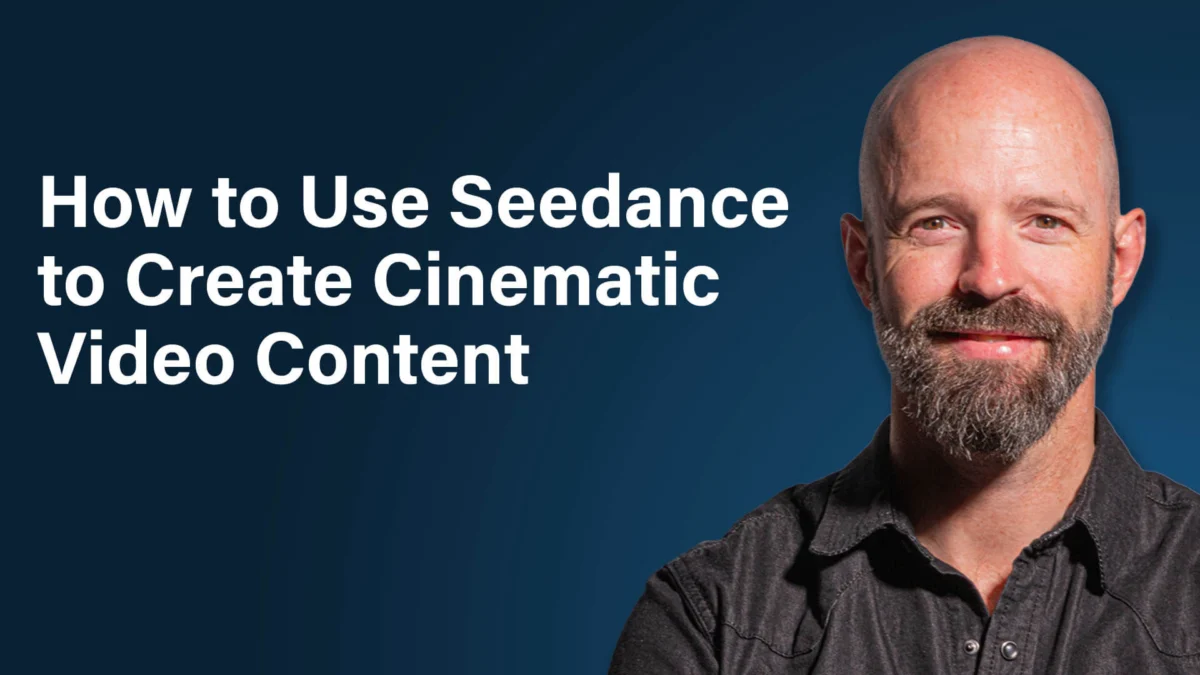
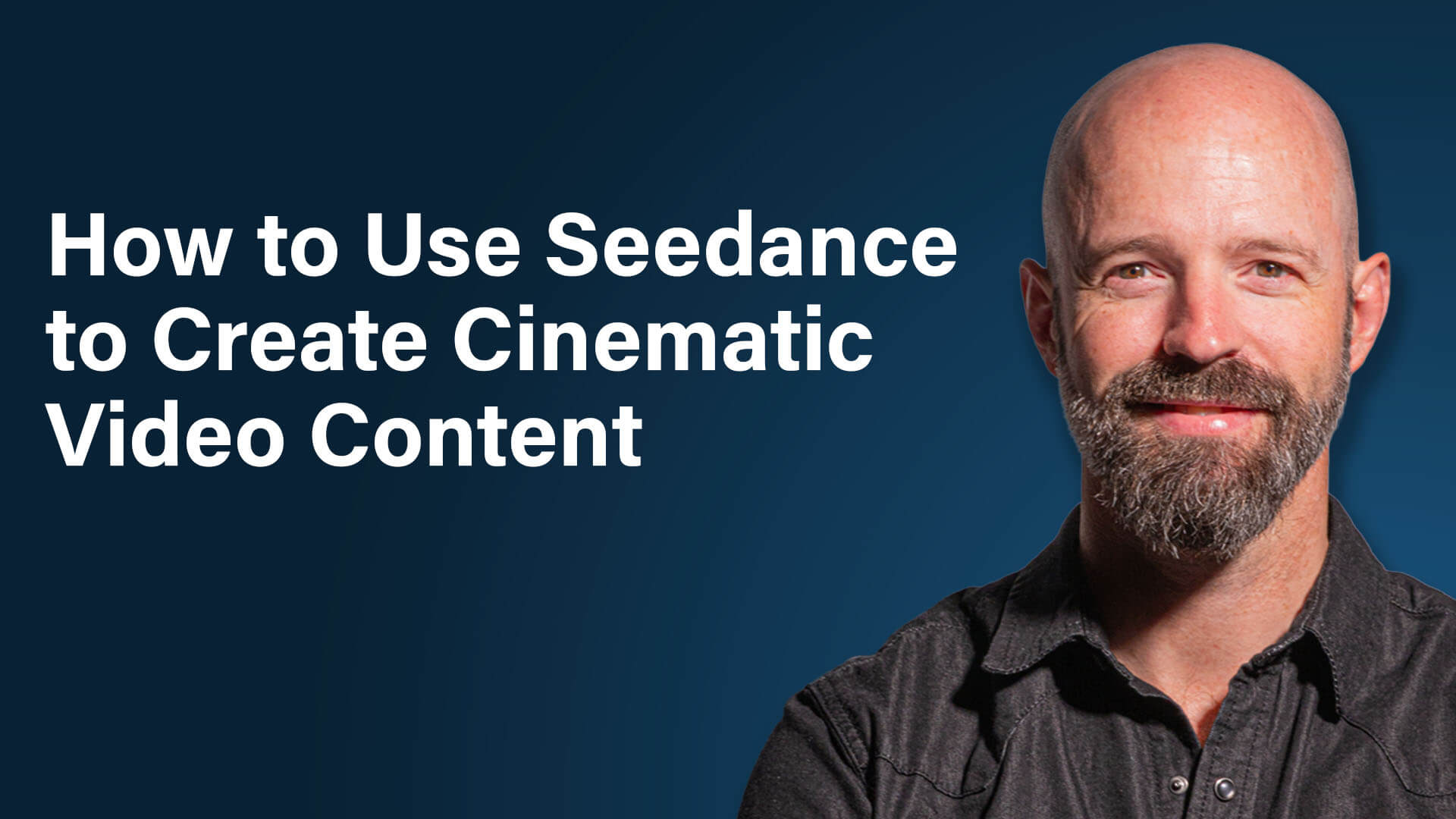
While operational automation gains traction, the creative sector is undergoing its own revolution. The era of "spaghetti-limbed" AI videos—characterized by distorted limbs and nonsensical movement—is rapidly coming to an end. Ross Symons, co-founder and Chief Creative Officer of Zen Robot, notes that we have entered a phase where AI-generated footage is becoming indistinguishable from traditional cinematography.
The Misconception of "Ease"
The most prevalent myth in the creative AI space is that these tools are "easy to use" simply because they accept prompts. Symons argues that high-quality results require a fundamental shift in communication strategy. Professional AI video is not about typing a description; it is about managing a technical process that involves diffusion models and LLMs working in concert.
The Workflow of a Modern AI Studio
To achieve polished, intentional content, creators must abandon the "generate and pray" method in favor of a storyboard-first approach:

- Concept Before Prompt: Before touching an AI tool, creators must define the narrative. Using an LLM to sharpen the story structure is a critical preliminary step.
- Key Visuals and Composition: AI models tend to default to centered, flat compositions. By utilizing "director shorthand"—referencing the visual style, lighting, and camera angles of specific filmmakers—creators can inject depth and emotion into their scenes.
- The Keyframe Strategy: To avoid the "spaghetti" effect in motion, professionals utilize start and end frames. By defining the beginning and end of a sequence and using timed prompts, the AI is forced to interpolate between two stable points, ensuring continuity and professional-grade editing.
Industry Chronology: Key Developments This Week
The rapid succession of product launches this week confirms that the industry is leaning heavily into "agentic" capabilities—systems that do more than just talk; they act.
Anthropic’s Triple-Play: Opus 5.5 and Unified Workflows
- Claude Opus 5.5: Anthropic’s flagship model has been upgraded to handle more complex coding and research tasks with lower latency and increased efficiency. This model is designed specifically for "computer-use" scenarios, where the AI interacts with software environments directly.
- Unified Interface: In a move to reduce "context switching," Anthropic has consolidated Chat, Cowork, Artifacts, and design tools into a single, seamless workspace. This integration allows users to build presentations and documents while maintaining a live connection to the AI’s research capabilities.
Meta’s Expansion into the Desktop
Meta has officially brought its Muse AI agent to macOS. This is a significant milestone for local computing, as Muse now possesses permission-based access to native files, calendars, and communication tools. Unlike cloud-only assistants, Muse on Mac can trigger actions within a user’s local ecosystem, such as scheduling a meeting or drafting an email from a local file, marking a shift toward true desktop autonomy.
OpenAI’s Advertising Transformation
OpenAI is aggressively pursuing the marketing sector by integrating conversational AI into its advertising suite. The introduction of "Sponsored Agents" allows businesses to provide potential customers with an AI representative that can answer questions and guide them through a sales funnel directly within the ChatGPT interface. Combined with new HubSpot and Shopify integrations, OpenAI is positioning itself as an end-to-end campaign management engine.
Implications: The Shift Toward Durable Workflows
As platforms evolve, the greatest risk to businesses is not the AI changing, but the workflow breaking. Many organizations have built processes that are tightly coupled to a specific AI tool’s current feature set.
Survival Strategies for AI Adoption
The industry is moving toward a "platform-agnostic" philosophy. As tools like Claude, ChatGPT, and Muse compete for dominance, businesses are being advised to build workflows that treat the underlying model as a replaceable component.
- Decoupling the Logic: By building logic into independent automation platforms rather than the AI interface itself, companies ensure that if one model goes down or increases its pricing, the workflow remains intact.
- The Four-Step Method: Experts suggest a standard methodology for building "model-agnostic" agents: define the input (the form), the processing logic (the automation), the API connection (the model), and the output (the destination).
Professional Outlook
The common thread across all these updates is a transition toward Agentic AI. We are moving from a world where we spend our time "talking to bots" to a world where we spend our time "designing systems that bots execute."
For the professional, the challenge of the coming months will not be learning the latest prompt-engineering hack. Instead, it will be the ability to architect systems that are robust, automated, and capable of operating across diverse software environments. Whether you are a content creator looking to produce cinematic sequences or a business owner looking to automate CRM entries, the mandate is clear: build for the workflow, not just the prompt.
As we look toward the remainder of the year, the winners in the AI space will be those who view these tools not as toys to be chatted with, but as engines to be integrated into the very infrastructure of their daily operations.