







For nearly two decades, navigating social media algorithms has felt remarkably similar to training an unpredictable pet. Users have had to rely entirely on indirect behavioral cues—liking a video about woodworking, pausing for three seconds on a news clip, or hastily scrolling past celebrity gossip—hoping that Meta’s underlying machine learning models would eventually pick up on subtle preferences.
Now, Meta is fundamentally changing how its platforms interpret user intent. In a major platform update, the tech giant is rolling out a brand-new feature called “Your Algorithm” for Facebook. Designed to bridge the gap between human desire and algorithmic output, this AI-powered tool allows users to fine-tune their primary Feed and Reels recommendations simply by spelling out what they want to see more—or less—of, using plain, natural language.
Following similar personalization initiatives introduced across Instagram and Threads, the rollout marks a significant shift in Meta’s overarching recommendation philosophy: instead of merely watching what users do, the algorithm is finally learning how to listen.

Main Facts: What Is ‘Your Algorithm’?
At its core, Your Algorithm provides Facebook users with a dedicated, centralized space to manage, view, and directly alter the topics that populate their feeds. Rather than leaving content curation entirely up to background tracking pixels and engagement metrics, the feature introduces explicit, user-driven text inputs into the discovery pipeline.
- Natural Language Processing: Users are no longer restricted to binary choices like clicking a simple "Hide" or "See Fewer Posts Like This" button. They can now type explicit textual descriptions detailing their preferences—such as “Show me more DIY computer-building tutorials and fewer political debates” or “I want to see more local hiking trails and fewer sponsored ads for fashion.”
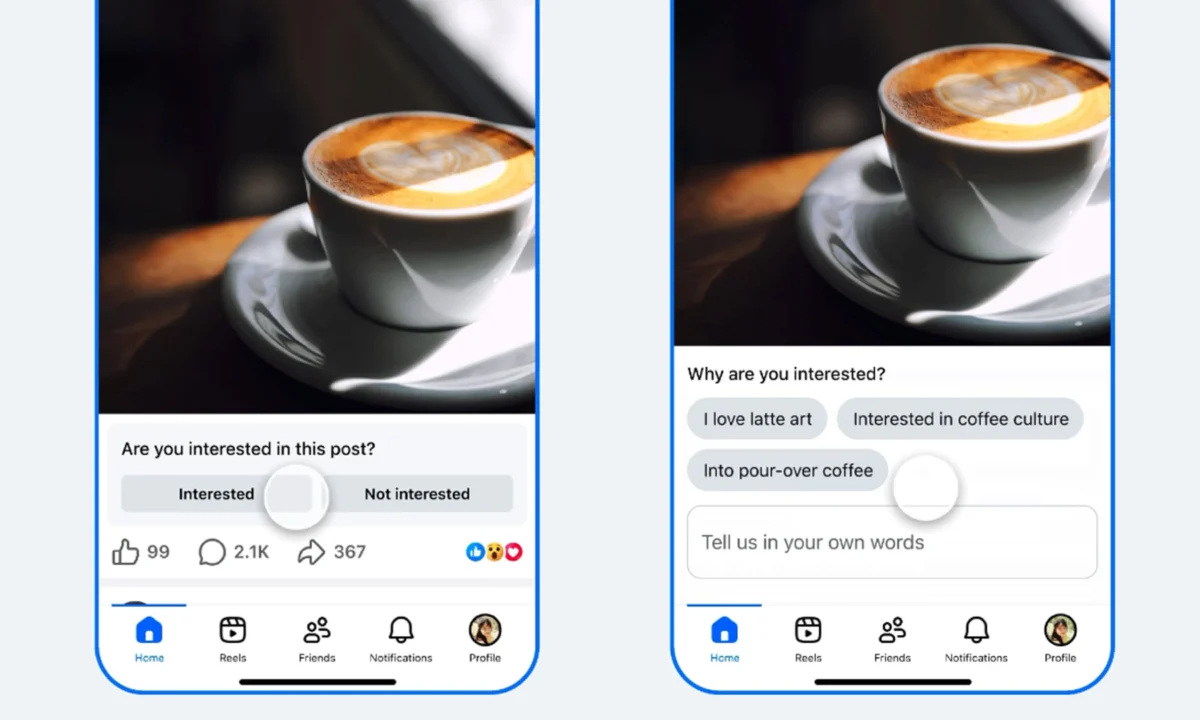
- Direct Feedback Mechanisms: The feature is accessible directly through the traditional three-dot menu found on individual posts. Additionally, revamped "Interested" and "Not Interested" options let users feed immediate feedback into the ranking engine.
- Interactive Follow-Ups: In certain instances, Facebook’s system may prompt users with follow-up questions to dig deeper into why a particular piece of content appeals to them, or conversely, why it missed the mark.
- Real-Time Responsiveness: According to Meta, the integration of advanced Large Language Models (LLMs) means that the ranking system can parse these instructions and adjust recommendations on the fly, potentially altering the very next batch of posts or videos that appear during the same active scrolling session.
Chronology: The Evolution of Meta’s Feed Customization
To understand the significance of Your Algorithm, it helps to look back at how Facebook has historically handled content distribution, and how Meta has gradually shifted control back to the end user.
The Black-Box Era (2006–2018)
In Facebook’s early years, feeds were straightforward, organized primarily in reverse-chronological order. However, as the platform grew, the sheer volume of content made chronological feeds untenable. Meta introduced complex algorithmic ranking models designed to maximize "time on site." These systems operated as opaque black boxes, tracking clicks, comments, shares, and watch time to curate a personalized experience. Users had almost no direct control over the underlying logic, leading to frequent frustration over unwanted content.

The Push for Granular Controls (2019–2023)
As public and regulatory scrutiny over algorithmic radicalization and echo chambers intensified, Meta began introducing rudimentary control features. Tools like "Favorites" (allowing users to prioritize specific friends or pages) and "Snooze" (temporarily hiding specific accounts for 30 days) were rolled out. Later, Meta introduced the "Feed Filter Bar," giving users a manual toggle between algorithmic recommendations, chronological feeds, and curated lists.
The Cross-Platform AI Push (2024–2025)
With the explosive growth of short-form video via Reels and the rise of generative artificial intelligence, Meta began overhauling its recommendation infrastructure. Similar natural-language curation mechanisms began appearing experimentally across Instagram—allowing users to reset or guide their main algorithm—and Threads, which adopted simple text prompts to filter out unwanted discourse.
The Launch of Your Algorithm (October 2026)
Meta officially announces and begins the global rollout of Your Algorithm for Facebook Feed and Reels. By leveraging sophisticated LLMs, the feature bridges the gap between passive behavioral tracking and active, conversational content moderation.

Supporting Data and Technical Architecture
Under the hood, Your Algorithm represents a fundamental marriage between traditional recommendation systems (collaborative filtering, deep-learning ranking models) and modern generative AI frameworks.
- LLM Integration: Meta is deploying its suite of internal Large Language Models to parse the unstructured, conversational text entered by users. When a user types a prompt into the Your Algorithm dashboard, the LLM extracts semantic intent, tagging specific categories, entities, and negative filters that are then injected into the real-time ranking pipeline.
- Dual-Engine Personalization: The system does not completely abandon historical telemetry data. Instead, it operates on a hybrid architecture. Historical likes, shares, and watch durations still form the baseline behavioral profile, but the user’s natural language inputs act as a dynamic "override layer" that can instantly boost or suppress specific content vectors.
- Reels Integration: Given the algorithmic dominance of short-form video on modern social media platforms, Your Algorithm has been deeply integrated into the Reels player interface, acknowledging that visual content is notoriously difficult for traditional systems to categorize accurately based on likes alone.
Official Responses and Industry Context
Meta’s engineering and product teams have framed Your Algorithm as a crucial step toward transparency and user empowerment in an era defined by automated curation.
In official statements accompanying the rollout, Meta emphasized that while automated recommendations will remain the backbone of discovery on Facebook—helping users find communities, creators, and topics they didn’t know existed—users should not feel trapped by a machine learning model that misinterprets their occasional curiosity for a permanent lifestyle change.

Industry analysts have largely praised the move, noting that as social media algorithms increasingly push aggressive monetization and engagement-bait, platforms must provide escape hatches to prevent user fatigue. By allowing users to verbally correct the AI, Meta hopes to reduce the friction that often drives younger audiences away from traditional feeds toward niche, highly curated alternative apps.
However, tech critics have also pointed out the inherent challenge: trust. The true test of Your Algorithm will not be how easily users can type a command, but whether the platform’s backend engineering actually respects those commands over the lucrative pull of high-engagement, controversial, or ad-driven content.
Implications for Users, Creators, and Advertisers
The introduction of Your Algorithm carries profound implications for all major stakeholders within the Facebook ecosystem:

For Everyday Users
The most immediate benefit is relief from the "accidental training" trap. Anyone who has clicked on a humorous video of a cat wearing a hat, only to have their entire feed inundated with feline media for the next three weeks, knows the pain of legacy algorithms. Your Algorithm offers a quick, clean escape route. Users can finally curate a healthier, more relevant digital environment without having to meticulously wipe their search histories or reset their accounts.
For Content Creators
Creators must adapt to a landscape where audiences have explicit, vocal control over their visibility. While passive metrics like watch time will remain vital, creators who rely on clickbait or polarizing hooks may find themselves explicitly filtered out by users who use natural-language prompts to banish specific tropes. Conversely, niche creators who build hyper-targeted communities could see a surge in loyal engagement, as users actively type their specific passions into the algorithm.
For Advertisers and Brands
Paid media on Facebook will face a new layer of friction. If users can easily tell Your Algorithm to minimize sponsored content or restrict ads to specific categories, performance-marketing strategies will need to evolve. Advertisers will no longer be able to rely solely on broad demographic targeting; they will need to ensure their creative assets clearly align with the genuine semantic interests that users are actively feeding into their custom algorithms.

The Road Ahead
As the global rollout of Your Algorithm continues to scale across Facebook apps worldwide, Meta stands at a fascinating crossroads in social media history. For over a decade, tech companies operated under the paternalistic assumption that algorithms knew what users wanted better than the users themselves.
By finally handing over the steering wheel—or at least sharing it with a conversational co-pilot—Facebook is acknowledging that human preference is too nuanced for mere thumbs-ups and thumbs-downs. Whether the underlying AI listens as precisely as promised remains to be seen, but for millions of scrollers weary of endless algorithmic guessing games, a platform that finally takes requests is a welcome evolution.