In a significant move that highlights the ongoing churn among institutional investors in the Indian foodtech sector, global financial powerhouse Goldman Sachs has offloaded a substantial portion of its stake in the quick commerce and food delivery giant, Eternal. The transaction, executed via a block deal on the National Stock Exchange (NSE), saw the divestment of 53.4 lakh shares, signaling a strategic profit-booking exercise amidst a period of robust growth for the company’s stock.
The Transaction: Anatomy of the Block Deal
The block deal, valued at approximately ₹168.7 crore, was facilitated through Goldman Sachs Bank Europe SE. According to the data filed with the NSE, the shares were traded at an average price of ₹316 per unit. This pricing represented a discount of roughly 2.6% compared to Eternal’s closing price of ₹324.35 on the preceding Thursday.
The liquidity provided by this exit was swiftly absorbed by Bank of America (BofA), acting through its affiliate BofA Securities Europe. The seamless transition of these shares from a long-term institutional holder to another global banking giant underscores the continued high-conviction interest that international players maintain regarding Eternal’s market position.
A Chronology of Institutional Movements
This latest divestment is far from an isolated event; rather, it represents the second major block deal involving Eternal in just the last two months, reflecting a broader trend of institutional portfolio rebalancing.
In early September, the market witnessed a much larger churn when French financial services major BNP Paribas and the US-based hedge fund Millennium Management offloaded a combined total of over 9.9 crore shares. That transaction, valued at a staggering ₹3,264.8 crore, sent ripples through the market but was ultimately absorbed without destabilizing the company’s long-term valuation trajectory.
The recurrence of these large-scale block deals suggests that while early institutional investors are looking to monetize their gains following a period of strong performance, there remains an appetite among other global funds to establish or increase their presence in the Indian quick commerce narrative.
Supporting Data: The Bullish Momentum
The decision to offload shares comes at a time when Eternal’s stock is experiencing a sustained upward trend. Over the past three months, the foodtech giant’s shares have surged by nearly 10%. On a year-to-date (YTD) basis, the stock has climbed an impressive 16.2%, reflecting investor confidence in the company’s pivot toward high-growth segments.
Financial Performance at a Glance
The underlying catalyst for this market enthusiasm is Eternal’s recent financial performance, which has defied broader concerns regarding the saturation of the food delivery market and the fierce competition in the quick commerce space.
- Net Profit Surge: In the first quarter of FY27, Eternal reported a consolidated net profit of ₹92 crore. This figure represents a massive 3.7x jump compared to the ₹25 crore reported in the same quarter of the previous fiscal year.
- Revenue Growth: The company’s operating revenue reached ₹20,211 crore during the quarter, marking a significant 182% year-on-year increase and a 17% sequential growth.
These figures illustrate a company that is successfully navigating the transition from a pure-play food delivery platform to a comprehensive instant-delivery infrastructure provider.
The Quick Commerce Engine: Blinkit’s Dominance
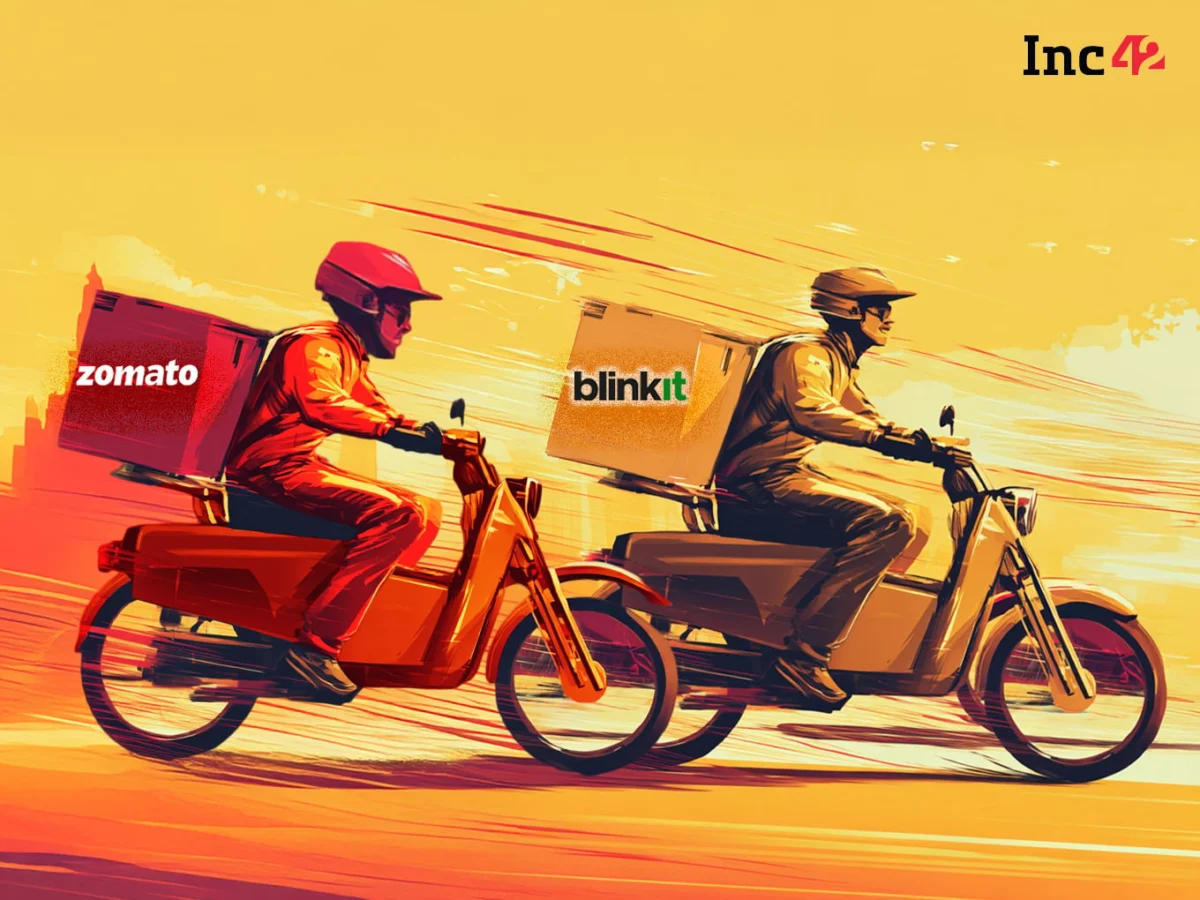
The primary driver behind Eternal’s recent stock performance is its quick commerce arm, Blinkit. Despite the entry of formidable competitors—including Flipkart’s Minutes, Swish, and Rapido’s Ownly—Blinkit continues to hold a dominant share of the instant delivery market.
The "quick commerce" model has moved beyond a pandemic-era convenience to become a core consumer habit in Tier-1 and Tier-2 Indian cities. By aggressively expanding its "dark store" network and optimizing supply chain efficiencies, Eternal has managed to capture a significant share of the wallet for grocery, electronics, and daily essentials. Analysts note that Eternal’s ability to achieve operating leverage in this capital-intensive sector is a key differentiator that separates it from smaller, less-capitalized entrants currently flooding the market.
Market Implications and Analyst Perspectives
The fact that Goldman Sachs exited at a discount suggests a desire to lock in gains rather than a lack of confidence in the underlying business. Institutional "profit-booking" is a standard lifecycle event for companies that have transitioned from high-risk startup status to stable, publicly traded entities.
Impact on Retail Investors
For retail shareholders, these block deals often cause short-term volatility. However, the consistent entry of other global entities like BofA provides a "floor" for the stock price. When major institutional houses swap positions, it indicates that the asset remains a "must-have" in the portfolios of global equity funds looking for exposure to India’s digital economy.
Competitive Landscape
Eternal’s resilience in the face of new entrants is a testament to its first-mover advantage and the density of its delivery network. While competitors are burning cash to capture market share, Eternal has demonstrated a path to profitability, which is the ultimate metric investors are scrutinizing in the current high-interest-rate environment.
The Road Ahead: Balancing Growth and Margins
As Eternal moves into the subsequent quarters, the focus will shift toward whether it can sustain the pace of its profit growth. The quick commerce market is notoriously margin-thin, and the pressure to maintain delivery timelines while managing rising logistics costs remains a persistent challenge.
However, the company’s ability to leverage its massive customer base for cross-selling—moving from food to groceries and, increasingly, to high-margin electronics and home goods—provides a roadmap for sustained revenue growth.
Strategic Outlook
- Consolidation: The market is likely to see further consolidation. As smaller players find the cost of scaling unsustainable, Eternal’s dominance is expected to solidify.
- Margin Expansion: With the core food delivery business reaching maturity, the focus on Blinkit’s unit economics will be the primary barometer for future stock performance.
- Institutional Stability: Investors should expect continued churn in shareholding patterns as early venture capital and private equity backers look for exit windows following the company’s strong public market performance.
Conclusion
The ₹168.7 crore block deal executed by Goldman Sachs is a reflection of the vibrant, evolving nature of the Indian capital markets. While the headline figure of a stake sale might be interpreted as a negative signal by some, the broader context of Eternal’s financial strength and the immediate absorption of these shares by another major global player suggests a vote of confidence in the company’s long-term prospects.
As Eternal continues to navigate the hyper-competitive landscape of quick commerce, its ability to maintain its growth trajectory, manage its unit economics, and retain the trust of global institutional investors will be critical. For now, the "Eternal story" remains one of the most compelling narratives in the Indian tech-retail ecosystem, characterized by rapid scaling and a relentless pursuit of operational efficiency.
Disclaimer: This report is for informational purposes only and does not constitute financial advice. Investors are advised to consult with certified financial planners before making investment decisions based on market data.