






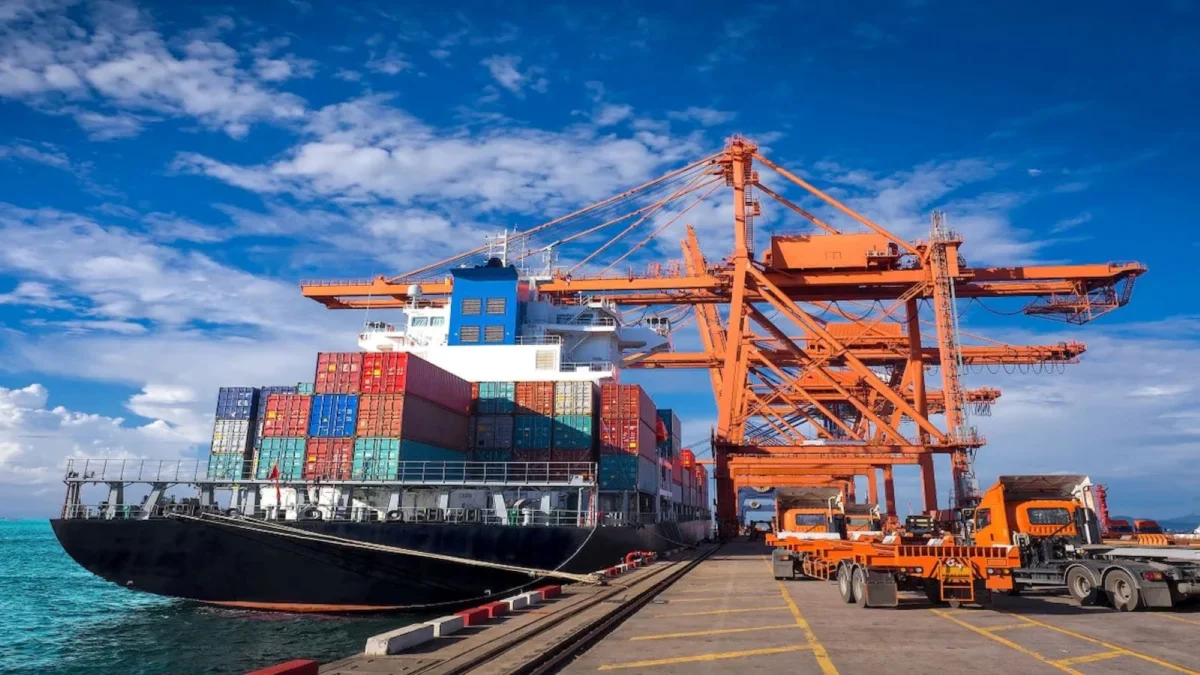
NEW DELHI — India’s economic and strategic trajectory with Europe is entering an unprecedented era of growth. According to a landmark report released by the Associated Chambers of Commerce and Industry of India (ASSOCHAM), India’s total exports of goods and services to Germany are projected to skyrocket past the $50 billion mark by the year 2030.
This meteoric rise is being underpinned by a powerful convergence of expanding economic complementarities, the recently concluded India-European Union Free Trade Agreement (FTA), and a dramatic deepening of bilateral industrial, technological, and defense cooperation.
As Berlin looks to diversify its global supply chains and New Delhi rapidly ascends as the world’s fastest-growing major economy, the bilateral partnership is morphing from a traditional buyer-seller dynamic into a high-tech, co-development powerhouse.
Main Facts: The Anatomy of an Economic Boom
The ASSOCHAM report outlines a rapidly accelerating commercial relationship that has weathered global economic headwinds to reach historic milestones. Germany firmly retains its position as India’s largest trading partner within the European Union (EU), serving as a crucial gateway for Indian manufacturing and services into the wider European market.
Key highlights of the bilateral ledger include:
- Merchandise Trade Growth: Bilateral merchandise trade between India and Germany reached $31 billion in FY26, marking a robust 41% expansion compared to FY18 levels.
- Export Trajectory: India’s merchandise exports to Germany grew by 8.44% to hit $11.5 billion in FY26, spearheaded by high-value sectors such as automotive components, electrical equipment, advanced pharmaceuticals, and specialized textiles.
- Services Sector Dominance: Trade in services between the two nations stands at an impressive $16.76 billion, with Indian service providers capturing the larger share of the exchange, fueled by IT, engineering consulting, and digital capabilities.
- Investment Footprint: More than 2,000 German companies currently operate in India, backed by cumulative foreign direct investment (FDI) totaling approximately $15.84 billion. These enterprises are heavily concentrated in engineering, automotive manufacturing, chemicals, and professional services.
ASSOCHAM’s analysis emphasizes that this relationship thrives on a natural economic synergy: India provides an expanding domestic consumer market, a vast and skilled young talent pool, and competitive manufacturing capabilities, while Germany contributes cutting-edge technology, specialized capital goods, and decades of industrial engineering expertise.
Chronology of Collaboration: Milestones Shaping the Partnership
The pathway to the current economic milestone has been paved with strategic diplomatic engagements, institutional frameworks, and landmark policy shifts over the past decade.
- 2015 — Launch of MIIM: Recognizing the distinct needs of Germany’s famed Mittelstand (small and medium-sized enterprises), the Embassy of India in Berlin launched the Make in India Mittelstand (MIIM) initiative. Designed to offer hand-holding support and demystify India’s regulatory and investment climate, MIIM became a vital bridge for mid-sized German enterprises entering the Indian market.
- January 27, 2026 — The Historic India-EU FTA: In what is widely regarded as a watershed moment for international trade, India and the European Union officially concluded a comprehensive Free Trade Agreement. The pact establishes a framework that will progressively eliminate or drastically reduce tariffs on more than 99% of Indian goods entering the EU market, while systematically opening India’s domestic economy to European goods.
- January 2026 — Chancellor Friedrich Merz’s State Visit: German Chancellor Friedrich Merz undertook a high-stakes diplomatic visit to New Delhi, resulting in a staggering 19 bilateral agreements and Memorandums of Understanding (MoUs) spanning 10 strategic domains. Key deliverables from the summit included the formal adoption of the Defence Industrial Cooperation Roadmap, a dedicated partnership on the semiconductor ecosystem, a joint declaration on critical minerals, the launch of the Digital Dialogue (2026–27), and Global Skill Partnerships aimed at seamless talent mobility.
Supporting Data: Sectors Driving the Expansion
The ASSOCHAM report provides a granular breakdown of the sectors expected to fuel the race toward the $50-billion export milestone by 2030. The removal of trade barriers under the India-EU FTA is expected to drastically enhance the price competitiveness of Indian goods across German retail and industrial supply chains.
1. Traditional and Value-Added Manufacturing
Indian exports are gaining substantial ground in high-specification product categories. Double-digit growth has been recorded in:
- Electrical plant components
- Automotive sub-assemblies and parts
- Pharmaceutical formulations and active pharmaceutical ingredients (APIs)
- Agricultural inputs and specialized technical textiles
2. Tapping Germany’s Import Appetites
Germany imports hundreds of billions of dollars worth of industrial machinery, electrical equipment, and vehicles annually. Currently, India accounts for 3.5% of Germany’s total imports of organic chemicals and maintains a robust market presence in iron and steel articles and pharmaceuticals. The FTA is expected to allow Indian players to capture a significantly larger slice of these lucrative import streams.
3. Sunrise Sectors and Future Growth Engines
Looking ahead to the next decade, ASSOCHAM has identified eleven high-potential areas for bilateral cooperation:
- Defense and aerospace manufacturing
- Semiconductors and electronics design
- Critical minerals sourcing and processing
- Green hydrogen and renewable energy storage
- Automotive and green mobility solutions
- Pharmaceuticals and advanced biotechnology
- Information technology and artificial intelligence (AI)
- Shipbuilding and maritime infrastructure
- Urban infrastructure development
- Education, vocational training, and skilling
Official Responses and Strategic Policy Alignment
Government and industry leaders on both sides have lauded the deepening partnership, emphasizing that it transcends mere commerce to address global challenges such as climate change, supply chain resilience, and geopolitical stability.
The modernization of ties has been heavily bankrolled by financial commitments from Berlin. Germany’s landmark €10 billion Green and Sustainable Development Partnership, bolstered by an additional €1.24 billion injection announced in early 2026, is actively financing joint initiatives in renewable energy, large-scale green hydrogen production, electric mobility infrastructure, and sustainable urban planning.
Furthermore, technology is rapidly emerging as the third pillar of bilateral ties alongside trade and investment. Projects like the establishment of Infineon’s Global Capability Centre in Gujarat’s GIFT City, ongoing joint research through the Indo-German Science and Technology Centre, and the implementation of the Higher Education Roadmap are directly linking Indian engineering talent with German industrial research labs.
In the defense arena, bilateral ties are shedding their historical buyer-seller skin to embrace co-development and co-production models. Backed by streamlined export clearance mechanisms, joint military exercises, and a newly established Indo-Pacific consultation framework, these defense linkages are opening unprecedented doors for Indian Micro, Small, and Medium Enterprises (MSMEs) to integrate into sophisticated German defense and aerospace supply chains.
Implications: Empowering MSMEs and Shaping the Future
The projections detailed in the ASSOCHAM report carry profound implications for the structure of Indian industry, particularly for the MSME sector, which forms the backbone of the country’s manufacturing output.
Expanding the Footprint of Indian MSMEs
For decades, large multinational corporations dominated bilateral trade. However, the combination of the India-EU FTA, targeted initiatives like Make in India Mittelstand, and the integration of Indian firms into German supply chains is trickling down to smaller enterprises. By granting MSMEs access to advanced European machinery, components, and quality-control standards, the partnership is elevating the baseline competitiveness of Indian manufacturing as a whole.
A Blueprint for Global Trade
As protectionist tendencies flare up in various parts of the globe, the India-Germany corridor stands out as a model of rules-based, mutually beneficial economic integration. By aligning Germany’s need for industrial resilience, demographic renewal, and technological leadership with India’s demographic dividend, manufacturing scale, and digital prowess, the two nations are well on their way to rewriting the playbook for 21st-century economic partnership.
With exports projected to shatter previous records and comfortably surpass $50 billion by 2030, the India-Germany relationship is no longer just a bilateral success story—it is a cornerstone of global economic stability and technological advancement.