







Modern online dating has long been characterized by a distinct paradox: while digital platforms promise infinite access to potential romantic partners, they frequently deliver frustration, emotional exhaustion, and burnout. For years, navigating apps like Tinder, Bumble, and Hinge has meant swimming through a maze of opaque algorithms, paywalled features, and endless swiping. The psychological toll of this routine has even been given a clinical-sounding moniker: "swipe anxiety" or "swipe fatigue."
Now, a new entrant is attempting to break the mold by shifting control away from cold code and back into the hands of real people. Rivet, a fresh dating network launched nationwide in the United States, introduces a novel framework to social matching. Spearheaded by former Tinder and Match Group executive Taru Kapoor, the app flips the traditional dating script by allowing everyday strangers to play matchmaker for one another.
As digital romance searches for a sustainable path forward, Rivet joins a growing industry-wide movement to reintroduce human intuition, community, and social validation into the dating process.

Main Facts: What Is Rivet and How Does It Work?
At its core, Rivet reimagines the architecture of dating applications by introducing a collaborative, community-driven ecosystem. Rather than relying solely on machine learning models to analyze user profiles and surface potential partners, Rivet utilizes a "give-to-get" format.
- Dual-Role Participation: Users on Rivet act as both daters seeking romantic connections and matchmakers evaluating profiles for others.
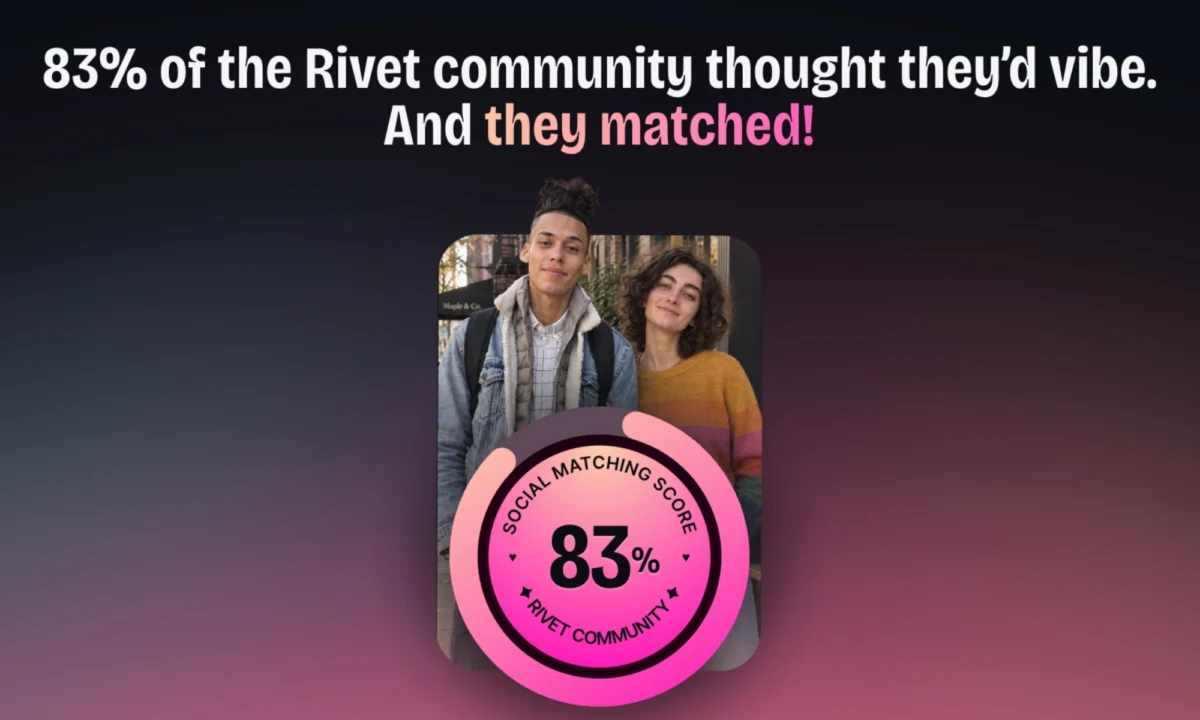
- The Social Matching Score: As users browse profiles and recommend matches within the community, the platform generates a "Social Matching Score" based on compatibility metrics and peer validation.
- Mutual Consent: When two individuals achieve a high Social Matching score through the collective input of the community, they are introduced. However, the system retains essential agency: each individual must independently decide whether to initiate a conversation.
- Accessibility: Rivet is free to download and is officially available across the United States on both Android and iOS platforms.
By positioning users as active participants in each other’s romantic journeys, Rivet attempts to transform what is typically a solitary, high-friction exercise into a shared, collaborative experience.
Chronology: The Evolution of Social Matchmaking
While Rivet’s nationwide launch marks a distinct escalation in community-driven dating, the concept of social matchmaking is not entirely new. Over the past several years, major players in the tech and dating industries have steadily tested features designed to incorporate friends, family, and peers into the app experience.

2023: Tinder Opens the Door to Acquaintances
In 2023, industry giant Tinder rolled out Tinder Matchmaker, a tool designed to let friends and family members access the platform without necessarily creating their own dating profiles. The feature allowed third-party participants to browse profiles, evaluate potential suitors, and recommend matches directly to the primary user. It was an early acknowledgment that external perspectives often catch red flags or highlight positive traits that an individual might overlook.
July 2026: Hinge Introduces "Friend’s Take"
Continuing the industry trend toward social integration, Hinge launched a feature called Friend’s Take. This tool enabled users to invite friends and family members to contribute directly to their profiles through multimedia formats—including text notes, voice recordings, and video descriptions. By allowing loved ones to vouch for a user’s personality, Hinge aimed to inject authenticity into profiles that might otherwise feel curated or sterile.
September/October 2026: Rivet Launches Nationwide
Building upon these incremental experiments, Taru Kapoor and the Rivet team introduced a platform built entirely around the social matching paradigm. Rather than treating peer input as an add-on feature to a traditional swipe-based interface, Rivet makes community matchmaking the foundational mechanism of the entire network.

Supporting Data: The Crisis of "Swipe Fatigue"
To understand why platforms like Rivet are gaining traction, one must examine the mounting dissatisfaction with legacy dating apps. For over a decade, swipe-based mechanics have dominated the market, but user sentiment has shifted dramatically.
- Monetization Barriers: Studies and consumer reports consistently show that finding meaningful matches on traditional apps increasingly requires premium subscriptions. Without paying, users often face throttled visibility, limited likes, and opaque algorithmic sorting.
- The Psychology of the Endless Feed: Behavioral psychologists have long pointed out that the infinite-scroll model treats partner selection like consumer goods, leading to decision paralysis. When a potential partner is just one swipe away, users are conditioned to value novelty over depth.
- The Rise of Alternative Formats: According to industry research, Gen Z and younger millennial daters are actively seeking out niche, community-oriented, and real-world (IRL) dating solutions. The fatigue associated with messaging strangers who ghost or mismatch expectations has fueled an appetite for systems anchored by trusted recommendations.
Rivet’s premise addresses this pain point directly: if an algorithm reduces humans to data points, reintroducing human judgment and peer review might restore quality and accountability to the digital dating space.
Industry Responses and Competitive Landscape
Rivet enters a crowded marketplace dominated by Match Group and Bumble Inc., but its launch reflects a broader industry pivot. Major platforms are actively searching for ways to combat declining engagement and user cynicism.

Taru Kapoor’s background as a former executive at Tinder and Match Group gives Rivet a distinct insider perspective. Kapoor understands the limitations of legacy systems firsthand, having watched the industry grapple with the unintended consequences of gamified swiping. By designing Rivet around a give-to-get philosophy, leadership hopes to foster higher-intent interactions where users are invested in the ecosystem’s overall health.
Meanwhile, competitors are adapting their own playbooks:
- Wingman: Long before major tech conglomerates experimented with peer matchmaking, apps like Wingman allowed friends and relatives to write profile biographies and actively swipe on behalf of single loved ones.
- Hinge and Tinder: By embedding social features into existing massive user bases, these legacy platforms are attempting to capture the trust factor that third-party matchmakers provide without forcing users to migrate to entirely new ecosystems.
Implications: Can Human Curation Save Digital Dating?
The arrival of Rivet raises critical questions about the future of human connection in the digital age. Can community matchmaking successfully scale, or will it remain a niche alternative for the disillusioned?

1. Rebuilding Accountability
One of the most persistent complaints on modern dating apps is poor behavior, ranging from ghosting to harassment. When third parties—such as friends, acquaintances, or community matchmakers—are involved in the vetting process, a natural social contract begins to form. People may be less likely to engage in toxic behavior if their digital community is actively participating in their romantic pursuits.
2. The Limits of Trust Among Strangers
Unlike traditional matchmaking, where a friend sets you up based on intimate knowledge of your personality, Rivet relies partially on strangers playing matchmaker. This creates a fascinating sociological experiment: Can machine-aggregated crowd-wisdom match or exceed the accuracy of a close friend? If the platform’s "Social Matching Scores" prove effective, it could validate crowd-sourced curation as a viable alternative to black-box algorithms.
3. A Shift in Power Dynamics
By shifting the power from opaque corporate algorithms to community networks, Rivet signals a broader cultural fatigue with big tech curation. Whether users are willing to trade the passive ease of mindless swiping for the active labor of a "give-to-get" social ecosystem will ultimately determine the app’s longevity.

Conclusion
The launch of Rivet marks a compelling chapter in the ongoing evolution of online dating. As "swipe anxiety" continues to drive users away from traditional applications, the industry is being forced to innovate beyond simple profile grids and paywalled super-likes.
Whether Rivet becomes a mainstream staple or remains an experimental outlier, its core thesis is hard to ignore: sometimes, the best way to find a meaningful connection isn’t trusting a computer program—it’s trusting the people around you.