







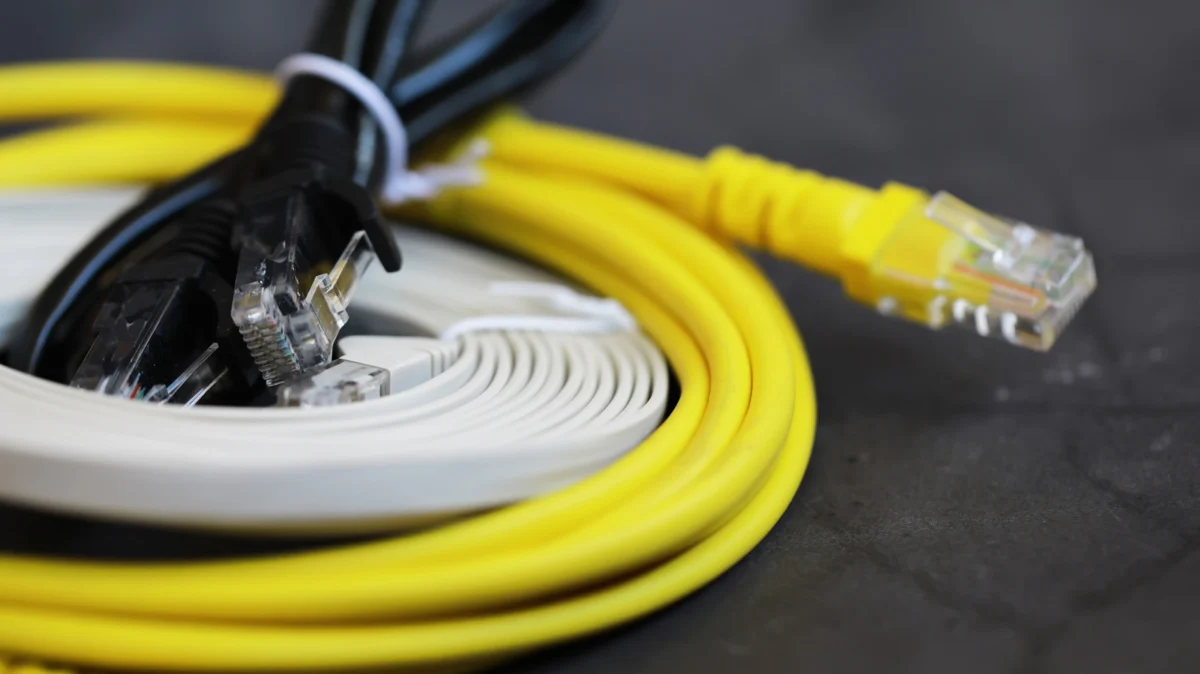
Just because you can do something doesn’t mean you should. This adage, often applied to impulsive DIY projects or questionable life choices, is perhaps most critical when applied to home networking infrastructure. Many homeowners, eager to extend their Wi-Fi reach to a backyard office or connect a security camera to the front porch, make the mistake of assuming that the standard Ethernet cables running through their walls are robust enough for the great outdoors.
While a Cat5e or Cat6 cable might successfully transmit data from your router to your outdoor device for a few months, relying on indoor-rated cabling for external use is a ticking time bomb. Understanding the material science and regulatory standards behind networking cables is not just about avoiding a service outage—it is about protecting your home, your hardware, and your safety.
Main Facts: The Material Difference
To understand why indoor cables fail outside, one must look at their composition. Standard indoor Ethernet cables are typically encased in a polyvinyl chloride (PVC) jacket. PVC is an excellent, cost-effective, and flexible material for climate-controlled environments. However, it was never designed to withstand the harsh realities of the exterior world.
The UV Vulnerability
The primary enemy of an indoor Ethernet cable in a yard or on a patio is ultraviolet (UV) radiation. Sunlight, specifically the UV spectrum, breaks down the chemical bonds in the PVC jacket. Over time, the material becomes brittle, loses its flexibility, and begins to crack. Once these micro-cracks form, the internal copper twisted pairs are exposed to the environment.
Thermal Stress and Moisture
Beyond UV rays, the natural cycle of expansion and contraction caused by temperature fluctuations—from the scorching heat of a summer afternoon to the sub-zero chill of a winter night—accelerates the degradation of the cable’s jacket. Once moisture, humidity, or rainwater enters the cable through the cracks, it begins to corrode the copper conductors. This leads to increased signal interference, packet loss, and, eventually, complete connectivity failure.
Chronology of Failure: What Happens to Your Network
When you install an improper cable, the decay follows a predictable, albeit slow, trajectory:
- Installation Phase (Months 0–6): The cable works perfectly. The user feels validated in their decision to bypass more expensive, specialized cabling.
- Degradation Phase (Months 6–18): As the PVC jacket experiences daily solar radiation and humidity, it begins to lose its plasticizers. The cable becomes stiff to the touch. The "industrial" sheen fades to a dull, chalky white or grey.
- Compromise Phase (Months 18–30): The first physical cracks appear. Rainwater begins to wick into the cable, traveling via capillary action deep into the interior of the line.
- Failure Phase (Months 30+): Oxidization of the copper takes hold. Resistance increases, data speeds plummet, and sensitive electronics at the ends of the cable—such as security cameras or outdoor access points—begin to reboot randomly or fail entirely due to short circuits.
Supporting Data: Understanding Ratings and Standards
The networking industry categorizes cables based on their ability to withstand environmental stress. Consumers should pay close attention to the markings printed directly on the cable jacket.
Understanding Cable Ratings
- CM/CMG/CMR: These are common indoor ratings (Communications Multipurpose). They are designed for fire safety within wall cavities and plenums, not for outdoor survival.
- CMX: These cables are limited-use, outdoor-rated communications cables. They are designed to withstand some sunlight and temperature variation.
- OSP (Outside Plant): These cables are the gold standard for outdoor environments. They are specifically engineered for extreme durability, often featuring moisture-blocking fillers like gel or water-swellable tape.
Direct Burial vs. Conduit
There is a distinct difference between "outdoor-rated" and "direct-burial." Outdoor-rated cables can handle sun and rain, but they are not necessarily meant to be buried. Direct-burial cables are armored or shielded with high-density polyethylene (HDPE) or linear low-density polyethylene (LLDPE) to withstand the physical pressure of soil and the corrosive chemistry of the earth.
Official Responses and Regulatory Guidance
The National Electrical Code (NEC), specifically NFPA 70, provides the regulatory framework for all electrical and communications installations in the United States. According to NEC guidelines, the installation of communications cables must adhere to strict safety standards to prevent fire and electrical hazards.
The 50-Foot Rule
A critical, often overlooked aspect of the NEC is the transition point between outdoor and indoor environments. An unlisted outdoor cable—which often lacks the flame-retardant properties of indoor-rated cabling—cannot legally or safely run more than 50 feet inside a building. If you pull an outdoor-rated cable into your home, you must terminate it at a junction box near the entry point and transition to an indoor-rated cable (like a Plenum or Riser cable) for the remainder of the run. Failure to do so can void your homeowner’s insurance in the event of a fire.
UL and Safety Testing
Underwriters Laboratories (UL) mandates that cables evaluated for outdoor use must be clearly marked. If a cable lacks the "Outdoor" or "Sunlight Resistant" designation, it has not been tested for these conditions. Relying on an unrated cable for an outdoor run is, from a regulatory standpoint, an "unlisted installation," which is a significant liability.
Implications: The Risks of Poor Planning
The implications of using incorrect cabling extend beyond mere inconvenience.
Electrical Surges and Lightning
Copper is an excellent conductor—not just of data, but of electricity. If you run a long, outdoor copper Ethernet cable without proper surge protection, you are effectively creating a lightning rod for your home network. A nearby lightning strike can send a surge through the outdoor cable, fry your router, destroy your connected security cameras, and potentially travel into your home’s main power distribution system.
Financial Consequences
While buying a spool of cheap indoor Cat6 is tempting, the long-term cost is significantly higher. You will eventually face the cost of replacing the cable, the cost of labor (or your own wasted time), and potentially the cost of replacing expensive hardware like PoE (Power over Ethernet) switches or high-end security cameras that were damaged by a short-circuited cable.
Best Practices for Implementation
- Invest in Quality: Always purchase "Direct Burial" or "Outdoor Rated" cable with PE or LLDPE jackets for any outdoor run.
- Use Conduit: Even with direct-burial cable, running it through PVC conduit provides a layer of physical protection against shovels, lawnmowers, and rodents.
- Install Surge Protection: Use high-quality Ethernet surge protectors at the point where the cable enters the house.
- Consider Fiber: For long runs, particularly between buildings, fiber optic cable is the superior choice. Fiber is non-conductive, meaning it carries no electricity and is immune to lightning strikes and electrical interference.
- Check Local Ordinances: Before digging, consult local building codes. Many municipalities have strict rules regarding the depth of buried lines and the types of conduit required for residential properties.
Conclusion
The internet is a vital utility, and extending it to your porch, yard, or garage is a logical step in modern home automation. However, the integrity of that connection depends entirely on the materials you choose. By opting for outdoor-rated, UV-resistant, and properly shielded cabling—and by adhering to safety standards like the 50-foot transition rule—you ensure that your network remains reliable, safe, and durable enough to withstand the elements for years to come. Don’t let a "good enough" attitude turn your next home improvement project into a recurring maintenance nightmare.