










By Legal Correspondent
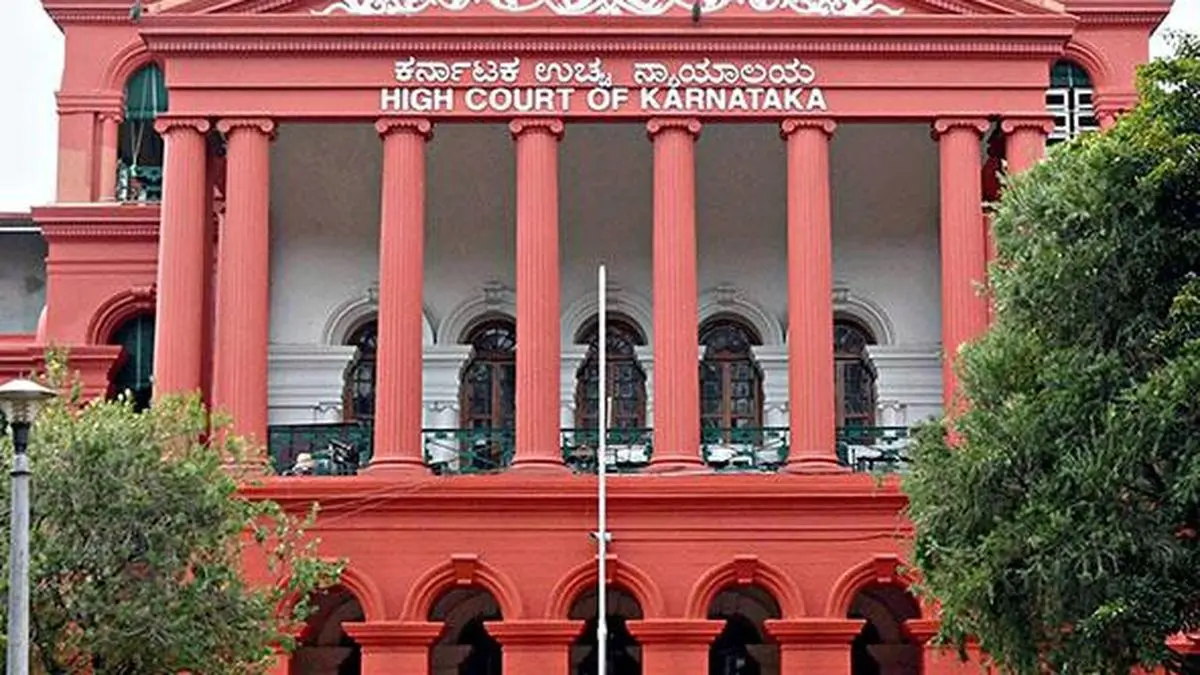
In a landmark verdict that has sent ripples through the political and social landscape of Karnataka, the High Court on Monday declared the provisions of a 2022 state law—which sought to increase reservations for Scheduled Castes (SCs) and Scheduled Tribes (STs)—as unconstitutional. The decision effectively halts the state’s attempt to bypass the long-standing 50 per cent ceiling on total reservations, setting the stage for a protracted legal battle and a renewed national debate on the limits of affirmative action in India.
A division bench comprising Chief Justice Vibhu Bakhru and Justice K.S. Hemalekha delivered the ruling, asserting that the Karnataka Scheduled Castes and Scheduled Tribes (Reservation of Seats in Educational Institutions and of Appointments or Posts in the Services under the State) Act, 2022, fundamentally undermined the principles of equality enshrined in the Constitution.
The Verdict: Breach of the Constitutional Ceiling
The core of the High Court’s ruling rests on the "50 per cent rule." For decades, the judiciary has maintained that aggregate reservation quotas must not exceed half of the total available seats or posts to preserve the constitutional guarantee of "equality of opportunity" for all citizens.
In its judgment, the bench specifically struck down Section 3 and Section 4 of the 2022 Act. The court held that by elevating the quota for SCs from 15% to 17% and for STs from 3% to 7%, the state had pushed the total reservation threshold to 56%. This, the court ruled, was a direct violation of Articles 14 (Right to Equality) and 15 (Prohibition of Discrimination) regarding educational institutions, and Article 16 regarding public employment.
"Section 3 of the Act, insofar as it takes the aggregate reservation beyond the ceiling of 50 per cent, is struck down as it violates Articles 14 and 15 of the Constitution," the bench stated. By declaring the hike unconstitutional, the High Court has reaffirmed the sanctity of the ceiling originally established by the Supreme Court in the seminal 1992 Indra Sawhney vs Union of India case—a ruling that has served as the bedrock of reservation policy for over three decades.
Chronology: From Legislative Intent to Judicial Intervention
The path to this judicial impasse began as a high-stakes legislative maneuver during the tenure of the previous BJP government, led by then-Chief Minister Basavaraj Bommai.
- Pre-2022: Pressure mounted on the state government to address the demands of SC/ST communities, backed by reports from the Justice (Retd) Nagamohan Das Commission and the committee headed by former High Court Judge Justice Subhash B. Adi. These reports argued that historical under-representation necessitated a recalibration of quotas.
- Late 2022: The state legislature passed the Karnataka Scheduled Castes and Scheduled Tribes (Reservation of Seats in Educational Institutions and of Appointments or Posts in the Services under the State) Act, 2022.
- January 11-12, 2023: The legislation received the Governor’s assent and was officially gazetted, making the 17% (SC) and 7% (ST) quotas legally binding.
- The Challenges: The Act was immediately met with legal pushback. Two primary petitions formed the basis of the recent judgment. One was filed by Mahendra Kumar Mitra, representing the Dr. Ambedkar Scheduled Castes Federation. The second was a joint petition filed by Sagar H.R., Prajwal Kumar D., and Purushotham Gowda G.M.—all civil engineering graduates—who challenged the reservation hike in the context of recruitment for Assistant Engineer (Civil) posts under the Bruhat Bengaluru Mahanagara Palike (BBMP).
- October 2026: The High Court delivered its final verdict, invalidating the hike and effectively resetting the reservation percentages to their pre-2022 levels.
The Legal and Data-Driven Conflict
The petitioners argued that the state government’s decision was a populist measure lacking the "extraordinary circumstances" required to breach the 50% cap. In Indra Sawhney, the Supreme Court noted that the ceiling could only be breached in "exceptional circumstances," usually to account for regional variations or extremely isolated populations.
The petitioners contended that the state’s reliance on the Nagamohan Das Commission report did not constitute a "compelling state interest" sufficient to override the constitutional guarantee of merit-based selection. Furthermore, the 56% total reservation created a significant barrier for candidates from the General Category, potentially infringing upon their right to equality under Article 14.
The state government, conversely, had argued that the increase was a necessary corrective measure to ensure social justice for historically marginalized groups, reflecting the demographic realities of Karnataka.

Official Responses: A Political Firestorm
The judgment has triggered an immediate and intense political reaction, particularly from the ruling Congress-led government in the state.
Deputy Chief Minister G. Parameshwara issued a strongly worded statement characterizing the judgment as a "serious development" with profound implications for the state’s social justice framework. "We respect the judiciary and the constitutional framework," Parameshwara noted, "but this judgment raises fundamental questions about the political responsibility of the previous BJP government and the continued inaction of the BJP-led Union government."
Parameshwara underscored that the current administration is committed to pursuing legal remedies, including an appeal to the Supreme Court. However, he also shifted the burden toward the Centre, urging Prime Minister Narendra Modi’s government to intervene.
"Our demand is not for symbolic reservation," he stated. "We are calling for a comprehensive review of the 50 per cent ceiling. We have requested that the reservation hike be included in the Ninth Schedule of the Constitution, which would grant it immunity from judicial review. The Centre must act on this immediately."
Broader Implications: The Future of Reservation in India
The Karnataka High Court’s ruling is not merely a local legal matter; it serves as a litmus test for the national reservation debate. As various states across India face mounting pressure to increase quotas for specific castes and communities, the "50 per cent ceiling" has become the primary point of friction between state legislative power and judicial oversight.
1. The Ninth Schedule Dilemma
By calling for the inclusion of the Act in the Ninth Schedule, the Karnataka government is seeking a "shield" against judicial intervention. However, the Supreme Court has previously held that while the Ninth Schedule provides a layer of protection, laws included therein are still subject to the "Basic Structure" doctrine. If the court decides that a reservation hike violates the core equality principle, it could still be struck down.
2. Impact on Recruitment and Education
The immediate consequence of the verdict is administrative uncertainty. Candidates currently in the recruitment process or already appointed under the 2022 Act face a period of limbo. The state government has pledged to ensure that ongoing recruitment processes are "protected in accordance with the law," but the mechanics of this protection remain unclear without a stay order from a higher court.
3. The Political Battleground
The judgment provides significant political ammunition to both sides. The Congress government is framing the issue as a failure of the BJP to secure the state’s legislative intent, while the BJP is likely to face scrutiny over the drafting and legal viability of the 2022 Act. As elections and public discourse continue to revolve around caste-based representation, the verdict ensures that the "quota cap" will remain a central theme in Indian politics for the foreseeable future.
4. The Path Ahead: Supreme Court Appeal
Legal experts anticipate that the Karnataka government will move for an urgent hearing in the Supreme Court. Given the constitutional complexity of the issue—balancing the directive principles of state policy regarding the welfare of SCs and STs against the fundamental rights of all citizens—the Supreme Court may be forced to revisit the Indra Sawhney precedent.
As the state prepares its legal defense, the message from the judiciary is clear: while the goal of social justice is paramount, the methods employed to achieve it must remain within the established boundaries of constitutional law. For the people of Karnataka, the legal battle is far from over, and the outcome will define the state’s approach to equity and representation for years to come.



