







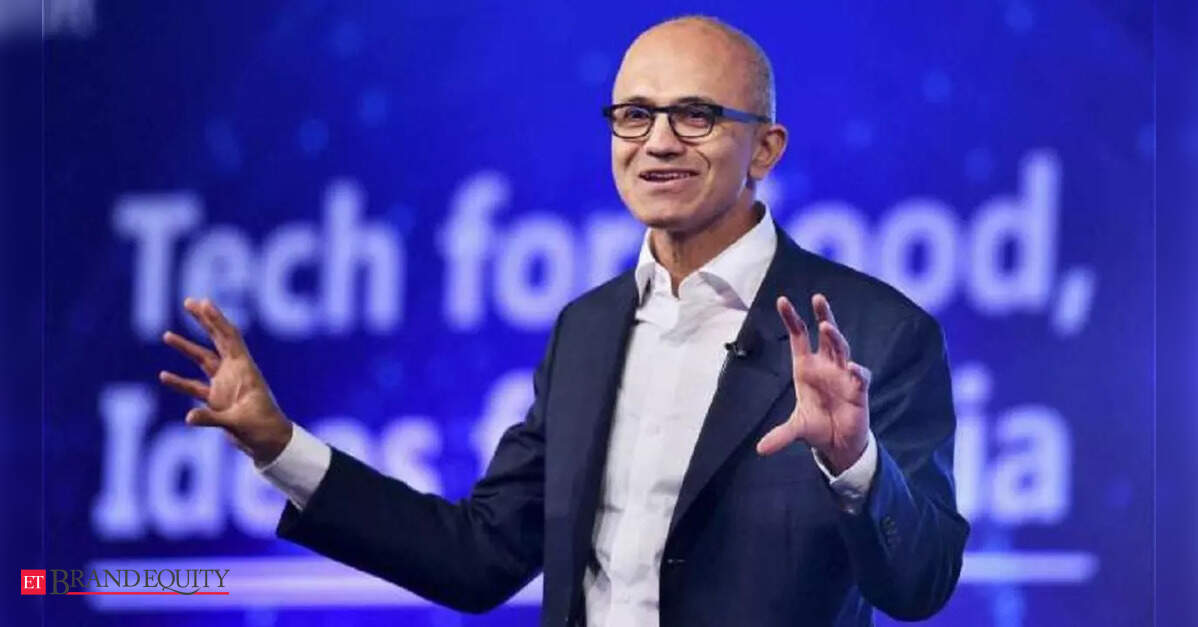
At the recent Microsoft Ignite conference in San Francisco, CEO Satya Nadella struck a tone of profound gravity. Standing before an audience of global industry leaders, developers, and engineers, the executive addressed two of the most critical challenges facing the technology sector today: the fragility of the digital infrastructure upon which the modern world relies and the existential uncertainty surrounding the rapid evolution of artificial intelligence.
In an era where Microsoft’s ecosystem serves as the backbone for governments, healthcare systems, and global financial markets, Nadella’s remarks were more than mere corporate rhetoric. They represented a pivotal moment of reflection following a high-profile service outage that disrupted operations worldwide just days prior.
The Weight of Global Responsibility: Lessons from the Recent Outage
The recent disruption—a stark reminder of the interconnectedness of modern digital systems—served as the backdrop for Nadella’s keynote. Addressing the incident directly, Nadella emphasized that the "responsibility entrusted by the world" to Microsoft is not one the company takes lightly.
"We take the responsibility entrusted by the world on us extremely seriously," Nadella stated. "We are committed to ensuring that we learn and we continuously improve."
The Chronology of Resilience
While the specific details of the outage were not the primary focus of his keynote, the incident has reignited a broader conversation regarding the "too big to fail" nature of cloud computing. As Microsoft Azure and its suite of productivity tools have become deeply embedded in the operations of Fortune 500 companies and critical infrastructure, the threshold for error has vanished.
Historically, Microsoft has prided itself on 99.999% uptime, often referred to as "five-nines." However, the recent incident highlights that as systems grow more complex, the ripple effect of a single failure point—whether it be a software update, a configuration error, or a security patch—is magnified. Nadella’s acknowledgment serves as an admission that in the age of hyperscale computing, the margin for error is effectively zero, and the company is now forced to re-evaluate its redundancy protocols and deployment strategies.
The AI Paradox: Scaling vs. Understanding
While the outage addressed the immediate operational concerns of the company, the second half of Nadella’s address delved into a more abstract, yet potentially more dangerous, frontier: the "Black Box" problem of Artificial Intelligence.
Microsoft, through its multi-billion dollar partnership with OpenAI, has been at the vanguard of the Generative AI revolution. However, Nadella’s remarks revealed a surprising level of intellectual humility. Despite the unprecedented capabilities of models like GPT-4, the industry is grappling with a fundamental lack of visibility into how these systems reach their conclusions.
The Problem of "Mechanistic Understanding"
"Scaling models continue to work," Nadella explained. "You have all these emerging capabilities from each scale-up, and yet we find ourselves in a place where alignment is elusive. Mechanistic understanding of these models is elusive."
This "alignment" problem—the challenge of ensuring that AI systems act in accordance with human intentions and ethical boundaries—is the primary bottleneck for safe AI deployment. Nadella pointed out that while we can observe the inputs and outputs of these models, the internal "thought process" remains opaque.
Why Self-Verification Fails
One of the most provocative points in Nadella’s address was his critique of the current trend of using AI to monitor AI. He cautioned that relying on an AI model to explain or verify its own behavior is fundamentally flawed.
"Today we can see almost everything that models touch, but you cannot see what happens inside a model," he argued. "What a model says about itself cannot be treated as independent evidence."
This critique challenges the industry’s current trajectory, where researchers are increasingly training "agentic" systems to police one another. Nadella’s stance suggests that without a deeper, fundamental breakthrough in how we interpret the neural pathways of Large Language Models (LLMs), the industry is effectively building on a foundation it does not fully understand.
Supporting Data and the Evolution of Trust
The technological landscape is currently defined by an "arms race" in compute power. Since 2020, the amount of compute used to train the largest AI models has increased by orders of magnitude annually. However, the data provided by independent researchers suggests that the ability to interpret these models has not kept pace with their growth.
The Gap in Interpretability
Industry data indicates that while error rates in task completion for AI have plummeted, the "hallucination" rate remains a persistent hurdle. More concerning, however, is the lack of "traceability." In traditional software, a developer can trace a bug back to a specific line of code. In neural networks, the decision-making process is distributed across billions of parameters, making traditional debugging impossible.
Nadella’s call for "mechanistic understanding" aligns with a growing movement in the academic community to prioritize AI interpretability. Without the ability to map the internal state of a model to specific human concepts, Microsoft and its peers remain in a position where they are deploying powerful tools whose internal logic is essentially a mystery.

Implications for the Future of Tech
The implications of Nadella’s double-pronged message—operational accountability and AI transparency—are profound for the future of Microsoft and the broader technology sector.
1. A Shift Toward "Safe-by-Design" Infrastructure
Following the recent outage, we can expect Microsoft to double down on its "Cloud Sovereignty" and "Resilience" initiatives. This will likely involve a slower deployment cycle for core updates, increased use of "canary" testing (rolling out updates to a small subset of users before global deployment), and a more transparent communication strategy with enterprise clients. The goal is to move from a culture of rapid innovation to one of "measured stability."
2. The Rise of "Explainable AI" (XAI)
Nadella’s comments signal a strategic shift in Microsoft’s research priorities. Expect to see significant funding directed toward Explainable AI (XAI). If Microsoft can pioneer tools that provide a window into the "black box," it would provide them with an insurmountable competitive advantage, as enterprises are currently hesitant to adopt AI for mission-critical tasks due to the lack of auditability.
3. Regulatory Preparedness
By speaking openly about the lack of mechanistic understanding in AI, Microsoft is likely positioning itself for the inevitable wave of global regulation. By acknowledging the risks, Nadella is preemptively inviting the conversation on governance. This proactive stance helps the company manage the narrative before external regulators force a restrictive framework upon the industry.
Conclusion: The Path Ahead
The Ignite conference served as a microcosm of the current state of technology: a mix of awe-inspiring potential and sobering reality. Satya Nadella has positioned Microsoft not just as a creator of technology, but as a steward of it.
His commitment to "learning and continuously improving" following the outage is a necessary step in rebuilding trust with the millions of users who rely on his platform. Simultaneously, his candid admission regarding the mysteries of AI models highlights that the road to Artificial General Intelligence (AGI) is not just a challenge of scale, but a challenge of philosophy and security.
As the industry moves forward, the success of Microsoft—and indeed the health of the digital global economy—will depend on whether the company can bridge the gap between its immense power and its ability to understand and control that power. The world is watching, and as Nadella noted, the responsibility is indeed significant.
For the millions of developers and industry professionals tracking these shifts, the message from Ignite is clear: the era of "move fast and break things" is over. We have entered the era of "move intentionally and understand everything."