











In a chilling revelation that highlights the profound vulnerabilities within the global consumer electronics supply chain, security researchers at Bitdefender have uncovered a sophisticated, long-running malware campaign dubbed "Midnight Mimosa." This campaign has successfully compromised thousands of low-cost Android smartphones by embedding malicious code directly into the device firmware before they even reach the consumer.
The presence of this malware—which enables silent app installation, massive ad fraud, and the repurposing of devices into illicit residential proxies—represents a significant escalation in mobile security threats. Because the malicious software is baked into the system partition, it arrives on devices with system-level privileges, effectively bypassing standard user security protocols and making it nearly impossible for the average consumer to eradicate.
Main Facts: A Trojanized Ecosystem
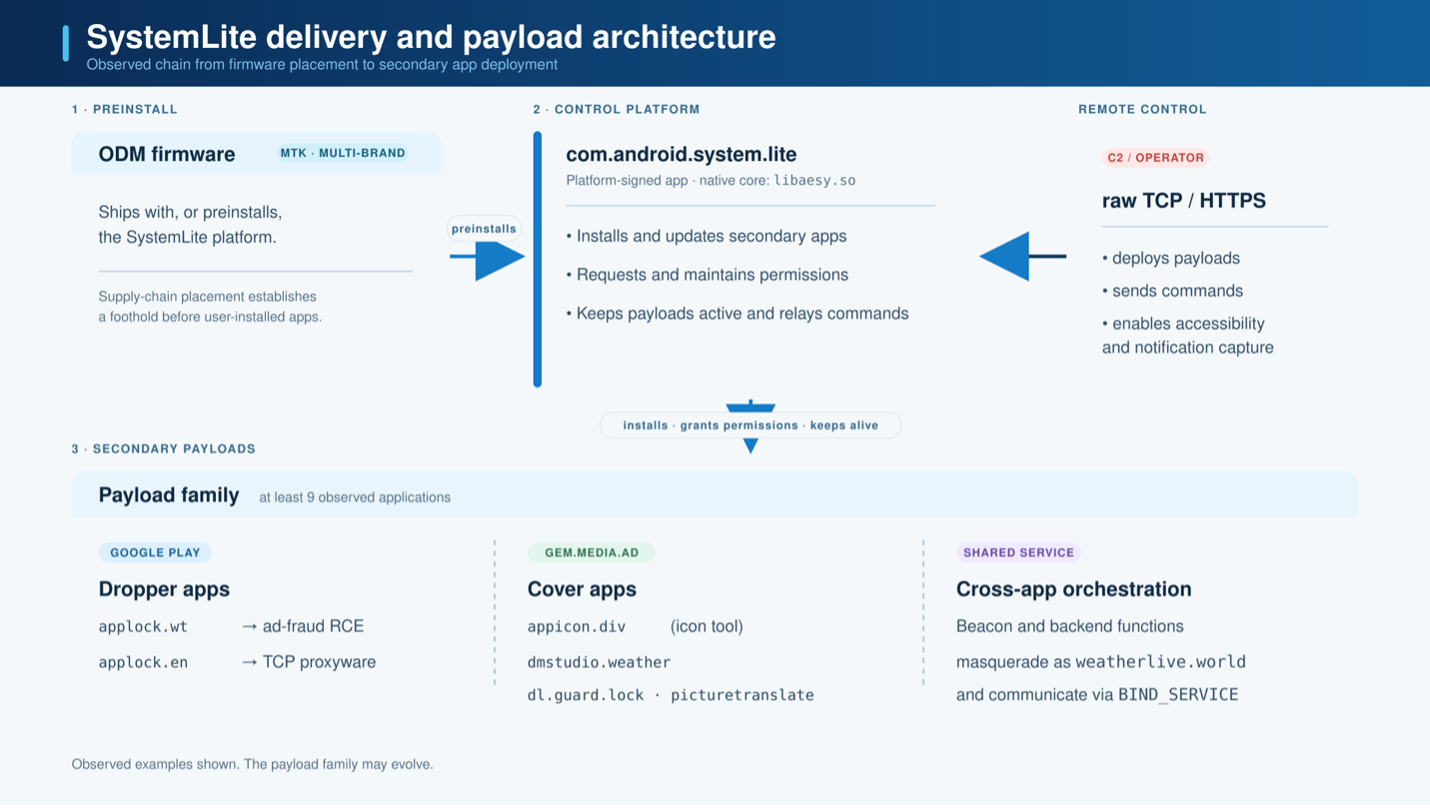
The Midnight Mimosa campaign is not a typical virus spread through malicious links or compromised app stores. Instead, it is a hardware-level intrusion. The malware resides within the firmware of affordable Android devices—specifically those utilizing MediaTek chipsets—allowing it to operate with elevated system-level privileges.
By masquerading as legitimate system packages with names like com.android.system.lite, com.android.sys.prot, and com.android.sys.gmsprot, the malware gains the ability to:
- Silently install or remove applications without user consent.
- Grant itself sensitive system permissions.
- Execute remote code downloaded from command-and-control (C2) servers.
- Manipulate Google Play Store records to make malicious apps appear legitimate.
Bitdefender’s researchers identified this campaign through their "App Anomaly Detection" technology, which flagged suspicious activity from the com.android.system.lite package. Further analysis revealed a sprawling infrastructure involving at least 32 distinct applications, all serving to generate fraudulent advertising revenue and maintain a network of residential proxies.
Chronology: Two Years of Stealthy Operations
The Midnight Mimosa campaign has been active for approximately two years, quietly spreading across more than 150 countries. While the exact point of entry into the supply chain remains shrouded in mystery, the timeline of the infection suggests a coordinated, persistent effort to exploit the manufacturing and distribution process.

The Timeline of Discovery
- 2022–2023 (Inception/Growth): The campaign begins infecting various low-cost Android models. Victims across the globe, particularly in Mexico, France, Italy, the United States, Germany, Brazil, and Spain, begin experiencing strange device behaviors, such as apps spontaneously reinstalling themselves.
- Early 2024 (User Reports): Frustrated users begin flooding forums like XDA Developers. Owners of Cubot and Doogee smartphones describe an "unremovable" package, identified as
com.android.sys.extplv. One user reports that an official firmware update from the manufacturer actually delivered the malware, which disappeared upon rolling back the firmware but returned immediately upon re-updating the device. - Late 2024 (Bitdefender Investigation): Bitdefender researchers formally document the campaign. They identify the link between the user-reported issues and a larger, modular framework designed for ad fraud and proxy exploitation.
- Present Day: While some manufacturers have released firmware updates to mitigate the issue, the lack of transparency regarding the source of the infection leaves a lingering question of trust regarding the integrity of these budget-friendly supply chains.
Supporting Data: The Scope and Methodology
The scale of Midnight Mimosa is global. Bitdefender has confirmed that thousands of devices are affected, with the most significant impact concentrated in regions where affordable, white-label Android devices are the primary entry point for mobile connectivity.
The Ad Fraud Engine
The malware’s primary revenue stream is sophisticated ad fraud. The system-level component does not register clicks itself; rather, it drops "cover" apps—such as fake weather utilities, file managers, or app lockers—onto the device. These apps load genuine advertising SDKs. The malware then overlays an invisible window on top of these ads, registering clicks and impressions without the user ever seeing an advertisement. This creates a lucrative, automated revenue stream for the attackers while exhausting device resources and data.
The Proxy Network
Perhaps more concerning than the ad fraud is the use of infected devices as residential proxies. By utilizing a TCP proxy component hidden within a fake app-locker, the malware registers the device with a remote server. This allows cybercriminals to route their malicious traffic—such as credential stuffing, spam campaigns, or scraping operations—through the IP addresses of unsuspecting, innocent consumers. This masks the attackers’ true location, making it appear as though the traffic is originating from a legitimate, home-based residential device.
Official Responses and Manufacturer Accountability
The role of the manufacturers in this scandal is the most contentious element of the investigation. Bitdefender’s research identified firmware signed with certificates associated with Shenzhen Zediel, a Chinese original design manufacturer (ODM). However, it remains unclear whether the infection is a result of a direct mandate from the manufacturer, a compromised third-party vendor within the supply chain, or a rogue actor operating within the factory environment.
The "Silent" Fix
Following public pressure on forums like XDA, some manufacturers, including Cubot and Doogee, have pushed firmware updates that purportedly resolve the issues. However, these manufacturers have remained largely silent regarding how the malware was introduced in the first place. There has been no public admission of a security breach or a clear explanation of how their supply chain security was bypassed.
This lack of accountability creates a precarious environment for consumers. If a device can be "fixed" via an update, it implies the manufacturer had the power to prevent the installation of the malware to begin with. This suggests a failure of basic quality assurance and security testing during the production phase.
Implications: The Broken Trust in Supply Chains
The Midnight Mimosa campaign serves as a stark reminder of the "Supply Chain Problem" in consumer technology. When devices are manufactured in complex, multi-tiered environments, the lack of end-to-end oversight can lead to disastrous consequences.
For the Consumer
For the average user, the implications are severe. If you own an affected device, you are essentially carrying a compromised piece of hardware. Standard security measures—such as using a reputable antivirus app or carefully vetting what you download—are rendered useless because the threat exists at the root level of the operating system. Removing the malware is not as simple as clicking an "uninstall" button; it requires advanced knowledge of the Android Debug Bridge (ADB) or a complete, manual firmware re-flash, tasks that are far beyond the capabilities of the typical smartphone user.
For the Industry
This incident forces a reckoning for the mobile industry. It exposes the risks associated with the proliferation of low-cost, white-label hardware. If the integrity of the firmware cannot be guaranteed, the entire value proposition of these "budget" devices—cost-effectiveness—is undermined by the long-term cost of privacy loss, data theft, and the utilization of the device for illegal activities.
Security Recommendations
Bitdefender and other cybersecurity experts emphasize that this is a systemic issue. To protect themselves, users should:
- Be Skeptical of "Too Good to Be True" Deals: Extremely low-cost devices from obscure brands are significantly more likely to have compromised supply chains.
- Monitor Data Usage: If your phone is consuming significant amounts of data in the background, it may be acting as a residential proxy.
- Check for "System" Anomalies: While difficult, users can check their list of system apps for unusual names (e.g.,
sys.protornon.szcz). If these are present and cannot be disabled, the device is likely compromised. - Prioritize Established Brands: While not immune to attacks, established manufacturers with a reputation for regular, transparent security patches are significantly safer than white-label vendors that disappear when a vulnerability is discovered.
As we move forward, the Midnight Mimosa incident will likely become a case study in the necessity of stricter firmware auditing. Until manufacturers are held legally and commercially responsible for the integrity of their code, consumers must remain vigilant, treating their digital devices as potential Trojan horses rather than secure portals to the internet.



