










In the rapidly shifting landscape of digital marketing, small businesses are no longer debating whether to adopt Artificial Intelligence (AI)—they are struggling to discern which tools are essential and which are mere noise. As search engines evolve and AI-driven answer engines change how users discover information, the traditional SEO playbook is being rewritten. For small businesses, the challenge is not a lack of options, but rather an abundance of them, often leading to "tool sprawl" and wasted budgets.
Current market data highlights the urgency of this transition. According to HubSpot’s latest AI Trends for Marketers report, two-thirds of marketers globally have integrated AI into their daily workflows. In the United States, that figure rises to 74%. For lean teams operating with limited resources, AI isn’t just a trend; it is a necessity for maintaining competitive visibility.
The Strategic Framework: Evaluating AI SEO Tools
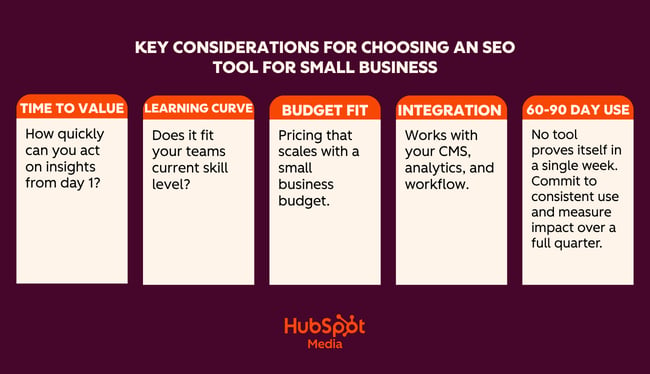
Before investing in new technology, business leaders must move beyond the marketing hype. The most effective AI SEO tools for small businesses are those that minimize the learning curve and maximize time-to-value. When evaluating a potential purchase, teams should prioritize four core metrics:
- Time-to-Value: How quickly does the tool provide actionable data? A platform that requires weeks of configuration is a liability for a small team.
- Learning Curve: Does the tool require a dedicated SEO specialist to interpret its data, or does it offer clear, plain-language recommendations?
- Cost and Scalability: Does the pricing model align with the business’s growth trajectory over the next three to five years?
- Integration Ease: Does the tool function within your existing Content Management System (CMS), or does it create a siloed, redundant workflow?
The 90-Day Litmus Test
Trial-period enthusiasm often masks a tool’s true utility. A more reliable indicator of value is whether the team is still using the platform consistently at the 60- to 90-day mark. If the tool has not contributed to specific, measurable outcomes by the end of the first quarter, it is likely an unnecessary overhead.

What AI Can—and Cannot—Do for SEO
While AI can drastically increase output, it is not a replacement for human expertise. Understanding the boundaries of these technologies is critical for brand integrity.
Drafting and Scaling Content
AI excels at generating meta descriptions, FAQs, and structured blog drafts. For small teams struggling with publishing consistency, this is a game-changer. However, "thought leadership" requires a human touch. Content that demands expert opinion, original research, or nuanced industry analysis should be authored or heavily edited by subject-matter experts. Google’s algorithms increasingly prioritize E-E-A-T (Experience, Expertise, Authoritativeness, and Trustworthiness), and AI-generated content that lacks these human markers often struggles to rank.
Keyword Research and Page Optimization
AI tools can identify keyword clusters and search intent patterns in minutes, replacing hours of manual research. Nevertheless, marketers must always validate AI suggestions against real-world search volume data. AI provides the "idea," but human intuition must provide the "validation."
Essential Tools for SEO and Technical Audits
For businesses building an SEO foundation from scratch, integrating tools that provide both technical diagnostics and actionable fixes is essential.
HubSpot SEO Recommendations
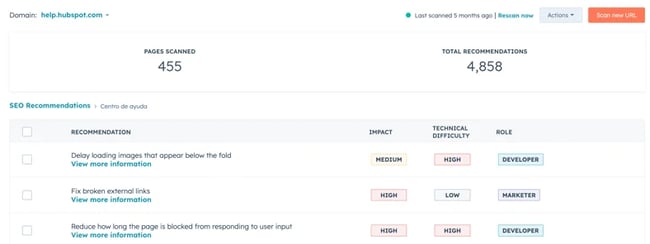
HubSpot’s SEO tools, embedded within the Marketing Hub, offer a unified approach. Unlike standalone technical crawlers that provide a list of "broken links" without context, HubSpot’s platform explains the why and the impact of each issue. It connects SEO activity directly to the CRM, allowing businesses to see the correlation between organic traffic and closed deals.
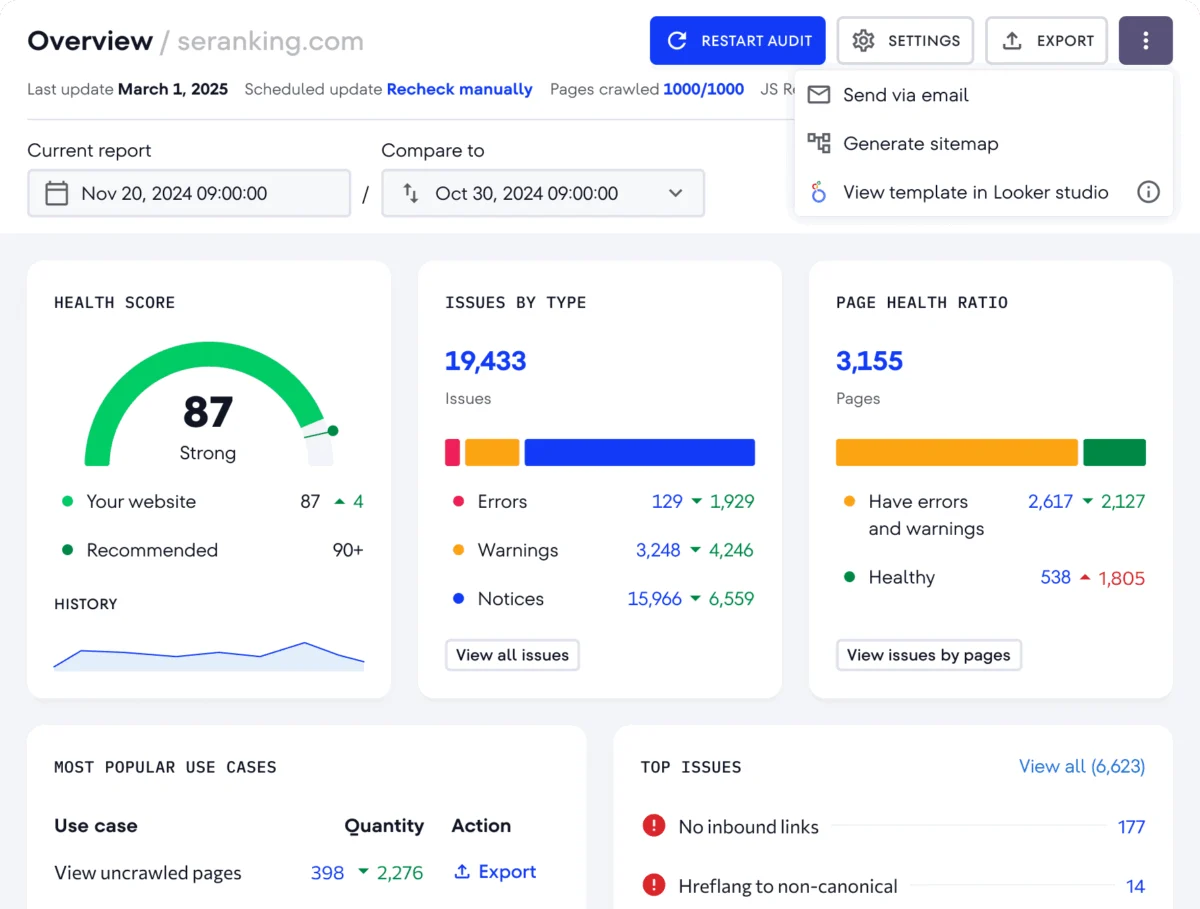
SE Ranking
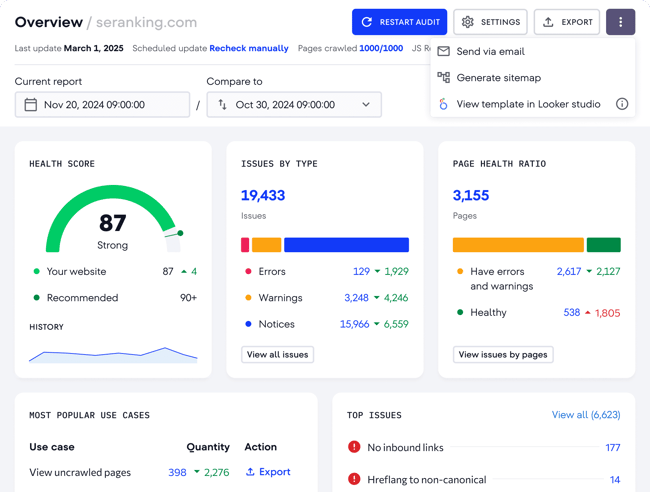
For teams requiring a robust, standalone SEO suite without the enterprise price tag, SE Ranking offers comprehensive keyword tracking, site audits, and competitor monitoring. Its strength lies in its ability to translate raw technical data into simple, actionable tasks, making it ideal for teams without a full-time SEO technician.
Automating Content Strategy
Content production is the greatest bottleneck for most small businesses. Modern tools are designed to streamline this without sacrificing quality.
Content Hub and the Power of Breeze
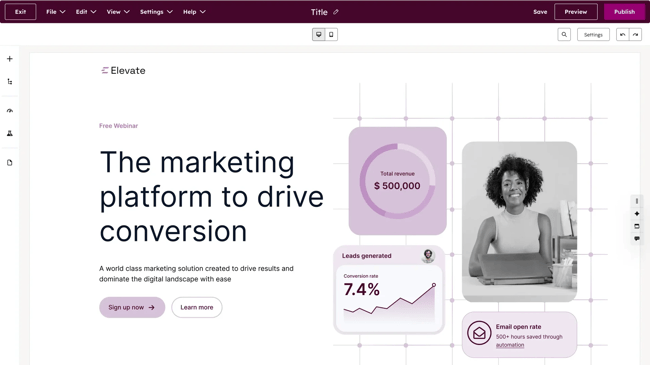
HubSpot’s Content Hub utilizes "Breeze," an AI engine that functions as a co-pilot for content creators. Rather than generating generic, unedited text, Breeze helps writers refine, expand, and optimize content within a defined brand voice. By using the "Topic Cluster" model—where a core pillar page is supported by smaller, interconnected articles—businesses can signal topical authority to search engines, a proven strategy for compounding organic traffic.
Yoast for WordPress
For businesses rooted in the WordPress ecosystem, Yoast remains the industry standard. Its real-time, on-page SEO guidance is built directly into the content editor, ensuring that every post is optimized before it goes live. While it lacks the deep analytics of a full SEO platform, it is an indispensable tool for daily on-page maintenance.
AnswerThePublic
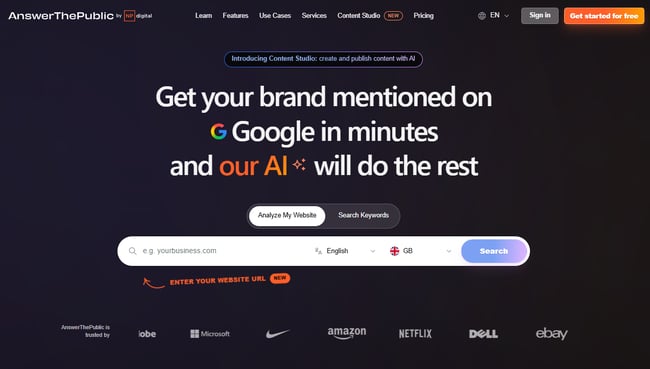
For content ideation, AnswerThePublic remains unmatched. By leveraging Google autocomplete data, it generates a visual map of the specific questions and prepositions your customers are using. It is a cost-effective, high-impact tool for filling a content calendar with high-intent topics.

The New Frontier: Answer Engine Optimization (AEO)
As AI search (like ChatGPT, Perplexity, and Gemini) becomes the standard for information retrieval, "traditional" SEO is no longer enough. Businesses must now prioritize Answer Engine Optimization (AEO).
HubSpot AEO and the AEO Grader
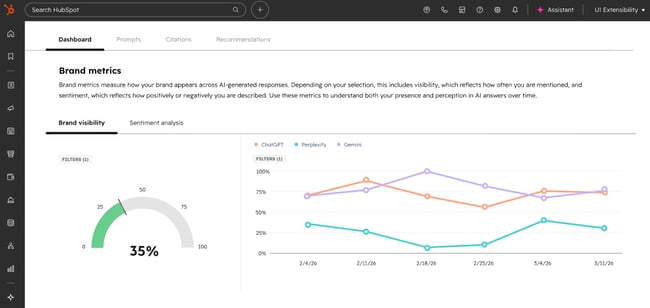
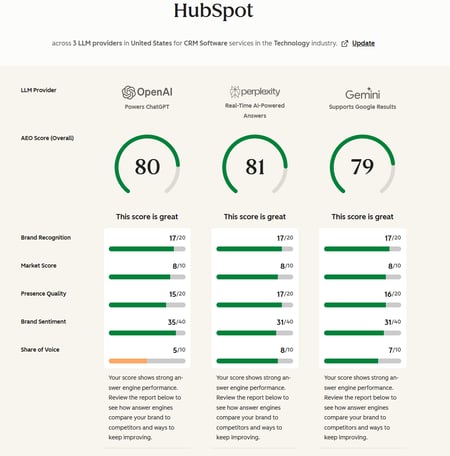
HubSpot has pioneered the AEO space by allowing businesses to track how their brand appears in AI-generated answers. Their AEO Grader is a free, powerful diagnostic tool that provides an instant snapshot of a brand’s visibility across AI engines. For a small business, this is the most frictionless way to determine if their current content strategy is effectively reaching users in an AI-first world.
Google Analytics (GA4) and Search Console (GSC)
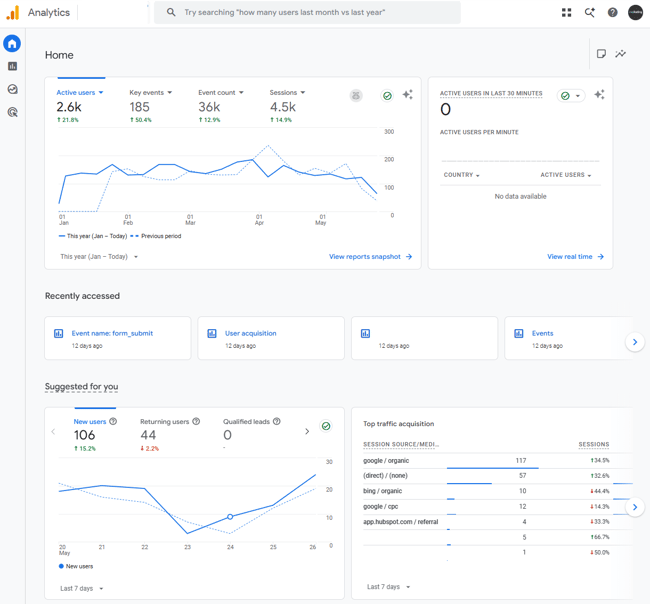
Regardless of paid tool investments, GA4 and GSC remain the foundational pillars of any SEO strategy. GSC provides the data directly from Google’s index, making it the most reliable source for tracking search queries and technical health. GA4, meanwhile, provides the behavioral data necessary to understand if that traffic is actually converting into revenue.
Frequently Asked Questions
Do small businesses really need multiple AI tools?
Most businesses find that a combination of two to three tools is optimal. The key is to avoid "tool sprawl." A well-integrated stack—such as a CRM combined with an SEO suite—often replaces four or five disconnected, manual processes.
How can I ensure AI does not dilute my brand voice?
The most effective defense is a formal, written "Brand Voice Guide" that the AI can reference. Platforms like HubSpot allow you to input these parameters directly, ensuring that every generated draft adheres to your specific tone, terminology, and formatting requirements.
When should I move from free tools to paid subscriptions?
The transition to paid tools should be driven by a specific, identified bottleneck. If a manual task is costing your team more in labor hours than the subscription cost of a tool that automates it, the ROI is clear.
Conclusion: Simplifying for Success
For the small business owner, the goal of adopting AI SEO tools should be simplification, not complication. By choosing a platform that bridges the gap between technical auditing, content creation, and revenue attribution, businesses can reclaim the time spent on manual configuration and pivot toward strategy.
Ultimately, the best AI SEO tool is the one that solves multiple problems simultaneously. Whether it is through the integrated capabilities of a platform like HubSpot or a targeted approach with specialized tools like SE Ranking or AnswerThePublic, the priority must remain the same: delivering genuine value to your audience in a way that search engines—and AI answer engines—can easily understand.
Start with the basics, prioritize high-impact integrations, and remember that while AI provides the speed, human oversight provides the authority. In a world of automated content, the brands that win will be the ones that leverage technology to amplify, rather than replace, their unique human expertise.