










Executive Summary: The Impossible Mandate
Design leaders today find themselves trapped in a structural paradox. Corporate leadership has finally embraced the gospel of User Experience (UX), with high-profile studies from McKinsey and Forrester touting ROI figures as high as $100 for every $1 invested. Yet, while the appreciation for design has grown, the capacity of design teams has remained stagnant.
Most design leaders are currently tasked with an impossible mandate: deliver high-quality, research-backed, user-centric solutions across entire organizations with teams that are perpetually under-resourced. The traditional model—where design leaders function primarily as "implementors"—has reached its breaking point. To survive and thrive, design leaders must pivot from being the sole practitioners of design to becoming organizational enablers.
The Chronology of a Crisis
The evolution of the "Design Leader Dilemma" can be mapped through three distinct eras of digital transformation:

- The Era of Specialization (2000–2010): Design was a niche skill. Leaders were hired to "do the design." The scope was limited to specific web pages or applications, and success was measured by aesthetic quality and basic functionality.
- The Era of Integration (2010–2020): Design began to permeate the business strategy. Organizations realized that user experience was a competitive differentiator. However, design leaders remained the "bottleneck," personally reviewing every pixel and conducting every research session to ensure quality.
- The Current Era of Ubiquity (2020–Present): Digital transformation touches every corner of the enterprise—from internal HR portals to complex customer-facing ecosystems. The sheer volume of demand now exceeds the physical capacity of any centralized design team. The "doer" model has become a systemic risk, leading to burnout and fragmented product experiences.
Supporting Data: The ROI vs. Reality Gap
The disconnect between boardroom expectations and operational reality is backed by compelling data.
- The Financial Promise: McKinsey & Company’s research famously identified that design-led companies achieve 56% higher returns to shareholders compared to their peers. This has driven massive pressure on design departments to prove their worth through metrics.
- The Resource Deficit: Despite the promised ROI, internal surveys of design leaders show that 78% of teams are supporting more projects than they were three years ago, with no commensurate increase in headcount.
- The Impact Calculation: If a design leader spends 40 hours a week "doing" design, they may influence 5% of the company’s output. If that same leader spends 40 hours "enabling" others, they can influence 90% of the company’s output. The math favors a shift in strategy.
Redefining the Role: From Implementor to Enabler
To resolve this crisis, design leaders must undergo a fundamental shift in mindset. It is no longer about "doing" the work; it is about "scaling" the work through others. This does not mean relinquishing quality; it means decentralizing design literacy.
Targeted Services: The High-Impact Approach
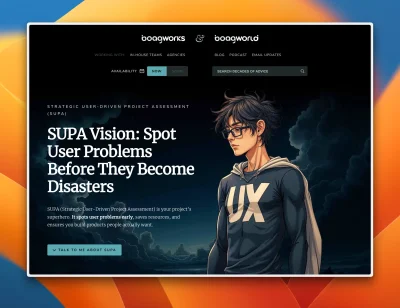
Rather than attempting to be involved in every project, leaders must act like internal consultants. By providing high-value services—such as "SUPA" (Spot User Problems Before They Become Disasters)—designers can intervene at critical junctures rather than getting bogged down in low-level execution. This involves:

- Risk Assessment: Identifying which projects are mission-critical.
- Strategic Audits: Providing high-level guidance that sets a project on the right path.
- Governance: Acting as a quality gatekeeper for key initiatives only.
Coaching and Mentoring: Scaling Literacy
The most effective way to scale is to train non-designers to think like designers. This involves a shift from "I will design this for you" to "I will teach you how to make this design decision."
- Mentorship Programs: Pairing designers with product managers and engineers to build UX empathy.
- Consultation Windows: Using tools like Calendly to manage "office hours," allowing colleagues to book time for guidance rather than demanding full-time design involvement.
- Accepting Imperfection: Leaders must accept that a 70% "perfect" solution executed by a team is often more valuable than a 100% "perfect" solution that never leaves the design studio.
Practical Implementation: Building the Infrastructure
Enabling others requires more than just advice; it requires a structural framework.
Developing UX Resources
Create a repository of tools that empowers teams to work autonomously. This includes:

- Component Libraries: Providing pre-built, tested UI elements to developers.
- Research Templates: Standardized scripts and survey formats that anyone in the company can use to gather user feedback.
- Accessibility Checklists: Ensuring that basic standards are met without needing a design review for every minor change.
Setting Standards Without Bureaucracy
The goal of standards is to facilitate velocity, not to act as a barrier. A successful standard framework provides clear guidelines on branding, accessibility, and user flow, allowing teams to move fast while staying within the "guardrails" of the design system.
The Strategic "UX Playbook"
The culmination of this shift is the creation of a UX Playbook. Much like the UK Government’s Digital Service Manual, this should be a "single source of truth" for the entire organization.
- Content of the Playbook: It should consolidate policies, research findings, design patterns, and "how-to" guides.
- Dynamic Nature: It must be a living document, constantly updated based on the feedback of the people who use it.
- Strategic Value: By providing this resource, the design leader shifts from being an individual contributor to an architect of the company’s digital culture.
Implications: The Future of Design Leadership
The implications of this shift are profound. By moving away from the role of the sole executor, design leaders reclaim their strategic seat at the table. They cease to be the "design department" and become the "design capability," weaving UX into the DNA of the organization.

The Risks of Stagnation:
If design leaders continue to cling to the "implementor" role, they will inevitably face two outcomes:
- Marginalization: As the organization grows, the "bottleneck" becomes an obstacle to progress, and leadership may attempt to bypass the design team entirely.
- Burnout: The physical and mental toll of trying to scale an individual’s effort to match an organization’s output is unsustainable and leads to high turnover among talented practitioners.
The Benefits of Enabling:
By choosing the path of the enabler, the design leader achieves:
- Greater Influence: A broader footprint across the organization’s products and services.
- Professional Longevity: A role that is rooted in leadership and strategy rather than just execution.
- Organizational Maturity: A company that inherently values and understands design because it is part of their daily workflow, not an external service provided by a select few.
Conclusion
The design leader’s dilemma is a test of organizational maturity. While the pressure to deliver "the impossible" is real, the solution is not to work harder or hire more designers. The solution is to transform the role itself. By providing the tools, coaching, and standards necessary for others to succeed, the design leader ensures that user experience is not just a department—it is a competitive advantage that permeates the entire enterprise.

The transition requires courage. It requires letting go of the ego associated with "owning" every design and embracing the satisfaction of building an organization that can design for itself. As the digital landscape continues to expand, those who make this transition will be the ones who define the future of their companies.



