






Search engines have evolved from simple file-indexing utilities into the central nervous system of the internet. As we navigate 2026, the definition of a "search engine" is more fluid than ever, encompassing everything from massive, AI-powered answer machines to niche, community-driven crawlers. Whether you are a casual user looking for a privacy-first alternative or a site owner trying to decode the complexities of modern ranking, understanding the current ecosystem is essential.

The Anatomy of Modern Discovery: How Search Works
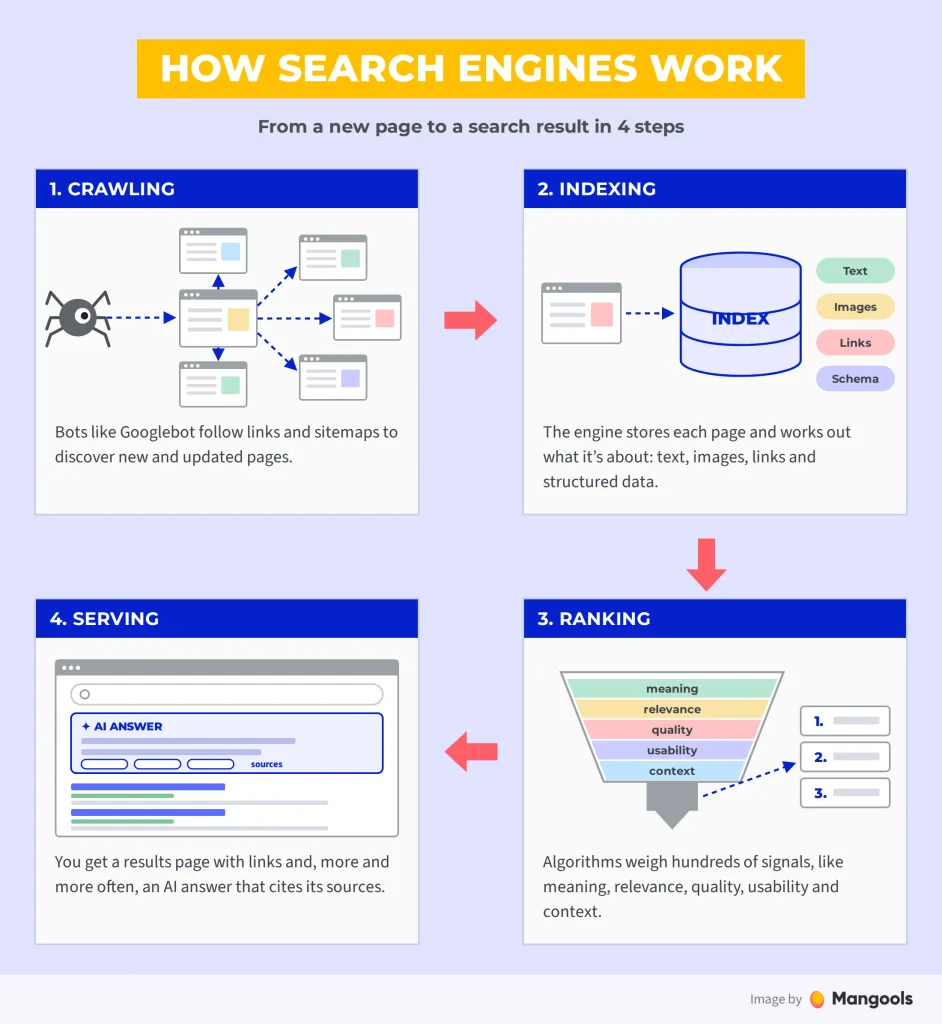
At its core, a search engine is a software system designed to discover, index, and rank information. In 2026, this process is no longer just about blue links; it is a sophisticated, three-stage orchestration that often concludes with an AI-generated synthesis.
1. Crawling: The Digital Reconnaissance
Search engines deploy automated programs—crawlers, bots, or spiders—to navigate the web. Googlebot and Bingbot continuously traverse the internet, discovering new pages and revisiting existing ones. This is a perpetual cycle; as content changes, the crawlers must adapt to keep the search engine’s map of the web accurate.
2. Indexing: The Library of the Web
Once crawled, content is stored in a massive, structured database known as the "Index." Google’s index alone spans hundreds of billions of pages. During this phase, the engine analyzes text, images, and structured data, identifying canonical versions of pages to avoid duplication. This database serves as the foundation for every query result.
3. Ranking and Serving: The Intelligence Layer
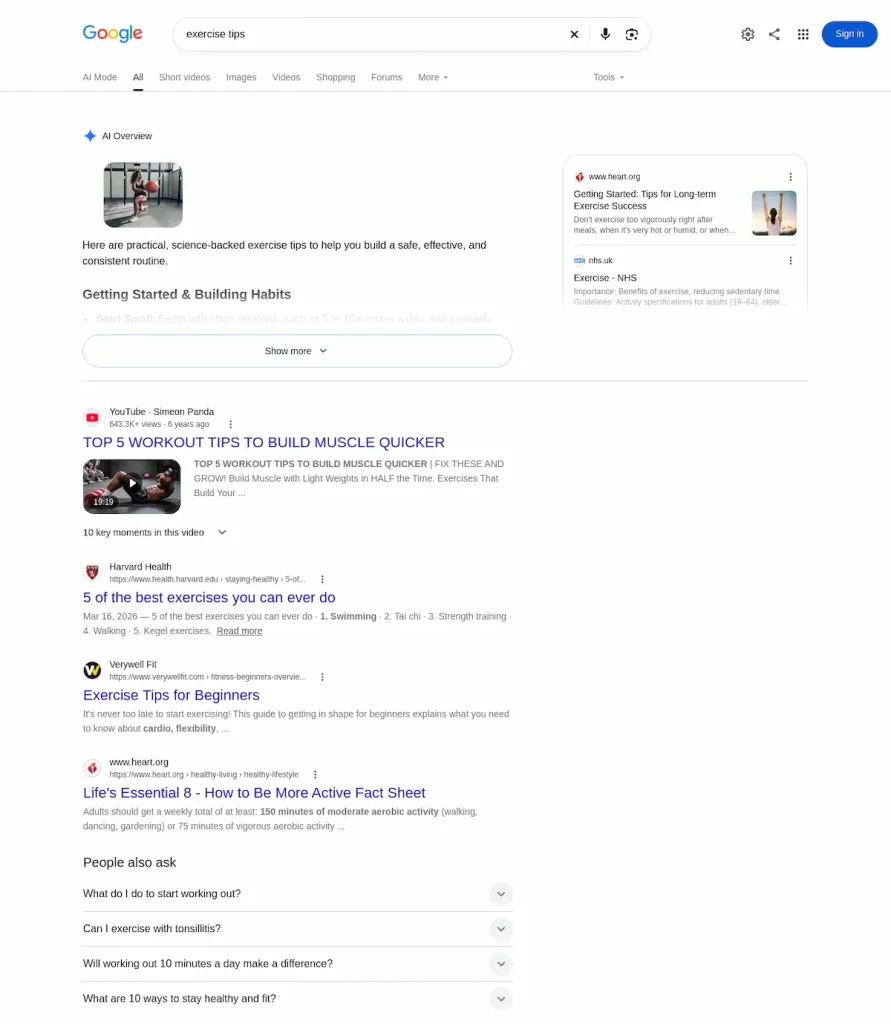
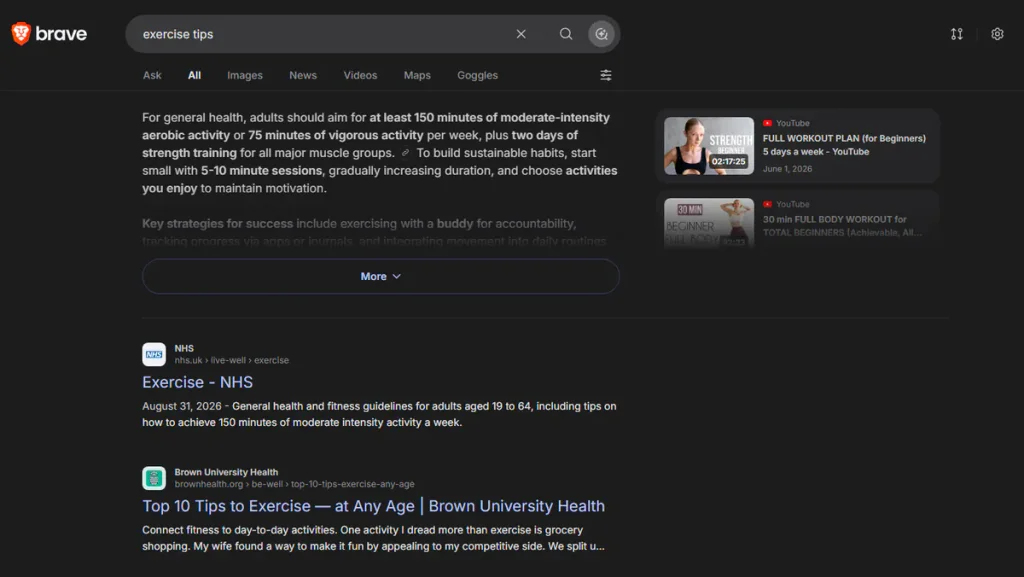
The final step is the most complex. When a user enters a query, the search engine utilizes over 200 signals to determine relevance. This includes location, language, and search history. In the current era, this process is augmented by "query fan-out," where AI models break complex questions into multiple sub-queries, synthesize information from the top results, and present a cohesive, cited answer.
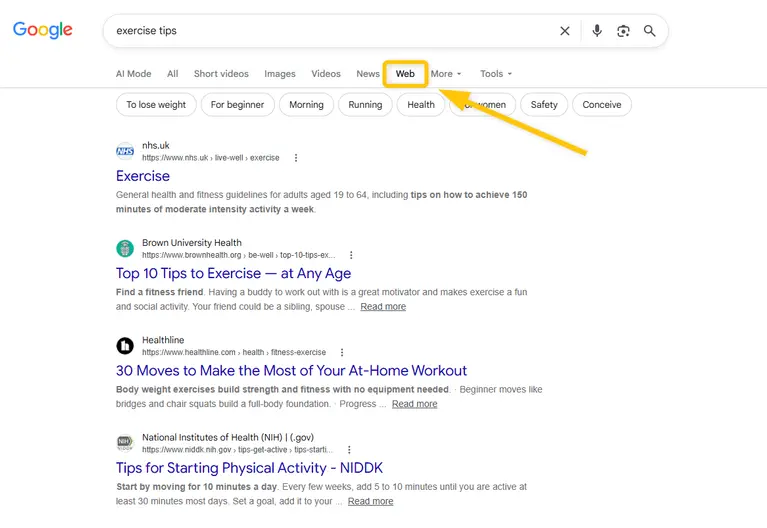
Chronology: From Archie to AI Overviews
The journey of search reflects the history of the web itself.
- 1990: Archie is born at McGill University, the first tool to index FTP file names.
- 1994-1996: The "Wild West" era begins with the launch of WebCrawler (the first full-text search), Lycos, and Yahoo!.
- 1998: Google changes everything with the PageRank algorithm, prioritizing site authority based on link signals.
- 2009: The launch of Bing and WolframAlpha introduces computational engines and serious competition for Google.
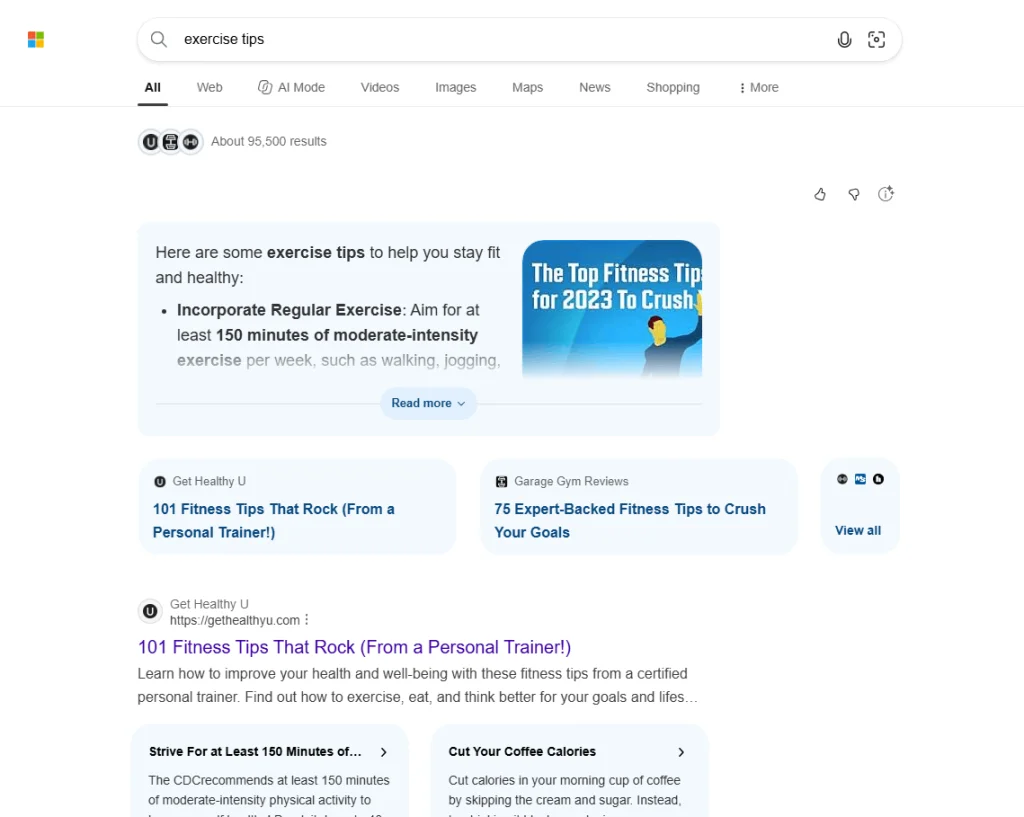
- 2022-2024: Generative AI enters the mainstream. Perplexity and ChatGPT arrive, and Google responds with AI Overviews.
- 2026: The industry reaches a tipping point. AI Mode becomes standard, legacy engines like Ask.com shut down, and Yahoo! debuts its Scout AI agent.
Market Dynamics: The Dominance of Google
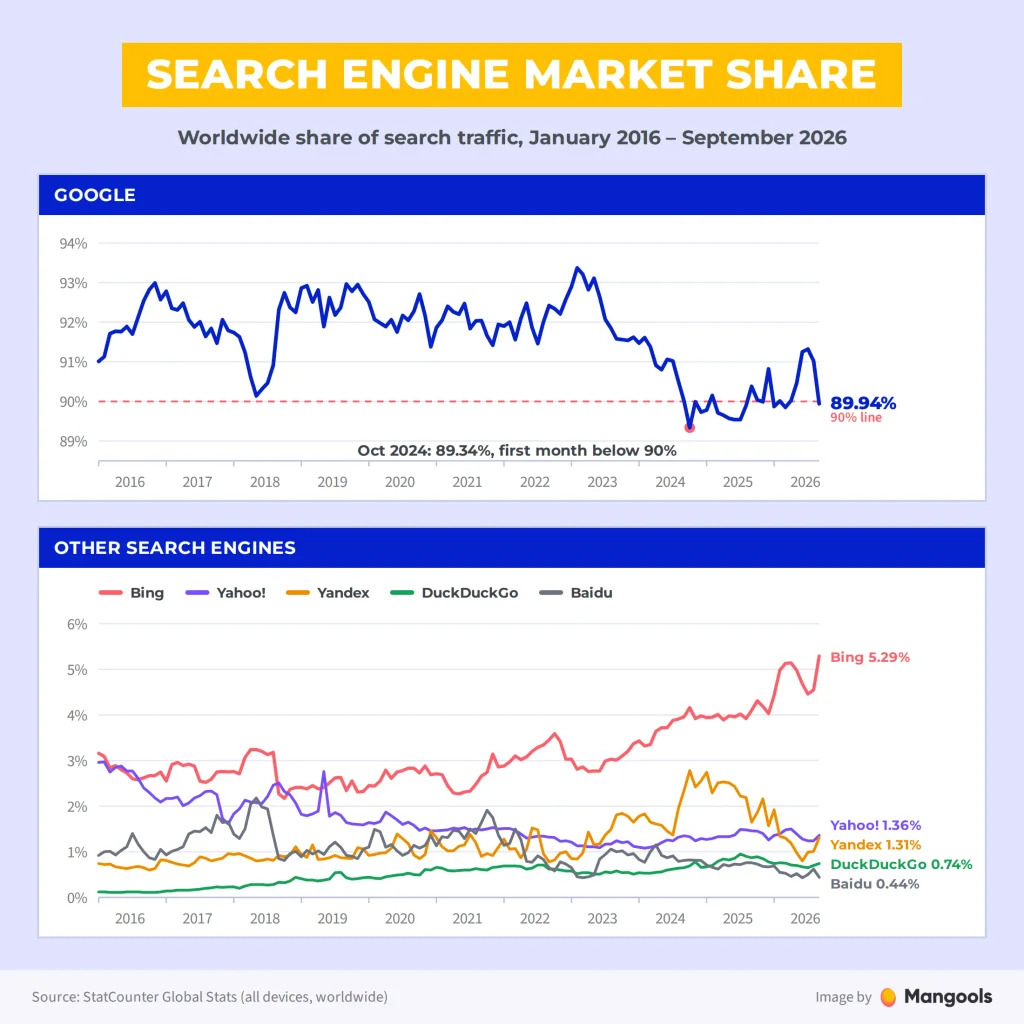
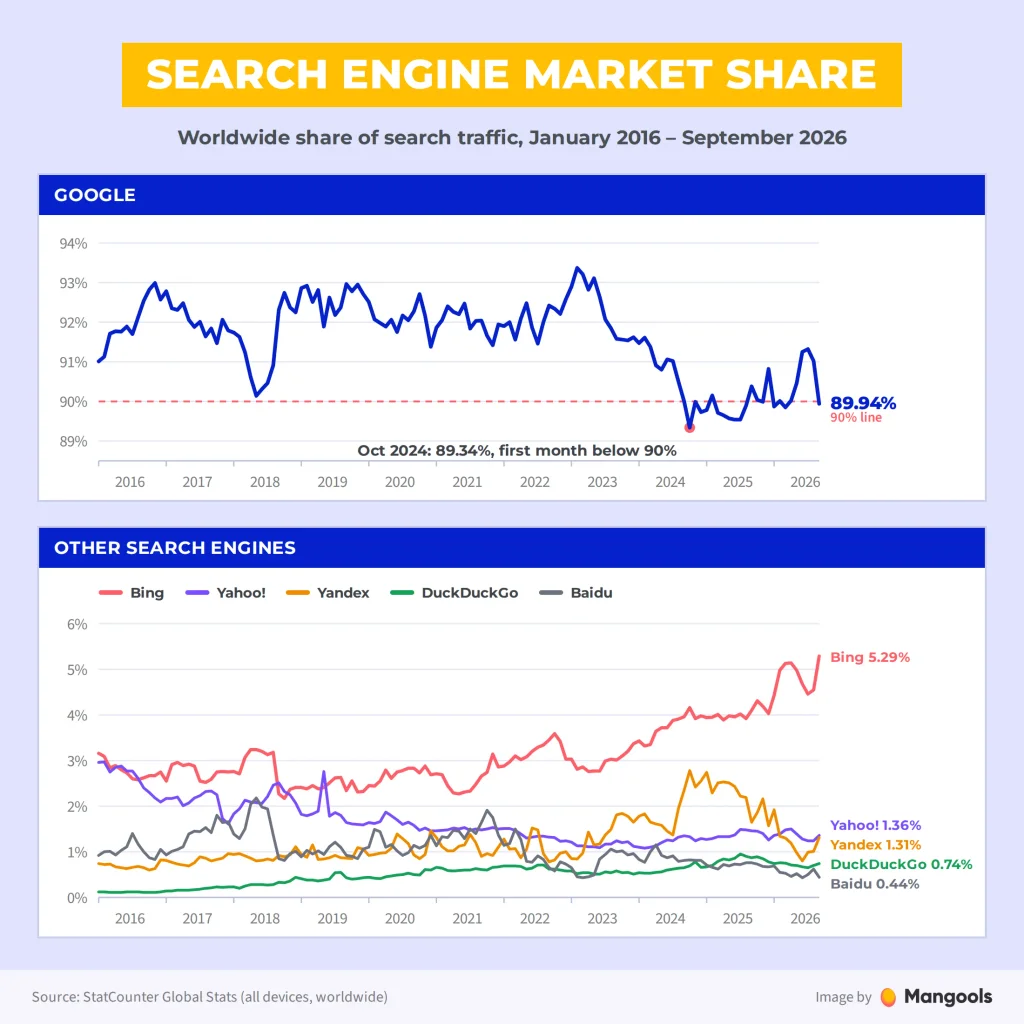
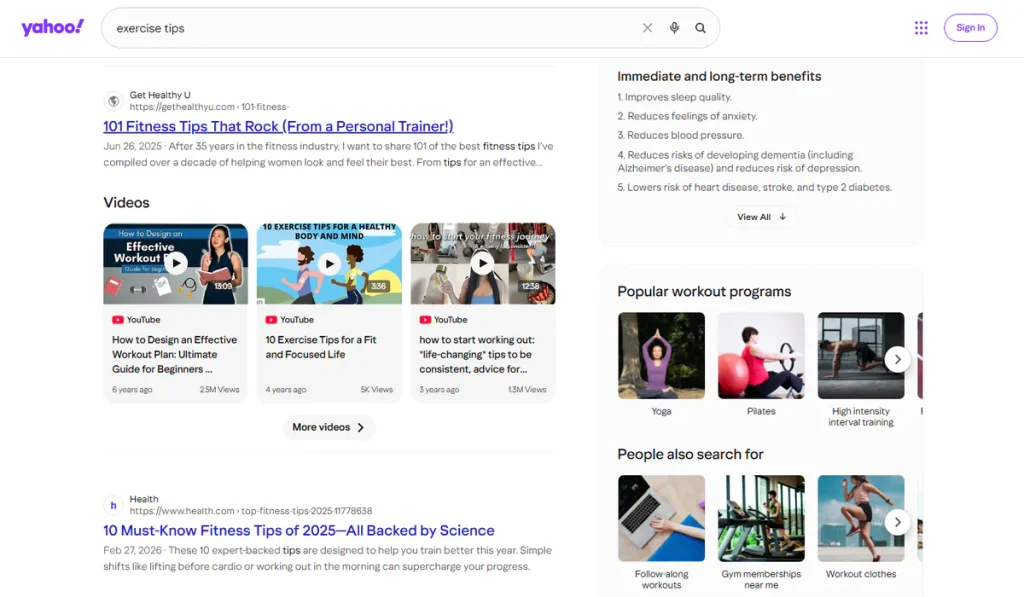
Despite the proliferation of AI, Google remains the undisputed leader, commanding approximately 90% of the worldwide market. However, the dynamics are shifting. While Google maintains dominance in mobile, desktop search remains more competitive, with Microsoft Bing capturing a larger share of referrals.
| Search Engine | Worldwide Share (Est. 2026) | Primary Advantage |
|---|---|---|
| 89.94% | Unmatched local relevance | |
| Microsoft Bing | 5.29% | Deep integration with Windows/Edge |
| Yahoo! | 1.36% | Portal convenience |
| Yandex | 1.31% | Russian-language dominance |
| DuckDuckGo | 0.74% | Privacy-first UX |
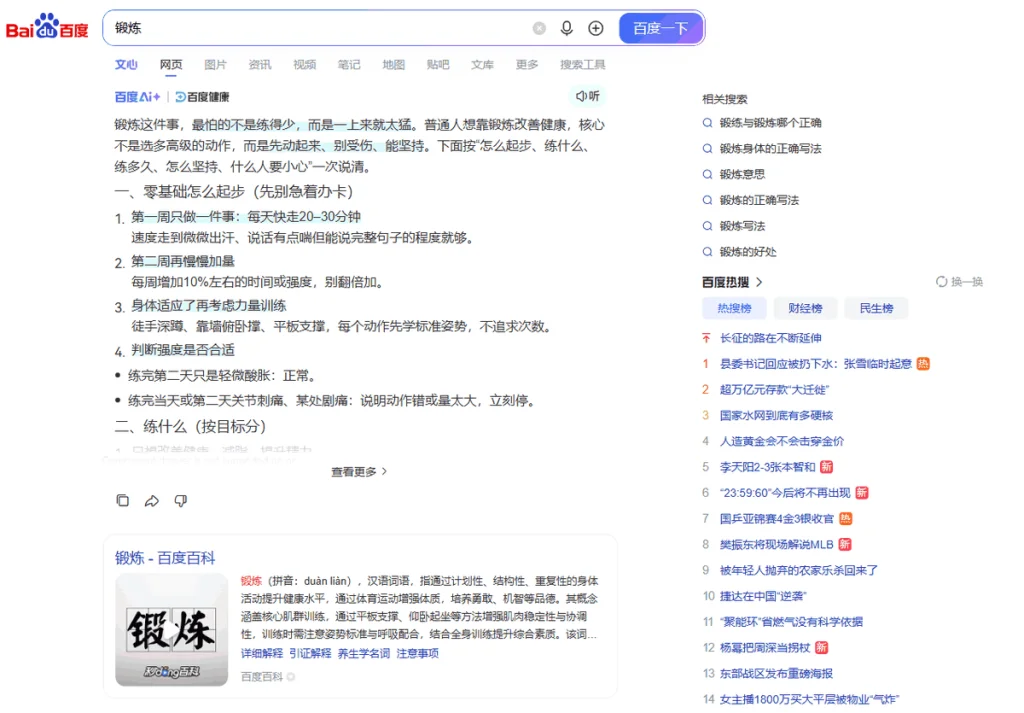
Regional engines continue to hold vital territory. In China, Baidu remains the standard due to its deep integration with the domestic ecosystem. In South Korea, Naver competes head-to-head with Google, thanks to its superior grasp of local culture and language.

The AI Transformation: Is Search Being Replaced?
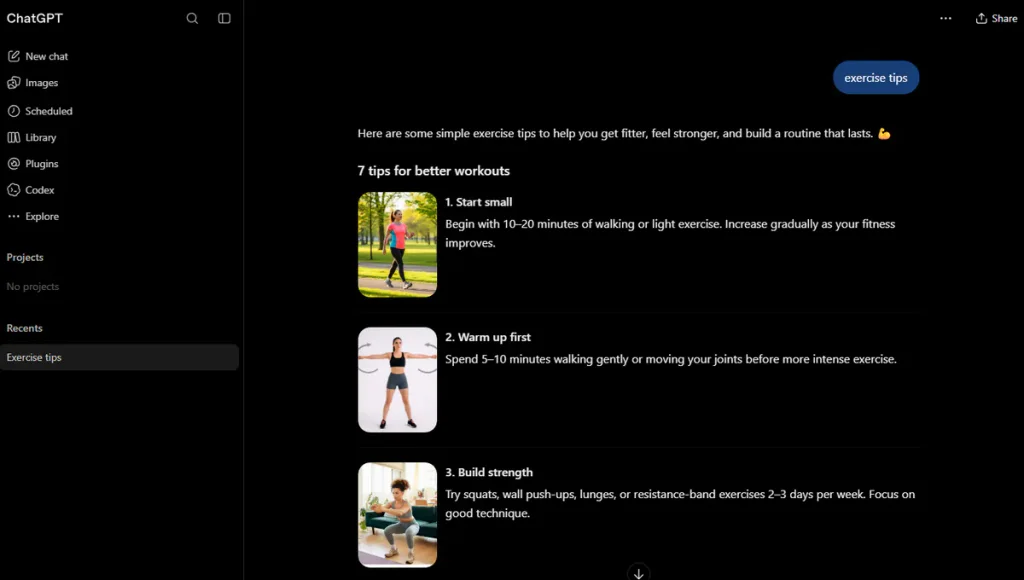
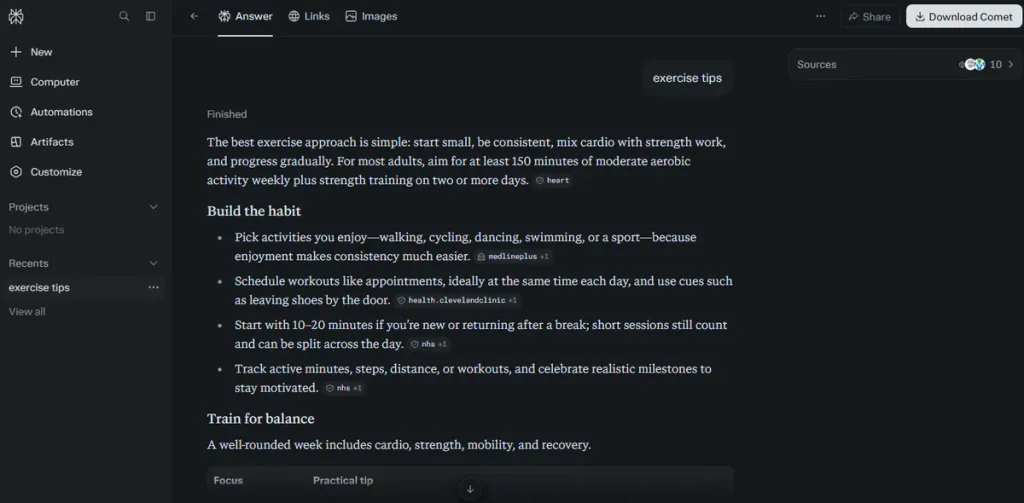
The most common question in 2026 is whether AI is replacing search engines. The data suggests a transformation rather than a replacement. Google reported in May 2026 that its "AI Mode" had surpassed 1 billion users, while OpenAI’s ChatGPT reached 1.2 billion weekly users.

Instead of choosing one or the other, users are adopting a "hybrid" behavior. They use traditional engines for navigation and e-commerce, while turning to AI agents for research, summarization, and complex queries. For businesses, this has created a new SEO imperative: you must not only rank for keywords but also ensure your content is "citation-worthy" for AI models.
Strategic SEO in the Age of AI
Optimizing for the modern search landscape requires a multi-pronged approach:
1. Technical Foundation
Ensure your site is crawlable. Submit your sitemaps to the major webmaster tools: Google Search Console, Bing Webmaster Tools, and Yandex Webmaster. The use of the IndexNow protocol is highly recommended, as it alerts multiple engines simultaneously when content is updated.
2. Authority and E-E-A-T
Google’s E-E-A-T (Experience, Expertise, Authoritativeness, and Trustworthiness) guidelines are more relevant than ever. AI models are trained to prefer high-credibility sources. Ensure that your content clearly displays author bios, cites reputable references, and provides up-to-date data.
3. AI Visibility
How do you ensure an AI agent cites your site?

- Structured Data: Use schema markup to help AI understand your content structure.
- Direct Answers: Write concise summaries within your articles that AI can easily pull into a snippet.
- Brand Perception: Use tools like AI Search Watcher to monitor if your brand is appearing in AI-generated answers and adjust your content strategy based on the prompts where you are under-performing.
Future Implications
As we look toward the remainder of the decade, the barrier between "browsing" and "searching" will continue to dissolve. Browsers are becoming AI assistants, and search engines are becoming synthesis engines.
For the average user, this means faster, more conversational access to information. For website owners, it means shifting away from "keyword stuffing" toward a philosophy of "information utility." The websites that provide the clearest, most verifiable, and most authoritative information will be the ones that survive the AI transition, whether the final deliverer is a human eye on a browser or an AI agent summarizing a query.

The era of the "10 blue links" is not dead, but it is no longer the sole gatekeeper of knowledge. Discovery is becoming more contextual, more conversational, and more integrated into our daily workflows than ever before. Staying visible in this new world requires agility, a commitment to technical SEO, and a clear understanding of your audience’s intent.