








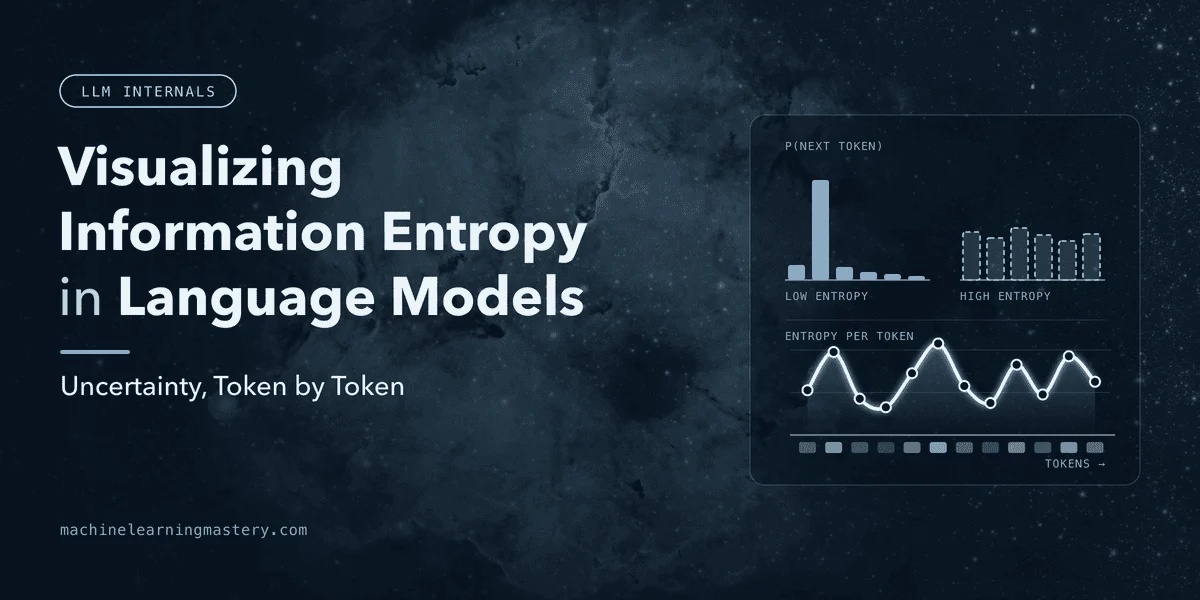
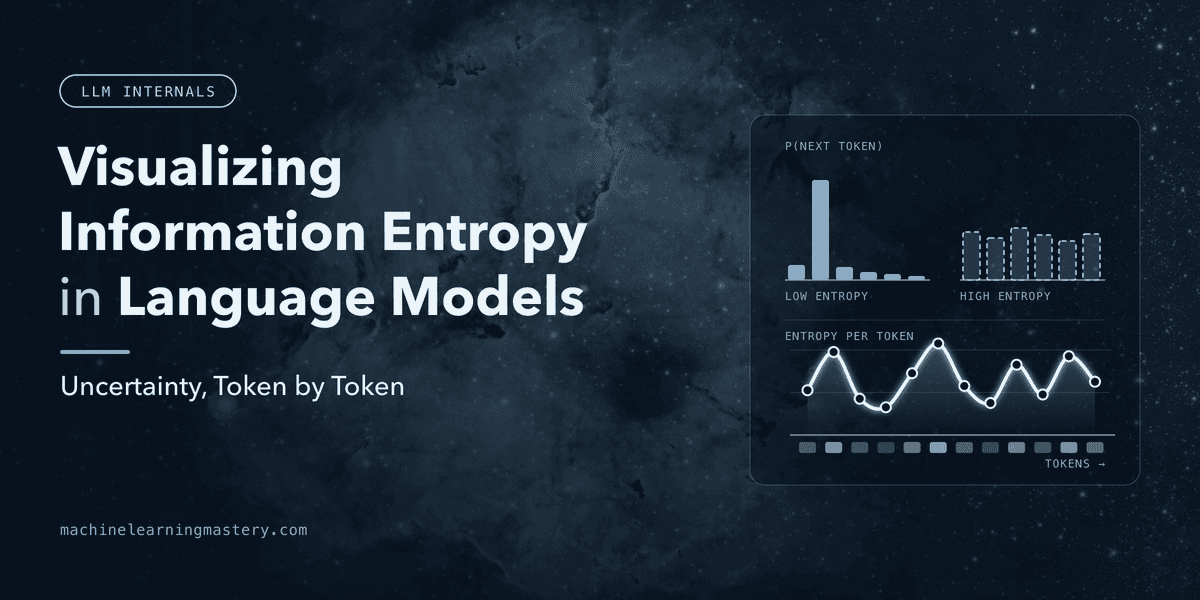
In the rapidly evolving landscape of artificial intelligence, few concepts are as foundational—yet as frequently misunderstood—as cross-entropy loss. From the architectural blueprints of OpenAI’s GPT series to the robust frameworks of Meta’s Llama and Google’s Gemini, this mathematical metric serves as the invisible tether guiding the evolution of machine intelligence. To understand how a model "learns" to construct coherent, human-like prose, one must move beyond the hype and delve into the mathematical bedrock of information theory.
Main Facts: The Compass of Modern AI
At its core, a Large Language Model (LLM) is a probabilistic engine. It does not "think" in the sentient sense; rather, it performs a high-dimensional game of prediction. When you prompt a model with the phrase, "The cat sat on the…", it does not retrieve a stored sentence from a database. Instead, it assigns a probability distribution across its entire vocabulary—tens of thousands of potential words—to determine which token is most likely to follow.
The process of training these models is essentially the act of narrowing this uncertainty. The objective function used to achieve this is cross-entropy loss. This metric quantifies the "distance" between the model’s predicted distribution and the "ground truth"—the actual word that appears in the training text. By minimizing this loss, developers force the model to sharpen its predictions, moving from a state of total confusion to one of high-fidelity accuracy.
Chronology: From Shannon’s Bits to Neural Networks
The intellectual lineage of today’s LLMs traces back to 1948, a watershed year in science. Claude Shannon, a mathematician at Bell Labs, published his seminal paper, A Mathematical Theory of Communication. Shannon sought to quantify "information." He posited that information is essentially the resolution of uncertainty.
- 1948 (The Dawn): Shannon introduces the concept of Information Entropy ($H$). He defined it as the average amount of "surprise" or uncertainty in a random variable. A fair coin toss has high entropy because the outcome is entirely unpredictable; a rigged coin that always lands on heads has zero entropy because there is no surprise.
- 1950s–1980s (The Mathematical Foundation): The principles of entropy were refined, forming the basis of coding theory and data compression. Scientists realized that minimizing entropy was synonymous with finding the most efficient way to store information.
- 2010s (The Deep Learning Revolution): As researchers began scaling neural networks, they realized that the same principle used to compress data could be used to train machines. If you treat a word prediction task as a classification problem, minimizing the cross-entropy between the model’s output and the target word becomes the most efficient way to teach the model grammar, syntax, and world knowledge.
- 2020s (The LLM Era): Modern architectures like the Transformer have allowed us to scale this "entropy minimization" to trillions of parameters, resulting in the emergent reasoning capabilities we see in contemporary AI.
Supporting Data: Visualizing the "Uncertainty Engine"
To grasp why cross-entropy is the superior metric for training, consider a simple five-word vocabulary: ["apple", "banana", "cat", "dog", "elephant"]. Suppose the correct target word is "cat".
If we examine three hypothetical model states, we see the mathematical impact of entropy:
- The Uncertain Model (Flat Distribution): If the model assigns 20% probability to each word, it is in a state of high entropy. It has no "opinion." The loss is high because the model is not distinguishing the target from the noise.
- The Confident but Wrong Model: If the model assigns 80% probability to
"apple", it is "certain" but incorrect. The cross-entropy loss is massive here, as the model is penalizing itself heavily for being confidently wrong. - The Confident and Correct Model: If the model assigns 90% probability to
"cat", the entropy is low, and the cross-entropy loss is minimized. This is the goal of every training iteration.
Python Implementation: Measuring the Loss
Calculating these metrics requires a focus on logarithmic probability. In Python, we use the following logic to quantify this:
import numpy as np

def shannon_entropy(dist):
    # Measures the internal 'flatness' or uncertainty
    return -np.sum(dist * np.log2(dist + 1e-9))

def cross_entropy(true_dist, pred_dist):
    # Measures the penalty against the ground truth
    return -np.sum(true_dist * np.log2(pred_dist + 1e-9))
This code snippet mirrors the internal "loss function" loop in models like Llama. By iterating over billions of sequences, the model adjusts its internal weights—its millions of parameters—to decrease this value.
Official Perspectives and Academic Consensus
In the AI research community, the consensus is clear: there is no substitute for cross-entropy as a primary loss function. Dr. Ilya Sutskever, a pioneer in the field, has frequently remarked that the objective of an LLM is to "compress the internet." This is not a metaphor. Mathematically, the better a model can predict the next word in a sequence, the more it has successfully compressed the underlying logic, facts, and structure of human language.
Critics often point to the limitations of this approach—specifically, that "next-token prediction" does not equate to "understanding." However, industry leaders argue that as cross-entropy loss approaches zero, the model’s performance on downstream reasoning tasks improves proportionally. The "loss" is the signal; the complexity is the result.
Implications for the Future of AI
The reliance on information entropy as a training signal has profound implications for the future of the technology:
- Efficiency vs. Scale: As we continue to refine training techniques, the focus is shifting toward "entropy efficiency." Can we achieve the same level of intelligence with fewer parameters if we optimize the learning signal better? This is the core research question driving companies like Mistral and Anthropic.
- Safety and Alignment: The same math that trains a model to be helpful can be used to steer it away from harmful content. By adjusting the "target distributions" during Reinforcement Learning from Human Feedback (RLHF), engineers can effectively apply a "penalty" to entropy in directions that produce undesirable outputs.
- The Limits of Prediction: If LLMs are simply minimizing cross-entropy, are they capable of true creativity? Or is "creativity" simply the art of managing entropy in a way that remains coherent while avoiding the banality of high-probability outcomes?
Conclusion: The Unending Quest for Lower Loss
The journey from Claude Shannon’s 1948 paper on bits to the sophisticated conversational agents of today is a testament to the power of information theory. By transforming language into a series of probability distributions, we have successfully created machines that can navigate the complexity of human thought.
As we look toward the future, the challenge remains: we are still essentially asking machines to "guess the next word." Yet, by mastering the mathematics of uncertainty—by lowering the cross-entropy—we are witnessing the birth of a new kind of intelligence, one built not on logic gates alone, but on the elegant, cold, and precise language of probability. The model’s goal is to minimize its loss; our goal is to understand what that minimized loss actually represents: the bridge between random noise and human wisdom.