




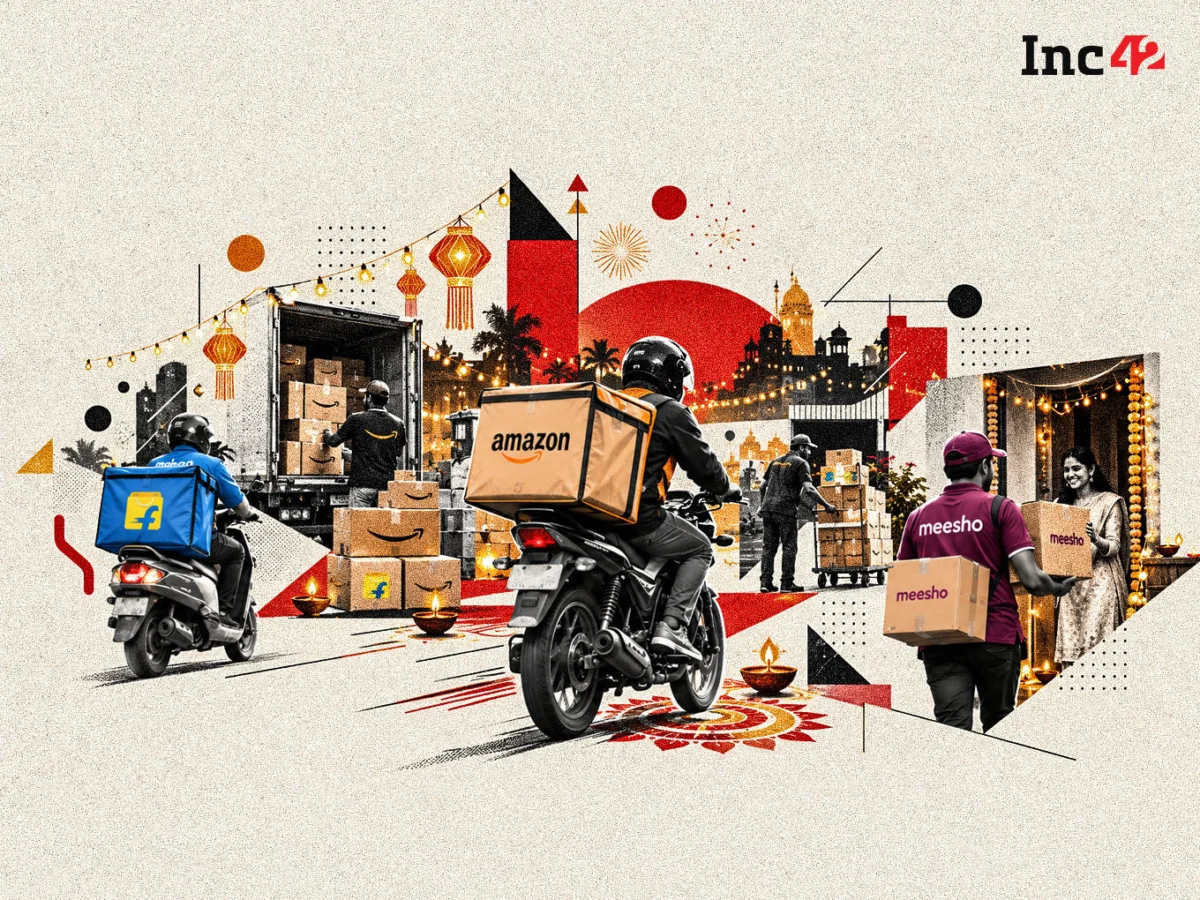
The traditional narrative of the Indian festive season—a period characterized by unbridled consumer optimism and a collective splurge—has encountered a significant reality check this year. While digital storefronts buzzed with record-breaking traffic and millions of concurrent users, the underlying financial data paints a sobering picture of a consumption landscape defined by caution, budget constraints, and a strategic pivot away from big-ticket discretionary spending.
As India’s retail giants closed the books on their primary festive sale windows, the contrast between "clicks" and "currency" has never been sharper. Despite high engagement, consumers are tightening their purse strings, signaling that the macroeconomic headwinds of inflation and stagnant income growth are finally taking a toll on the country’s retail engine.
The Macro View: A Tale of Two Metrics
Early data from market intelligence firm Redseer indicates that India’s online festive sales generated a Gross Merchandise Value (GMV) of $7–8 billion during the initial phase (October 8 to 18). Nearly 100 million shoppers placed over 350 million orders, with consumption rates running at three times the daily average.
However, beneath the surface of these high-level figures lies a troubling trend. According to Datum Intelligence, total online festive sales reached approximately ₹29,800–₹30,900 crore, representing a 7–10% decline compared to the ₹33,200 crore recorded during the same four-day period last year. Perhaps most telling is the 12–15% year-on-year (YoY) drop in card-based spending, suggesting that when consumers do decide to spend, they are increasingly relying on cash-on-delivery or smaller-ticket transactions rather than the credit-fueled binge typical of previous years.
The broader sentiment is further corroborated by the LocalCircles "Mood for the Consumer 2026" survey. Covering over 67,000 urban households across 307 districts, the survey estimates total urban festive discretionary spending at ₹1.97 lakh crore—a 6% contraction from the ₹2.10 lakh crore seen in 2025.
Chronology of the Festive Campaigns
The festive season kicked off with aggressive posturing by the e-commerce majors:
- October 8: Flipkart’s "Big Billion Days" went live, recording a staggering 6.3 million concurrent users within the first minute.
- October 9: Meesho’s "Mega Blockbuster Sale" commenced, later reporting a 75% YoY increase in day-one orders and a 60% growth in transacting customers.
- October 8–20: Amazon’s "Great Indian Festival" spanned nearly two weeks, with the platform reporting that the number of products ordered in the first 24 hours more than doubled compared to the previous year.
- Late October: Myntra’s "Big Fashion Festival" (October 8–25) saw daily active users spike by 40% compared to September averages.
Despite this operational success in driving traffic, the conversion of that traffic into high-value transactions remained elusive. On October 9, the first day Amazon and Flipkart were open to all users, the number of card transactions was comparable to last year (83.5 lakh vs 82 lakh), yet the value of those transactions plummeted by 18%, falling from ₹8,067 crore to ₹6,594 crore.
Supporting Data: Where the Money Flowed
The divergence in performance across categories reveals a clear hierarchy of needs. Consumers are prioritizing smaller, essential, or vanity purchases over capital-intensive electronics.
Fashion and Beauty: The Resilient Sectors
Fashion and beauty bucked the downward trend. Myntra’s monthly active users reached 93 million (up 8% YoY), while Nykaa Fashion saw a 24% growth in its user base to 17 million. Flipkart reported a 42% surge in beauty sales in the first hour, and Redseer estimates that the fashion category grew by 20–25%, accounting for nearly a fifth of total festive GMV.
Electronics: The "Premiumization" Paradox
The electronics sector presents a more complex narrative. While overall volume in mobiles and consumer electronics faced pressure, "premium" segments showed surprising resilience. Amazon reported that 55-inch+ televisions accounted for 65% of its TV sales, and premium Android smartphone sales rose 70% YoY. High-end home theater systems sold at 100 times their regular levels, and large-capacity front-load washing machines saw an 80x increase in demand.
However, this "premiumization" does not represent a broad recovery. Instead, it reflects a K-shaped recovery where the top-tier of consumers continues to upgrade, while the mass-market consumer—who usually drives the bulk of volume—is priced out or holding back.
The Smartphone Sector: A Bellwether for Caution
Smartphones, often the flagship category for festive sales, provided the clearest evidence of market stress. Counterpoint Research reported a 16% YoY decline in smartphone sales during the first three days of the festive window, surpassing their initial 12% contraction forecast.
Tarun Pathak, Research Director at Counterpoint, noted: "Platforms have seen strong traffic, but conversions have been weak. While premium smartphones continue to perform, entry-level devices are facing intense pressure as prices have climbed, and direct discounts have been replaced by complex financial instruments like no-cost EMIs and exchange offers."
The shift from flat discounts to "financial engineering" appears to have failed to move the needle for the average price-sensitive buyer. With festive discounts estimated to be 35–40% lower than last year and base prices for premium electronics up by 30–40%, the "value proposition" has simply evaporated for the middle-class shopper.
Official and Industry Perspectives
Industry experts point to a confluence of factors creating this "festive chill." Sachin Taparia, founder of LocalCircles, highlights the stagnation in real wages and the relentless climb of inflation.
"Household earnings are not rising, yet inflation—particularly food inflation, which stood at 7.74% in September—continues to eat into disposable income," says Taparia. "There is also a palpable anxiety regarding the impact of AI on white-collar job security, which is leading households to prioritize savings over discretionary consumption."
Furthermore, the lack of a "tax-led" stimulus—unlike 2025, when GST rate cuts provided a sudden boost to consumer sentiment—meant there was no external trigger to catalyze demand this year.
Implications for the Retail Future
The data from the 2026 festive season offers several critical takeaways for the Indian retail ecosystem:
- The End of "Volume-at-All-Costs": Retailers can no longer rely on traffic metrics or order counts to define success. The disconnect between order volume and GMV value suggests that the "next 100 million users" from Tier II and III towns are buying smaller, cheaper items, which does not compensate for the loss of high-value electronics sales.
- Shift in Household Priorities: The LocalCircles survey found that 72% of households prioritized clothing and footwear for festive spending, while only 22% intended to purchase mobile phones or gadgets. This indicates a permanent shift in how households allocate their limited festive budgets.
- The Savings Mandate: Perhaps the most significant finding is the reliance on savings. With 83% of households intending to use savings to fund their purchases—and 16% planning to exhaust savings entirely—the "buy now, pay later" culture is reaching a ceiling. Consumers are no longer willing to leverage future income for current consumption in an uncertain economic climate.
- Pricing Sensitivity: The 30–40% price hikes in electronics have clearly alienated the price-conscious demographic. Brands that continue to rely on premiumization to mask volume declines risk losing market share as the "aspirational middle class" remains sidelined.
Conclusion
The 2026 festive season will be remembered as the year the Indian consumer opted for pragmatism over impulse. While the digital infrastructure proved robust enough to handle record traffic, the consumer’s wallet remained firmly shut to anything that was not an essential or a deeply discounted necessity.
For retailers, the implication is clear: the era of easy growth driven by aggressive online discounting is over. As household budgets remain under the dual pressure of stubborn inflation and job market uncertainty, the future of Indian e-commerce will depend less on marketing blitzes and more on the ability to provide genuine, inflation-adjusted value to a increasingly cautious, budget-conscious population. The "Festive Chill" is not merely a seasonal anomaly; it is a fundamental correction in the Indian consumption story.