







SAN FRANCISCO — It is 7:00 a.m., and before a single sip of coffee has been consumed, a typical small business owner or sales director faces a daunting reality: an inbox already overflowing with forty unread messages. While a high volume of digital correspondence is fundamentally a positive indicator of business activity, the sheer cognitive load of managing it has become one of the modern workplace’s most pervasive bottlenecks.
For decades, email was expected to act as a secure communications channel, but it has organically mutated into something entirely unintended—functioning simultaneously as an ad-hoc sales pipeline, a customer support ticketing desk, a project management board, and a never-ending to-do list.
Enter the next generation of artificial intelligence: AI inbox management. Far beyond the rudimentary, rule-based spam filters of the past, modern AI systems act as sophisticated digital assistants. By natively integrating with customer relationship management (CRM) platforms, these tools can parse incoming messages, prioritize urgent requests, draft context-aware responses, and autonomously handle routine administrative tasks.
Main Facts: What is an AI Inbox and How Does It Work?
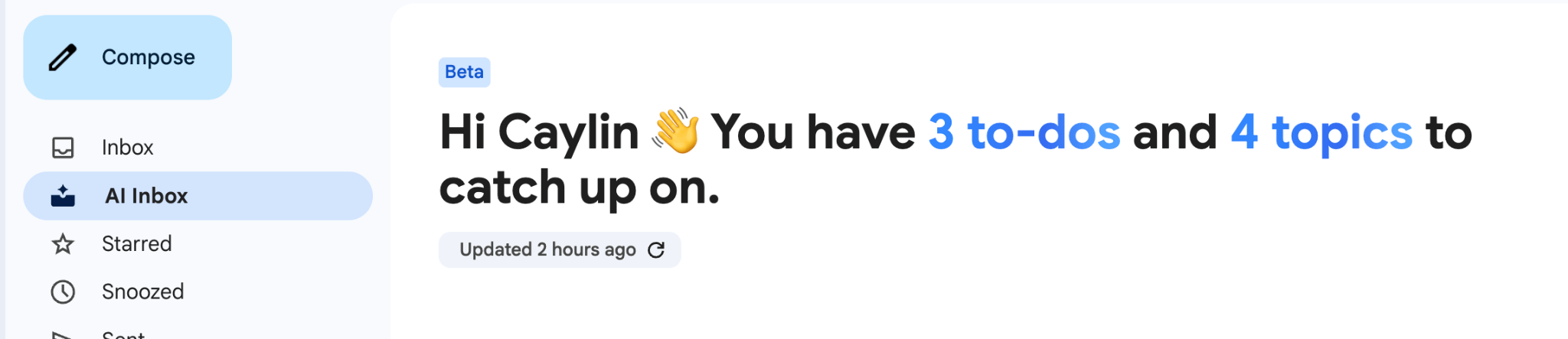
At its core, an AI inbox utilizes advanced machine learning and generative artificial intelligence to sort, draft, prioritize, and even execute email communication on behalf of a user. Industry leaders like Google—with the integration of Gemini into Gmail—and enterprise ecosystem giants like Salesforce have pioneered systems that go far beyond simple folder categorization.

Key capabilities of modern AI inbox frameworks include:
- Contextual Prioritization: The AI analyzes incoming messages to surface actionable to-dos, flag time-sensitive inquiries requiring same-day replies, and quietly archive or file low-priority items such as newsletter unsubscribes.
- Autonomous, Personalized Drafting: By evaluating previous interactions stored within a company’s database, the AI drafts replies that mimic the user’s personal tone and incorporate accurate historical data.
- CRM Synergy: Unlike standalone email clients, advanced AI inboxes are anchored directly to a centralized CRM. This integration ensures that sales, marketing, and customer service data live in a unified ecosystem, allowing the AI to "connect the dots" across multiple customer touchpoints.
According to enterprise workflow analysts, the primary differentiator between a basic email filter and a true AI inbox agent is the presence of deep contextual awareness. Instead of merely scanning keywords, an AI agent understands why a customer is emailing based on their past purchase history, recent support tickets, and previous sales conversations.
Chronology: The Evolution of Email Management
To understand how the workplace arrived at the current AI inbox revolution, it is helpful to examine how email management has evolved over the past thirty years:
- The Early Era (Late 1990s – 2000s): Email established itself as the dominant form of professional communication. Organization relied entirely on manual sorting, folder creation, and color-coded flags.
- The Rule-Based Automation Era (2010s): The introduction of basic filters, auto-responders, and rudimentary spam detection helped curb unwanted mail, but users remained entirely responsible for reading, prioritizing, and drafting every legitimate response.
- The Fragmented Tool Era (Early 2020s): Growing businesses adopted disjointed ecosystems—utilizing one tool for email marketing, another for customer service ticketing, and a spreadsheet or basic CRM for sales tracking. This fragmentation created massive operational friction.
- The Integrated AI Era (Present Day): Modern AI agents emerge to unify disparate channels. Platforms like Salesforce integrate inbox management directly with foundational CRM databases, enabling seamless bi-directional workflows where AI handles both incoming triage and outbound campaign execution.
Supporting Data and Operational Impact
The financial and operational toll of inbox fatigue is well-documented. Studies on workplace productivity consistently indicate that professionals spend up to 28% of their workweek reading and answering emails. For growing businesses and lean teams, this time drain directly impacts revenue generation.
When organizations deploy AI-driven inbox tools integrated with a centralized CRM, measurable efficiencies emerge:
- Drastic Reduction in Response Times: Customer service and sales inquiries that previously sat in queues for hours are addressed within minutes, dramatically increasing lead conversion rates.
- Shift to High-Value Strategy: By delegating first-draft creation and message triage to AI agents, knowledge workers reclaim hours of deep-focus time each week, redirecting their efforts toward business strategy, product development, and relationship-building.
- Unified Data Integrity: Eliminating the gap between inbound communications and customer profiles ensures that no critical piece of client data is ever lost in an individual employee’s personal inbox.
Official Perspectives and Industry Responses
Industry leaders emphasize that the integration of artificial intelligence into daily workflows is no longer an experimental luxury, but an operational necessity for scaling enterprises.
"An email agent doesn’t just answer faster — it answers with the context of every conversation your business has had with that person," notes leadership at Salesforce, highlighting the shift toward autonomous AI agents designed to alleviate administrative burdens.
Technology analysts point out that small-to-medium businesses (SMBs) stand to benefit the most from these advancements. Lacking the massive administrative workforces of multinational corporations, SMBs often suffer disproportionately when key personnel are bogged down by manual email management. By lowering the barrier to entry—offering free trials and foundational suites—tech providers are democratizing access to enterprise-grade automation tools.

Furthermore, educational frameworks like Salesforce Trailhead have rolled out comprehensive guides focused on targeted email creation, segmentation, and timing. These resources are designed to help lean teams build professional communication rhythms without requiring dedicated marketing departments.
Implications for the Future of Work
The widespread adoption of AI inbox management signals a broader cultural and structural shift in how humans interact with enterprise software. As trust in artificial intelligence grows, several long-term implications are beginning to take shape:
1. The Redefinition of the "First Draft"
Human workers are transitioning from creators of initial content to editors and supervisors of AI-generated output. In the context of email, this means professionals spend their time evaluating strategic decisions and maintaining brand voice, while the AI handles the heavy lifting of composition and data retrieval.
2. Bridging the Gap Between Inbound and Outbound
Historically, inbound customer service and outbound marketing operated in distinct silos. AI-driven inbox management bridges this divide. Because the AI draws from the same centralized customer truth, outbound marketing campaigns are instantly informed by recent customer service interactions, preventing tone-deaf marketing messaging to clients currently experiencing active support issues.

3. Scalability Without Headcount Inflation
For small businesses, scaling operations traditionally required linear hiring: more customers meant more support staff, which meant more inbox chaos. AI-backed inbox tools decouple business growth from administrative overhead, enabling small teams to handle significantly larger volumes of correspondence without sacrificing response quality or personal touch.
Frequently Asked Questions
Is AI inbox management only useful for sales teams?
No. While sales teams benefit greatly from rapid lead response times, AI inbox management is equally valuable wherever email volume is high, including customer support desks, billing departments, and general inquiry hotlines. Service teams often experience the fastest operational wins because their replies are strictly time-sensitive.
Will an AI agent send emails without human oversight?
That is entirely up to the user. Most small businesses adopt a phased approach: initially configuring the AI to draft replies strictly for human review and approval, and gradually loosening guardrails as trust and familiarity with the system increase.
Does AI inbox management replace traditional email marketing tools?
No, the two technologies complement one another. Inbox management handles incoming correspondence and triage, while AI-powered marketing tools optimize outbound campaigns. Both systems achieve maximum efficiency when sharing a unified customer database.

How does an AI inbox differ from a basic spam filter or auto-responder?
Basic filters operate on rigid, pre-set rules, while auto-responders send generic, one-size-fits-all messages. In contrast, AI inbox management comprehends complex context, references historical interactions across the business, and drafts highly personalized, relevant responses.
What is the fastest way for a small business to begin utilizing this technology?
Organizations are advised to start small—focusing on a single inbox and a specific use case, such as drafting initial replies to new inbound leads—using an SMB-friendly CRM platform before expanding automated workflows across the broader enterprise.