










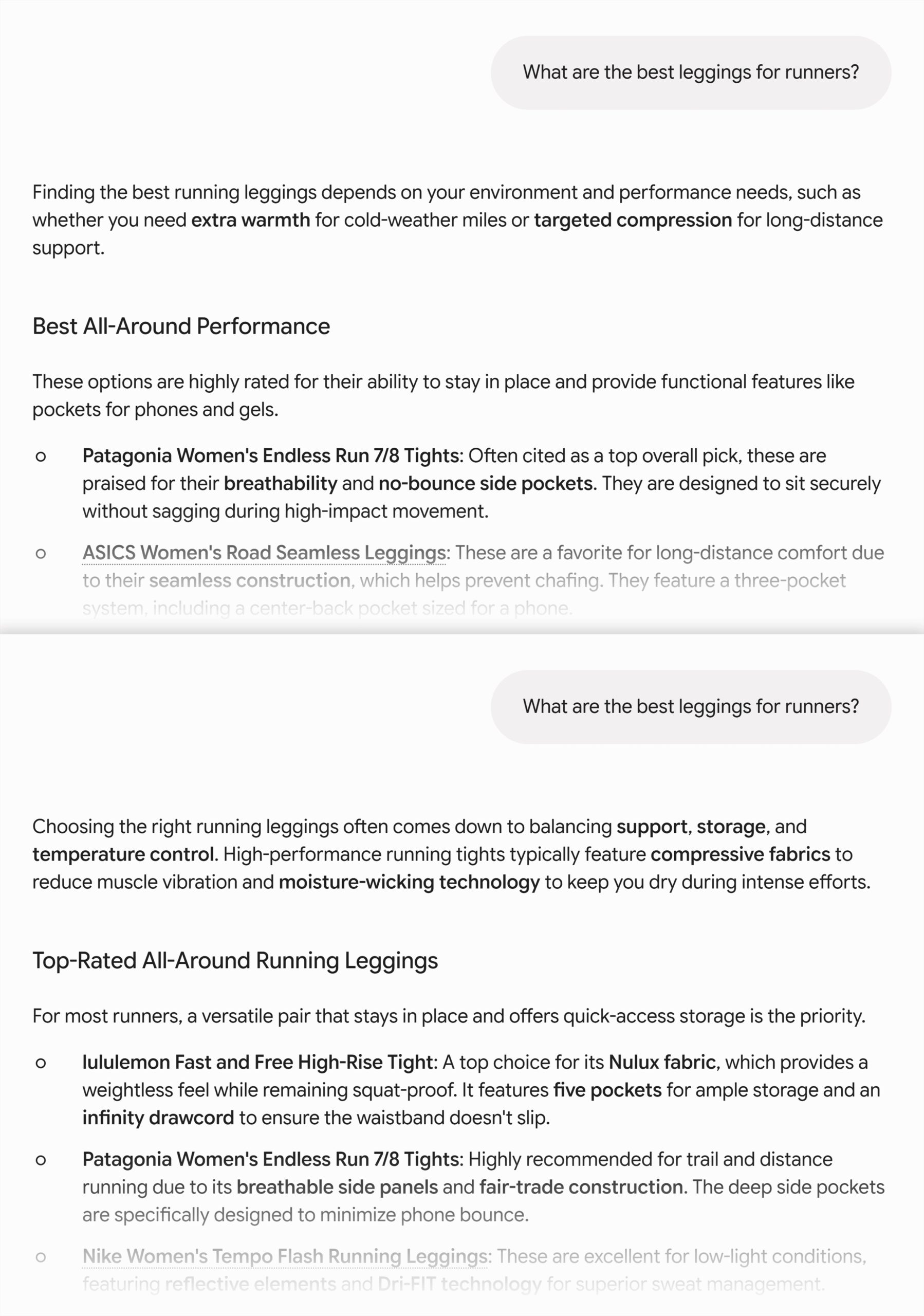
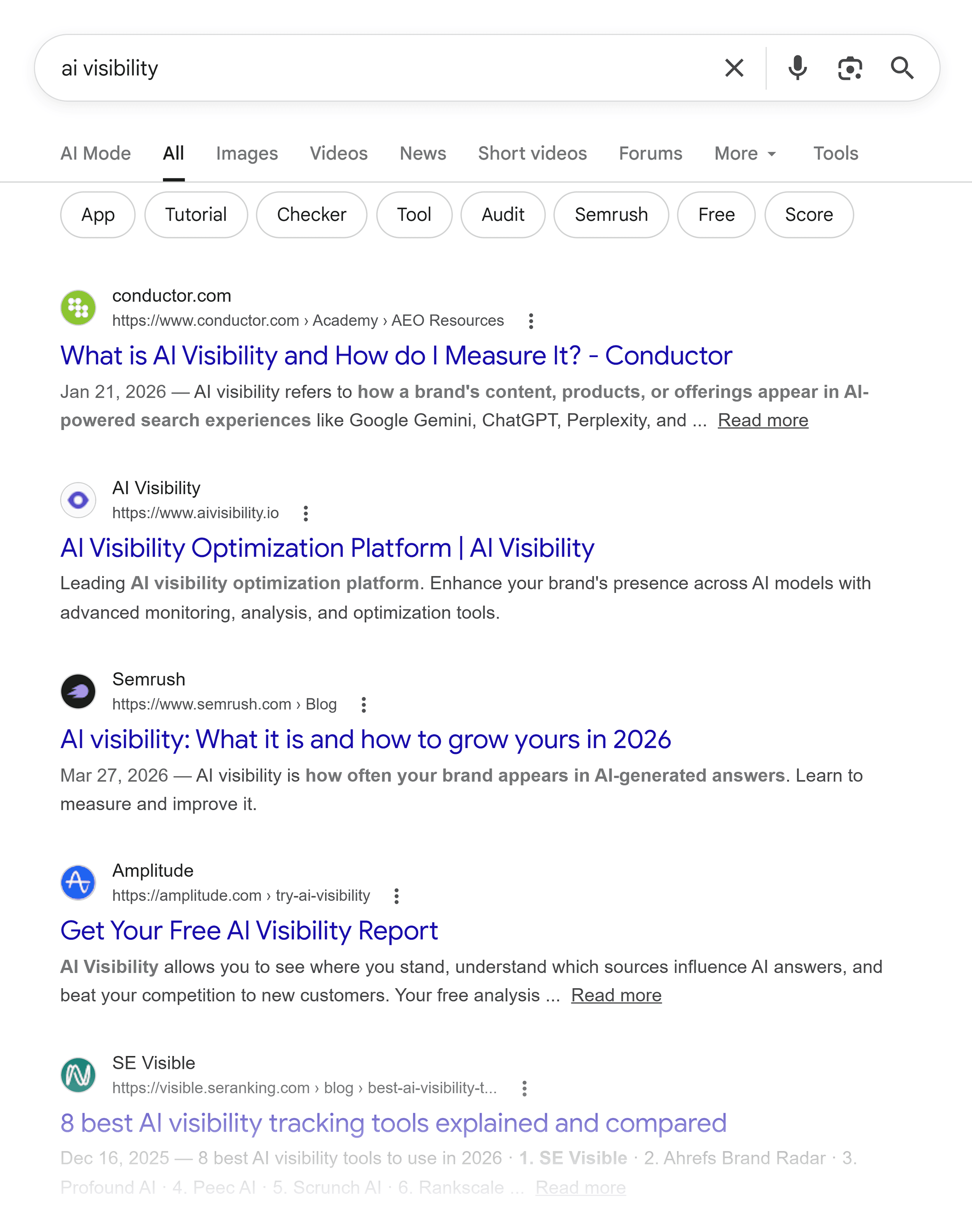
Your website might be the top result for your most important keywords, boasting a pristine Google ranking. You have the backlinks, the optimized meta-tags, and the high-quality content. Yet, to a growing segment of your audience, your brand is effectively invisible.
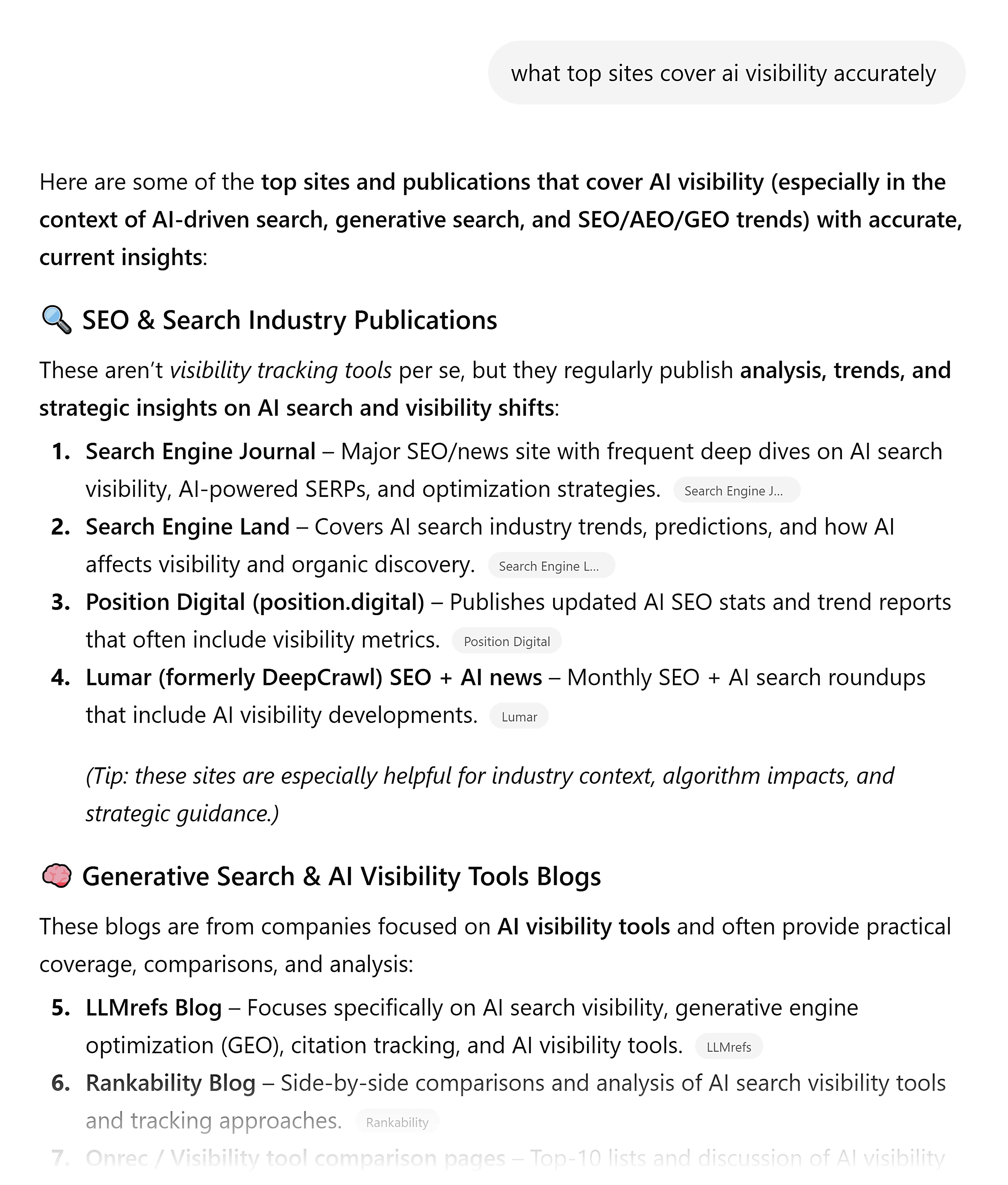
As users increasingly turn to Large Language Models (LLMs) like ChatGPT, Claude, and Gemini to research products, they aren’t scrolling through ten blue links. They are asking questions and receiving curated, synthesized answers. If your brand isn’t being cited in those responses, you are being erased from the conversation. Worse, if the AI is hallucinating outdated or incorrect information about your business, it could be actively damaging your sales pipeline.
Traditional SEO rank tracking is no longer enough. To survive in the "Answer Economy," you need a new operational framework: Prompt Tracking.
Understanding Prompt Tracking: The New Visibility Standard
Prompt tracking—also referred to as LLM visibility tracking—is the practice of systematically monitoring how your brand appears (or fails to appear) in AI-generated responses over time.
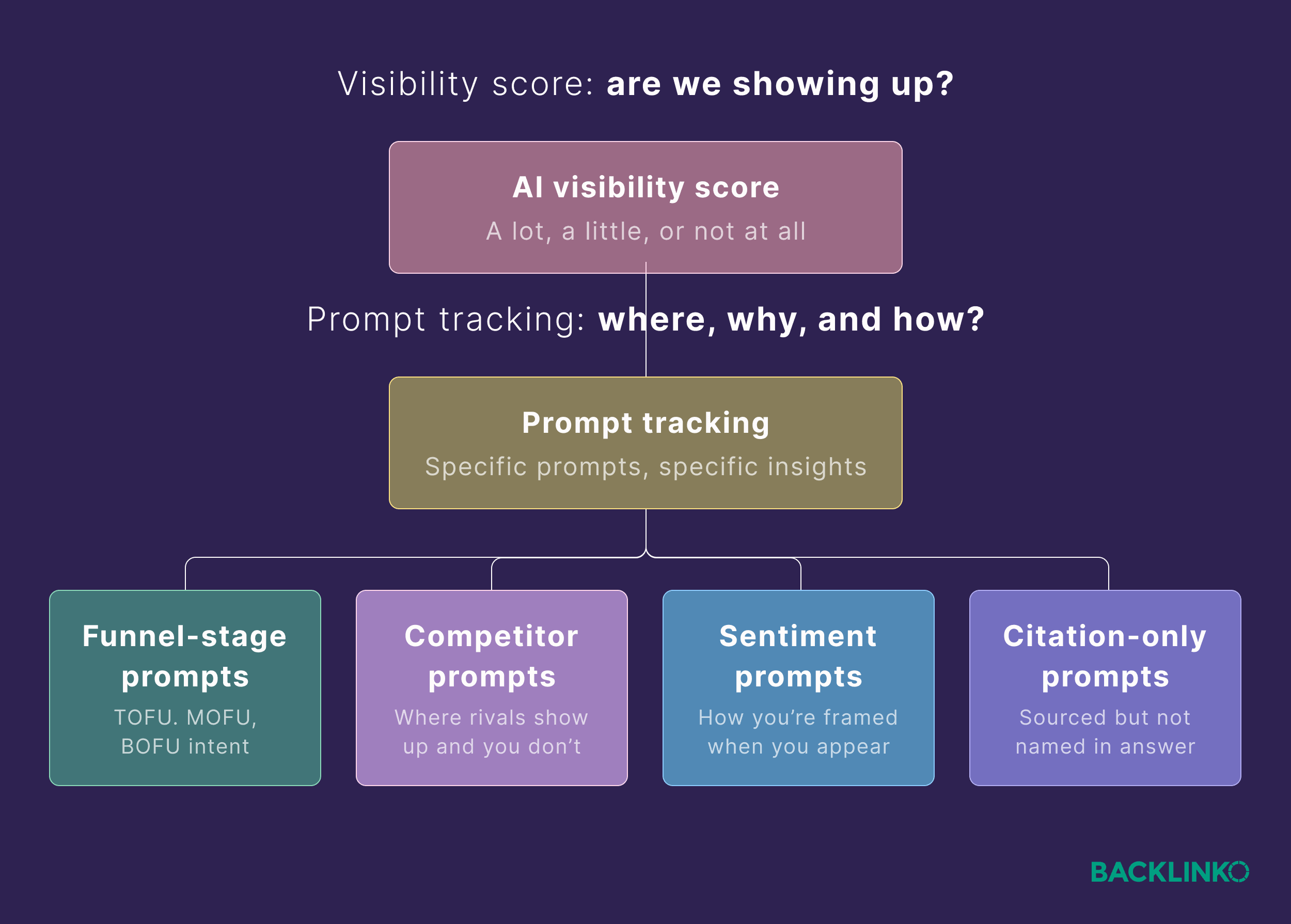
Traditional SEO rank tracking asks, "How close are we to position one on the SERP?" In contrast, prompt tracking asks, "Are we a trusted entity in the LLM’s knowledge base, and are we being recommended to the right people?"
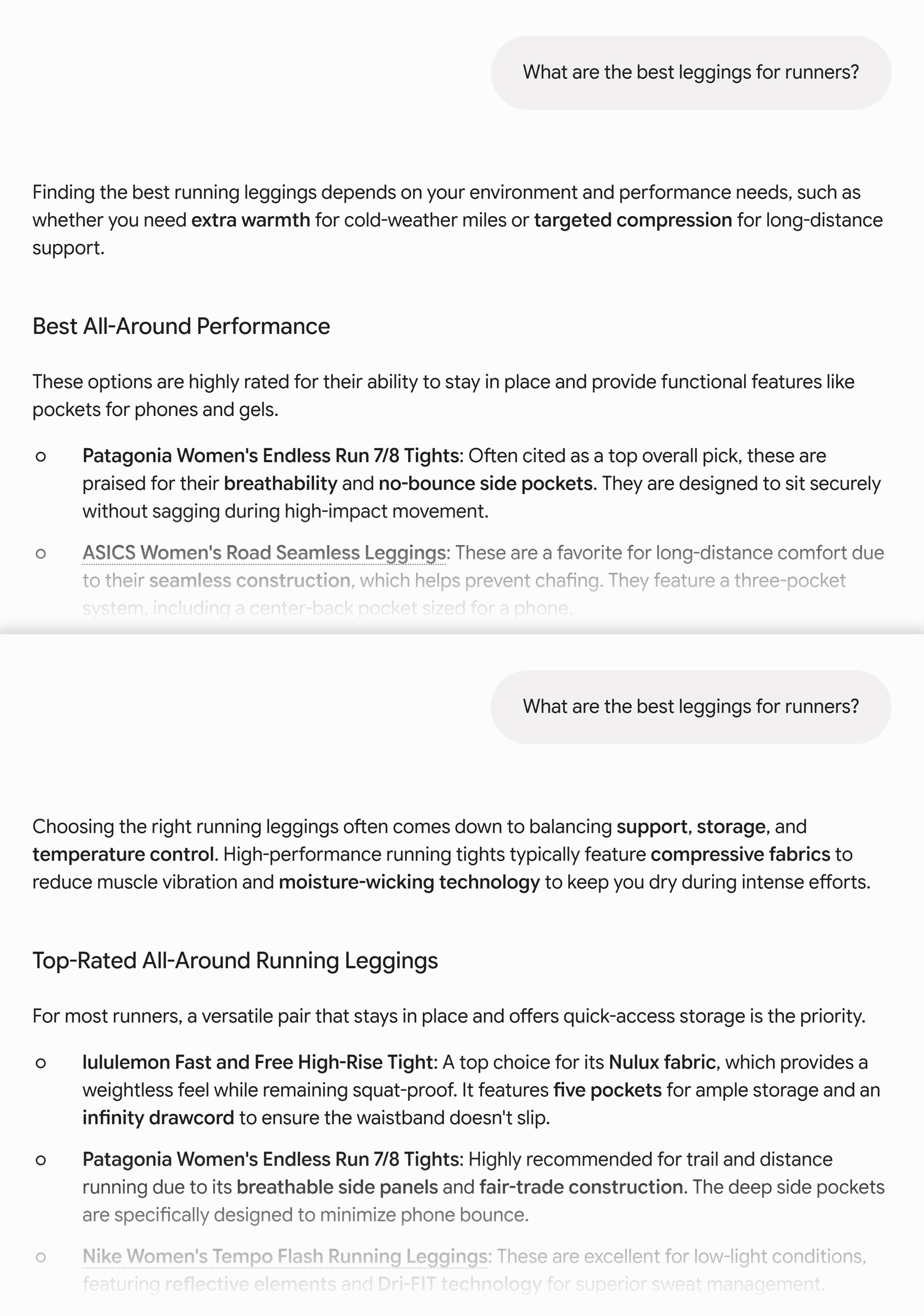
Unlike the static, predictable nature of search engine results pages (SERPs), LLMs are non-deterministic. They pull from massive, shifting datasets to generate unique responses tailored to the specific user and context. You could input the same prompt twice and receive two entirely different answers. In this environment, a single "position" is meaningless. What matters is the frequency and quality of your brand’s presence across thousands of similar inquiries.
Why Your Business Cannot Ignore AI Visibility
The shift in user behavior is no longer theoretical. According to a recent study by Orbit Media, 55% of internet users in the U.S. now rely on AI as their primary or frequent research tool, with 32% explicitly using it for product recommendations.
This represents a massive shift in the B2B and B2C funnel. Buyers are increasingly finalizing their research—and often their decision-making—within an AI interface, without ever clicking through to your website. If your brand has a low AI visibility score, you are missing out on the most critical phase of the modern buyer’s journey.
Case Study: The Strategic Advantage of Data-Driven Tracking
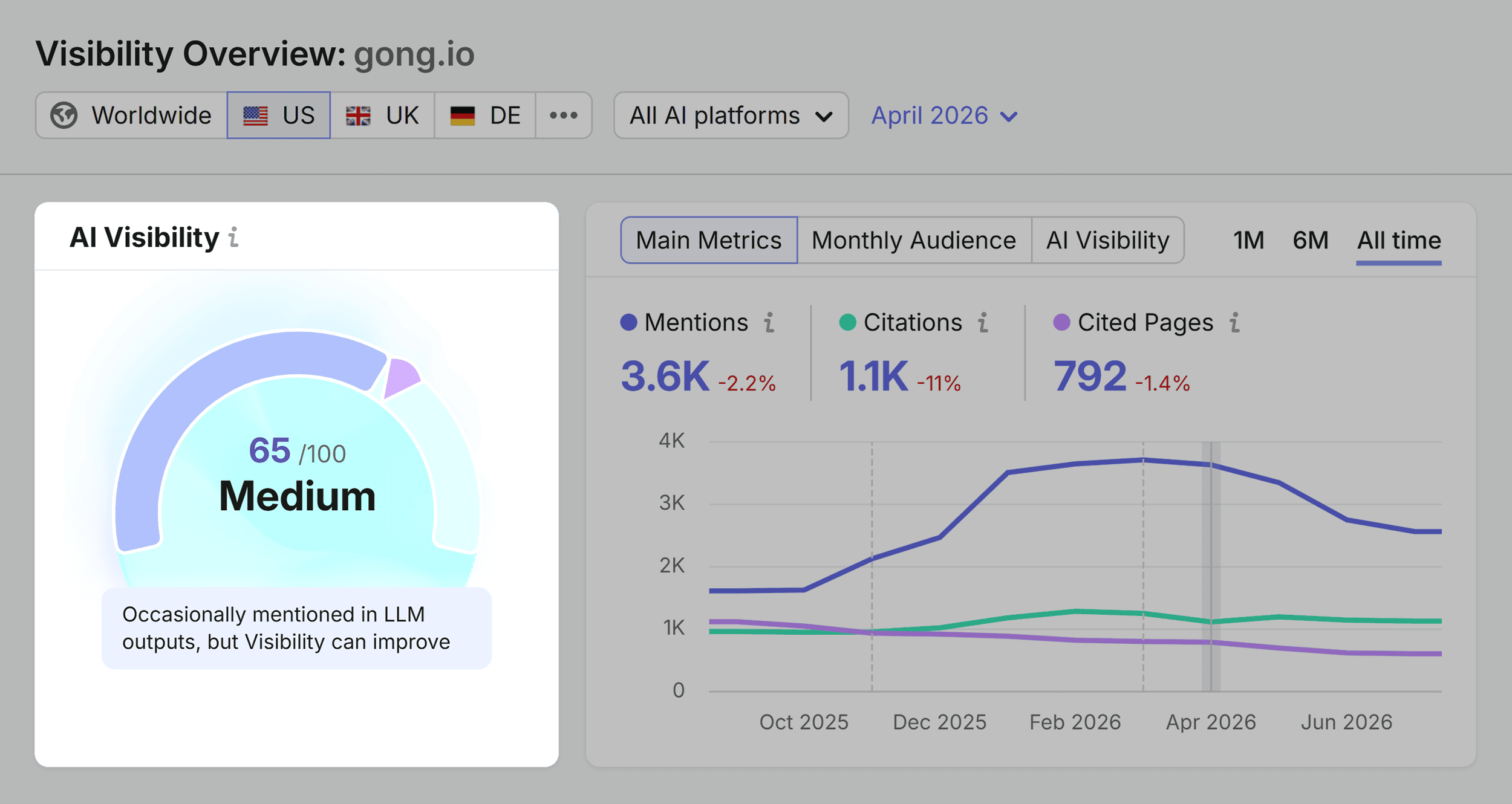
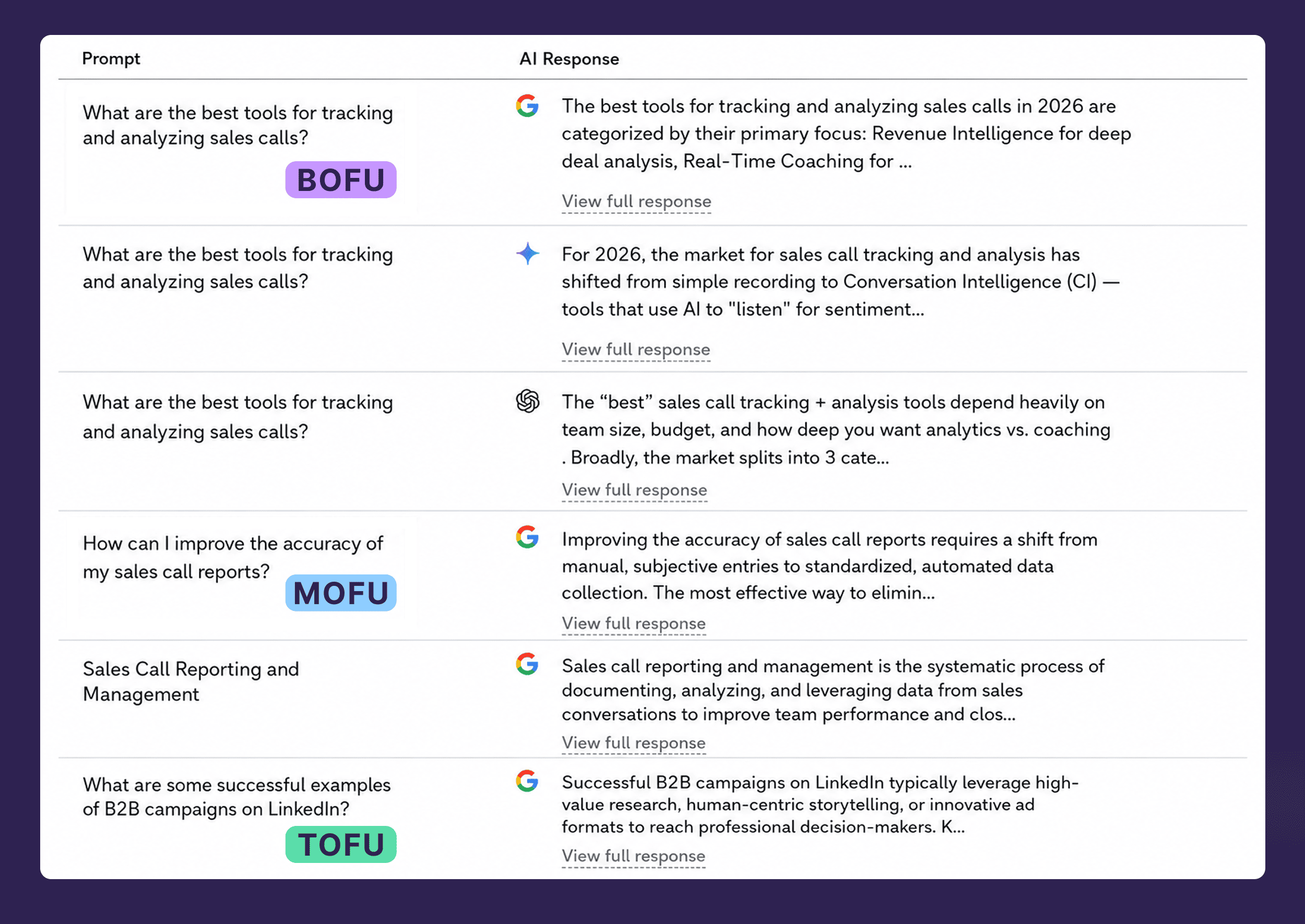
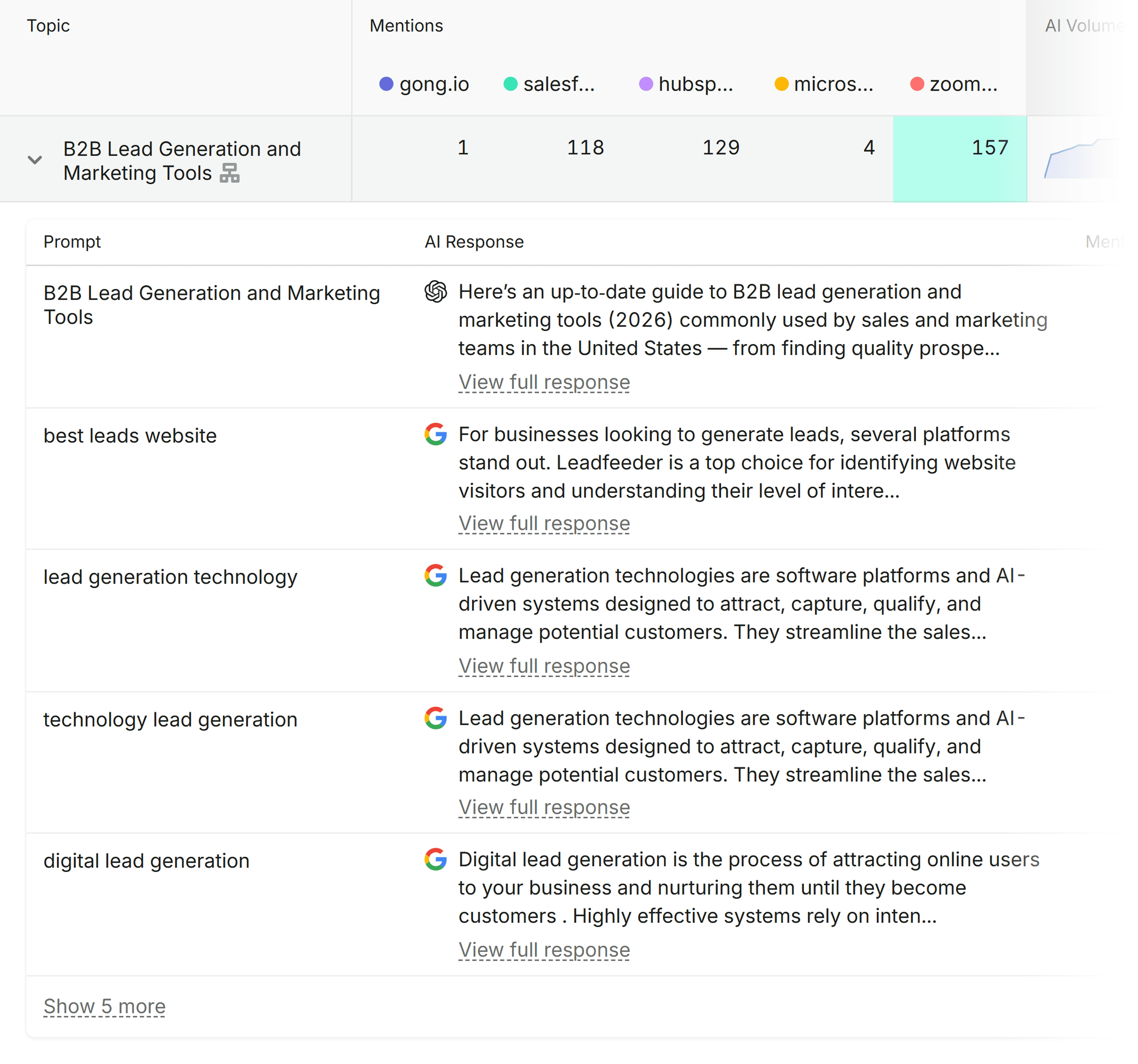
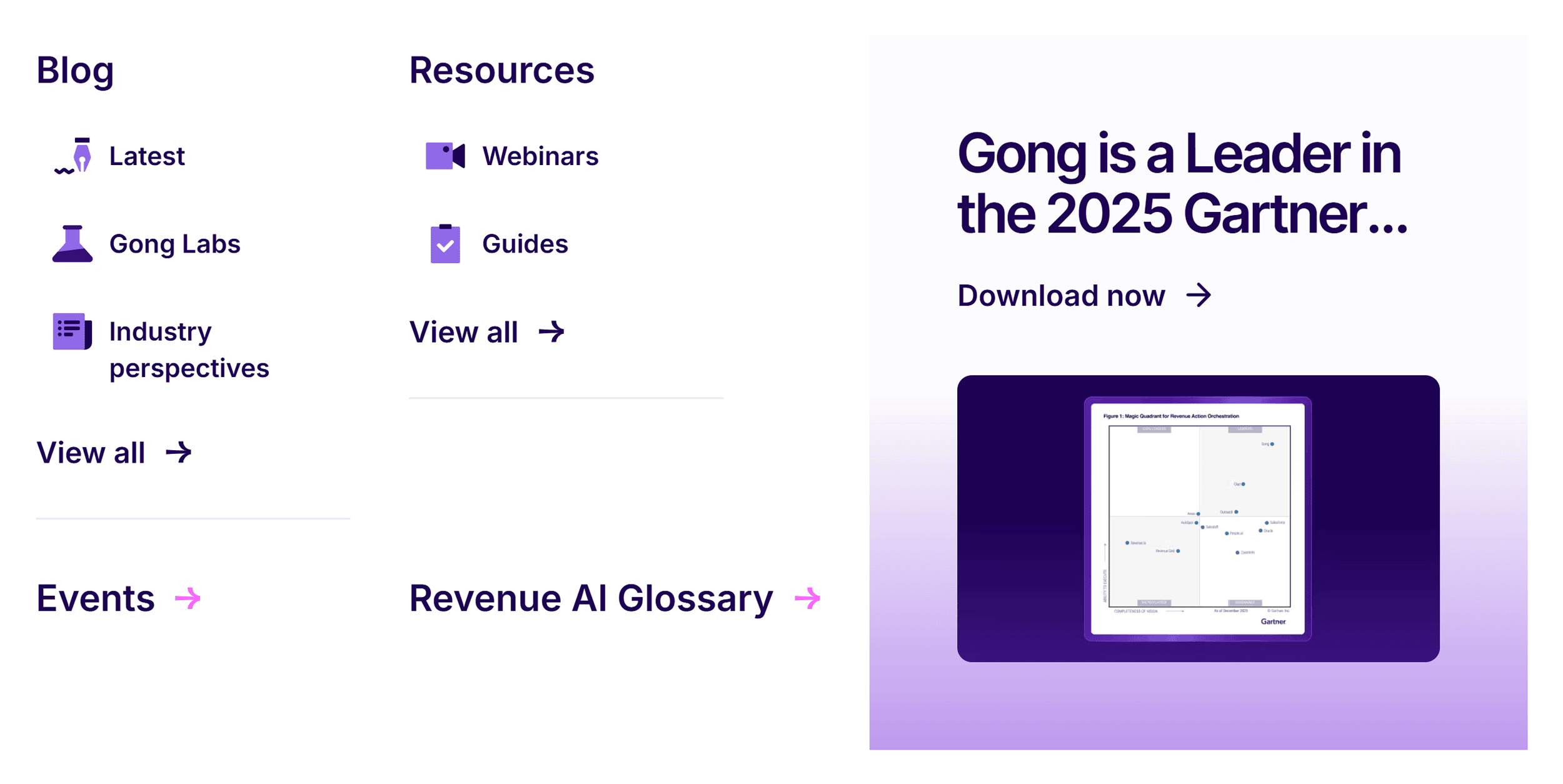
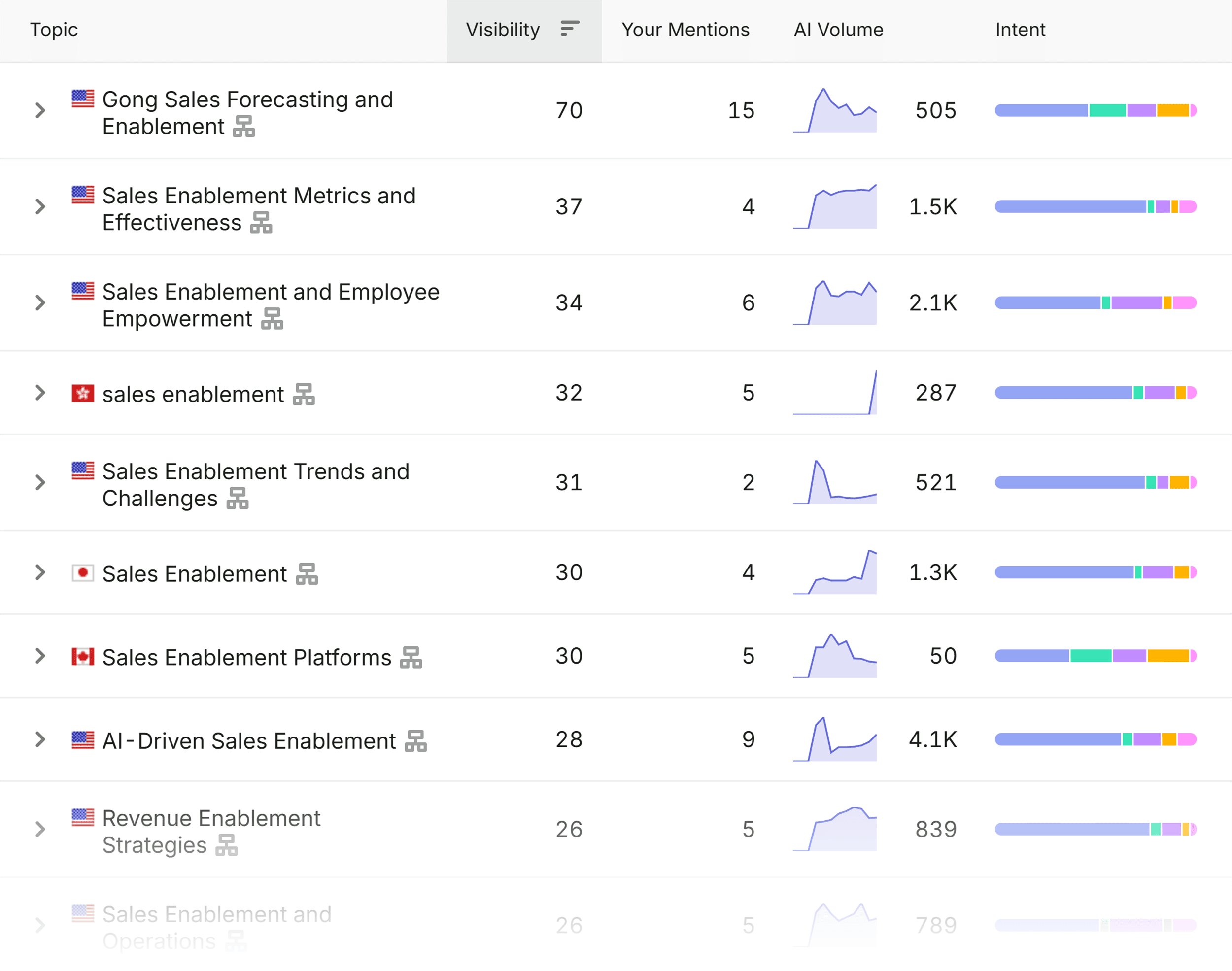
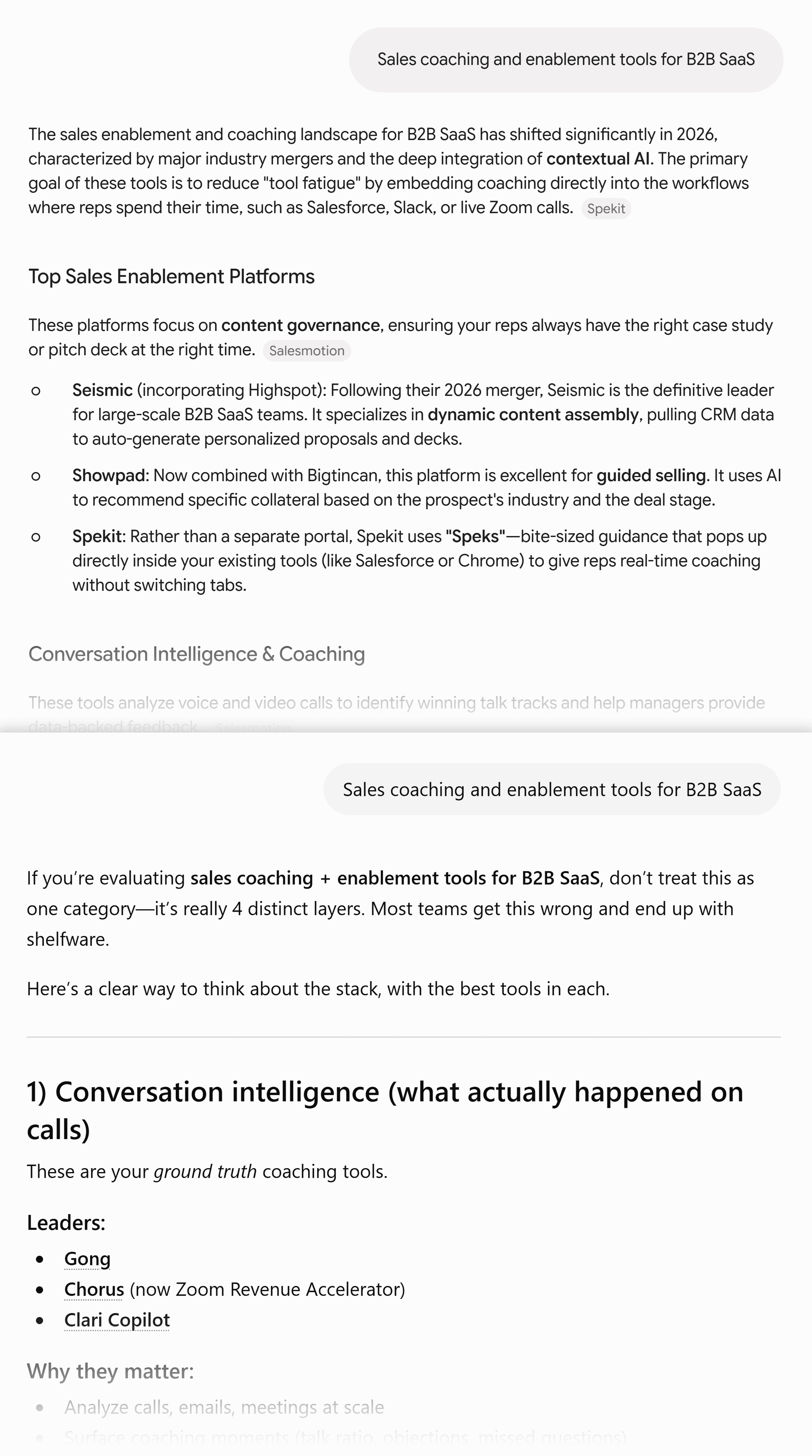
Consider the case of Gong, a leader in sales call intelligence. By maintaining a high AI visibility score, they ensure they are present at every stage of the funnel—from top-of-funnel (TOFU) awareness to bottom-of-funnel (BOFU) purchase decisions.
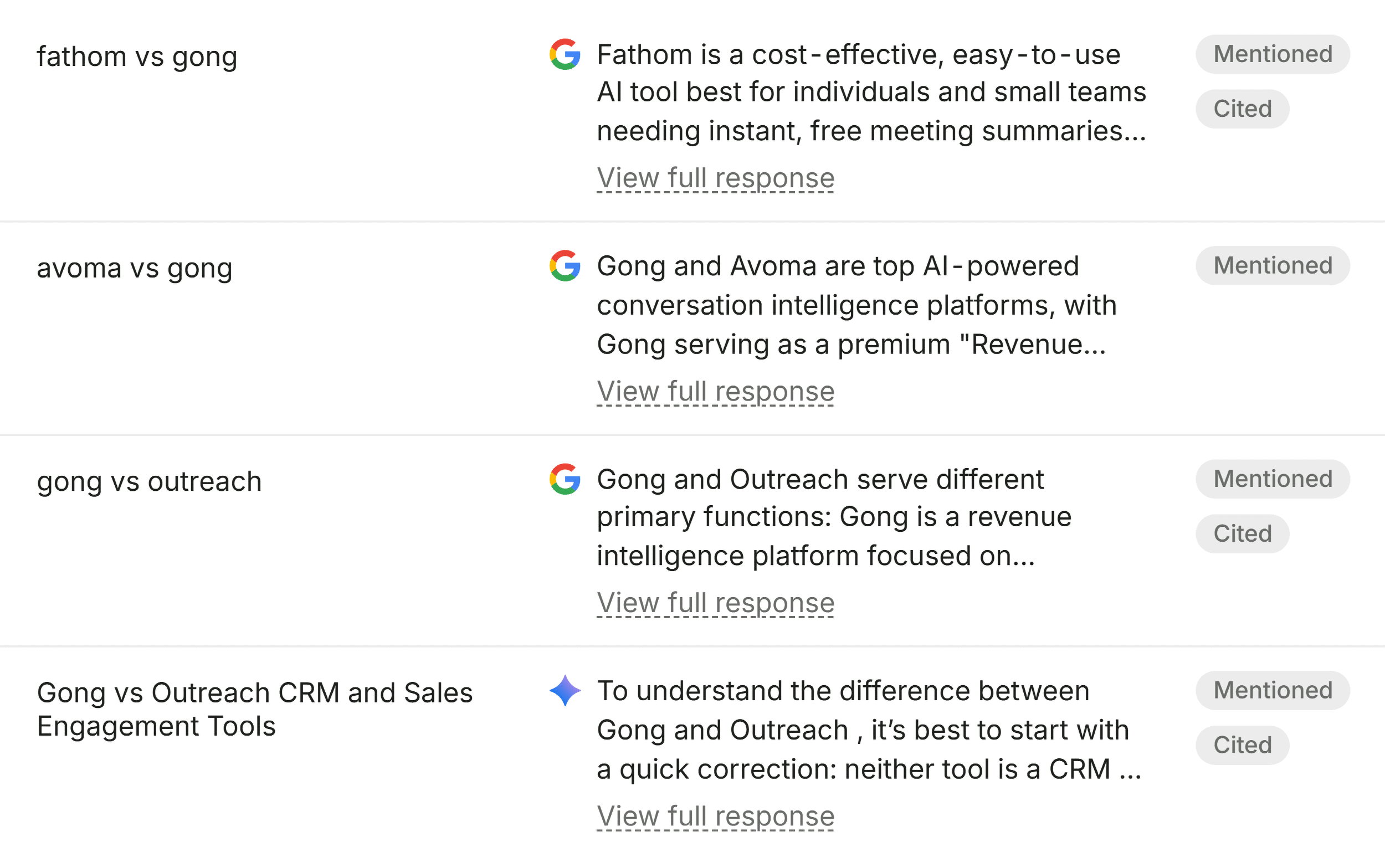
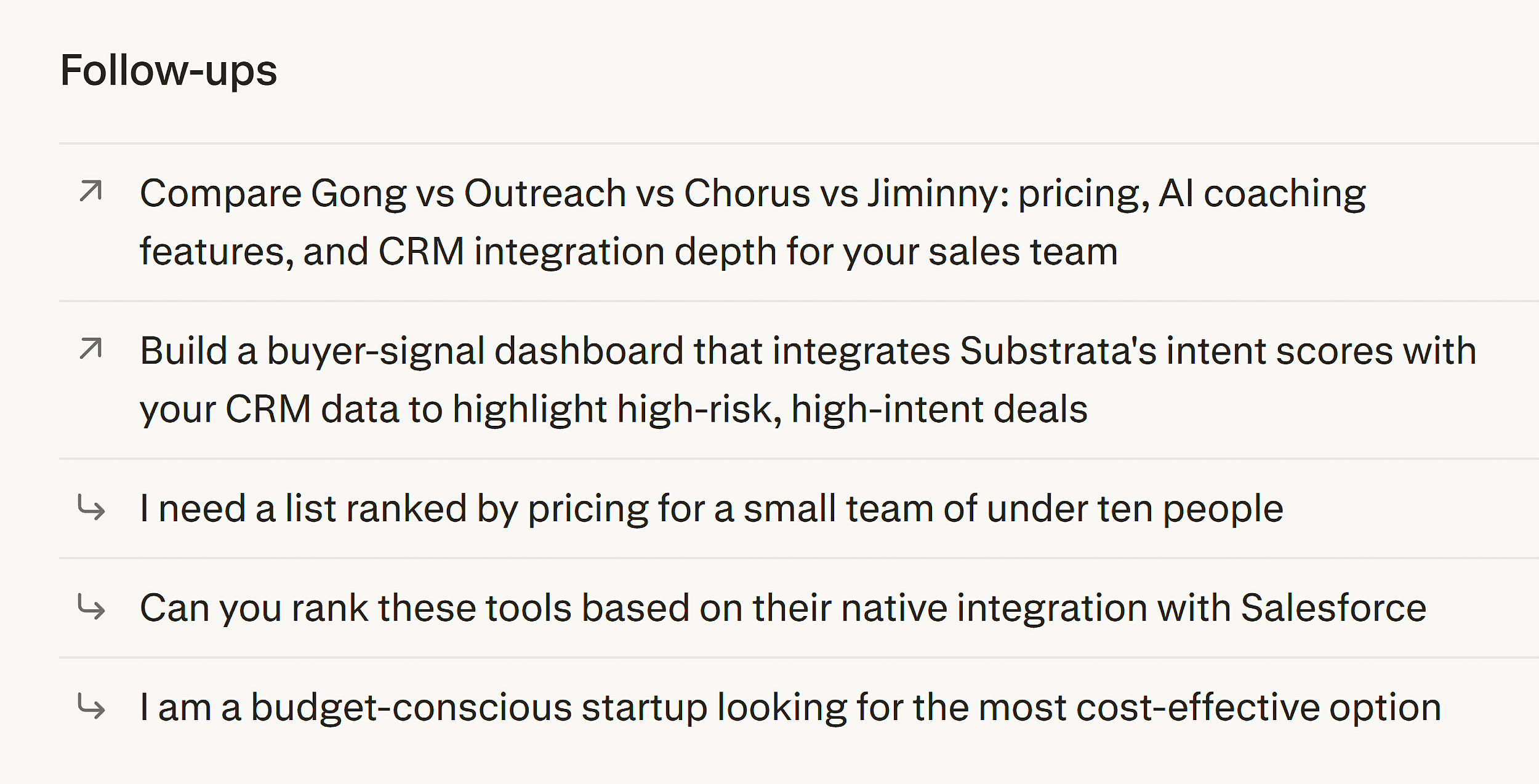
By utilizing prompt tracking, Gong can identify specific topics where competitors are gaining an edge. For instance, if Salesforce or HubSpot consistently own the "AI sales enablement" prompts, Gong can analyze that gap. Is it a lack of content? Is it a sentiment issue? By tracking these shifts over time, they can prioritize which pieces of content to update, which third-party sites to pitch for coverage, and which areas of their digital footprint need immediate reinforcement.
Building Your Prompt Set: A Step-by-Step Guide
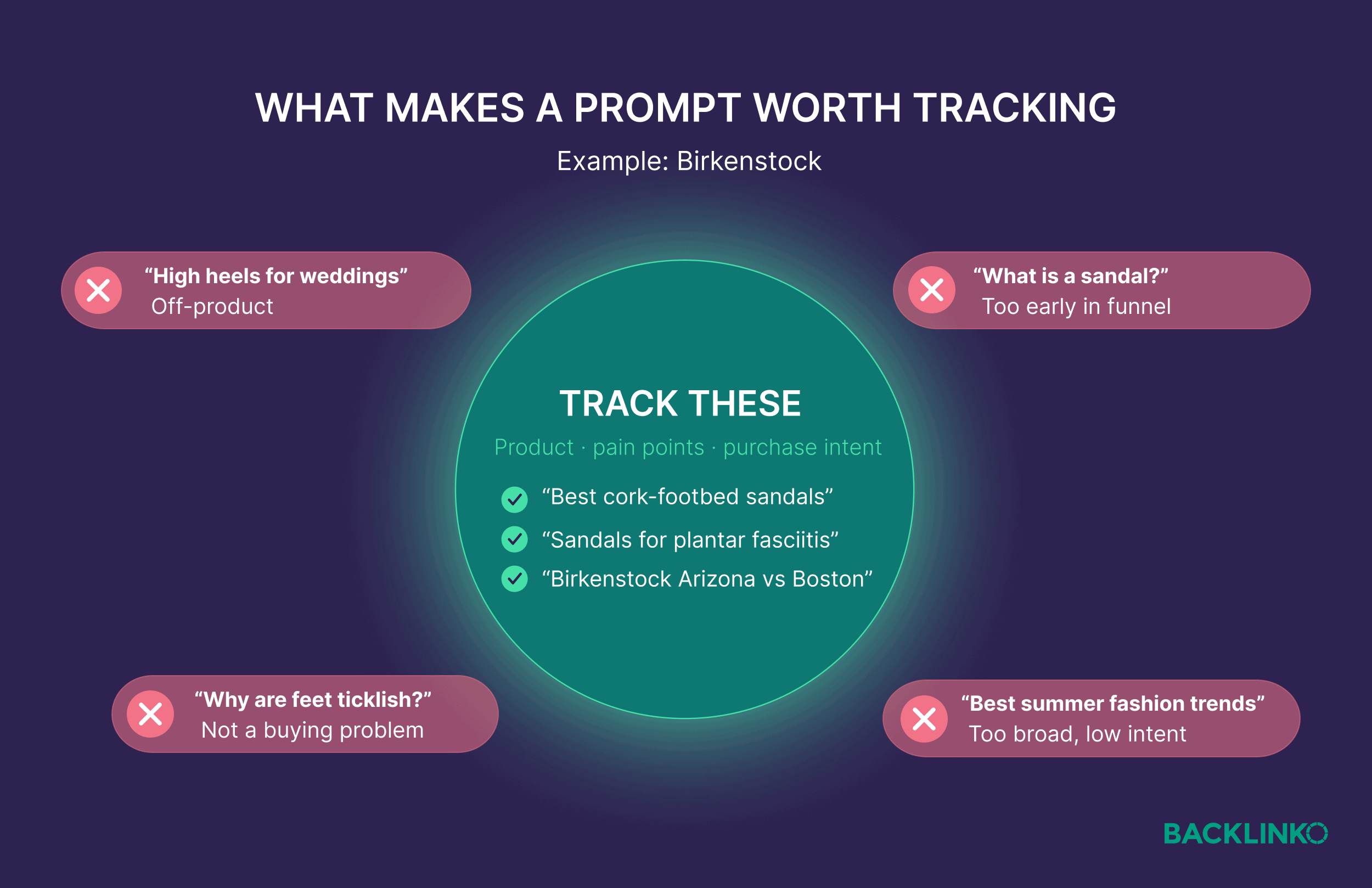
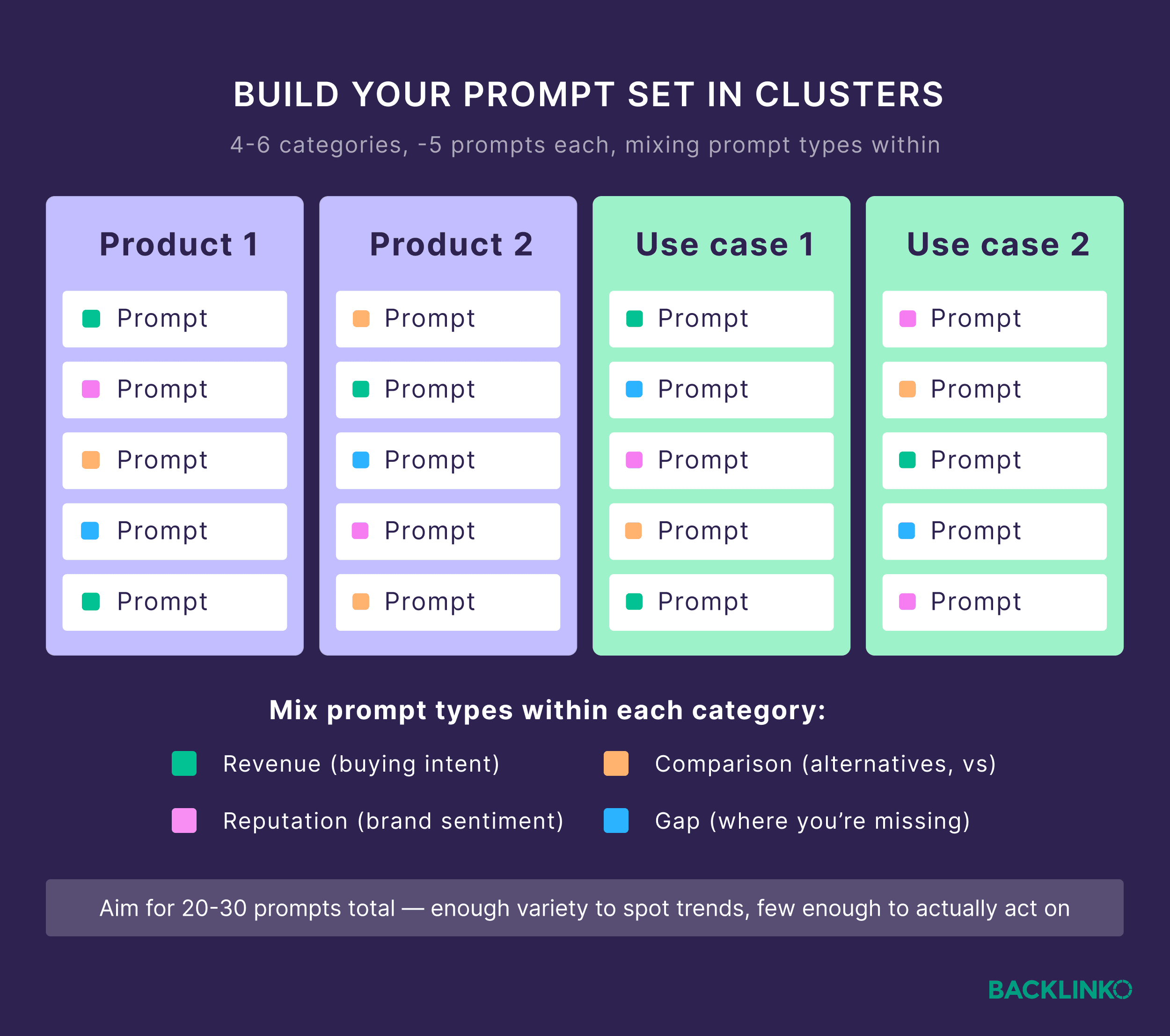
Don’t fall into the trap of trying to track every possible question. The key is to curate a "Prompt Set" that maps directly to your product offering, audience pain points, and high-intent buying moments.
1. Identify High-Value Prompt Clusters
Focus your tracking on four specific categories:
- Evaluation Prompts: "Best [category] software for [industry]."
- Comparison Prompts: "[Brand A] vs. [Brand B] for [use case]."
- Reputation Prompts: "Is [Brand] worth the price?" or "What are the common complaints about [Brand]?"
- Competitive Landscape: Identifying where competitors appear in your category’s conversations.
2. Find Your Prompts
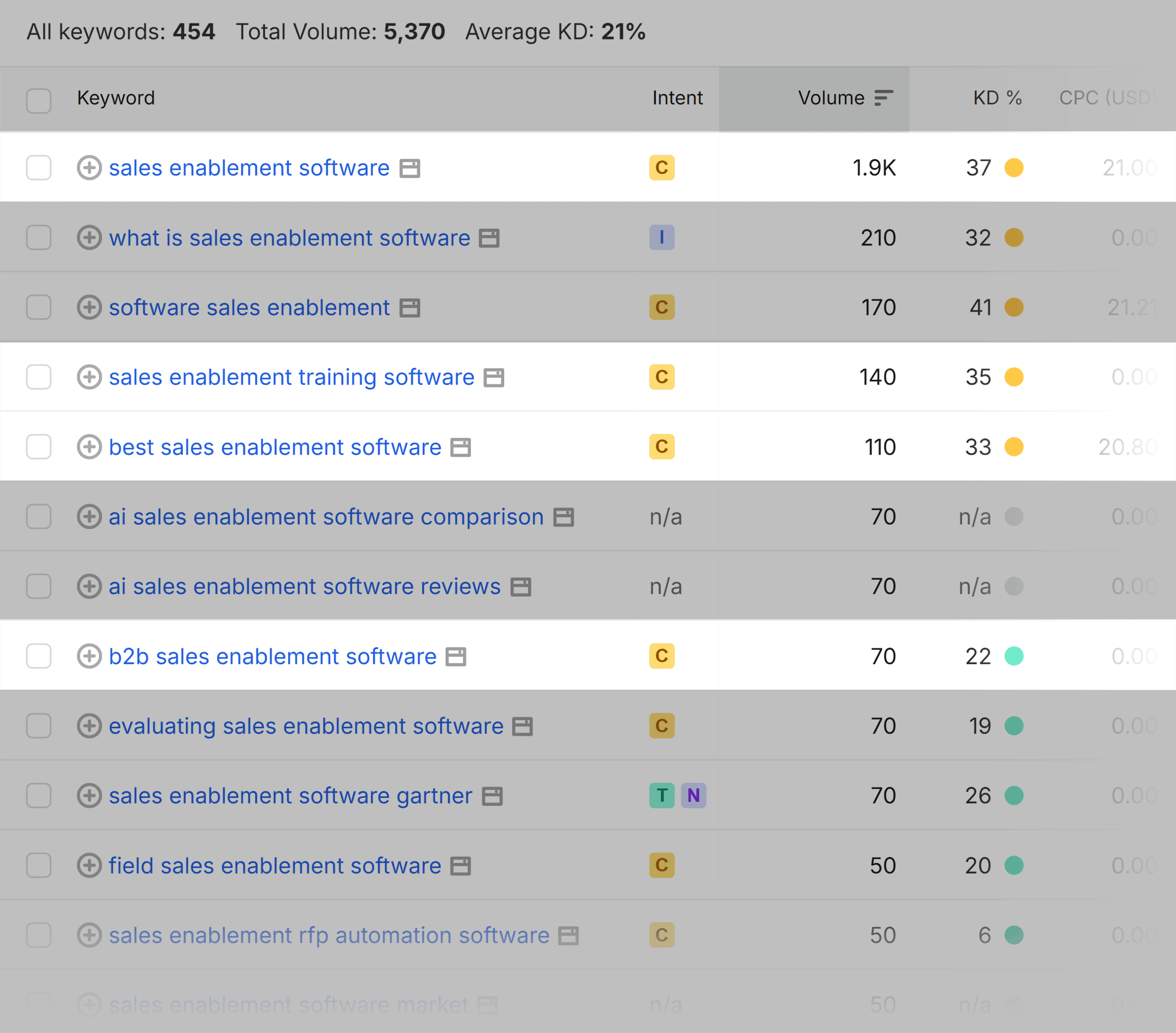
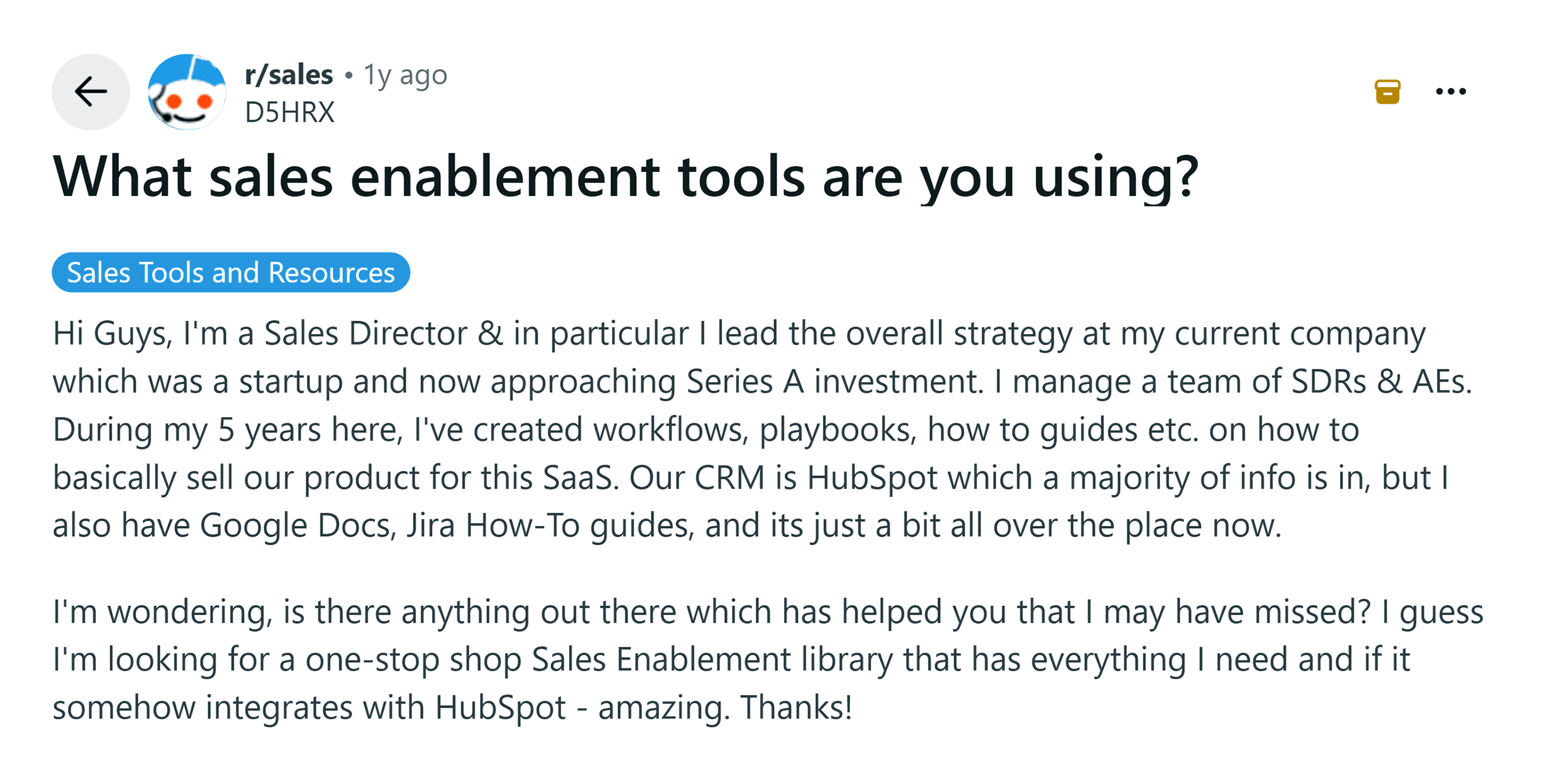
Use existing keyword research tools like Semrush’s Keyword Magic Tool to filter for commercial or transactional intent. Complement this by mining community forums like Reddit or niche Slack groups to find the exact language, frustrations, and specific constraints your customers use when discussing your category.
3. Organize by Use Case
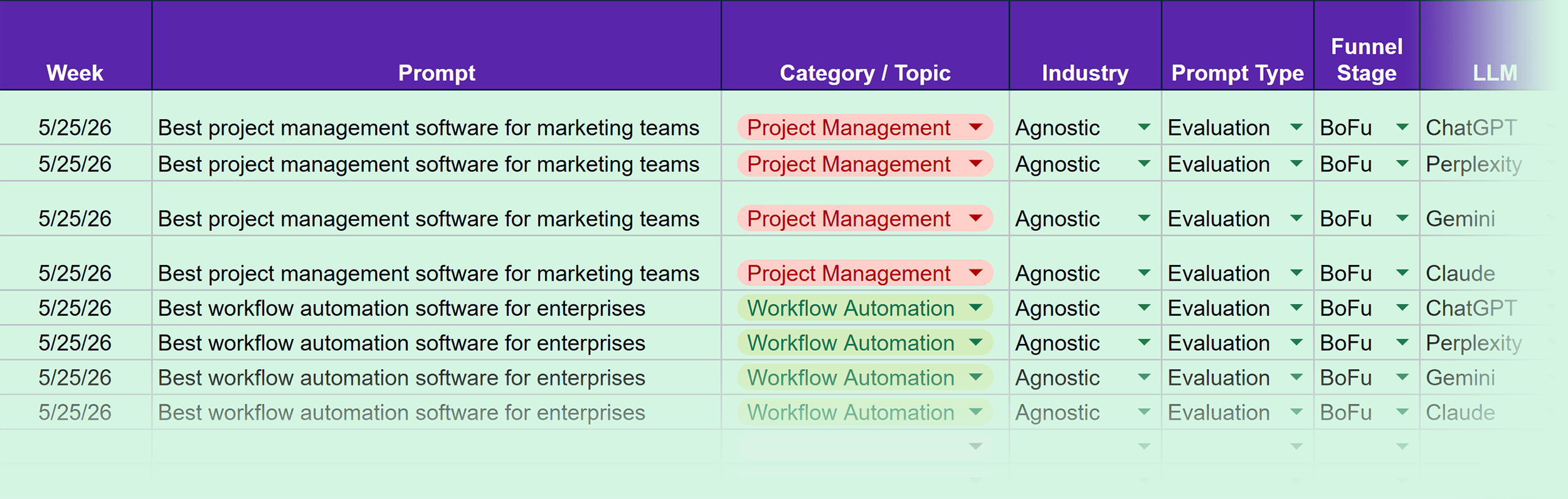
Structure your tracking in clusters. If you are a project management tool, organize your prompts by "Task Management," "Workflow Automation," and "Team Reporting." This organizational structure is vital; it allows you to slice your data later and answer complex questions about where your brand’s authority is strongest versus where it is failing.
The Operational Workflow: From Data to Action
Tracking data is useless without a process to act on it. Here is a recommended weekly workflow for any marketing team:
Weekly Routine
- Run the Prompts: Input your core prompt set into major LLMs (ChatGPT, Gemini, Perplexity, and Claude).
- Log the Output: Use a spreadsheet to record whether your brand was mentioned, if it was recommended, and what third-party sources (e.g., G2, TechRadar, LinkedIn) were cited alongside you.
- Monitor Trends: Do not react to a single week of bad data. Look for trends over four consecutive weeks.
Monthly Analysis
- Spot the Gaps: If a cluster of prompts shows declining visibility for four weeks, initiate a targeted intervention.
- Audit Cited Sources: Identify which third-party sources the LLM consistently trusts. If you aren’t on those lists, prioritize them for PR, guest posting, or review campaigns.
- The "Ghost Ranking" Check: If you see your brand cited as a source but not recommended as a product, you are suffering from "ghost ranking." The AI knows you, but it doesn’t trust you yet. Update your profile, improve your reviews, or contribute more authoritative content to the sites that are being cited.
When Prompt Tracking Isn’t Worth It
It is important to acknowledge that prompt tracking requires resources. If you are a local service business that relies entirely on word-of-mouth or Google Business Profile, building a sophisticated prompt-tracking engine is likely an inefficient use of budget. However, for any brand in a competitive digital category, the cost of being "AI-invisible" is far higher than the cost of implementing a monitoring system.
Final Implications: The Future of Brand Authority
The emergence of AI search doesn’t mean the death of SEO. It means the evolution of SEO into AI Optimization.
As LLMs continue to refine their training models, the brands that win will be those that view their digital presence as an integrated ecosystem. Your website, your third-party reviews, your social media, and your press coverage must all feed into the AI’s understanding of your brand.
By implementing prompt tracking today, you are not just watching the conversation; you are beginning to participate in it. You are moving from a state of reactive panic to a state of strategic, data-driven authority. In the age of AI, visibility is no longer given—it is earned, measured, and optimized.



