The landscape of modern web and application development is undergoing a period of profound re-evaluation. As artificial intelligence fundamentally alters the economics of software engineering, established practices—ranging from cross-platform frameworks to the very definition of "standard" web APIs—are being challenged. This report examines the pivotal shifts currently reshaping the industry, including Shopify’s strategic pivot back to native development, the evolving design philosophy of asynchronous programming, and the struggle to fund the open-source infrastructure that underpins the global digital economy.
1. Main Facts: The Great Re-Architecture
Recent developments indicate that the "write once, run anywhere" mantra is being stress-tested by the rise of AI-assisted coding.
- Shopify’s Native Shift: In a move that signals a departure from the long-standing trend of cross-platform dominance, Shopify has announced that it is transitioning its mobile strategy back to native development in Swift and Kotlin. The core rationale is that AI agents now mitigate the primary cost barrier of native development—the need to maintain two separate codebases.
- The TypeScript API Gap: Google engineer Philip Walton has introduced
modern-web-types, a project designed to bridge the gap between browser innovation and TypeScript’s conservative type definitions. By default, TypeScript only supports APIs that are implemented across multiple engines, leaving developers stranded when using cutting-edge features likestartViewTransition. - The Funding Crisis: Former npm executive Laurie Voss has ignited a fresh debate regarding the sustainability of open source. Voss argues that the current voluntary donation model is insufficient and suggests that package registries could serve as mandatory collection points for commercial users of open-source software.
2. Chronology of Recent Industry Movements
The current climate is the result of several years of accumulated tension between developer productivity and platform performance.
- Mid-2023: The rise of sophisticated Large Language Models (LLMs) begins to change the daily workflow of mobile developers. Coding agents prove capable of translating business logic between languages with high accuracy.
- Early 2024: Shopify begins internal testing of using AI to maintain parity between its iOS and Android applications, discovering that the maintenance tax of React Native is no longer the primary bottleneck for their mobile teams.
- Late 2024: Discussions surrounding "The Death of
reduce" gain traction in developer circles, as engineers express increasing frustration with the cognitive overhead of functional programming primitives in JavaScript code reviews. - September 2026: The official release of
modern-web-typeshighlights a growing friction between the "living standard" of the web and the static nature of typed languages. Simultaneously, the industry reaches a fever pitch regarding the monetization of npm and other registries as the primary vehicle for open-source support.
3. Supporting Data and Technical Analysis
The async/await Disconnect
A recent deep dive into the design space of async/await by Gavin Gray has revealed that what developers assume to be a universal concept is, in fact, a fractured landscape. When comparing JavaScript, Rust, Python, and Swift, the underlying mechanics—specifically how task scheduling, cancellation, and stack traces function—vary wildly. This discrepancy creates significant "mental model drift" for developers who switch languages, leading to potential bugs in error handling and resource cleanup.
The Rise of Atomic CSS
Meta’s StyleX continues to gain momentum as a replacement for traditional CSS-in-JS libraries. By transforming style objects into plain atomic CSS at build time, StyleX provides the developer experience of dynamic styling with the performance characteristics of static CSS. Industry analysts suggest that this approach is uniquely suited for the "agentic" era of coding, as AI agents can generate atomic CSS more reliably than complex, runtime-injected style frameworks.

4. Official Responses and Industry Perspectives
The Case for Native (Mustafa Ali, Shopify)
In a detailed engineering blog post, Mustafa Ali articulated the rationale behind Shopify’s move away from React Native. "The cost of writing everything twice has historically been the enemy of the native approach," Ali wrote. "However, with the advent of coding agents, that cost has been commoditized. We are no longer paying for the redundancy of human labor; we are gaining the superior performance, deeper platform integration, and better debugging experiences that only native code can provide."
The TypeScript Bottleneck (Philip Walton, Google)
Philip Walton’s intervention with modern-web-types addresses a long-standing tension between the TypeScript team and the web standards community. "TypeScript’s commitment to safety is admirable, but it effectively acts as a gatekeeper to the web," Walton explains. By creating a drop-in replacement for lib.dom, his project allows developers to utilize APIs that are technically supported by at least one major engine, forcing the tooling to catch up to the browser rather than waiting for universal consensus.
The Open-Source Funding Dilemma (Laurie Voss)
Laurie Voss, whose tenure at npm gave him a unique vantage point on the economics of the ecosystem, has been vocal about the failure of the "voluntary contribution" model. In his recent manifesto, ‘Nobody Pays for Open Source: We Can Force Them To,’ he posits that registries are the only point in the software supply chain with enough leverage to force payments. "We have spent twenty years hoping corporations will pay out of the goodness of their hearts," Voss states. "It is time to treat open-source dependencies like a utility bill."
5. Implications: What This Means for the Future
The "Agent-First" Development Lifecycle
We are entering a phase where the "developer experience" is being rewritten for non-human readers. As seen with StyleX, tools that prioritize machine-readable, predictable outputs are becoming more valuable than those that prioritize syntactic sugar for humans. When code is largely generated by agents, the human role shifts from writing to architecting and auditing.
The End of the "Write Once" Era
The success of Shopify’s native transition will likely trigger a wave of "native-first" migrations among large-scale consumer applications. For years, the industry sacrificed performance for the sake of team agility. If the "cost" of maintaining native apps is mitigated by AI, the performance gains of Swift and Kotlin become the only logical choice for high-traffic, mobile-first companies.
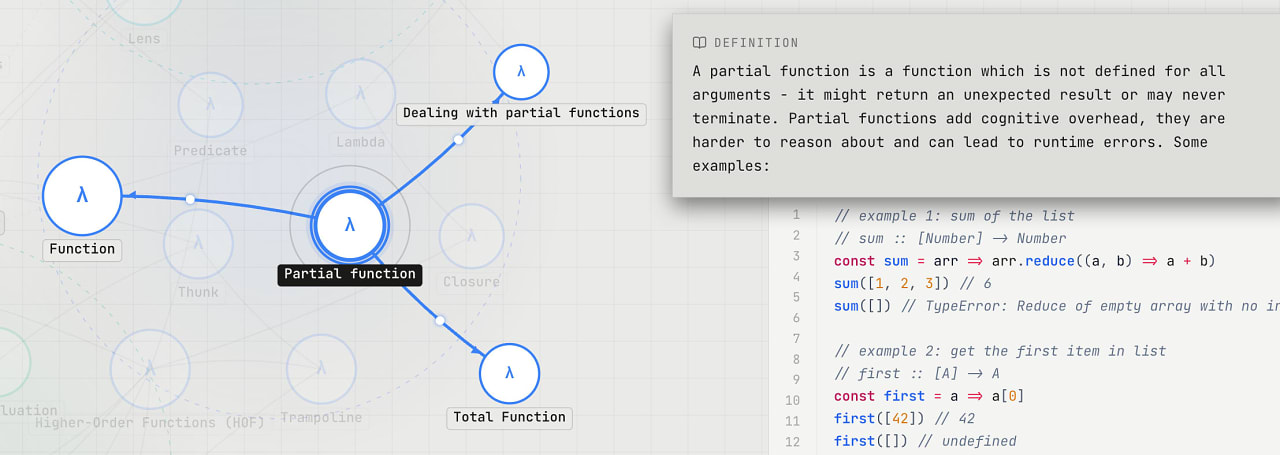
The Fragility of the "Reduce" Paradigm
The anecdotal evidence that developers dislike the reduce function—despite its functional elegance—suggests a cultural shift. As codebases grow in complexity, the industry is favoring readability and maintainability over "clever" code. This implies that future language features and library designs will likely prioritize explicit, declarative patterns over the dense, high-abstraction styles that characterized the early 2010s.
The Governance of the Web
The conflict between modern-web-types and the standard TypeScript definitions is a microcosm of a larger battle: who controls the web? If TypeScript remains the primary interface for web development, the TypeScript team effectively controls the pace of web innovation. By bypassing this through community-led projects, developers are reclaiming the ability to experiment, even if it introduces the risk of fragmented browser support.
Conclusion
The developments of 2026 reflect an industry that is maturing beyond its adolescent obsession with "the next big framework." Whether it is the move toward native code for better performance, the push for systemic funding for open-source maintainers, or the friction between static typing and evolving web standards, the underlying theme is one of stabilization and pragmatism.
As we move forward, the most successful engineering organizations will be those that embrace AI-augmented workflows while simultaneously doubling down on the foundational strengths of native platforms and sustainable, community-backed infrastructure. The era of the "all-in-one" JavaScript solution is yielding to a more nuanced, hybrid future where efficiency is calculated by the machine, but the stability of the platform remains the ultimate goal for the human architect.