







You have done the heavy lifting. You’ve spent hours agonizing over a subject line designed to maximize open rates, you’ve drafted copy that feels authentic and human, and you’ve meticulously built your automation workflows. With the confidence of a seasoned founder, you hit "send."
Then, silence.
The campaign fails to move the needle. You check your analytics, and the numbers are abysmal. The problem isn’t your offer, your pricing, or your creative—it’s that your email never reached its destination. It has been relegated to the digital graveyard: the spam folder.
Email deliverability is the invisible foundation of the modern ecommerce business. It is a technical, high-stakes game played in the background of every campaign, and for many founders, it remains a mystery until revenue begins to decline.
The Anatomy of Deliverability: More Than Just "Sent"
To understand the crisis, one must first distinguish between delivery and deliverability.
Delivery is a binary state; it simply means the email did not bounce. It arrived at the recipient’s mail server. However, deliverability is the measure of whether that email actually lands in the primary inbox. Major Internet Service Providers (ISPs) like Gmail, Outlook, and Yahoo are the gatekeepers. They use complex, real-time algorithms to determine if your message is a legitimate communication or unwanted clutter.
If 20% of your emails are filtering into the spam folder, you haven’t just lost 20% of your reach—you have effectively eroded your brand’s reputation and sacrificed a significant chunk of your quarterly revenue. This damage is insidious; because it is invisible, most founders do not realize they are in a "deliverability hole" until their open rates have already cratered.
The Credit Score of the Digital Age: Your Sender Reputation
If you want to understand your standing with ISPs, think of your sender reputation as a credit score. Every time you hit send, these providers analyze your behavior.
The Metrics That Matter
- Engagement Rates: Are your subscribers opening, clicking, and replying? High engagement is the strongest signal that you are a trusted sender.
- Spam Complaints: This is the most damaging metric. When a user marks your email as spam, it sends a red flag to the ISP that is nearly impossible to ignore.
- Bounce Rates: High bounce rates indicate a bloated or unverified list, signaling to providers that you are not practicing responsible list management.
A stellar reputation grants you "the pass"—your emails glide into the inbox. A poor reputation triggers an automatic filter, often without notifying you or your subscribers.
Authentication: The "ID Card" for Your Domain
If sender reputation is your credit score, then technical authentication is your passport. Without it, you are essentially trying to enter a secure facility without identification. ISPs require three core protocols to verify your identity:
- SPF (Sender Policy Framework): A DNS record that specifies which mail servers are authorized to send email on behalf of your domain.
- DKIM (DomainKeys Identified Mail): A digital signature that ensures the email was not tampered with in transit.
- DMARC (Domain-based Message Authentication, Reporting, and Conformance): A policy that tells the receiving server what to do if an email fails SPF or DKIM checks.
Missing or misconfigured records are the primary culprits for legitimate businesses ending up in the spam folder. Configuring these takes less than 15 minutes, yet thousands of founders ignore them, leaving their domain vulnerable to spoofing and poor placement.
List Hygiene: The Unsexy Work That Saves Revenue
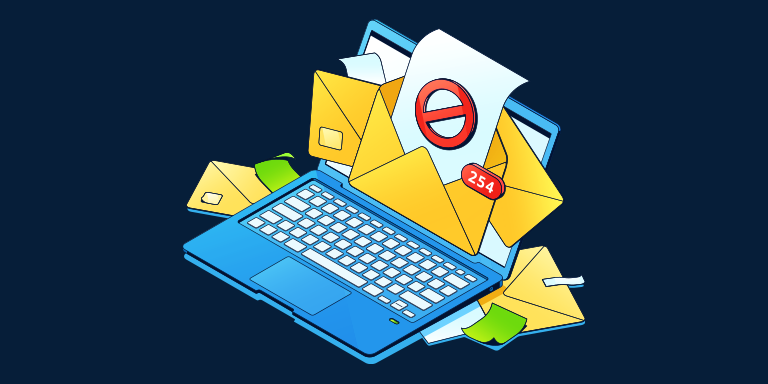
One of the most persistent myths in digital marketing is that a larger list is always better. In reality, a massive, uncleaned list is a liability. Over time, every list accumulates "dead weight": inactive users, old addresses, and bots.
The Strategy for a Clean List
- Re-engagement Campaigns: Identify subscribers who haven’t engaged in 90 to 180 days. Launch a targeted campaign asking them to re-confirm their interest. If they don’t respond, delete them.
- Hard Bounce Suppression: Automated systems should remove hard bounces (invalid emails) instantly. Never send to these addresses twice.
- Double Opt-in: While it adds friction to the sign-up process, a double opt-in ensures that every person on your list genuinely wants to hear from you. This leads to higher engagement, which in turn reinforces your sender reputation.
The Interplay Between Content and Deliverability
Modern spam filters have evolved beyond simple keyword scanning. They no longer just look for the word "free" or excessive exclamation points; they analyze the structural integrity of your emails.
Common Triggers to Avoid:
- Poor HTML Structure: Broken code or messy formatting can flag your email as "suspicious" to automated scanners.
- URL Shorteners: Using bit.ly or similar tools in emails often triggers spam filters because they hide the final destination of the link.
- Inconsistent Sending Cadence: If you send 50,000 emails one month and none the next, ISPs will view your domain as erratic. Consistency is key to building trust.
The Chronology of an Email Failure
To visualize how this unfolds, let’s look at the timeline of a typical deliverability failure:
- Day 1: A founder purchases a list or fails to clean their existing one. The bounce rate spikes.
- Day 7: The ISP notices the high bounce rate and low engagement. The "reputation score" begins to slide.
- Day 14: The ISP moves the sender to a "probationary" status. Emails start appearing in the "Promotions" or "Spam" tabs.
- Day 30: The open rate drops by 50%. The founder assumes the audience is no longer interested in their products.
- Day 45: The domain is blacklisted. Even transactional emails (like password resets) stop arriving.
This slow-motion disaster is entirely preventable through proactive monitoring and rigorous list hygiene.
The Role of Modern Infrastructure
The complexity of deliverability is why most scaling brands move away from basic email tools toward sophisticated platforms like Omnisend. These platforms are not just sending engines; they are deliverability partners.
With features like automated bounce handling, built-in authentication support (SPF/DKIM/DMARC), and smart-sending algorithms that detect when a user is becoming disengaged, these tools act as a guardrail for your reputation.
Final Implications: The Path Forward
Deliverability is not a "set it and forget it" task. It is an ongoing practice of maintenance and respect for your audience’s inbox. The most successful founders view their email list as a sacred asset—one that requires constant nurturing and cleaning.
If you are currently experiencing a slide in your key metrics, do not panic. The solution is rarely found in changing your copy or your offer; it is found in the technical and behavioral fundamentals of your sending infrastructure.
Actionable Steps for This Week:
- Audit your records: Ensure SPF, DKIM, and DMARC are fully configured.
- Review your list: Run a suppression report on anyone who hasn’t opened an email in six months.
- Check your welcome series: Ensure your first interaction with new subscribers is high-value to set a positive engagement trend from day one.
- Adopt a professional platform: Ensure your email service provider offers robust deliverability analytics.
By prioritizing these unsexy, foundational tasks, you ensure that when you finally do hit "send," your message doesn’t just reach a server—it reaches a person.
For those looking to secure their email infrastructure, Omnisend offers a suite of tools specifically designed to protect sender reputation. Foundr readers can access an exclusive 50% discount for their first three months by using the code FOUNDR50 at sign up.