










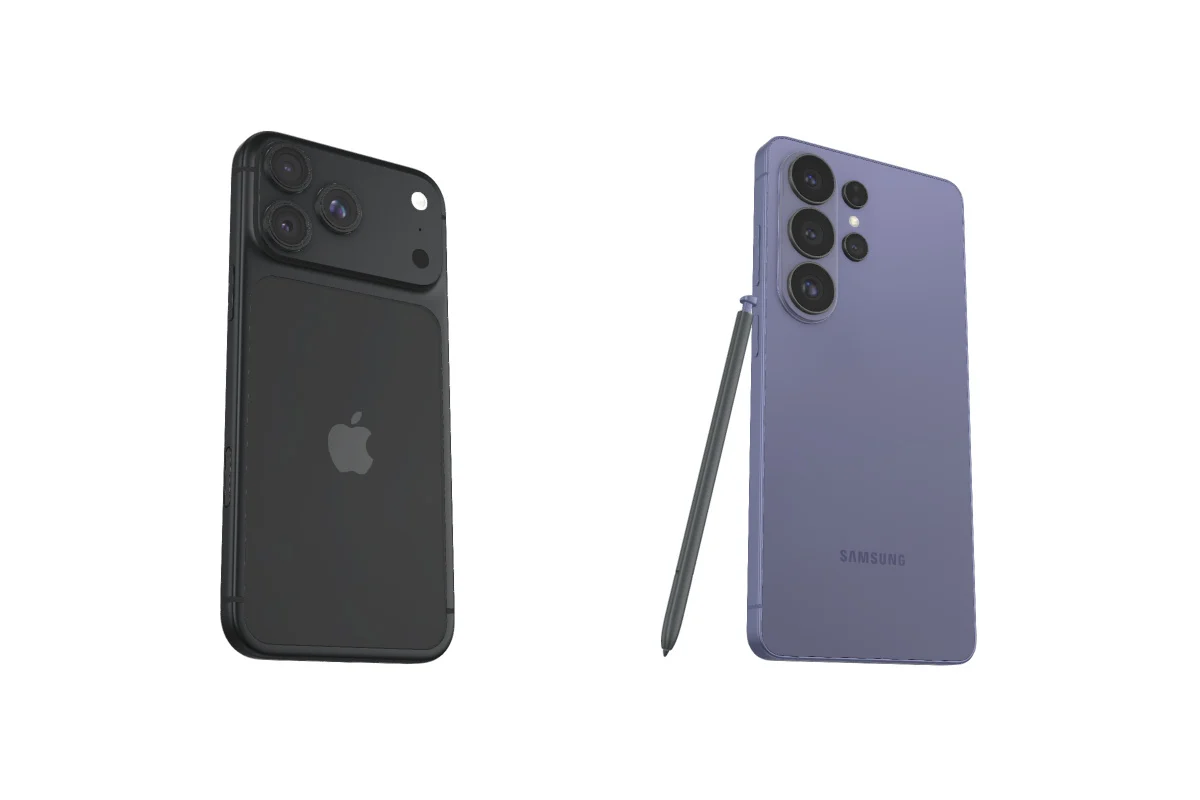
The battle between Apple and Samsung is as old as the smartphone era itself. Year after year, these two tech giants trade blows across every conceivable category: hardware design, software ecosystem, marketing campaigns, and fierce consumer loyalty. This eternal rivalry has reached a new pinnacle as we place the freshly released Apple iPhone 18 Pro Max directly beside the Samsung Galaxy S26 Ultra.
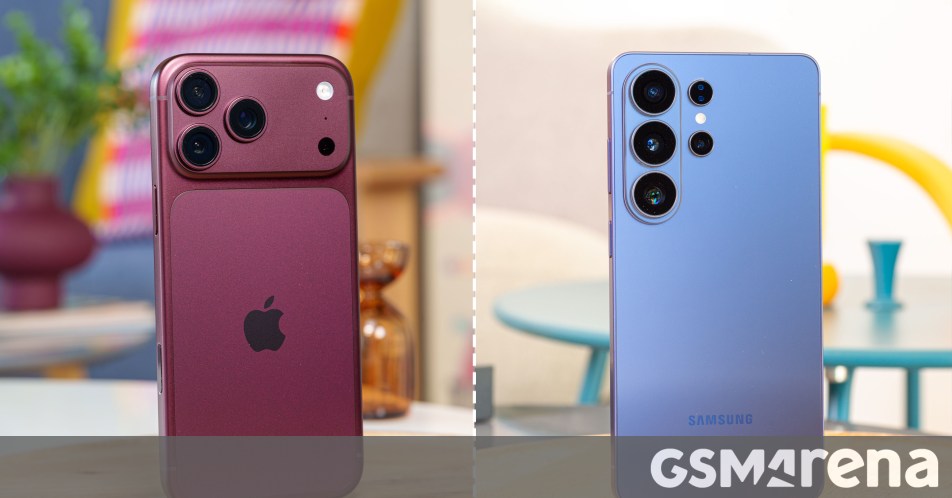
Both devices represent the absolute apex of mobile engineering for their respective camps. But when you strip away the marketing gloss and pit them head-to-head in a comprehensive technical assessment, which titan truly claims the crown?
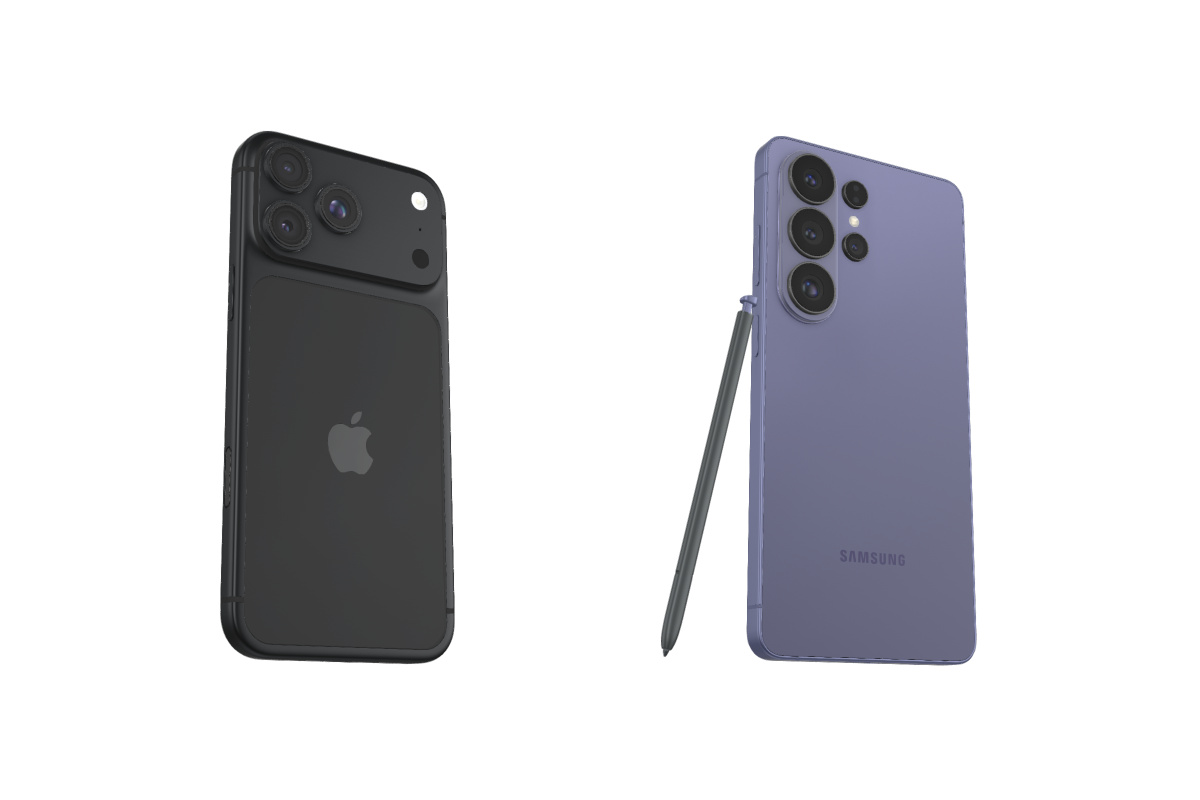
Main Facts: Design, Build, and Ergonomics
When evaluating modern ultra-flagships, industrial design dictates not only aesthetic appeal but daily comfort.

The Apple iPhone 18 Pro Max refines Apple’s established design ethos, presenting a cohesive chassis built from premium multi-textured elements. It features a robust Ceramic Shield 2 front display glass, a seamless aluminum unibody, and a first-generation Ceramic Shield protecting the wireless charging coil on the back panel. Rated IP68 for dust and water resistance, Apple boldly claims this device can survive submersion in up to 6 meters of water for up to 30 minutes. However, all this rugged architecture comes with a physical penalty: the iPhone is a certified heavyweight, tipping the scales at a hefty 249 grams.

Conversely, the Samsung Galaxy S26 Ultra adopts a streamlined, pragmatic approach, offering one of the cleanest and most stylish silhouettes on the market. It utilizes flat Gorilla Armor 2 on the front and flat Gorilla Glass Victus 2 on the back, encased in a sturdy aluminum frame and chassis. It carries a standard IP68 water-resistance certification, rated for depths up to 1.5 meters for 30 minutes. While its footprint is nearly identical to the iPhone’s, the Galaxy S26 Ultra feels significantly more manageable in hand, weighing a noticeably lighter 214 grams.

- Design Verdict: The Samsung Galaxy S26 Ultra takes the win for its cleaner, more understated aesthetic and considerably lighter, more ergonomic body.
Chronology: The Evolution of Display and Visual Fidelity
Display technology has transformed from a simple output medium into a primary differentiator for flagship devices.

The iPhone 18 Pro Max arrives with a sprawling 6.9-inch LTPO OLED screen boasting a resolution of 1320 x 2868 pixels (approx. 460 ppi). It supports a dynamic 120Hz refresh rate, Dolby Vision, and HDR10, all wrapped around Apple’s signature pill-shaped Dynamic Island cutout and protected by Ceramic Shield 2 with an oleophobic coating.

The Galaxy S26 Ultra counters with an equally expansive 6.9-inch LTPO OLED panel, but pushes higher native resolution numbers: 1440 x 3120 pixels, resulting in a denser 500 ppi. It also supports a dynamic 120Hz refresh rate and HDR10+, but houses its front-facing camera in a more discreet, minimal punch-hole. Furthermore, Samsung layers its panel with Gorilla Armor 2, a DX anti-reflective coating, and an integrated Privacy Display feature.

When measuring luminosity, the Galaxy S26 Ultra achieves a higher maximum automatic brightness of 1,480 nits compared to the iPhone’s 969 nits, though both devices top out at an eye-searing peak brightness of roughly 2,800 nits under direct sunlight.

- Display Verdict: The Galaxy S26 Ultra secures another victory here, delivering a sharper pixel density, a less intrusive camera cutout, superior anti-reflective coatings, and specialized privacy controls.
Supporting Data: Battery Life, Charging Speeds, and Audio Performance
Raw specifications mean little if a device cannot sustain performance throughout a grueling work day.

Endurance & Battery Life
- Apple iPhone 18 Pro Max: Powered by a massive 5,391mAh battery.
- Samsung Galaxy S26 Ultra: Equipped with a 5,000mAh battery cell.
Despite Apple holding a capacity advantage on paper, battery longevity depends heavily on chipset efficiency and display optimization. In standardized active-use testing, the iPhone 18 Pro Max posted an impressive Active Use Rating of 19 hours and 20 minutes, comfortably outpacing the Galaxy S26 Ultra’s score of 16 hours and 22 minutes. The iPhone consistently outperformed its rival across active on-screen workflows, including web browsing, video streaming, and mobile gaming.

Charging Capabilities
- Apple iPhone 18 Pro Max: Supports up to 54W wired charging and 25W wireless charging.
- Samsung Galaxy S26 Ultra: Supports up to 60W wired charging, 25W wireless charging, and notably features reverse wireless charging—a functional omission on Apple’s device.
Both phones charge rapidly in initial bursts, reaching 50% capacity in just 15 minutes and crossing the 80% threshold in 30 minutes. However, thanks to its slightly higher input wattage, the Galaxy S26 Ultra achieves a full 100% charge roughly 12 minutes faster than the iPhone.

Audio Output
Both flagships feature high-fidelity stereo speaker systems that earned "Very Good" marks in acoustic loudness testing. Their audio outputs are remarkably similar, producing rich, deep sound profiles with balanced mid-tones and substantial bass depth.

Official Responses: Performance and Processing Power
Under the hood, both manufacturers deploy their most advanced silicon architectures to date, pushing the boundaries of mobile computing and artificial intelligence.

Apple’s flagship is driven by the Apple A20 Pro chip, fabricated on an advanced 2nm process node. Apple highlights desktop-class CPU cores, a radically upgraded GPU, a doubled Neural Engine core count, and a 50% boost in memory bandwidth. The 6-core CPU features 2 Super Cores clocked at 4.93GHz and 4 Efficient Cores running at 2.64GHz. The 7-core Apple GPU delivers up to 40% faster graphical performance than the previous A19 Pro. Meanwhile, the 32-core Neural Engine provides a massive lift for on-device machine learning tasks, all kept cool by a significantly expanded vapor chamber cooling array. The iPhone is offered with storage configurations ranging from 256GB up to a staggering 2TB, paired uniformly with 12GB of RAM.

Samsung opts for an overclocked variant of the Qualcomm Snapdragon platform, officially branded as the Snapdragon 8 Elite Gen 5 for Galaxy (Model SM8850-AD). The "AD" suffix denotes that its main Oryon V3 Phoenix L CPU cores are pushed to 4.74GHz (up from the standard 4.6GHz), while the six efficiency cores remain at 3.62GHz. The Adreno 840 GPU is similarly overclocked to 1,300MHz. Samsung pairs this silicon with 12GB or 16GB of RAM and storage options scaling up to 1TB.

Benchmark Assessment
While both devices utilize top-tier hardware, benchmark suites reveal a narrow victory for Apple. The A20 Pro holds a slight advantage in raw single-core and multi-core CPU and GPU computations. Furthermore, the iPhone’s beefed-up Neural Engine scores higher in dedicated AI benchmark tests, and it exhibits superior sustained thermal performance over extended gaming sessions.

- Performance Winner: Apple iPhone 18 Pro Max.
Implications: Camera Systems and Real-World Imaging
Camera innovation has plateaued in terms of generational leaps, but software processing, sensor sizes, and focal versatility continue to drive the rivalry.

Hardware Breakdown
- Main Sensors: The Galaxy S26 Ultra features a 1/1.3-inch sensor paired with a fixed f/1.4 lens (200MP). The iPhone 18 Pro Max utilizes a slightly larger 1/1.28-inch sensor with a variable aperture system capable of shifting between f/1.48, f/1.8, f/2.8, and f/4.0 (48MP).
- Ultrawide Sensors: Both use comparable 1/2.5-inch sensors with wide-angle optics.
- Telephoto Lenses: Samsung offers a 3x optical zoom alongside a 5x periscope telephoto (111mm equivalent). Apple relies on a 4x telephoto lens (100mm equivalent).
- Selfie Cameras: The iPhone utilizes an innovative 18MP multi-aspect sensor with a 20mm-equivalent lens, capable of capturing landscape-oriented selfies while holding the phone vertically. Samsung sticks with a more conventional 12MP sensor with a 23mm lens.
Image Quality Analysis
- Daylight: At 1x magnification, both phones deliver stunning clarity, dynamic range, and color accuracy. The iPhone defaults to 24MP output, capturing marginally finer detail, while Samsung’s processing favors slightly more saturated greens in foliage. At 2x zoom, the iPhone maintains a clearer, more natural rendering of fine textures. For long-range zooming, the Galaxy’s 5x and 10x telephoto setups generally produce more pleasing, sharper results in bright daylight compared to the iPhone’s 4x and 8x equivalents.
- Low Light: In dimly lit environments, both phones capture usable images, but their philosophies diverge. The iPhone 18 Pro Max typically delivers sharper, cleaner low-light shots with less chroma noise than the Galaxy S26 Ultra, which occasionally struggles with white balance shifts when aggressive Night modes are engaged.
- Video Capabilities: Both phones record pristine 4K video at up to 60fps across all lenses, with 4K120 support available on primary sensors. The Galaxy stands out by offering 8K video capture at select focal lengths, alongside pro-grade codecs and direct external storage recording. However, frame-by-frame analysis shows that the iPhone 18 Pro Max consistently produces slightly sharper 4K footage with superior noise suppression in both daylight and low-light scenarios.
Final Verdict: Which Flagship Reigns Supreme?
It is difficult to imagine entrenched brand loyalists abandoning their ecosystem of choice over this generation’s upgrades. Both the Apple iPhone 18 Pro Max and the Samsung Galaxy S26 Ultra deliver extraordinary user experiences.

The iPhone 18 Pro Max is the definitive masterpiece of the Apple ecosystem. It delivers a rugged build, an industry-leading processor, phenomenal battery endurance, and unmatched video recording stability.

On the other side of the aisle, the Samsung Galaxy S26 Ultra matches nearly every hardware stride while introducing the unmatched productivity utility of the integrated S Pen. It boasts a lighter, more ergonomic chassis, a higher-resolution anti-reflective display, lightning-fast charging capabilities, and an extraordinarily versatile multi-lens camera system complete with reverse wireless charging.

Ultimately, the choice does not rest on a hollow brand war. It rests entirely on your personal workflow, ecosystem preference, and daily productivity needs. Pick the device that elevates your digital life—and let the rivalry continue.



