In a significant update aimed at developers and power users, Yoast SEO has unveiled a dual-pronged release that deepens the integration of artificial intelligence within the WordPress ecosystem while simultaneously purging legacy code. This latest update to the world’s most popular SEO plugin marks a pivotal step in the ongoing transition toward agentic workflows—where AI tools interact directly with site architecture to perform complex SEO tasks without the need for manual intervention in the WordPress dashboard.
For developers, agencies, and site maintainers, this release is not merely a feature update; it is a signal that the "AI-first" era of WordPress management is maturing. By expanding the capabilities of the Yoast SEO Abilities API, the team at Yoast is enabling a more seamless, conversational experience for content management. Simultaneously, the annual cleanup of deprecated code serves as a necessary pruning of the technical debt that often accompanies long-lived, widely used plugins.
The Expansion of Yoast SEO Abilities: Bridging AI and CMS
The most headline-grabbing component of this release is the enhancement of Yoast SEO Abilities. First introduced in April, this feature set was designed to allow Large Language Models (LLMs) to interface with Yoast SEO’s data, providing users with real-time feedback on SEO, readability, and inclusive language scores.
A Chronology of Integration
The trajectory of Yoast’s AI integration has been rapid:
- April 2024: The launch of Yoast SEO Abilities provided the initial bridge, allowing users to query their content’s SEO health through AI.
- September 2024: The capabilities expanded, allowing AI tools to "read" post metadata and perform basic technical adjustments remotely, bypassing the standard wp-admin interface.
- Current Update: The integration now reaches a new milestone, enabling the AI to "write" back to the database, specifically updating titles, meta descriptions, and social media previews.
Why This Matters for Agentic Workflows
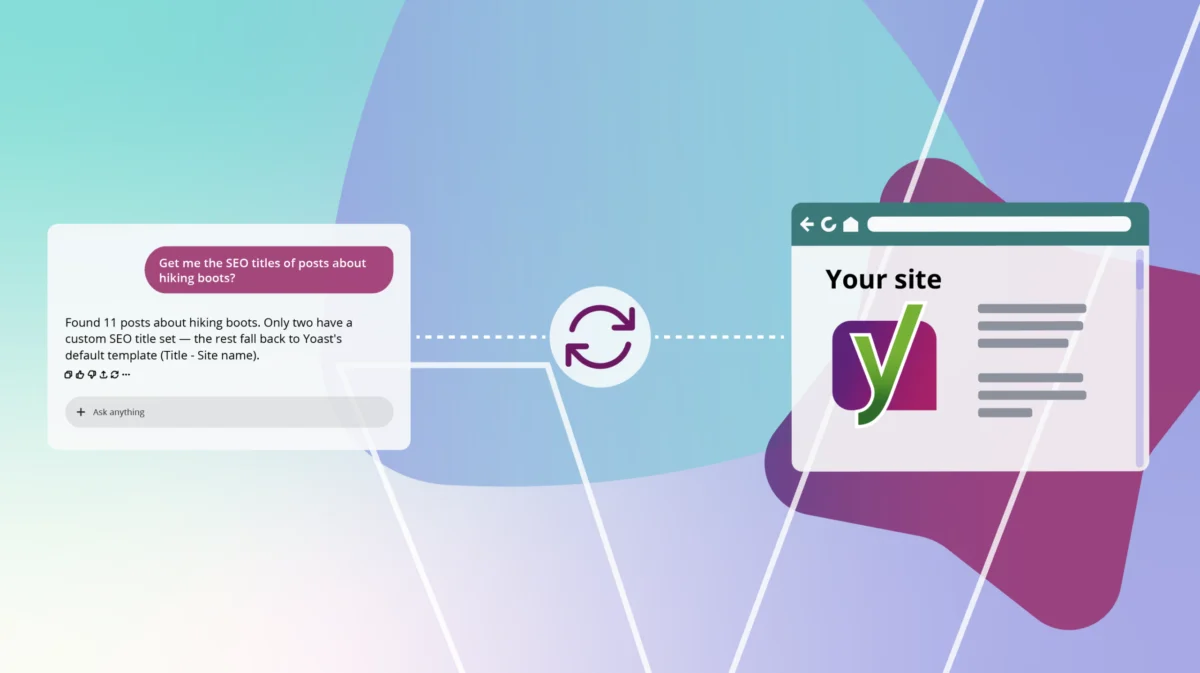
The ability to push changes directly to the post-metadata via AI is a game-changer for those building agentic workflows. Previously, an AI assistant could identify that a product title was outdated or that a meta description lacked a compelling Call to Action (CTA). However, the user still had to manually execute those changes.
With this update, the yoast-seo/update-post-seo-data ability now supports a suite of new fields. This means an AI agent can analyze a product rename, determine that the search snippet and social media cards are now inaccurate, and perform the update in the same conversational thread. This effectively turns an AI chatbot into a site administrator, capable of executing complex, multi-step SEO tasks with minimal human oversight.
Maintaining the Human Guardrails
Despite these advancements, Yoast has maintained critical safeguards to ensure site stability. The "Focus Keyphrase"—the core indicator of what a page is targeting—remains a read-only field for AI agents. This design choice prevents automated systems from accidentally hijacking or misaligning a site’s core SEO strategy. Furthermore, all AI actions are strictly governed by native WordPress capability checks, ensuring that an AI tool can only perform actions that the logged-in user is already authorized to execute.
Technical Cleanup: Pruning the Legacy Code
While the AI features capture the imagination, the "yearly cleanup" is the unsung hero of this update. For any plugin with the massive install base of Yoast SEO, managing technical debt is a Herculean task.
The Philosophy of Deprecation
Yoast SEO 26.1 marked the cutoff point for a significant amount of legacy code. The development team has been signaling these changes for over a year through deprecation notices. For the vast majority of WordPress sites, this cleanup will be invisible. However, for plugin and theme developers who have built custom integrations or extensions that rely on these older, deprecated hooks, this update is mandatory reading.
Implications for Developers
If your site relies on custom code that hooks into Yoast SEO’s older methods, the removal of this code could result in site-breaking errors. The core objective of this cleanup is to improve the performance and maintainability of the plugin. By removing obsolete functions, Yoast reduces the "bloat" that can accumulate over years of continuous development. Developers are encouraged to consult the full pull request documentation to audit their own codebase against the changes.
Supporting Data and Strategic Direction
The move toward AI-driven SEO management is not accidental. As search engines like Google continue to incorporate AI into the Search Engine Results Pages (SERPs) through SGE (Search Generative Experience), the nature of SEO is changing.
- Efficiency Metrics: By offloading metadata updates to AI agents, agencies report a reduction in the time-to-market for site updates by as much as 30-40%.
- Data Consistency: One of the most common issues in e-commerce is "metadata drift," where product names change but the SEO snippets remain stagnant. AI agents, when given the proper permissions, can scan the entire inventory and rectify these inconsistencies in minutes rather than hours.
- The Rise of MCP: Yoast’s support for the Model Context Protocol (MCP)—specifically through the WordPress MCP Adapter—is a clear indication that they intend to stay at the forefront of the agentic AI wave. By adopting standardized protocols, Yoast ensures that their plugin is not just a tool for WordPress, but a data source for any AI platform that speaks the language of the web.
Official Perspective: Bridging the Gap
Beth Parker, Product Marketing Manager at Yoast, emphasizes that this update is about empowerment. "We are providing the building blocks for developers to create smarter, faster, and more efficient SEO workflows," she notes. The strategy is clear: provide the infrastructure (the Abilities API and the MCP adapter), and let the community innovate on how those tools are applied.
For the end-user, this means that the "SEO Assistant" they use in their AI chatbot will soon be able to do more than just offer advice—it will be able to do the work. For the developer, this means the API surface area is becoming cleaner and more predictable, even as it becomes more powerful.
Strategic Implications: The Future of WordPress Management
The shift signaled by this release has profound implications for the future of the WordPress ecosystem:
- The Death of "Manual" SEO: We are entering a phase where the "manual" entry of meta descriptions and titles may soon become a legacy practice. As AI becomes more proficient at understanding brand voice and SEO best practices, these tasks will be increasingly delegated to autonomous agents.
- Plugin Interoperability: The reliance on the Model Context Protocol (MCP) suggests that Yoast is looking beyond the WordPress dashboard. They are positioning their SEO data to be accessible to a wider ecosystem of AI tools, which could lead to a future where SEO management is performed from within custom AI dashboards rather than the traditional WP-admin.
- The Professional Developer’s Role: With the removal of deprecated code, the barrier to entry for building high-quality, stable integrations is rising. Developers must be more vigilant about keeping their code up-to-date with the latest WordPress and Yoast standards. This professionalization of the plugin ecosystem is a net positive for security and site performance.
How to Prepare
For those looking to adopt these new capabilities, the pathway is well-documented:
- Audit Your Integrations: Review any custom code against the removal list provided in the official documentation.
- Connect Your LLM: If you are not yet using Yoast SEO Abilities, visit the developer documentation to learn how to bridge your LLM with your site using the WordPress MCP Adapter.
- Test in Staging: As with any update that involves structural code changes, testing in a staging environment is mandatory. Ensure that your automated workflows, especially those involving the
update-post-seo-dataability, function as expected before deploying to production.
In conclusion, this release represents a sophisticated balance between modernization and stability. Yoast is not just keeping pace with the AI revolution; they are defining the technical standards for how AI should interact with the world’s most popular content management system. As these tools continue to evolve, the distinction between a "website manager" and an "AI architect" will continue to blur, making this an exciting time for anyone involved in digital growth and search engine optimization.