










As modern startups navigate an increasingly crowded digital marketplace, the daily focus for most founders remains locked on the immediate horizon: sales pipelines, customer retention rates, and surviving the next 90 days. Amidst these urgent operational priorities, long-term brand positioning in emerging technology channels often falls by the wayside. Yet, a silent shift in buyer behavior is already fundamentally altering how B2B and B2C decisions are made.
Today’s prospective buyers are no longer relying solely on traditional search engines to discover software, services, and vendors. Instead, they are turning directly to artificial intelligence systems and conversational answer engines for recommendations. When a potential client asks an AI model to list the top vendors in your industry, the response dictates who gets a seat at the table—and who remains invisible.
For startup leaders, treating AI-generated brand descriptions as an afterthought is a dangerous gamble. Founders who ignore how artificial intelligence perceives and summarizes their business are essentially betting that their competitors are doing the same. As the industry transitions toward an AI-first research paradigm, that assumption carries steep commercial risks.
To bridge this emerging visibility gap, enterprise platforms like HubSpot have begun rolling out specialized Answer Engine Optimization (AEO) tools designed to demystify how AI engines index, evaluate, and cite brands.
The Main Facts: The Shift From Traditional Search to Conversational AI
The fundamental mechanics of how people discover products and services have undergone a seismic transformation. For over two decades, Search Engine Optimization (SEO) was the undisputed cornerstone of digital marketing. Companies spent countless hours and marketing dollars optimizing keywords, climbing Google’s ranking pages, and acquiring backlinks to capture high-intent traffic.
However, answer engines—powered by Large Language Models (LLMs) and conversational search interfaces—operate on an entirely different set of rules. When a user queries an answer engine, the system does not merely return a list of blue links ranked by keyword density. Instead, it synthesizes vast amounts of data across the web to construct a direct, authoritative narrative. It weighs brand reputation, cross-platform citations, reviews, and semantic context to formulate a curated list of recommendations.

Crucially, strong traditional SEO rankings do not automatically translate into high visibility within AI-generated answers. Answer engines pull from disparate, often unpredictable sources, constructing their recommendations using logic that bypasses standard keyword matching.
Consequently, companies operating without direct visibility into their AI footprint are flying blind. They have no way of knowing whether a potential buyer researching their niche is being directed to their platform, pushed toward a competitor, or ignored entirely. This uncertainty creates a critical strategic dilemma for leadership teams: how to measure, manage, and master a digital channel that lacks traditional metrics.
Chronology: The Evolution of Digital Discovery and the Rise of AEO
Understanding how Answer Engine Optimization became a boardroom-level priority requires examining the rapid timeline of search technology over the past several years.
- Late 2022 to 2023: The public release and explosive adoption of generative AI tools fundamentally alter user expectations. Consumers and enterprise buyers alike realize they can bypass traditional search engines in favor of conversational agents that provide immediate, synthesized answers to complex queries.
- Throughout 2024: Digital marketers and early-adopting enterprises begin noticing a decline in organic referral traffic from traditional search engines. User behavior shifts heavily toward zero-click searches and AI-assisted summaries, prompting initial inquiries into how AI models source their information.
- 2025: The realization dawns that traditional SEO is insufficient for capturing AI-driven discovery. Brands discover that being absent from LLM training data or authoritative citation networks leads to total market invisibility among tech-forward buyers.
- 2026 and Beyond: Industry leaders begin formalizing "Answer Engine Optimization" (AEO) as a distinct operational discipline. Platforms introduce dedicated dashboards, visibility scoring systems, and CRM integrations to help resource-constrained teams monitor and influence their AI brand equity without requiring massive marketing agencies.
Supporting Data: Quantifying the Impact of AI Visibility
While many executives view digital brand presence as a nebulous concept, emerging data highlights a direct correlation between AI visibility and tangible revenue growth.
According to internal platform data released by HubSpot, businesses that actively manage and optimize their presence in answer engines experience a dramatic lift in commercial activity. Specifically, AEO customers create 82% more deals compared to those relying solely on traditional outbound or legacy search strategies.
This statistic underscores a vital economic reality: AI-assisted buyers are high-intent buyers. When an answer engine recommends a specific vendor to a prospect, that recommendation carries immense weight and credibility. Users frequently treat AI recommendations as vetted, expert-level advice, shortening the traditional sales cycle and accelerating prospect conversion.

Additional industry metrics emphasize the widening gap between traditional search volume and conversational discovery:
- Over 40% of complex enterprise software research now incorporates AI-assisted discovery tools during the initial vendor shortlisting phase.
- Brands cited consistently across authoritative third-party forums, review sites, and niche publications enjoy a disproportionate share of voice in generative AI responses.
- Companies that fail to audit their digital footprint find that outdated or inaccurate information is frequently pulled by LLMs, misrepresenting their product offerings to prospective enterprise clients.
Official Responses and Industry Perspectives
Tech executives and marketing strategists are increasingly vocal about the necessity of integrating AEO into broader corporate strategies.
Industry analysts point out that the traditional barrier to entry for digital marketing—requiring dedicated agencies, large content teams, and specialized SEO consultants—often priced early-stage founders out of effective optimization. However, the next generation of visibility tools is shifting toward democratization and automation.
"As a founder, your attention is naturally pulled toward immediate pipeline metrics, customer retention, and the financial health of the next 90 days," notes product development literature from enterprise automation leaders. "Yet, ignoring how AI engines describe your company is no longer viable. Your buyers are already asking AI which vendors to consider. Getting your brand in front of them comes down to two things: knowing where you stand, and making targeted, high-leverage moves."
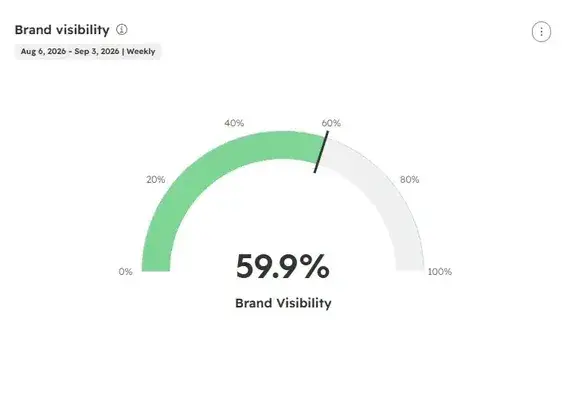
By simplifying the auditing process, modern platforms allow non-technical executives to assess their standing without needing a deep background in data science or search engine algorithms. Brand visibility dashboards now surface concrete metrics—such as AI visibility scores, share of voice, and specific citation sources—giving leadership immediate clarity on where they stand relative to their fiercest competitors.
Implications: What This Means for Founders and Business Leaders
The rise of Answer Engine Optimization carries profound implications for how startups and scaling enterprises structure their go-to-market strategies moving forward.

1. Moving Beyond the Marketing Silo
Historically, digital visibility was treated as a departmental silo managed entirely by marketing teams or external SEO agencies. In the age of AI, brand perception directly impacts the executive-level sales pipeline. Because answer engines synthesize data from across the entire web—including product reviews, customer forums, PR mentions, and technical documentation—optimizing for AI requires a holistic organizational approach.
2. Actionable Insights Without Agency Overheads
One of the primary roadblocks for early-stage founders is resource allocation. Hiring specialized consultants to manage emerging tech channels is often financially prohibitive. To combat this, modern AEO solutions are designed to deliver prioritized, step-by-step recommendations directly to the user. Whether it is identifying content gaps, updating specific landing pages, or pursuing authoritative external sources, founders can execute these strategies independently or delegate them efficiently to existing team members.
3. Tying AI Visibility Directly to Revenue
Visibility for the sake of awareness is a vanity metric. For AEO to matter to a startup founder, it must connect directly to pipeline growth and closed-won deals. Integrating AEO tools with advanced customer relationship management (CRM) systems—such as HubSpot Smart CRM—allows businesses to track how AI-driven discovery translates into actual contacts, sales conversations, and revenue streams. By grounding AI strategy in real customer context rather than generic industry templates, companies ensure their optimization efforts drive meaningful commercial outcomes.
Conclusion
The digital research landscape has permanently evolved. As conversational AI agents and intelligent answer engines become the default starting point for B2B and B2C procurement, the traditional rules of engagement no longer apply.
Founders can no longer afford to assume that strong legacy search rankings will automatically secure their position in an AI-driven market. By proactively auditing their AI visibility, acting on targeted optimization recommendations, and integrating these insights directly into their CRM pipelines, businesses can ensure they are not left behind.
The question for leadership teams is no longer whether buyers are using AI to research vendors in their category—it is whether those buyers are finding them when they do.



