









By Natalie Stubbs, Senior Technical SEO at Lumar | May 27, 2026
The digital landscape is currently undergoing its most radical transformation in a quarter-century. As we close out May 2026, the intersection of traditional search engine optimization (SEO) and the burgeoning field of Generative Engine Optimization (GEO)—often referred to as AI-driven search—has reached a critical inflection point.
From Google’s landmark I/O 2026 revelations to the rapid evolution of LLM (Large Language Model) behavior, the "link-based" web is rapidly being augmented by, and sometimes superseded by, AI-first experiences. For marketers, developers, and SEO professionals, the challenge is no longer just about ranking; it is about visibility, citation, and brand authority within the black boxes of AI.
The Core Transformation: A Summary of May’s Seismic Shifts
The primary narrative this month is one of total integration. Google has transitioned from treating AI as an experimental feature to positioning it as the backbone of the entire Search ecosystem. With AI Mode now boasting over one billion monthly users, the search giant has signaled that the future of information retrieval is agentic, conversational, and highly personalized.
Key highlights from this month include:
- Google I/O 2026: The unveiling of a search engine that prioritizes persistent conversational context over static blue links.
- Formalization of AI Optimization: The release of Google’s first official documentation on optimizing for generative AI features.
- The May 2026 Core Update: A global algorithmic shift that is further complicating the separation of traditional ranking signals from AI-driven traffic.
- The "Deep Content" Mandate: Senior leadership at Google has confirmed that the algorithm now places a heightened premium on high-authority, original, and "deep" human insights.
Chronology of May 2026: A Month in Motion
The month began with a flurry of activity that set the tone for the rest of the year. Below is the timeline of the most significant industry milestones:
- May 6: Snap and Perplexity AI announce the "amicable" termination of their $400M partnership, signaling the complexities of integrating AI search into established social ecosystems.
- May 14-16: Google I/O 2026 takes place. Google announces the biggest overhaul to Search in 25 years, introducing "information agents" capable of autonomous task completion.
- May 20: OpenAI pushes GPT-5.5 Instant to users, enhancing the model’s ability to determine when to trigger live web searches.
- May 21: Google begins the rollout of the May 2026 Core Update, a two-week global process affecting all regions.
- May 22: Google officially publishes the "Optimizing your website for generative AI features" guide.
- May 25: Nick Fox, SVP of Knowledge & Information, emphasizes the necessity of "deep content" during Google Marketing Live.
Supporting Data: Understanding User Behavior in the AI Era
Google’s recent publication, “How people are using AI Mode in the US,” provides a fascinating glimpse into the shifting user psychology. The data confirms that AI Mode is not cannibalizing search volume; rather, it is expanding the definition of what is searchable.
The Shift Toward Multi-Layered Queries
Users are increasingly leveraging AI for exploratory, multi-layered tasks. Unlike the traditional "keyword-to-website" journey, the modern user engages in "conversational chains."
- Exploratory Trends: Users are asking more follow-up questions, treating the search engine as a consultant rather than a directory.
- Agentic Shopping: The introduction of the "Universal Cart" across Google, Gemini, and YouTube indicates a shift toward a seamless, AI-assisted purchasing journey. This system tracks price drops and inventory in the background, making brand visibility in these shopping models a new priority for e-commerce SEOs.
The Rise of the "AI-Assistant" Traffic Channel
The introduction of a dedicated "AI assistant" traffic category in GA4 is a long-overdue acknowledgement of the current reality. By grouping traffic from tools like ChatGPT, Claude, and Gemini, Google is giving site owners the granular data needed to track how much of their traffic originates from LLM citations versus traditional organic search.
Official Responses and Strategic Guidance
For the SEO community, the most critical development is the release of Google’s formal guidance on AI optimization. For years, practitioners have been operating on speculation; now, we have a foundational document.
Google’s Stance on Optimization
Google’s documentation on "Optimizing your website for generative AI features" mirrors the principles of traditional SEO:
- Helpful, Structured Content: If it is good for the user, it is good for the AI.
- Crawlability: A site that cannot be effectively indexed by a traditional crawler is unlikely to be accurately "read" by an AI model.
- Technical Foundation: The basics—site speed, clear architecture, and semantic markup—remain non-negotiable.
The "Deep Content" Premium
In his keynote at Google Marketing Live, Nick Fox provided the most actionable advice of the month: "Go beyond the surface level."
Fox noted that AI is inherently efficient at summarizing high-level facts. Consequently, the content that gains the most traction in an AI-summarized environment is that which offers unique, firsthand data, expert analysis, and depth that a generic model cannot replicate. If your content is merely a regurgitation of existing web information, it is effectively invisible to an AI looking for a definitive, authoritative source.
Implications for the Future of Digital Marketing
The events of May 2026 carry profound implications for how we structure our digital strategies moving forward.
1. The Decline of FAQ Rich Results
The total removal of FAQ rich results from Google Search is symbolic. Google is shedding legacy UI elements to make room for AI Overviews. This is a clear signal: stop relying on "hacks" or superficial rich results to win SERP real estate. Instead, focus on the substance of the information provided within your pages.
2. The Battle for Distribution
The failed Snap-Perplexity deal serves as a cautionary tale. While AI search engines are powerful, their distribution is a massive operational hurdle. For brands, this means you must be active in monitoring where your content is being cited—not just on Google, but across various browser integrations, social platforms, and proprietary AI chatbots.
3. The New "AEO" (Answer Engine Optimization)
We are no longer just optimizing for keywords; we are optimizing for mentions. As models like GPT-5.5 Instant become more sophisticated at deciding when to trigger a search, brands must ensure their data is authoritative and easily retrievable. This involves:
- Structured Data: Ensuring your schema is robust enough to provide context to LLMs.
- Authoritative Tone: Writing in a way that positions your brand as a primary source of truth.
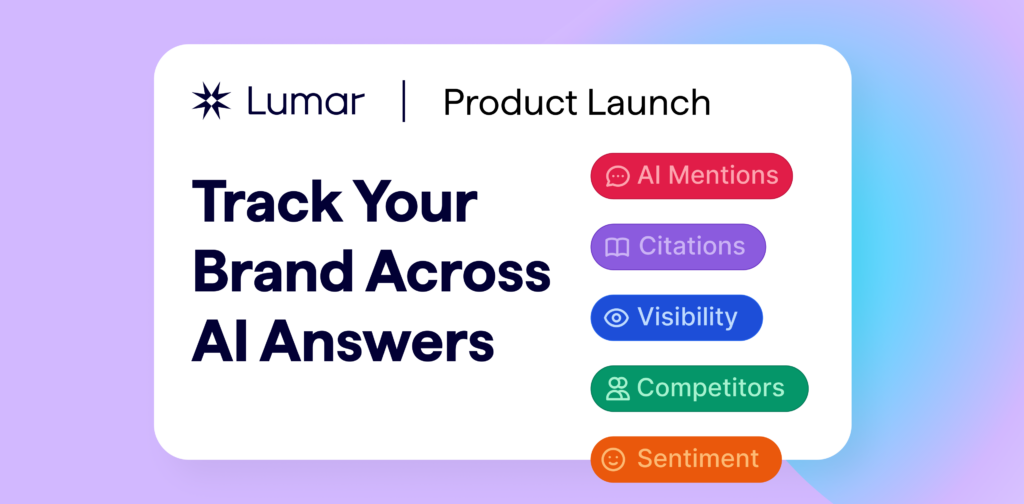
- Technical Health: Utilizing tools to monitor your brand’s AI presence and sentiment across the models your buyers are using.
Conclusion: Adapting to the New Reality
The May 2026 updates confirm that the SEO industry is not dying; it is evolving into a more complex, data-driven discipline. The "AI-first" search era rewards those who prioritize quality, technical excellence, and original insights.
As we look toward the remainder of 2026, the brands that win will be those that embrace the new AI visibility landscape. By leveraging sophisticated tracking tools—such as those recently integrated into the Lumar platform—businesses can gain clarity on their AI citation rates and adjust their content strategies to meet the demands of this new, agent-driven web.
The era of static search is over. The era of the AI-augmented journey has begun. Are you ready to lead the conversation?

About the Author: Natalie Stubbs is a Senior Technical SEO at Lumar. With a focus on the intersection of content quality and technical architecture, she helps brands navigate the complexities of modern search. When not analyzing crawl logs, she can be found advocating for a more accessible and semantic web.