










For over a decade, Bill Aulet’s Disciplined Entrepreneurship has served as the gold standard for aspiring founders. As the managing director of the Martin Trust Center for MIT Entrepreneurship, Aulet developed a 24-step framework that transformed the way business is taught in university lecture halls. With more than 500,000 copies sold worldwide and a proven track record of fueling startups that have raised over $3 billion, the methodology has become synonymous with startup success.
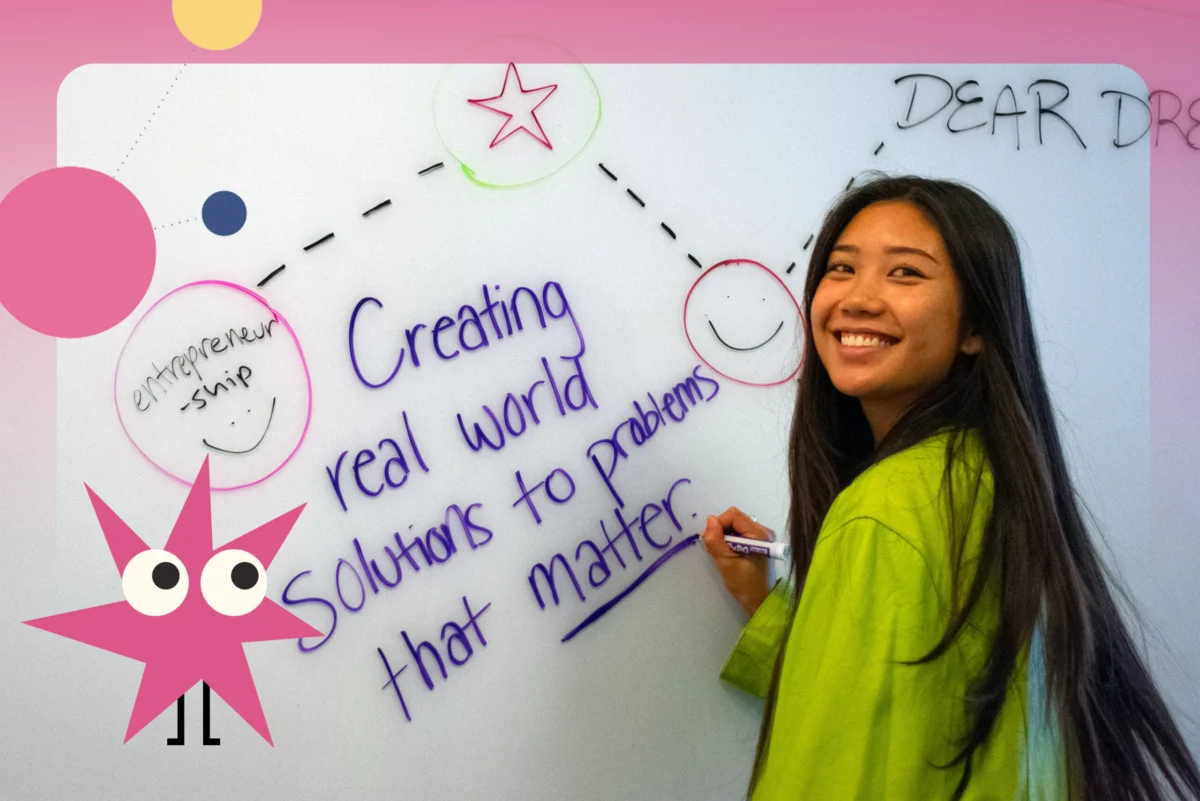
However, a significant demographic remained underserved by this rigorous academic approach: middle and high school students. Recognizing this gap, the Martin Trust Center, supported by a transformative gift from the Frank and Eileen Foundation, has launched Dear Dreamer—a free, AI-powered platform designed to bring the power of MIT’s entrepreneurial pedagogy to young minds globally.
The Core Methodology: Bridging the Academic-Youth Divide
The Disciplined Entrepreneurship framework is not merely a collection of tips; it is a systematic, repeatable process for building ventures. Traditionally, this curriculum was tailored for the high-octane environments of the MIT Sloan School of Management, where MBA and PhD students utilize the framework to navigate the delta v startup accelerator. The results have been staggering, with participants achieving a 61 percent survival or acquisition rate—a metric that dwarfs standard startup success rates.
But adapting a framework designed for seasoned graduate students for a 12-year-old requires more than just simplification; it requires a complete redesign of the user experience. Dear Dreamer functions as a digital, self-paced learning portal. It strips away the dense academic jargon and replaces it with interactive exercises, snackable educational videos, and personalized AI feedback that mimics a one-on-one mentorship session. By meeting students where they are—using an interface reminiscent of the social media platforms they frequent—the project aims to lower the barrier to entry for youth innovation.
Chronology of a Vision: From MIT to the World
The genesis of Dear Dreamer is rooted in the "MIT in the world, for the world" ethos. The timeline of this initiative reflects a long-term commitment to expanding access to entrepreneurial education.
- The Foundation: The initial success of Disciplined Entrepreneurship as a textbook established the credibility of the framework.
- Scaling via EdX: When the material was adapted into an online course, it reached hundreds of thousands of learners. The feedback from these students—many of whom reported feeling a newfound sense of "economic security"—spurred Aulet to think bigger.
- The Strategic Partnership: The project took a definitive turn when Aulet met Audrey McLoghlin, founder and CEO of the apparel brand Frank and Eileen. During their discussions, they identified a shared goal: to make high-level entrepreneurial training accessible to youth who lacked institutional support.
- The Technological Leap: The integration of "Jetpack," MIT’s proprietary generative AI tool, provided the "secret sauce." By training the AI on the Disciplined Entrepreneurship curriculum, the developers created a digital tutor capable of guiding students through the ambiguity of the startup process.
- The Launch: Dear Dreamer was officially introduced as a free, accessible platform, marking the first time such sophisticated AI-driven entrepreneurial tools have been deployed specifically for the K-12 market.
Supporting Data: Why the Framework Works
The efficacy of the Martin Trust Center’s approach is not based on anecdotes alone; it is backed by years of data from the MIT ecosystem. The 61 percent success rate observed in the delta v program is an anomaly in the venture capital world, where failure is the norm.
The primary differentiator is the "systematic" nature of the 24 steps. By focusing on customer discovery, unit economics, and product-market fit before scaling, the framework forces entrepreneurs to validate their ideas in the real world rather than relying on abstract business plans.
For the youth audience, the impact of these metrics is qualitative as much as it is quantitative. By teaching students to treat their business ideas as hypotheses to be tested, Dear Dreamer shifts their perspective from "I have an idea" to "I have a process to validate my solution." With a goal to empower 50,000 young entrepreneurs by 2030, the platform is poised to create a massive pipeline of talent that is prepared to tackle global challenges with a founder’s mindset.
Official Responses: Insights from Bill Aulet
In an exclusive discussion with MIT News, Bill Aulet articulated the philosophy behind the platform and the broader implications of teaching entrepreneurship to younger demographics.
On the Impetus for the Project
"When I saw the data from our edX courses, I realized that for many, entrepreneurship was not just about starting a company—it was about agency," Aulet noted. "Audrey McLoghlin was instrumental in this. When I showed her how our AI, Jetpack, could guide students through our 24 steps, she immediately grasped the potential. She told me, ‘This is how we create more entrepreneurs: we make this work accessible to young people.’ She wished she had this when she started, and she recognized that schools simply aren’t providing this kind of practical, iterative guidance."
On Adapting the Curriculum
"We had to work closely with middle and high school students to understand what resonates," Aulet explained. "It wasn’t just about changing the font size or the tone. It was about using case studies that a 12-year-old would find relevant, and using an interface that feels like YouTube or Instagram. The content is the same high-level curriculum, but the delivery is designed for a digital-native, younger audience."
On the Definition of "Success"
Perhaps the most profound takeaway from Aulet’s perspective is his definition of success. He argues that the entrepreneurial mindset is the most valuable skill set for the 21st century, regardless of whether a student ever registers an LLC.
"Entrepreneurship is a way of operating," Aulet says. "It’s a way to deal with the reality that the world is moving faster and faster. Even if you don’t start a company, you will likely work for a company, and in that environment, you need to be able to innovate, adapt, and iterate. We are teaching students to paint from a blank canvas. If you give a person a job, you give them dignity. But if you make someone an entrepreneur, you give them ‘super dignity.’ You transform them from a seeker to a creator."
The Broader Implications: Entrepreneurship as a Life Skill
The launch of Dear Dreamer signals a shift in the pedagogical approach to secondary education. Traditionally, schools have focused on preparing students for college or specific vocations. However, as the global economy becomes increasingly volatile, the traditional career path is no longer a linear guarantee of stability.
Building Resilience in an Uncertain World
The Dear Dreamer curriculum is fundamentally about teaching resilience. By training students to systematically address ambiguity, the platform prepares them to navigate complex challenges. In a world characterized by rapid technological advancement and societal change, the ability to define a problem, validate a solution, and iterate based on data is a universal skill.
Economic Agency and Job Creation
Aulet’s vision of the "job creator" is particularly poignant for underprivileged communities. By democratizing access to these tools, Dear Dreamer can help break the cycle of poverty by empowering students in under-resourced areas to build their own economic solutions. When young people realize they can build something of value—whether it is a small local service or a scalable tech startup—it changes their relationship with the economy.
A New Model for Institutional Outreach
The project also serves as a blueprint for how elite academic institutions can exert a broader social impact. By leveraging private foundation support and proprietary AI technology, MIT has bypassed the traditional gatekeeping of academia. Dear Dreamer acts as a "public good" that extends the reach of the Martin Trust Center far beyond the borders of Cambridge, Massachusetts.
Conclusion: The Road to 2030
As Dear Dreamer begins its rollout, the focus will be on refining the AI’s ability to provide personalized feedback at scale. The goal of 50,000 young entrepreneurs by 2030 is ambitious, but it is supported by a robust framework and a clear mission.
In the final analysis, the project is about more than just business; it is about the cultivation of a specific human potential. By teaching young people to embrace the blank canvas, Bill Aulet and his team at the Martin Trust Center are not just teaching entrepreneurship—they are teaching the next generation how to navigate the future with confidence, purpose, and the tools to build a world of their own making.
For the student who logs onto Dear Dreamer for the first time, the platform offers more than just a 24-step lesson plan; it offers the validation that their ideas matter, that their perspective is valuable, and that they possess the agency to shape the world around them. As the rate of global change accelerates, that is the most important lesson any student can learn.



