










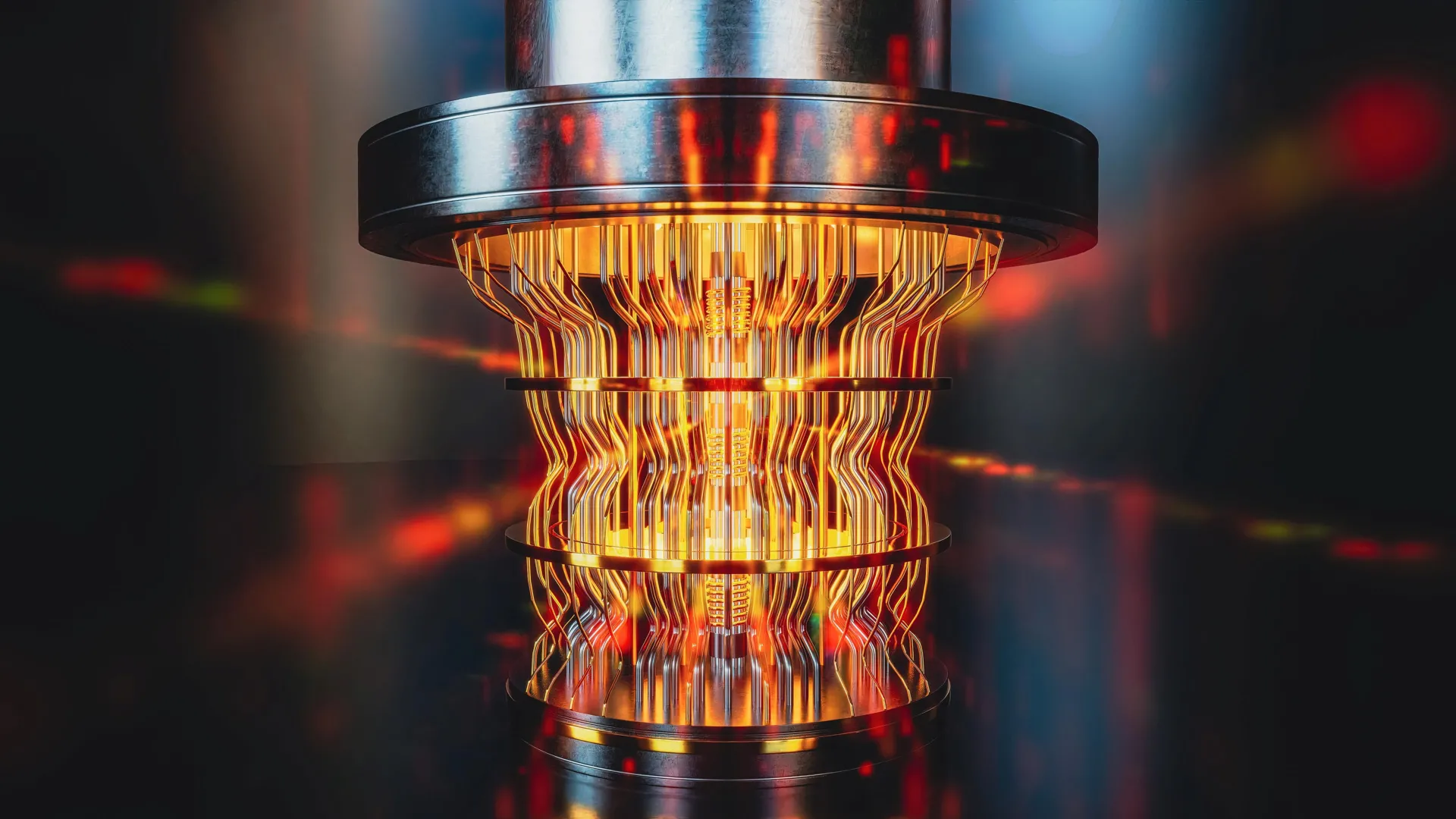
In what many are calling a defining moment for the field of computational science, a joint research team from IBM and the University of Chicago has successfully executed a quantum computing demonstration that ticks all the boxes for undisputed "quantum advantage." By harnessing a novel error-correction strategy to deploy 70 logical qubits, the research collective tackled a complex computational problem in a mere 15 minutes—a feat that would demand an impractical, if not impossible, amount of time for even the world’s most powerful classical supercomputers.
The breakthrough, detailed in a newly published paper titled "Sampling hard circuits with verifiably high fidelity," represents a massive leap forward in the practical application of quantum mechanics. Not only did the experiment execute a task far beyond the reach of traditional simulation techniques, but it also introduced a rigorous verification framework, proving with high statistical confidence that the quantum hardware delivered a correct and reliable result. For an industry long plagued by the dilemma of how to trust answers that classical computers cannot check, this demonstration opens a transformative new chapter.
1. Main Facts: The Anatomy of a Breakthrough
At its core, the recent experiment centers on two monumental achievements: scaling up fault-tolerant logical qubits and solving the "verification paradox" that has haunted quantum physicists for years.
- The Core Task: The quantum computer executed a highly sophisticated, structured circuit sampling problem designed to push the boundaries of computational complexity.
- The Speedup: The entire quantum computation was completed in approximately 15 minutes. Leading classical computing methods, by comparison, would require prohibitive, astronomical runtimes to achieve the same output, placing the task firmly outside the practical reach of traditional architecture.
- The Scale: The experiment utilized 70 logical qubits—comprising one of the largest demonstrations of logical quantum computing reported to date.
- The Complexity Metrics: Within this framework, the team successfully executed 2,415 logical two-qubit operations alongside 468 logical "T gates," showcasing unprecedented circuit depth and operational control.
- Error Reduction: Through advanced error-correcting codes, effective logical error rates were driven down to a level ten times lower than the underlying physical error rates.
- Public Transparency: In the spirit of open science, the complete circuits and raw experimental results have been made publicly accessible via the Quantum Advantage Tracker.
2. Chronology: Overcoming the Verification Paradox
To fully appreciate the significance of this milestone, one must understand the historical hurdles of quantum benchmarking. For years, researchers have relied on a standard metric known as Random Circuit Sampling (RCS) to measure whether quantum processors can outperform conventional computers.
The Evolution of Quantum Benchmarking
In simplified terms, RCS challenges a quantum machine to generate patterns of data that grow exponentially more complex. As the circuit scales, the resulting states become so entangled and chaotic that a classical computer cannot efficiently reproduce or simulate them. This inability to simulate has long been treated as the primary watermark for achieving quantum supremacy or advantage.
However, RCS introduced a Catch-22: The Verification Problem. Once a quantum calculation becomes genuinely too difficult for a classical supercomputer to simulate, checking whether the quantum machine got the answer right becomes equally impossible. Without a reliable answer key, scientists had no way to definitively prove that the quantum processor hadn’t simply churned out high-speed gibberish due to hardware noise.
The Shift Toward Structured Verification
Recognizing this roadblock, the IBM and University of Chicago team set out to redesign the benchmark. Rather than relying on purely random circuits, they developed a structured alternative to RCS.
- Phase One – Preserving Hardness: The researchers mathematically engineered their circuits to retain the core computational hardness criteria of RCS. To classical algorithms, the problem remained an insurmountable wall.
- Phase Two – Embedding Structure: By adding carefully calibrated structure to the quantum circuits, the team enabled internal error detection during the computation itself.
- Phase Three – Execution and Validation: The quantum computer ran the algorithm in roughly 15 minutes, while simultaneously generating metadata that allowed the researchers to verify the fidelity of the output states without needing a classical supercomputer to re-solve the entire problem from scratch.
This chronological progression—moving from unverified random sampling to structured, verifiable computation—marks a maturation of the entire quantum field.
3. Supporting Data: The Mechanics of 70 Logical Qubits
Quantum computers are notoriously fragile. Individual physical qubits are easily disrupted by environmental interference, thermal fluctuations, and electromagnetic noise—phenomena known collectively as decoherence. To build a computer powerful enough to solve real-world problems, scientists must transition from physical qubits to logical qubits, which group multiple physical qubits together to detect and correct errors on the fly.
The Power of Logical Encoding
In the recent demonstration, the research team operated 70 logical qubits. This architecture provided a robust shield for quantum information, dramatically suppressing the accumulation of errors.
- Operational Depth: The system maintained high enough fidelity to run 2,415 logical two-qubit operations. In quantum computing, multi-qubit gates are notoriously error-prone, making this volume of operations a testament to hardware stability.
- The Role of T Gates: The execution of 468 logical "T gates" is particularly noteworthy. T gates are non-Clifford operations required to achieve universal quantum computation (meaning the ability to run any possible quantum algorithm). They are notoriously difficult to implement fault-tolerantly, making their successful deployment at this scale a major technical milestone.
- Error Suppression Metrics: By leveraging their novel error correction strategy, the researchers achieved effective logical error rates that were an order of magnitude (10x) lower than the error rates of the underlying physical hardware. This proves that fault-tolerant error suppression can scale effectively alongside processor size.
4. Official Responses: Perspectives from Leadership and Academia
The announcement has elicited widespread enthusiasm from both corporate research labs and academic institutions, underscoring the collaborative nature of this modern scientific breakthrough.
"We are now firmly in the quantum advantage era," declared Jay Gambetta, Director of IBM Research and IBM Fellow. "We have demonstrated a quantum computation beyond the practical reach of classical computers that establishes, with statistical confidence, a lower bound on how faithfully it was executed. This milestone gives scientists, developers, and businesses a new foundation for trusting quantum computers as they scale to problems far beyond what we can achieve classically."
Gambetta’s remarks emphasize that the shift is not merely theoretical; it provides an industrial baseline of trust. For enterprises hesitant to invest in quantum infrastructure due to reliability concerns, a verifiably accurate calculation changes the economic and strategic calculus entirely.
From the academic side, the co-authors from the University of Chicago highlighted the broader scientific implications of their work:
"Verification remains one of the biggest challenges in firmly establishing experimental quantum advantage," noted Bill Fefferman, Associate Professor at the University of Chicago. "This experiment develops techniques to better characterize the fidelity of hard quantum states under noise, increasing confidence that the quantum computer is solving a computationally hard problem."
Echoing his mentor, Soumik Ghosh, a PhD student in Fefferman’s research group, pointed toward the future horizon:
"Beyond strengthening experimental validation, advances in verification have the potential to unlock practical applications for the next generation of quantum computers."
5. Implications: What This Means for the Future of Computing
The successful demonstration of 70 logical qubits with verifiably high fidelity is far more than a PR-friendly academic exercise. It acts as a foundational stepping stone toward utility-scale quantum computing.
Bridging the NISQ Era to Fault-Tolerant Computing
For years, the quantum computing community has operated in the NISQ (Noisy Intermediate-Scale Quantum) era, characterized by processors that lack error correction and are ultimately limited by noise. The IBM-UChicago collaboration demonstrates that we are standing on the threshold of the fault-tolerant era. By proving that logical error rates can be successfully suppressed while executing complex multi-qubit algorithms, the experiment validates the roadmap toward machines featuring thousands—and eventually millions—of logical qubits.
Unlocking Real-World Utility
Speed alone has never been enough to make quantum computers commercially viable. A fast computer that delivers incorrect answers is useless to a molecular biologist designing a new pharmaceutical drug, a logistics firm optimizing global supply chains, or a financial institution modeling systemic market risk.
By solving the verification problem—proving both that the machine outperformed classical computers and that its answer was correct—this research provides the missing trust layer. Developers and commercial partners can now look toward utility-scale applications with newfound certainty.
As the underlying circuits and data continue to be scrutinized by the global research community via the Quantum Advantage Tracker, one thing is abundantly clear: the rules of computation are rewriting themselves, and humanity has taken a giant step into a verifiably quantum future.



