



By: Digital Lifestyle & Culture Desk
Published: October 2023
Main Facts: The Digital Transformation of Vedic Astrology
For millennia, the practice of Vedic astrology—rooted deeply in the Indian subcontinent—relied on the meticulous hand-calculations of pandits and astrologers. Translating the movements of celestial bodies into a actionable blueprint for human life was a painstaking process that required visiting an expert in person, often armed with little more than an estimated birth time and a notebook.
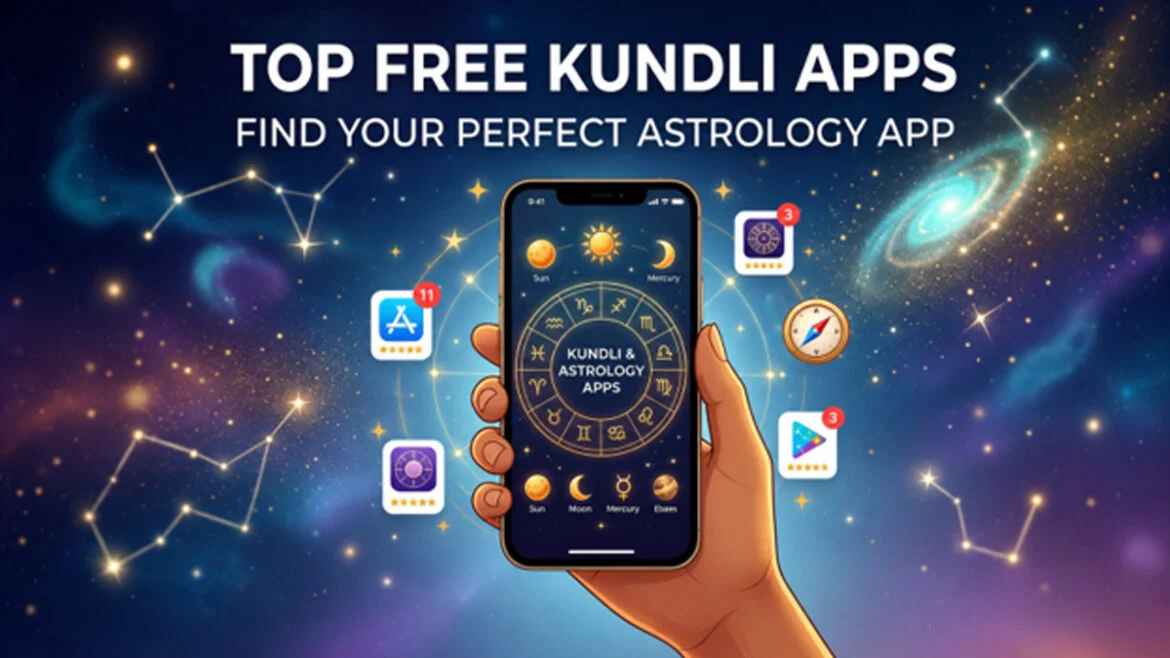
Today, that ancient tradition has undergone a radical metamorphosis. The proliferation of smartphone technology and artificial intelligence has decentralized astrology, placing sophisticated celestial calculators directly into the hands of millions. At the heart of this shift is the rise of free Kundli applications. Far beyond mere novelties offering daily horoscope forecasts, these platforms serve as comprehensive digital repositories for Janam Kundlis (birth charts), planetary alignments, dosha diagnostics, and personalized life counseling.
Recent industry data indicates that top-tier astrology applications boast user bases stretching into the tens of millions, bridging cultural heritage with modern, on-demand convenience. Whether navigating career pivots, vetting marital compatibility through Gun Milan, or mitigating malefic planetary periods (dashas), contemporary users can access centuries-old astrological wisdom within seconds—completely free of charge.
Chronology: From Palm Leaf Manuscripts to Pocket-Sized Algorithms
To understand the current dominance of digital Kundli apps, one must examine the chronological evolution of astrological accessibility:
- The Ancient Era (Pre-19th Century): Astrological calculations were inscribed on palm leaves and parchment. Astrologers—often royal court advisors or village sages—drafted birth charts manually using complex astronomical ephemerides (panchangs).
- The Print and Almanac Age (Late 19th–20th Century): The advent of print media popularized yearly panchang books and tables. While professional consultations still required face-to-face meetings, educated individuals could calculate basic planetary positions using mathematical tables.
- The Desktop Software Revolution (Late 1990s–Early 2000s): As personal computers entered households and businesses, early desktop software programs—such as Jagannatha Hora or commercial astrology suites—allowed users to generate birth charts by typing in coordinates. However, these tools were often clunky, expensive, and designed primarily for professional practitioners rather than the layperson.
- The Mobile App Boom (2010s–Present): With the proliferation of affordable smartphones and high-speed mobile internet, developers recognized the massive consumer demand for accessible spiritual guidance. Platforms like Astroyogi (founded as an early web portal in 2001) and AstroSage transitioned seamlessly into mobile apps. They integrated AI-driven calculations, chat interfaces, and live-streaming astrologers, permanently democratizing access to Vedic astrology.
Supporting Data: The Top 10 Free Kundli Apps Shaping the Market
Navigating the vast ecosystem of digital astrology can be daunting. To help users decode their birth charts and understand the cosmic influences shaping their lives, we have evaluated the ten most popular and reliable free Kundli apps currently available on iOS and Android platforms.
1. Astroyogi
- Overview: Established in 2001, Astroyogi is a titan in the digital astrology space, boasting a loyal user base exceeding 30 million people. It offers an all-in-one ecosystem encompassing horoscope forecasts, panchang updates, instant Kundli generation, and 24/7 access to verified astrologers via chat and call.
- Key Features: Users generate detailed birth charts by inputting their date, time, and birthplace. The platform breaks down complex data into planetary placements, doshas, dashas, and customized remedial solutions (such as lucky colors, favorable days, and appropriate gemstones or mantras).
- Standout Offering: First-time users receive a complimentary consultation, bridging the gap between automated software and personalized human guidance.
2. AstroSage
- Overview: AstroSage successfully bridges traditional Vedic principles with cutting-edge technology. By utilizing AI-powered calculation engines, the platform delivers instantaneous, highly accurate Kundli reports alongside deep dives into planetary influences and karmic debts.
- Key Features: Renowned for its computational depth, AstroSage caters to users seeking rigorous chart analysis. It calculates complex astrological parameters—including divisional charts (vargas)—with professional-grade precision.
3. Astrotalk
- Overview: Tailored for the fast-paced modern consumer, Astrotalk prioritizes speed and accessibility. Beyond standard Kundli creation, it integrates tarot readings, numerology, and immediate access to live practitioners.
- Key Features: After entering birth particulars, users receive immediate graphical insights into house lords, doshas, and transit impacts. Its core strength lies in its frictionless UI for connecting with live astrologers.
4. GaneshaSpeaks
- Overview: GaneshaSpeaks adopts a traditional, structured approach to astrology while maintaining a beginner-friendly interface. It specializes in comprehensive Kundli reports, Gun Milan (marriage matching), and predictive timeline analysis.
- Key Features: The app excels at translating dense Sanskrit-rooted terminology into plain, digestible language, ensuring that users with zero prior knowledge can interpret their own charts.
5. ClickAstro
- Overview: Particularly dominant across South India, ClickAstro has earned immense trust for its precision in regional astrological calculations, including complex Porutham matching and matchmaking evaluations.
- Key Features: Rather than overwhelming users with raw numbers, ClickAstro contextualizes life’s strengths and roadblocks in practical, narrative terms, making it a favorite for relationship and compatibility audits.
6. MyPandit
- Overview: Designed specifically for individuals taking their first tentative steps into the world of astrology, MyPandit strips away intimidating jargon in favor of intuitive, supportive guidance.
- Key Features: The app focuses on how specific planetary configurations impact everyday areas of life—such as workplace stress, interpersonal relationships, and emotional well-being—offering a gentle introduction to self-discovery.
7. Melooha
- Overview: Melooha shifts the focus away from cyclical daily horoscopes and toward lifestyle integration and psychological self-discovery.
- Key Features: By analyzing deep-seated birth chart patterns, Melooha explores how planetary placements correlate with emotional health, career fulfillment, and personal evolution, appealing to a younger, wellness-focused demographic.
8. Astro Arun Pandit
- Overview: Blending traditional Vedic roots with a modern, pragmatic coaching style, this platform focuses heavily on actionable remedies and direct mentorship.
- Key Features: Users can access standard birth chart reports alongside curated content designed to help them overcome psychological blocks, professional plateaus, and karmic hurdles through direct consultations.
9. InstaAstro
- Overview: InstaAstro is designed for instant gratification. By entering basic birth parameters, users instantly unlock their complete Kundli along with graphical breakdowns of astrological houses and planetary aspects.
- Key Features: The platform acts as a multifaceted spiritual marketplace, combining automated Kundli generation with tarot readers, numerologists, and live chat queues.
10. Jyotish App
- Overview: The Jyotish App prioritizes a clean, minimalist user experience without sacrificing analytical depth.
- Key Features: It offers robust horoscope forecasts and birth chart interpretations. Crucially, it allows users to download, save, and share their complete Kundli reports as PDF documents for offline viewing—a practical feature for those who wish to consult physical copies or share charts with family elders.
Official Perspectives: The Intersection of Tradition and Technology
Traditionalists and technologists have engaged in robust discourse regarding the democratization of astrology via mobile applications.
Traditional scholars often sound a note of caution. Many veteran astrologers argue that while software can calculate planetary longitudes and house cusps with mathematical perfection—a task humans could easily miscalculate—the interpretation of those charts requires years of philosophical study, intuitive development, and human empathy.
"An algorithm can tell you that Saturn is sitting in your seventh house, but it cannot fully measure the emotional resilience, social environment, or free will of the individual experiencing that transit," notes Acharya Vinod Mishra, a New Delhi-based Vedic scholar. "Apps are wonderful maps, but they should be used as tools for insight, not absolute deterministic decrees."
On the other hand, app developers and modern proponents emphasize empowerment. By removing the financial and logistical barriers associated with consulting a traditional astrologer for basic charts, these apps enable everyday people to engage with their cultural heritage on their own terms. Furthermore, the incorporation of certified human astrologers within these digital ecosystems ensures that users still have access to expert consultation when they require deeper, nuanced guidance.
Implications: What the Rise of Kundli Apps Means for Modern Society
The mainstreaming of free Kundli apps carries profound psychological, cultural, and market implications:
1. The Normalization of Mental Wellness and Self-Reflection
In an era marked by rising workplace burnout, economic uncertainty, and post-pandemic anxiety, millions of individuals are turning to alternative systems for comfort and validation. Kundli apps function not merely as predictive tools, but as frameworks for psychological introspection. By examining their strengths and weaknesses through an astrological lens, users often find structured narratives to process personal challenges.
2. The Commercialization of Spiritual Services
The digitization of astrology has transformed a fragmented cottage industry into a multi-million-dollar digital economy. With freemium business models—where basic Kundli generation is free, but live consultations and detailed reports are monetized—platforms have unlocked massive global audiences. This commercial viability has driven continuous innovation in UI/UX design, AI integration, and localized content delivery.
3. Preservation vs. Dilution of Ancient Knowledge
As astrological insights are compressed into bite-sized app notifications and bullet points, there is a risk of diluting deep philosophical traditions. However, proponents argue that these apps act as a vital gateway, sparking genuine curiosity in younger generations who might otherwise ignore Vedic traditions entirely. Many users who begin by reading a free app-generated Kundli eventually dive deeper into classical texts, ensuring the survival and evolution of the discipline.
Final Words
Free Kundli apps have irrevocably transformed how humanity interacts with the stars. Whether an individual is seeking to understand karmic doshas, evaluate marriage compatibility, or simply find daily reassurance during a difficult life transition, modern technology has bridged the gap between ancient sky-watchers and the smartphone generation.
Ultimately, the best app depends entirely on individual needs. Some users require the deep analytical metrics of AstroSage or ClickAstro, while others prefer the quick, conversational guidance of Astrotalk or InstaAstro. No matter the platform chosen, one reality remains clear: exploring the cosmos has never been faster, simpler, or more universally accessible.