







The New York Times has firmly cemented its status as the premier destination for daily mental stimulation. Following the meteoric rise of Wordle, the brain-teasing complexity of Connections, and the linguistic endurance required for Spelling Bee, the publisher’s latest hit, Strands, has evolved from a novel experiment into a daily ritual for millions of players. As we dive into the specifics of today’s puzzle, game #966, we explore not only the solution but the methodology behind conquering this increasingly popular word-finding challenge.
The Core Mechanics: Understanding NYT Strands
For those who have recently joined the fray, Strands is a grid-based word game that tasks players with identifying a series of thematic words hidden within a jumble of letters. Unlike a traditional word search where words are laid out in straight lines, Strands requires players to snake their paths across the board, moving in any direction—up, down, left, right, or diagonally—to connect letters into coherent, theme-related words.
The ultimate objective is to fill the entire board. Every letter must be used exactly once to complete the set of theme words. The linchpin of the experience is the "Spangram," a special, often lengthy word that touches two opposite sides of the board, effectively acting as a bridge that describes the overarching theme of the puzzle.
Decoding Game #966: The "Something to Build On" Challenge
Each day, the game resets at midnight local time, presenting a fresh grid and a cryptic theme. For today, Sunday, October 25, 2026 (Game #966), the New York Times challenged players with the theme: "Something to build on."
Analyzing the Theme
The phrase "Something to build on" is inherently structural. It implies a foundation, support systems, and the essential components required to erect a physical or metaphorical structure. When approaching a puzzle with this theme, players should immediately prime their vocabulary for construction-related terminology.
The Search for the Spangram
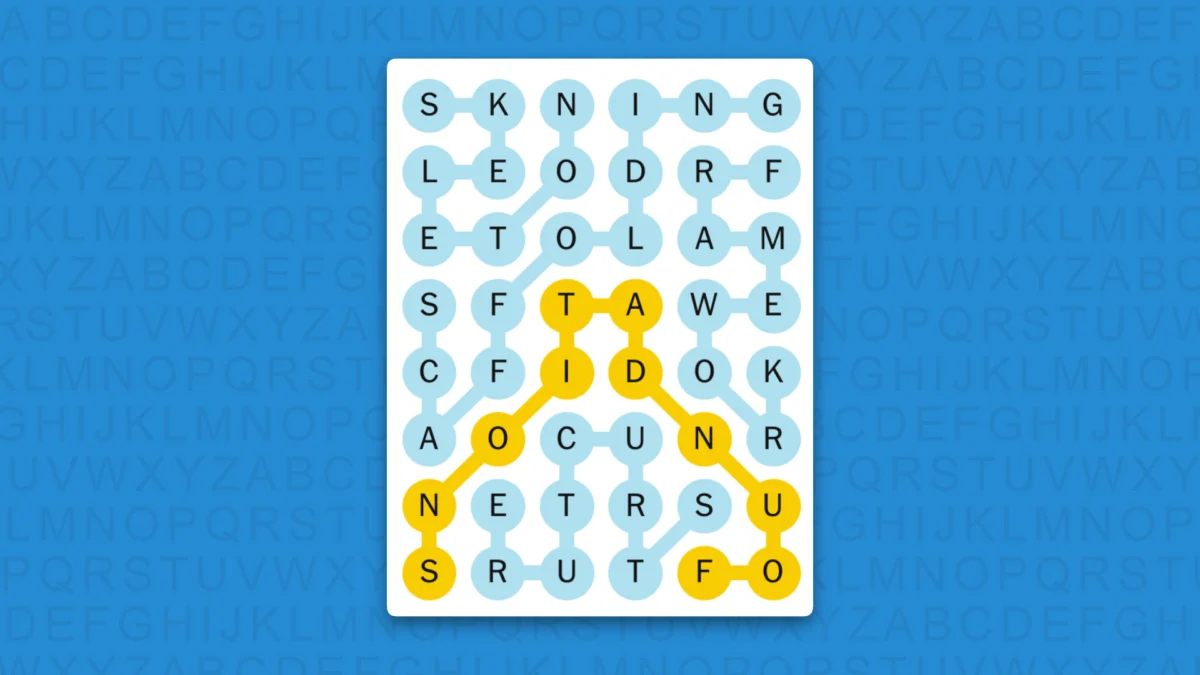
In Strands, the Spangram is the key to unlocking the board. For game #966, the challenge was to locate an 11-letter word that spanned the board. By analyzing the grid, one could identify that the word FOUNDATIONS was the intended anchor. It is a perfect linguistic fit for the theme.
Interestingly, the path for this particular Spangram was a rare right-to-left, bottom-to-bottom movement. Once this word was identified, the rest of the board began to fall into place like bricks in a wall. As noted in my personal playthrough, this marked my 113th "Spangram First"—an achievement that provides a massive advantage, as it splits the board into two distinct sections, making the remaining theme words significantly easier to isolate.
Supporting Words: Constructing the Solution
Once "FOUNDATIONS" was secured, the remaining words were easily extracted from the surrounding letter clusters. A major highlight was the word SCAFFOLDING. Much like the Spangram, it reinforced the construction motif. Other supporting words hidden within the grid, while not explicitly listed here to preserve the integrity for those still playing, follow the logic of architectural development and structural integrity.
Chronology of the NYT Gaming Ecosystem
The success of Strands did not happen in a vacuum. To understand why these games are so addictive, one must look at the timeline of the New York Times gaming department’s expansion:
- The Wordle Era (2022): The acquisition of Wordle transformed the NYT Games portal into a household name. It established the "daily habit" model.
- Connections (2023): This game shifted the focus from pure vocabulary to categorical thinking, testing the user’s ability to spot subtle associations between disparate concepts.
- The Rise of Strands (2024–Present): Strands represents the latest evolution, blending spatial awareness with linguistic recall. It is currently viewed as the most "visual" of the NYT puzzles, requiring a different set of cognitive skills compared to the strictly linear logic of Connections.
The consistency of these releases has created a "Game Suite" culture, where users often cycle through Wordle, Connections, Quordle, and Strands in a single sitting, creating a daily "digital crossword" routine.
Supporting Data: Why Players Are Hooked
Data from game engagement metrics suggests that Strands has a higher "completion rate" than Connections, likely due to the in-game hint system. By finding "clue words" (non-thematic words that help fill the progress bar), players can earn hints that reveal the location of a theme word.
This tiered system of assistance keeps frustration levels low. When a player is stuck, they are not met with a dead end, but rather a "learning moment" where the game gently nudges them toward the solution. This is a deliberate design choice by the New York Times editorial team, which prioritizes player retention through satisfaction rather than pure difficulty.
Official Perspective and Design Philosophy
While the New York Times rarely issues formal press releases regarding the specific creation of a daily Strands grid, their design philosophy is well-documented in their gaming FAQs. The goal is to provide a "accessible yet stimulating" experience.
The inclusion of the Spangram is a masterstroke of game design. It provides a "North Star" for the player. By defining the theme through a single, long word, the designers ensure that even a novice player has a chance to solve the puzzle, provided they can spot the primary connection. The shift toward more complex, multi-directional word paths has also been a deliberate move to challenge long-time fans of traditional, static word searches.
Implications for the Future of Digital Puzzles
The success of Strands suggests that the appetite for "bite-sized" cognitive games is not waning; it is maturing. Players are no longer satisfied with simple anagrams or dictionary-based searches. They want puzzles that require thematic synthesis.
We are likely to see the New York Times continue to iterate on these mechanics. The implication for the gaming industry is clear: the most successful apps of the next decade may not be high-fidelity, graphics-heavy experiences, but rather "daily routines" that fit into a coffee break. The psychological reward of solving a daily puzzle provides a sense of accomplishment that users crave in an increasingly chaotic digital landscape.
Tips for Tomorrow’s Game
If you are looking to improve your Strands performance, consider the following strategies:
- Look for Prefixes and Suffixes: Construction-themed puzzles, like today’s, often feature words ending in "-ING" or starting with common prefixes.
- Don’t Rush the Spangram: While the Spangram is the key, sometimes it is better to find 2–3 smaller theme words first. This clears the "clutter" on the board and makes the Spangram’s path more obvious.
- The "Vowel" Check: If you are stuck, look for vowels. They are the anchors of every word. If a specific area of the board is devoid of vowels, it is likely a dead zone or the path between two legitimate words.
- Check the Categories: Always visit the official NYT Games site or reputable strategy hubs to ensure you are playing the current game for your specific timezone, as some players may inadvertently look at spoilers for a different day.
As we look toward tomorrow’s puzzle, remember that the beauty of Strands lies in the process, not just the solution. Whether you solved it in seconds or needed a nudge from the hint system, the act of "building" your way through the grid is a victory in itself.
If you found this guide helpful, stay tuned for tomorrow’s breakdown of the next NYT Strands challenge. For those still struggling with other daily games, resources for Connections and Quordle remain available to keep your streak alive.