






As the work week draws to a close, the pace of innovation in the artificial intelligence sector shows no signs of slowing. From the evolution of personalized AI agents to the democratization of custom software development, the tools available to marketers and business owners are undergoing a profound transformation. This report synthesizes the latest industry developments, providing a roadmap for professionals looking to navigate the intersection of creative design, technical building, and the shifting landscape of enterprise AI.
The Design Dilemma: Mastering AI-Driven Layouts
In the world of AI-assisted design, the most common pitfall is a lack of iteration. Many users fall into the trap of accepting the very first output generated by an AI model, leading to tedious, repetitive tweaking that rarely achieves a professional finish.
Moving Beyond the First Prompt
The secret to high-quality AI design lies in demanding variety from the start. By instructing AI tools to generate multiple iterations simultaneously, designers can compare different approaches and select the strongest foundation. This methodology—often referred to as "parallel exploration"—allows for a broader creative scope before committing to a single design direction.
Pro Tip: To maintain a workflow safety net, always duplicate your design workspace and label it with the current date before making radical changes. This practice ensures that if an AI model "forgets" previous stylistic instructions or veers off-track, you have a documented point of reference to revert to without losing hours of progress.

From Consumer to Creator: Building Custom AI Apps
A paradigm shift is occurring in how businesses handle their software needs. Rather than relying on rigid, expensive, off-the-shelf subscriptions that only solve half of a specific business problem, professionals are increasingly turning to "no-code" and "low-code" AI development.
The Rise of the "Builder" Mindset
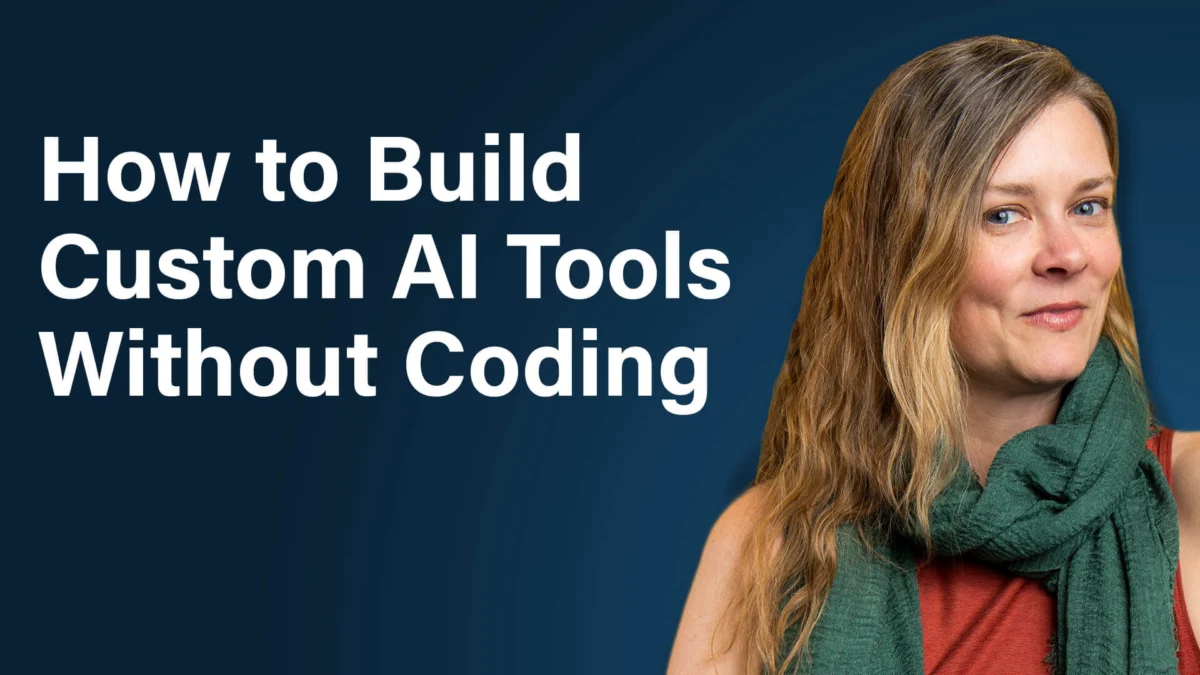
Erika Stanley, a noted AI strategist, suggests that the key to modern efficiency is shifting from a software buyer to a software builder. Building tools for a "market of one"—your specific business—can result in significant cost savings and solve operational bottlenecks that generic software was never designed to address.
The "Skateboard" Framework
The most effective way to start building is the "Skateboard, Not a Ferrari" approach. This framework prioritizes the development of a Minimum Viable Product (MVP) to prevent projects from stalling in the development phase.
- Documentation: Before touching a build platform, use AI to interview you regarding your requirements. This creates the technical documentation that developers need, saving significant time and capital.
- The Technical Path: Whether choosing all-in-one platforms like Lovable or more advanced environments like Claude Code, understanding the requirements for user-readiness is essential.
- Security: Building your own app brings the responsibility of maintenance. Security checks and robust backup habits must be implemented from day one to ensure that a single faulty update does not compromise your entire workflow.
Industry Chronology: Recent Developments in the AI Landscape
The rapid evolution of AI technology has been marked by several significant milestones this week, signaling a move toward more autonomous, integrated, and secure systems.
Google’s Strategic Pivot
Google has been at the forefront of this week’s news cycle with two major announcements:
- Reusable Skills in Gemini: Google is phasing out "Gems" in favor of "Skills." These allow users to save complex instructions, reference specific files, and automate recurring workflows. This shift reflects a broader trend toward AI that remembers personal preferences and brand guidelines.
- Gemini 4 Argon: Perhaps the most significant technical news, the launch of Gemini 4 Argon marks a move into long-horizon reasoning. Designed for cybersecurity, complex software engineering, and visual analysis, Argon is being deployed to select partners to autonomously identify, validate, and patch vulnerabilities.
The Evolution of Agency and Commerce
Meta is taking a long-term view on the AI ecosystem by previewing an "Open Standard for Personal and Business AI Agents." By collaborating with partners like Sierra, Meta is building a protocol that allows personal AI agents to communicate directly with business agents. This is a critical step toward a future where a user’s AI assistant can negotiate directly with a business’s AI, streamlining commerce and customer service.

Advertising in the Age of Conversational AI
OpenAI has officially expanded the ChatGPT advertising ecosystem. By introducing visual ad formats that appear during image generation, OpenAI is providing brands with a new, non-intrusive way to reach users during the discovery and purchasing phase. The emphasis remains on privacy, ensuring that advertising remains distinct from the AI’s core conversational responses.
Supporting Data and Technical Implications
The convergence of these technologies suggests that the "siloed" nature of marketing and AI is nearing its end. Industry practitioners are finding that AI is no longer an external "add-on" but a foundational layer of the business stack.

- Operational Efficiency: By moving to custom-built apps, businesses are reducing their dependency on fragmented SaaS ecosystems, effectively lowering operational overhead.
- Cybersecurity Readiness: The debut of specialized models like Argon highlights a shift where AI is becoming the primary defense mechanism against evolving digital threats.
- Standardization: The development of the Personal Agent Protocol indicates that the industry is maturing beyond proprietary "walled gardens" toward an open, interoperable internet of agents.
Implications for Professionals
For the average professional, these developments carry several key implications:
- Skill Acquisition: The ability to "prompt" is evolving into the ability to "build." Understanding the logic behind app architecture will soon be as important as understanding digital marketing fundamentals.
- The End of Passive Consumption: The transition from just "watching tutorials" to "hands-on practice" is now a competitive necessity. As AI models become more autonomous, the value lies in the human’s ability to orchestrate these tools toward high-value business outcomes.
- Integration of Strategy: The most successful organizations will be those that integrate their marketing strategy with their AI capabilities under one roof. The days of treating AI as a separate department are over; it must be embedded into the core workflow of every team, from design to security.
Official Perspectives: The Path Forward
As Michael Stelzner, founder of Social Media Examiner, notes, the industry is entering a phase where practitioners must move beyond curiosity and into active application. Whether it is through participating in hands-on sessions at conferences like AI Business World or simply adopting a "builder" mindset for daily administrative tasks, the focus must be on tangible output.

The message from industry leaders is clear: the tools are here, the infrastructure is being standardized, and the barrier to entry is lower than ever. The only remaining variable is the speed at which individuals choose to adopt these changes and integrate them into their own professional practice.
As we head into the next week, consider which of your daily tasks could be replaced by a "skill" in Gemini, or which of your software subscriptions could be retired in favor of a custom-built solution. The transition from observer to architect is not just an opportunity—it is the new standard of the professional landscape.