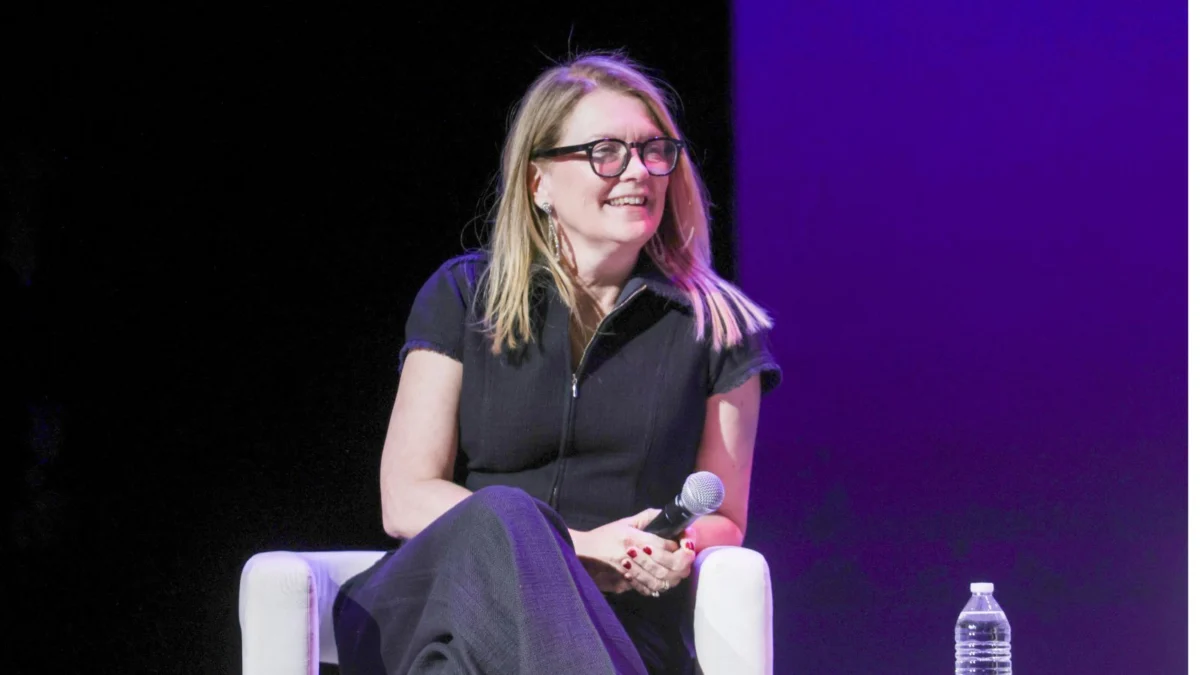
Executive Summary: A Legacy of Brand Stewardship
In a significant leadership transition for one of the world’s most recognizable financial institutions, American Express announced on Thursday, October 15, that Chief Marketing Officer Elizabeth Rutledge will retire in March 2027. The move marks the conclusion of a remarkable 37-year career at the company, during which Rutledge helped navigate the transition of a traditional credit card issuer into a modern, digitally savvy global lifestyle brand.
Rutledge, who has served as CMO since 2018, confirmed the news via a heartfelt LinkedIn post, reflecting on her journey from a new hire in 1990 to the top marketing executive at the firm. As American Express prepares for this transition, industry analysts suggest that the company is at a critical juncture, balancing the legacy of its premium "blue box" branding with the need to capture a younger, tech-forward demographic.
Chronology: A Career Built on Consistency and Innovation
The Early Years (1990–2000)
Elizabeth Rutledge joined American Express in 1990, an era when the financial services industry was undergoing a seismic shift due to the rise of personal computing and the globalization of consumer credit. During her first decade, she navigated various roles, focusing on the core card products that defined the company’s market dominance. Her early years were characterized by a focus on "high-touch" service, a philosophy that she would carry through her entire career.
Rising Through the Ranks (2000–2018)
Throughout the early 2000s, Rutledge held key positions across marketing, card products, and benefits. As the industry faced the 2008 financial crisis, her work in global advertising and brand management became pivotal. During this period, she played a crucial role in maintaining the perceived value of the American Express card as a symbol of status and security during a time of extreme economic volatility.
The CMO Era (2018–2027)
Upon her appointment as CMO in 2018, Rutledge was tasked with modernizing the brand’s image. Under her leadership, American Express shifted its marketing strategy from traditional television and print to a more aggressive digital and experiential approach. She spearheaded efforts to make the card more relevant to millennials and Gen Z, focusing on lifestyle perks, dining experiences, and travel benefits that went beyond mere financial transactions.
Supporting Data: Measuring the "Rutledge Effect"
To understand the impact of Rutledge’s tenure, one must look at the evolution of American Express’s brand value and customer acquisition metrics.
- Brand Value Growth: Since 2018, American Express has consistently ranked in the top tier of Interbrand’s "Best Global Brands." Under Rutledge’s guidance, the company successfully pivoted its messaging to focus on the "membership" model, emphasizing community and access over simple credit availability.
- Customer Demographics: Internal data from recent annual reports indicates that a significant percentage of new account growth in the last five years has come from millennial and Gen Z consumers—a demographic segment Rutledge prioritized through partnerships with brands like Resy, lounge access expansions, and influencer-led marketing campaigns.
- Marketing Spend Efficiency: Despite the shift to digital, the company has managed to maintain a high level of "share of voice" in the competitive premium card market, dominated by the likes of JPMorgan Chase’s Sapphire brand and Capital One’s Venture X.
Official Responses and Internal Sentiment
In a statement released shortly after the announcement, a spokesperson for American Express highlighted the profound void that will be left by Rutledge’s departure.
"Elizabeth has made an enduring impact on the brand, and her successor is expected to be announced in the coming weeks," the spokesperson said. "Her deep institutional knowledge and her ability to marry the traditional values of American Express with the demands of the modern consumer have been instrumental to our success."
In her own words, shared on social media, Rutledge noted: "Almost 37 years ago, I walked into the American Express Tower in New York City to fulfill a dream: to work for a company known for its iconic brand, marketing prowess, and extraordinary people. It has been the honor of a lifetime to contribute to this story."
Colleagues and industry peers have characterized her leadership style as "stabilizing yet transformative," noting that she rarely made impulsive moves, preferring instead to align marketing initiatives with the long-term strategic goals of the company’s business units.
Implications: What Comes Next for American Express?
The departure of a CMO who has been with a firm for nearly four decades is rarely just a personnel change; it is a structural inflection point.
1. The Search for a Successor
The coming weeks will be crucial as American Express identifies a replacement. The company is reportedly looking for a candidate who can maintain the "premium" DNA of the brand while continuing to push the envelope on data-driven marketing. Industry experts are divided on whether the company will hire internally—promoting a lieutenant from Rutledge’s current team—or seek an external hire from the tech or consumer-packaged-goods (CPG) sectors to inject fresh perspective.
2. The Shift in Marketing Philosophy
Under Rutledge, the marketing department became increasingly sophisticated in its use of big data to tailor offers. The incoming CMO will likely face pressure to integrate Artificial Intelligence (AI) more deeply into customer engagement. As the financial services sector becomes increasingly commoditized, the "brand moat" that Rutledge helped build will be tested by a new generation of fintech competitors.
3. Maintaining the "Membership" Narrative
Rutledge’s greatest legacy is arguably the successful rebranding of the cardholder as a "member." This shift moved the company away from the perception of a credit provider toward that of a lifestyle concierge. The next CMO will need to ensure that this narrative continues to resonate as global economic conditions shift and consumer spending habits evolve.
Analysis: The Future of Brand Longevity
The retirement of Elizabeth Rutledge invites a broader conversation about the nature of brand leadership in the 21st century. In an age of rapid turnover, her 37-year tenure stands as an outlier. It provides a case study in how a company can evolve without losing its core identity.
As American Express navigates the next two years leading up to her official retirement in March 2027, the focus will be on succession planning and the seamless transition of power. The company has a long history of cultivating leadership from within, and this transition will likely be viewed as a litmus test for the firm’s ability to sustain its culture in a rapidly changing environment.
Industry Commentary
"Elizabeth Rutledge leaves behind a brand that is arguably more relevant today than it was in 1990," says Sarah Jenkins, a senior analyst at a leading marketing consultancy. "Most legacy brands struggle to make the transition to digital-native, younger audiences. American Express did it by staying true to its premium roots while modernizing its delivery. That is the hallmark of a world-class CMO."
As the market waits for the announcement of her successor, the sentiment on Wall Street remains stable. Investors have long valued the consistency that Rutledge brought to the company’s growth strategy. While change brings uncertainty, the long runway provided by her two-year transition period suggests that American Express intends to handle this handover with the same deliberate, calculated approach that has defined the firm for over a century.
Conclusion
Elizabeth Rutledge’s career is a testament to the power of long-term commitment in an industry often obsessed with short-term metrics. By the time she steps down in 2027, she will have witnessed the transformation of American Express from a traditional card company into a global financial powerhouse. Her legacy will not be defined by a single campaign or product, but by the consistent, unwavering evolution of a brand that has managed to remain essential for nearly four decades.
The task for her successor will be daunting: to maintain the momentum of a brand that has become a global icon, while navigating the unpredictable waters of the future financial landscape. For now, however, the industry turns its attention to the final act of a career that has helped define the very concept of modern financial branding.